

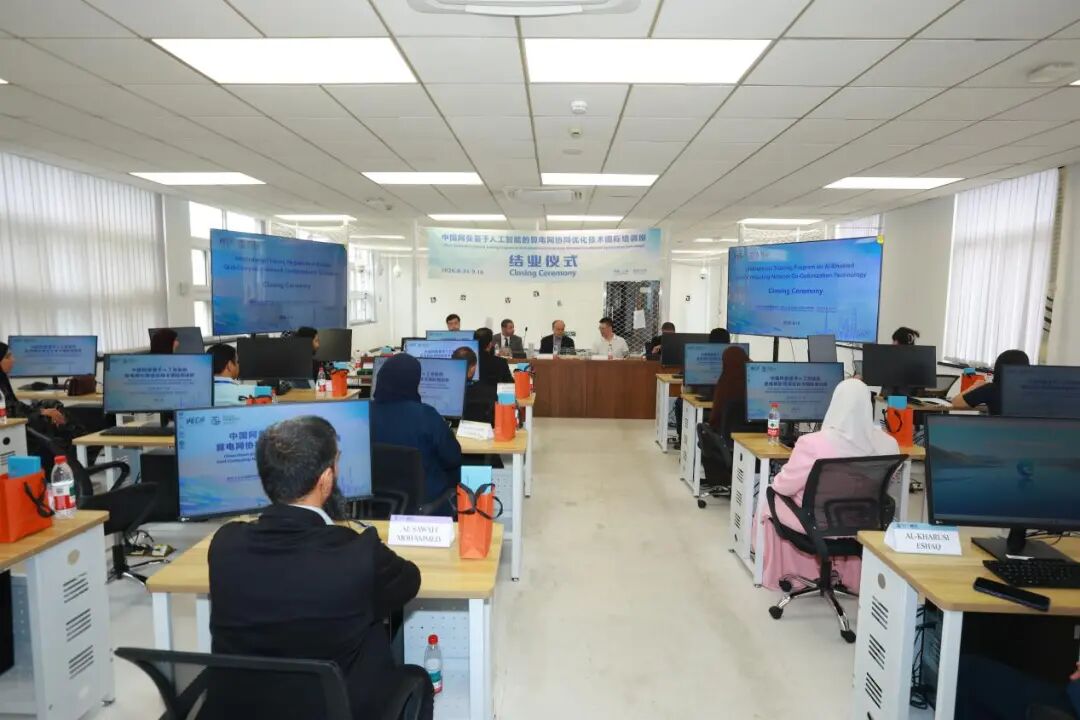
On the afternoon of September 13, the closing ceremony of the China–Oman International Training Workshop on AI-Based Coordinated Optimization of Computing, Power and Grid Technologies, sponsored by the Department of International Cooperation of the Ministry of Science and Technology (MOST) and organized by Fudan University, was held at Fudan University’s Handan Campus. Prof. Chen Zhimin, Executive Director of the Center for Global AI Innovative Governance (CGAIG) and Vice President of Fudan University, attended the ceremony together with representatives of relevant institutions from Oman and Jordan and Fudan faculty experts. During the workshop, Yao Xu, Secretary-General of CGAIG and Associate Professor at the Fudan Development Institute, was invited to deliver a special lecture for the trainees.
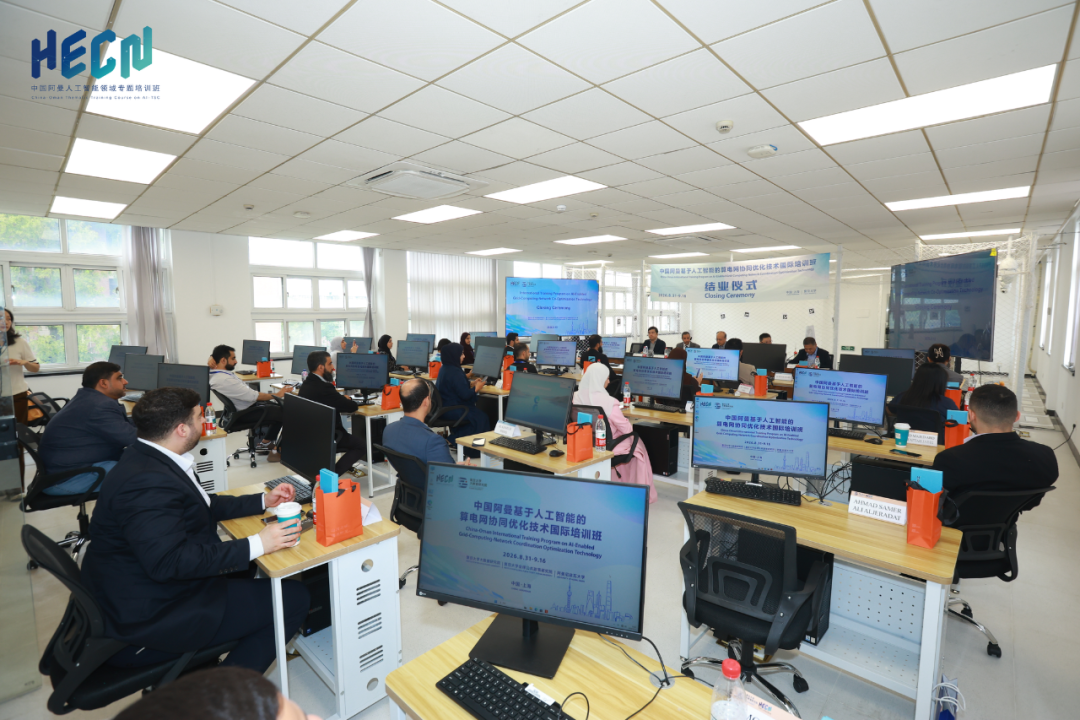
Photo credit: Institute of Big Data, Fudan University
The workshop officially began on August 31. It comprised four teaching modules and a total of 63 teaching and practical activities, forming a “three-in-one” teaching model of “classroom instruction + on-site experience + reflection and enhancement.” Teaching centered on AI-TSC core technologies and the technical concept of “delivering the right energy, through the right network, to the right users, at the right time.” Drawing on multidisciplinary faculty from across the university, the workshop produced 11 training textbooks, and trainees were organized into five study groups for close, structured management. Traditional and diverse cultural activities were held in parallel, integrating technical training with cultural exchange.
At the ceremony, guests including Qian Haoqi of Fudan’s Institute for Global Public Policy and Xue Xiangyang and Zou Hong of the Institute of Big Data presented the trainees with completion certificates issued by the Department of International Cooperation of MOST. They also presented awards to outstanding classes and outstanding trainees, as well as to the winning teams and individuals of the Best Creativity Award, Best Application Scenario Award, Best Assignment Award, Best Communication Award, Best Knowledge Reproduction Award, and Best Collaboration Award, recognizing the trainees’ practical achievements in localizing AI-enabled computing–power–grid coordination technologies, disseminating knowledge, identifying needs, and building bridges for cooperation.
Project Manager Shang Yuting, on behalf of the project team, summarized the workshop’s outcomes and introduced the “1-5-17-3-9” framework of practical results built through the training. The workshop was covered by media in China, Oman, Jordan, and elsewhere. Trainees developed five thematic cooperation proposals; distilled a list of 42 high-quality, scenario-based needs across 17 categories; produced 27 tangible learning outputs in three categories; and reached preliminary cooperation intentions with domestic universities and market entities in nine areas, laying a foundation for subsequent practical cooperation.
At the ceremony, a micro-drama made by the trainees, “My Days in Fudan’s AI Training,” was screened. Created using AI-based techniques, it documents the trainees’ study and daily life in Shanghai, vividly portraying the intensive and fulfilling teaching schedule, lively scenes of cross-border scientific and technological exchange, and a shared vision of jointly building a better future.
Prof. Chen Zhimin, Executive Director of CGAIG and Vice President of Fudan University, delivered the concluding remarks. He congratulated all trainees on successfully completing the program and thanked the Department of International Cooperation of MOST, all instructors, and the project staff. Chen noted that, throughout the study and exchange, everyone had been reflecting together on a very concrete question with global significance: how AI can better serve the energy transition and sustainable development. Around this theme, Chen offered three observations. First, the integration of AI and the energy transition must ultimately come down to solving real problems. Truly valuable technology is technology that can solve practical problems and keep running over time. He hoped that trainees would combine the concepts, methods, and cases they had learned with the realities of Oman and Jordan and explore development solutions suited to their national conditions. Second, genuinely sustainable international cooperation is not one-way technology transfer, but learning together and building capacity together. The workshop was a concrete practice of AI capacity building for the Global South; the exchange was not simply teaching and learning, but jointly identifying problems and jointly seeking answers, striving to turn a short-term training program into local development capacity that can keep growing. Third, the training may end, but cooperation should move forward from here. Graduation is not an endpoint but a new starting point. Fudan University is willing to work with the University of Nizwa and relevant institutions in Oman and Jordan to jointly develop course materials, promote two-way exchanges among researchers, carry out joint research, and explore demonstration projects grounded in local scenarios. CGAIG will also provide support for policy exchange, risk governance, and talent cultivation. He encouraged the trainees to take the knowledge, friendships, and cooperation ideas gained at Fudan back to Oman and Jordan, and expressed the hope that the ideas conceived in this seminar will materialize into new courses, projects, and practical outcomes.
Prof. Chen Zhimin, Executive Director of CGAIG and Vice President of Fudan University, delivers remarks
Photo credit: Center for Global AI Innovative Governance
Majid Abdullah Sulaiman, representing the outstanding trainees, shared his reflections on the program. He said that by systematically studying cutting-edge technical concepts such as integrated hydrogen–power–computing–grid systems and time-slice energy aggregation, and by getting up close to China’s energy digitalization research platforms, he had gained up-to-date theoretical knowledge and engineering practice ideas. He said that after returning home he would apply what he had learned in light of his country’s industrial realities, turning the training’s benefits into practical momentum for his country’s digital transformation.
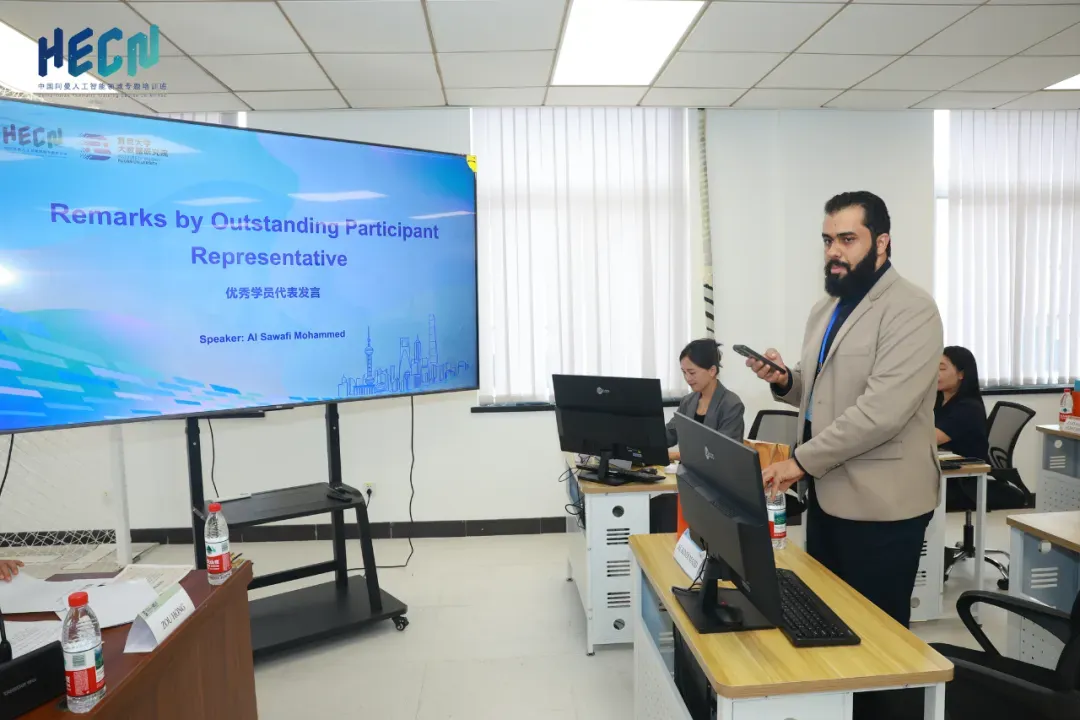
Majid Abdullah Sulaiman, representing the outstanding trainees, shares his reflections.
Photo credit: Institute of Big Data, Fudan University
Dr. Salim, Dean of the College of Economics, Management and Information Systems at the University of Nizwa, Oman, delivered remarks. He thanked Fudan University for its carefully designed curriculum and the effectiveness of its teaching. He noted that Oman is accelerating the development of its green hydrogen industry and urgently needs interdisciplinary talent combining AI and new energy. He hoped that the trainees would absorb the knowledge and put it into practice, and that the two universities would continue to advance joint development of teaching materials, exchange visits by scholars, and joint research projects, so that research outcomes can be adapted to Oman’s local application scenarios and the foundation for long-term cooperation between the two universities can be strengthened.
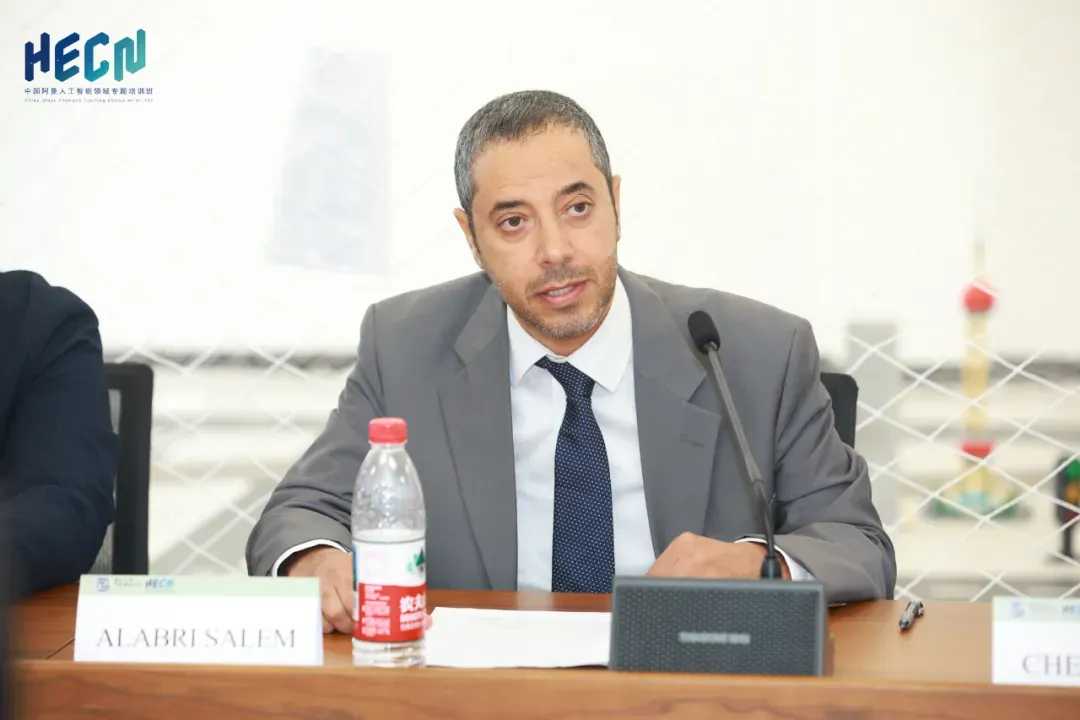
Dr. Salim, Dean of the College of Economics, Management and Information Systems, University of Nizwa, delivers remarks
Photo credit: Institute of Big Data, Fudan University
Meji, representing Jordan and serving as President of the Shanghai Arab Chamber of Commerce, gave a speech. He said that the integrated development of digital technology and renewable energy is a defining challenge of our times shared by Arab countries. The workshop has built an important communication link between Jordan and China’s science and technology community, and he hoped to use this opportunity to help Jordanian research institutions establish regular contact with Fudan University, explore cooperation opportunities in new-energy demonstration projects, and continue deepening two-way exchanges in science, technology, and the humanities.
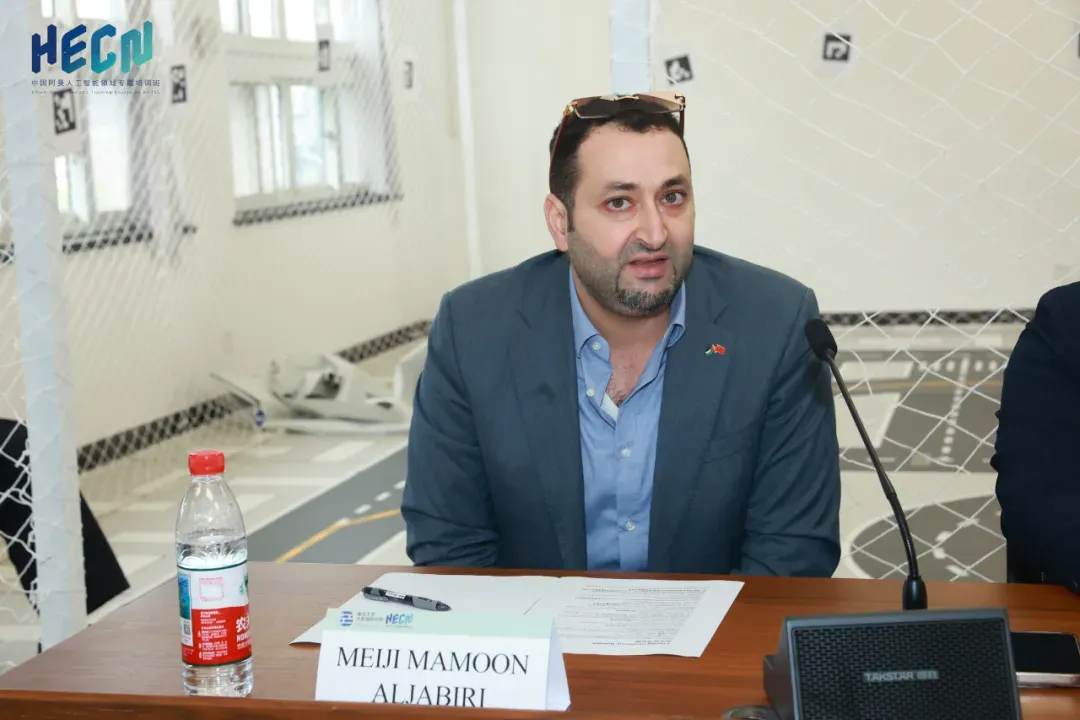
Meji, representing Jordan and President of the Shanghai Arab Chamber of Commerce, delivers a speech
Photo credit: Institute of Big Data, Fudan University
In addition, during the workshop, Yao Xu, Secretary-General of CGAIG and Associate Research Fellow at the Fudan Development Institute, was invited to deliver a special lecture titled “Challenges and Practices in Global AI Governance.” Starting from the global AI governance landscape, he systematically analyzed the new challenges that the rapid development of AI poses in technology, security, and development. Drawing on China’s practice in AI industry development and computing infrastructure construction, he introduced the explorations of major projects such as the “East Data, West Computing” initiative in optimizing the allocation of computing resources and supporting AI innovation. He stressed that AI governance requires balancing development and security: it is necessary both to respond effectively to technological risks and to attend to the digital divide that AI development may bring, and to strengthen international exchange, cooperation, and capacity building so that the benefits of AI development can better reach all parties, including countries of the Global South.
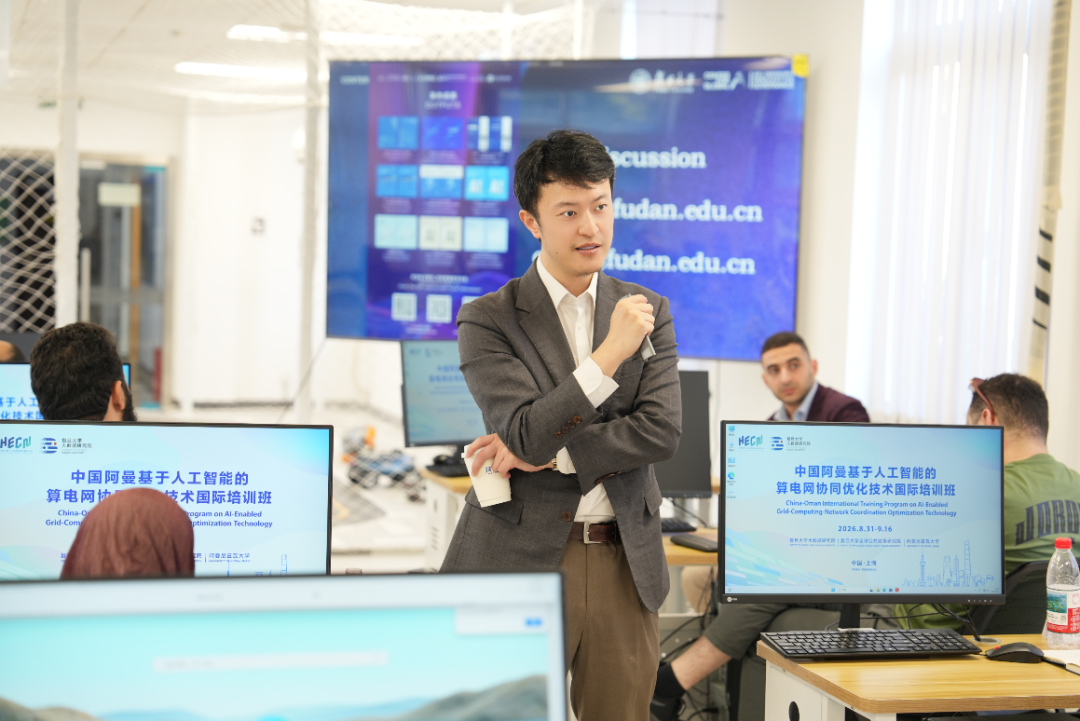
Yao Xu, Secretary-General of CGAIG and Associate Research Fellow at the Fudan Development Institute, delivers a training lecture
Photo credit: Center for Global AI Innovative Governance
This training has established an important cooperation platform for knowledge sharing, talent cultivation, and technical exchange between China and Oman and Jordan in the fields of AI and new energy, and has laid a foundation for further advancing joint development of teaching materials, exchange visits by scholars, joint research, and localized demonstration projects. Going forward, CGAIG will continue to support international AI exchange and capacity building, promote mutual learning of experience in development and governance, and help AI technologies serve the economic and social development of all countries.
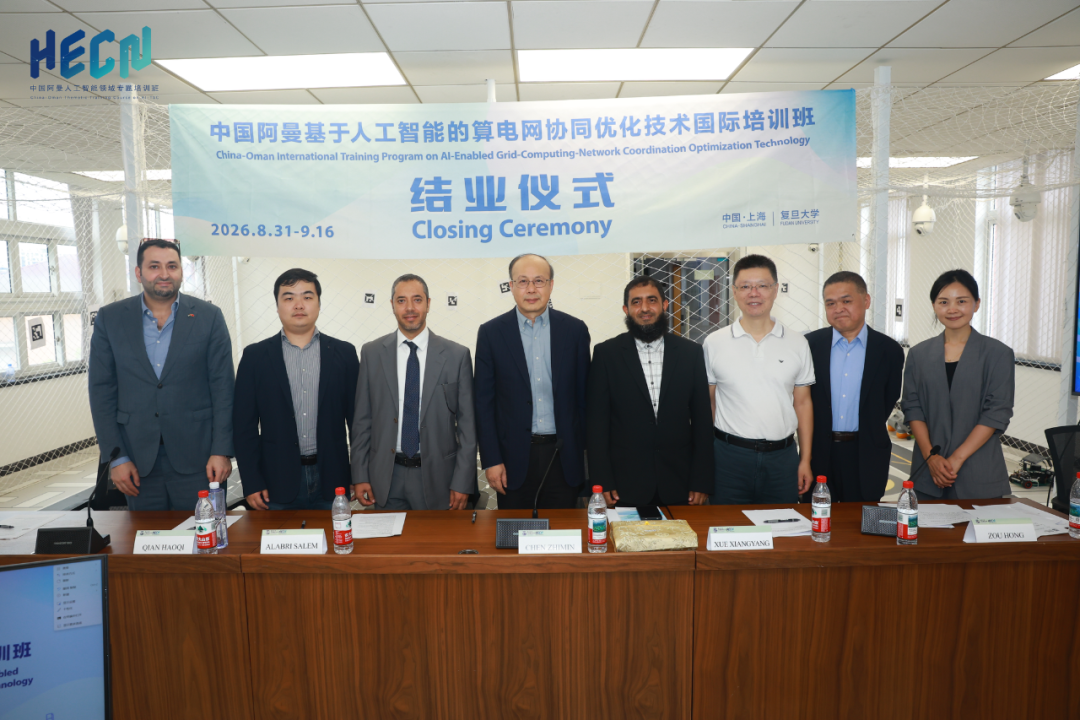
Group photo at the closing of the China–Oman International Training Workshop on AI-Based Coordinated Optimization of Computing, Power and Grid Technologies
Photo credit: Institute of Big Data, Fudan University
Original Link: https://mp.weixin.qq.com/s/JrGyjAKF-cCzTA-eIYaUGQ