

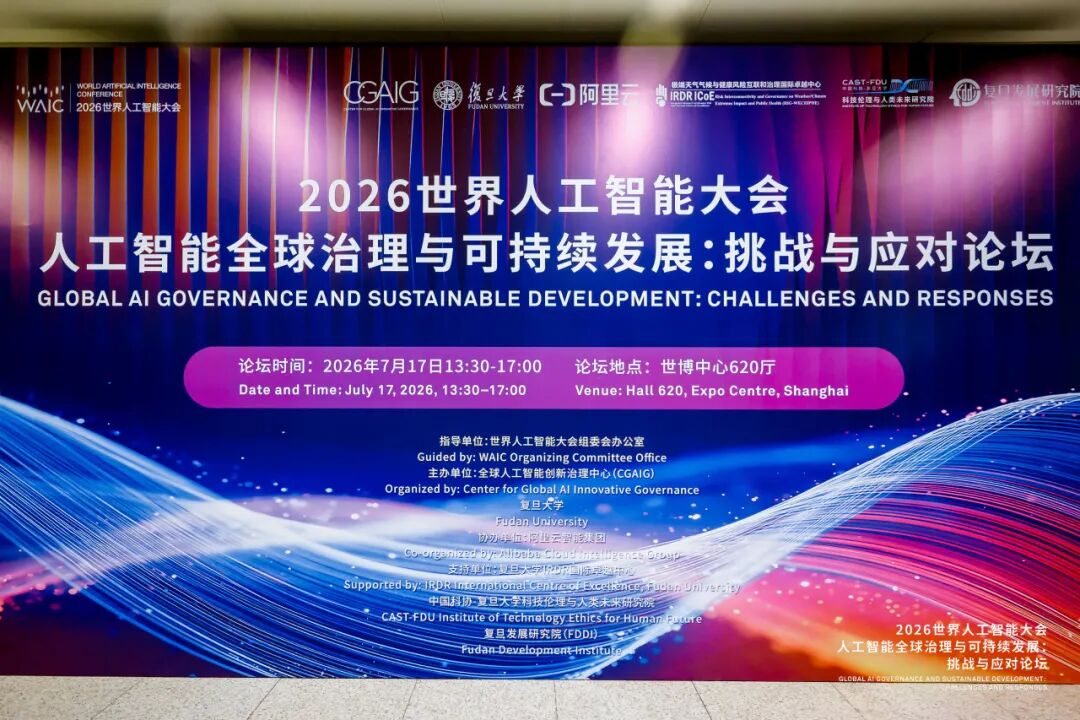
On July 17, the forum “Global AI Governance and Sustainable Development: Challenges and Responses” of the 2026 World Artificial Intelligence Conference (WAIC) was held at the Shanghai Expo Centre.
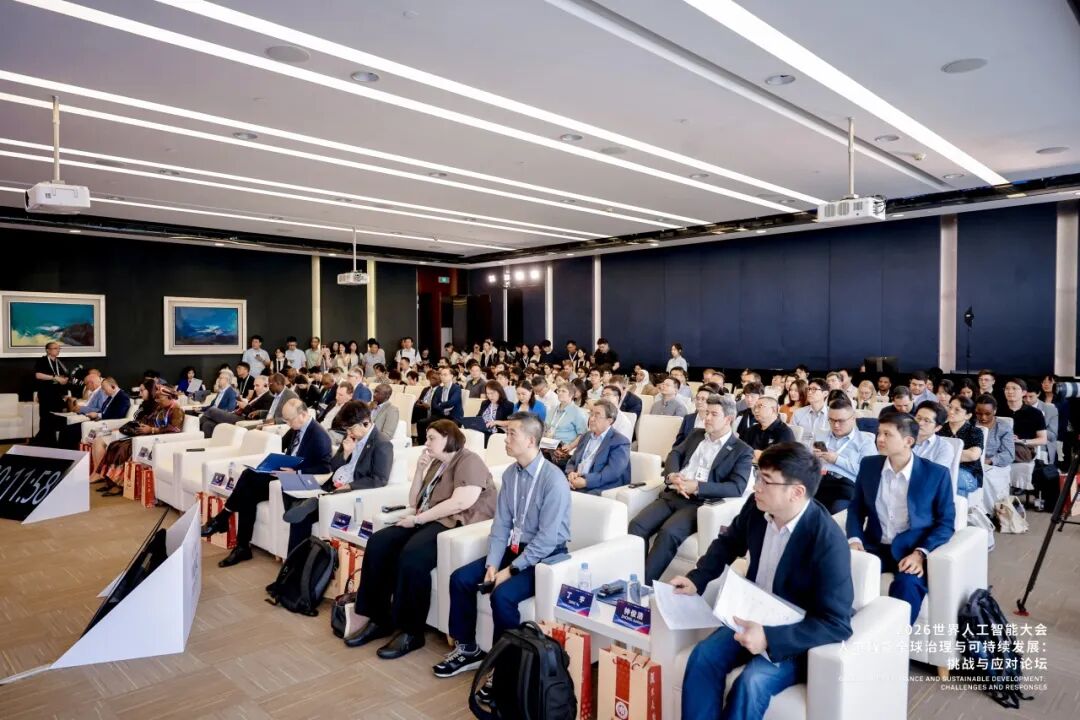
The forum brought together a series of major achievements in the fields of artificial intelligence governance and sustainable development. It also featured two roundtable discussions: “Ethics, Trust and Sustainable Development in Global AI Governance” and “Global AI Capacity Development Network and Capacity Building.” Representatives from multiple member institutions of the Global AI Capacity Development Network, supported by the United Nations, were invited to share the latest progress in the network’s development.
The forum was hosted by the Center for Global AI Innovative Governance and Fudan University, and co-organized by Alibaba Cloud Intelligence Group. Attendees included Amandeep Singh Gill, United Nations Under-Secretary-General and Special Envoy for Digital and Emerging Technologies; Pan Yan, Deputy Director of the Shanghai Municipal Commission of Economy and Information Technology; Zhao Houlin, former Secretary-General of the International Telecommunication Union (ITU); H.E. Minette LIBOM LI LIKENG, Minister of Posts and Telecommunications of Cameroon; Nicholas B. Dirks, President and Chief Executive Officer of the New York Academy of Sciences; Jin Li, President of Fudan University, Academician of the Chinese Academy of Sciences, and Director of the Center for Global AI Innovative Governance; Tao Xuefei, Vice President of Alibaba Group and President of Public Affairs at Alibaba Cloud; CHA Jiho, Member of the National Assembly of the Republic of Korea; H.E. SAM Sethserey, Director General of the General Department of Information and Communication Technology of Cambodia’s Ministry of Posts and Telecommunications; Ding Yu, Vice President of Alibaba Token Hub (ATH) and President of Qoder Business; and other guests.
Chen Zhimin, Vice President of Fudan University and Executive Director of the Center for Global AI Innovative Governance, presided over the opening ceremony of the forum. Chinese and international guests from government, industry, academia, and research sectors held in-depth discussions on topics including AI ethics and trust, sustainable development, and global capacity building.

On the afternoon of July 18, the Center for Global AI Innovative Governance convened the first closed-door meeting of its International Advisory Board. Jin Li presented appointment letters to leading experts serving on the committee from international organizations, renowned universities, research institutions, and professional think tanks.
The committee is co-chaired by Zhao Houlin and Nicholas B. Dirks. Members offered suggestions and recommendations on issues including the Center’s long-term development planning, the committee’s operational mechanisms, international cooperation strategies, and the cultivation of governance talent.
It is reported that the Center for Global AI Innovative Governance was officially launched and established at Fudan University during the opening ceremony of the 2025 World Artificial Intelligence Conference. Over the past year, with strong support from national and Shanghai authorities, the Center has achieved a series of outcomes in areas including global AI governance, capacity building, ethical rules, public goods, and international communication.
01
Promoting AI Innovation and Responsible Governance Toward Good
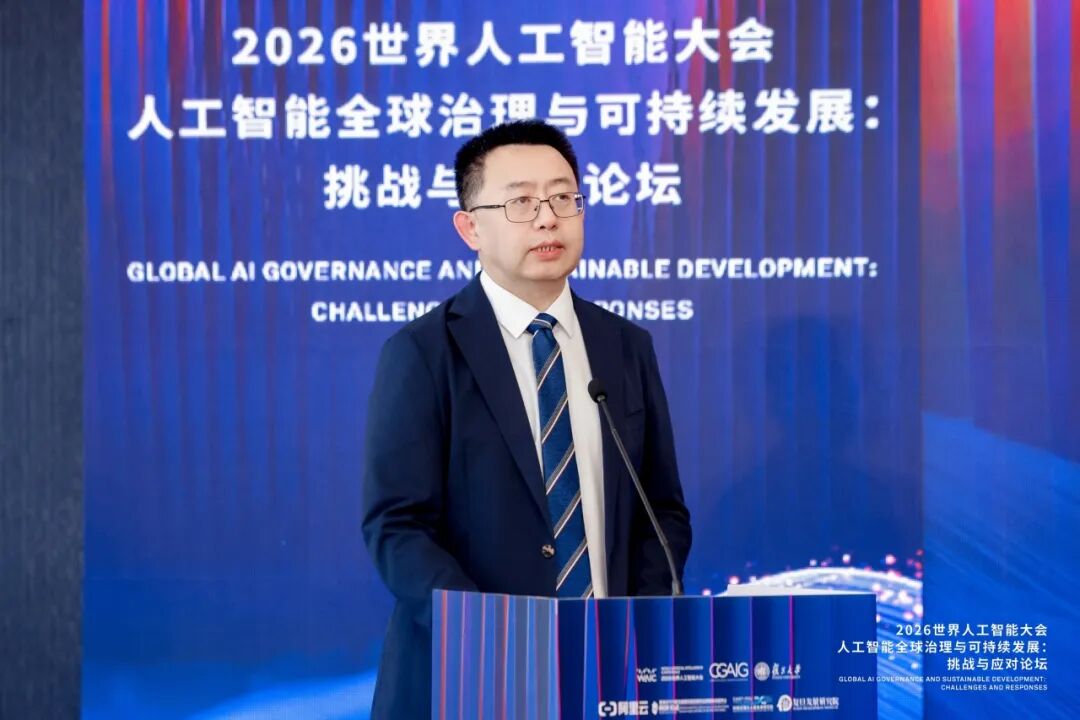
Pan Yan stated that Shanghai coordinates development and security, adheres to openness, win-win cooperation, and inclusive sharing, and actively promotes AI innovation and responsible governance toward good.
Looking ahead, Shanghai will continue to advance coordinated progress in AI technological innovation, industrial development, application scenarios, and governance systems. It will create an open and fair innovation environment for the sustainable development of artificial intelligence, actively participate in international exchanges and cooperation as well as the development of public goods, and contribute greater wisdom and strength to promoting the healthy development of artificial intelligence.
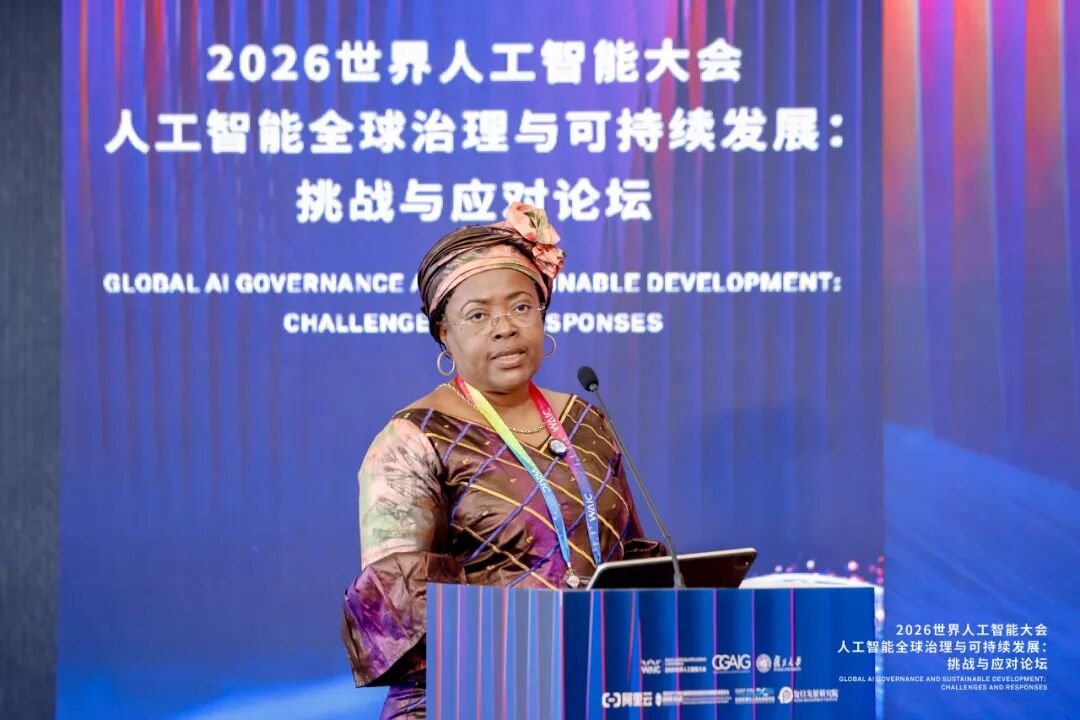
H.E. Minette LIBOM LI LIKENG stated that artificial intelligence brings both development opportunities and transnational security challenges, requiring joint participation from all countries in governance. Cameroon emphasized that governance systems should be inclusive and fair, ensuring that no country is marginalized.
Cameroon is strengthening digital infrastructure, data security, and talent cultivation while also taking into account gender equality and cultural diversity. Cameroon appreciates China’s open cooperation approach and its commitment to developing artificial intelligence that is people-centered and serves the common interests of all.
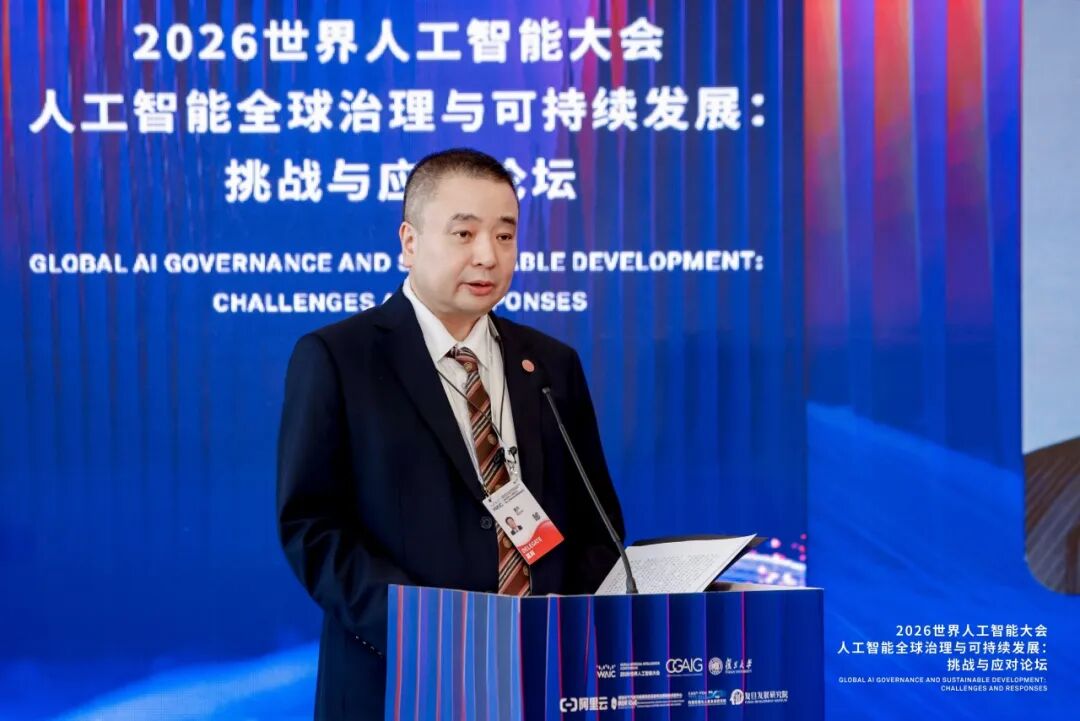
Jin Li stated that while artificial intelligence is reshaping economic and social development, it is also bringing new challenges in areas including security, ethics, fairness, and capability gaps.
Fudan University will continue to support the development of the Center, taking academia as the foundation, cooperation as the pathway, governance as the bond, and the common well-being of humanity as the goal, in order to jointly promote the beneficial, inclusive, and sustainable development of artificial intelligence.
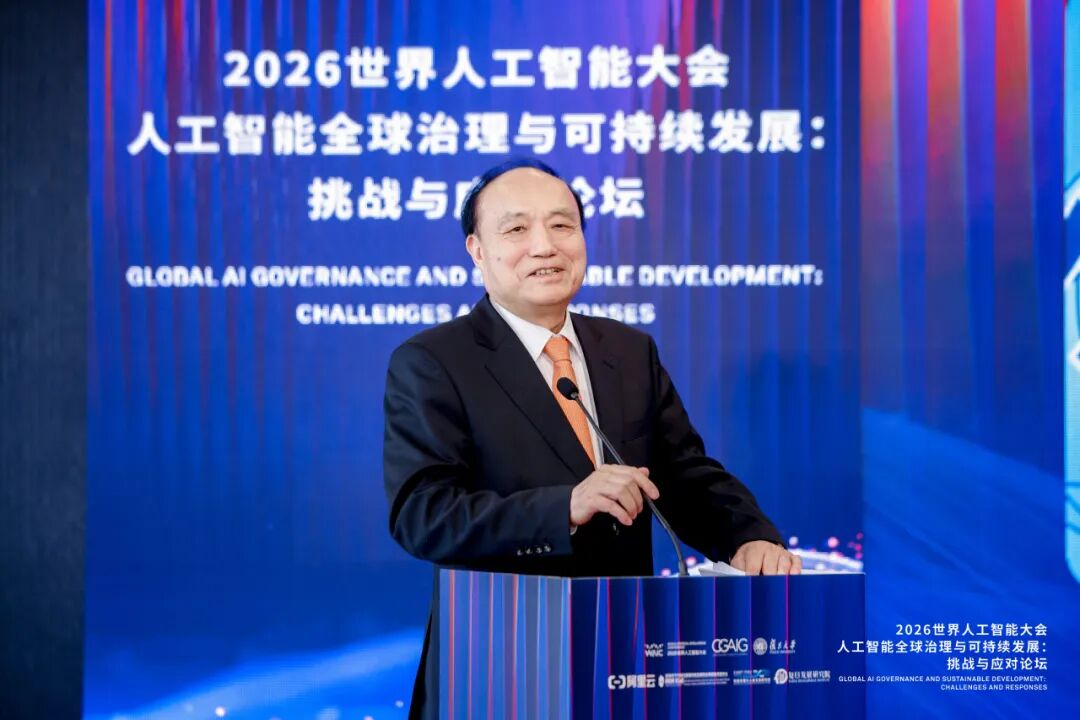
During the keynote speech session, Zhao Houlin, drawing on his extensive experience in global information and communication governance, emphasized around the themes of digital inclusion, rule coordination, and multilateral cooperation that opportunities for different countries and groups to participate in AI governance should be expanded.
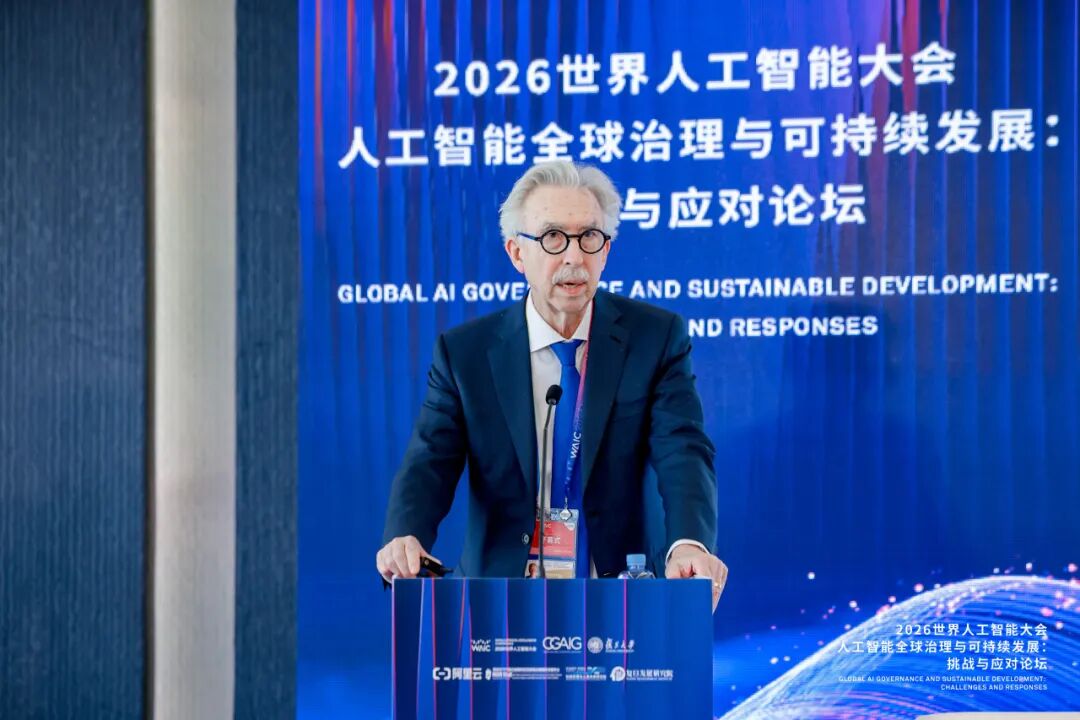
Nicholas B. Dirks delivered a keynote speech titled “Artificial Intelligence and Society,” exploring how the scientific community and higher education institutions can assume responsibilities for knowledge innovation and public responsibility amid technological transformation.
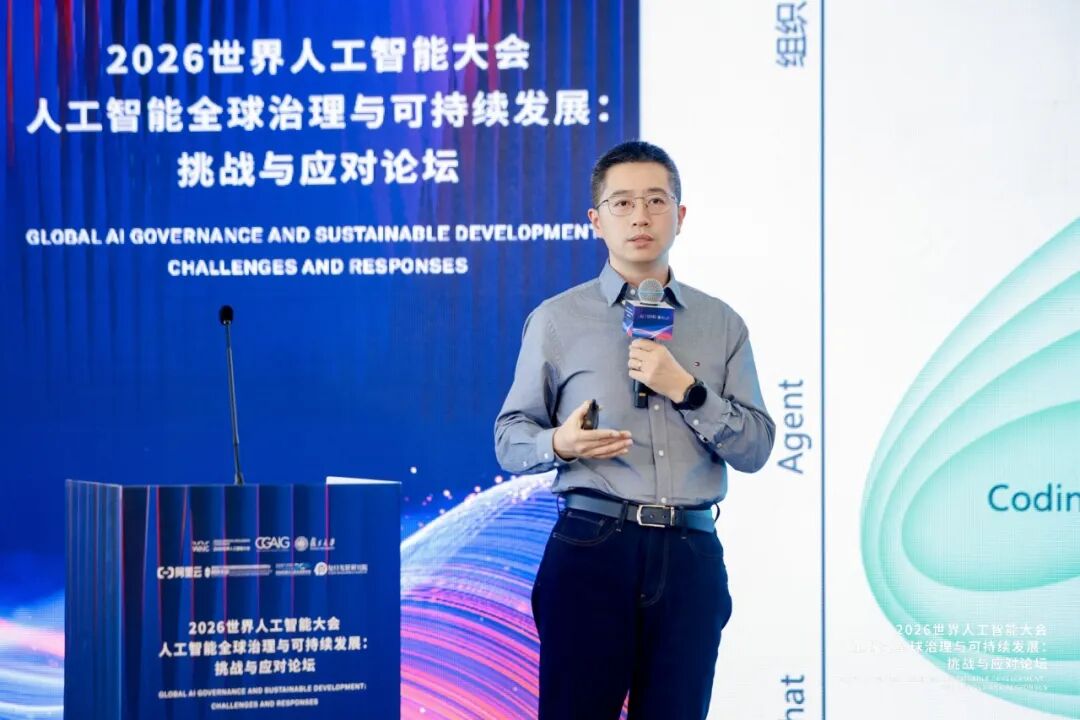
Ding Yu systematically introduced Qoder’s technological practices in building a secure capability system. He stated that agent security must be embedded into product architecture. Only when systems are secure and trustworthy can value be created at scale, enabling truly inclusive and sustainable development.
02
Multiple Major Achievements Make Their Debut at WAIC
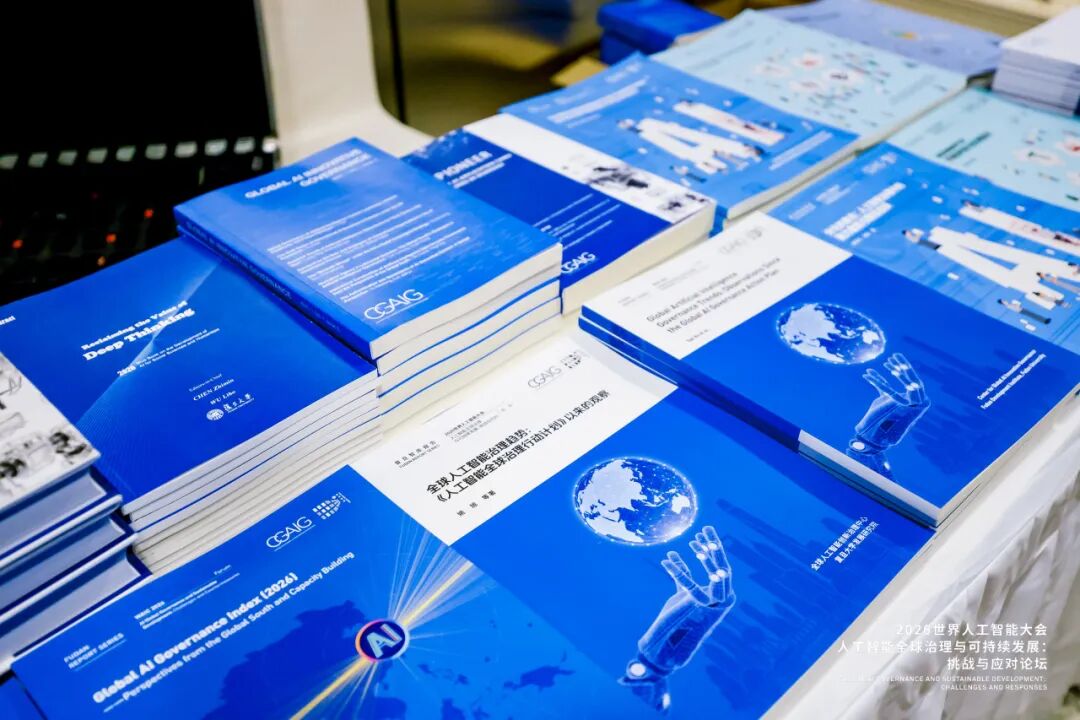
The forum also witnessed the concentrated release of a series of major achievements by the Center for Global AI Innovative Governance, including the “Yijian” Ethical Review Agent System 2.0, the Global Artificial Intelligence Governance Index (2026), a series of AI governance and capacity-building intelligent agents, AI Pioneer—Shanghai Small and Medium-sized Enterprises Artificial Intelligence Application Case Collection, the 2026 edition of Blue Book on the Intelligent Development of Humanities and Social Sciences, the journal Global Artificial Intelligence Innovation Governance, and five series of reports.
These achievements cover governance tools, evaluation systems, industrial applications, and academic research.
Ethical Safeguards: Upgrade of the Mirror 2.0 Ethical Review Agent
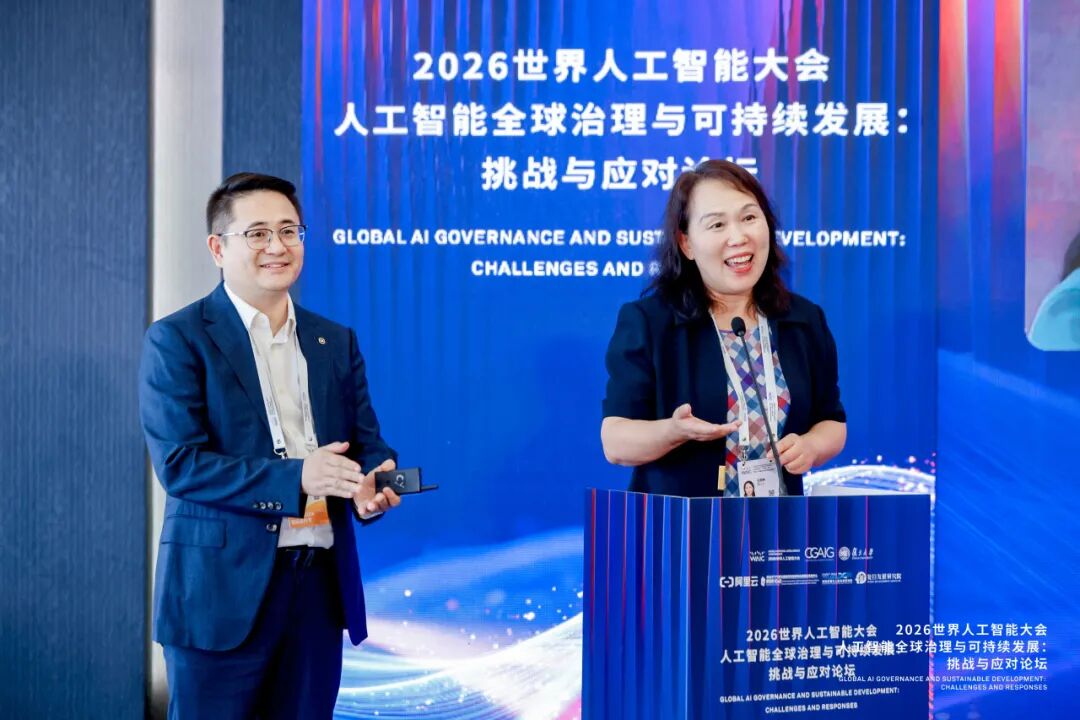
Wang Guoyu (right), Vice Chairperson of the International Advisory Board of the Center for Global AI Innovative Governance, Professor of the School of Philosophy at Fudan University, and Dean of the Institute of Technology Ethics and Human Future of the Chinese Association for Science and Technology and Fudan University; and Ma Xingjun (left), Researcher at the Institute of Trustworthy Embodied Intelligence of Fudan University, introduce the Mirror Ethical Review Agent System 2.0.
To address the complex ethical risks brought about by the rapid development of artificial intelligence and the demand for professional review, and to better unleash the enormous potential of artificial intelligence as a core engine of new quality productive forces, the ethical review agent system Mirror 2.0 has been officially upgraded and launched.
The Mirror 2.0 system was jointly developed under the leadership of the Institute of Technology Ethics and Human Future of Fudan University and the Institute of Trustworthy Embodied Intelligence, in collaboration with the School of Philosophy, the School of Life Sciences, Zhongshan Hospital Affiliated to Fudan University, and other institutions. It also received support from the Institute of Science and Technology Research of Fudan University and the Shanghai Artificial Intelligence Laboratory.
The research and development team brings together expertise from multiple fields, including philosophical ethics, artificial intelligence, life sciences, clinical medicine, public governance, and policy research. The team is committed to empowering scientific and technological ethics review through artificial intelligence, providing researchers and ethics experts with explainable, traceable, and verifiable professional assistance.
Building upon its existing capabilities in basic research ethics review, Mirror 2.0 expands into AI ethics review, with a particular focus on medical applications of artificial intelligence. It achieves three major upgrades in knowledge rules, agent capabilities, and application systems, providing more intelligent, efficient, and standardized support for scientific and technological ethics review, and contributing the “Fudan Solution” to China’s scientific and technological ethics governance and global AI governance.
Index Compass: Insights into Global AI Governance Trends
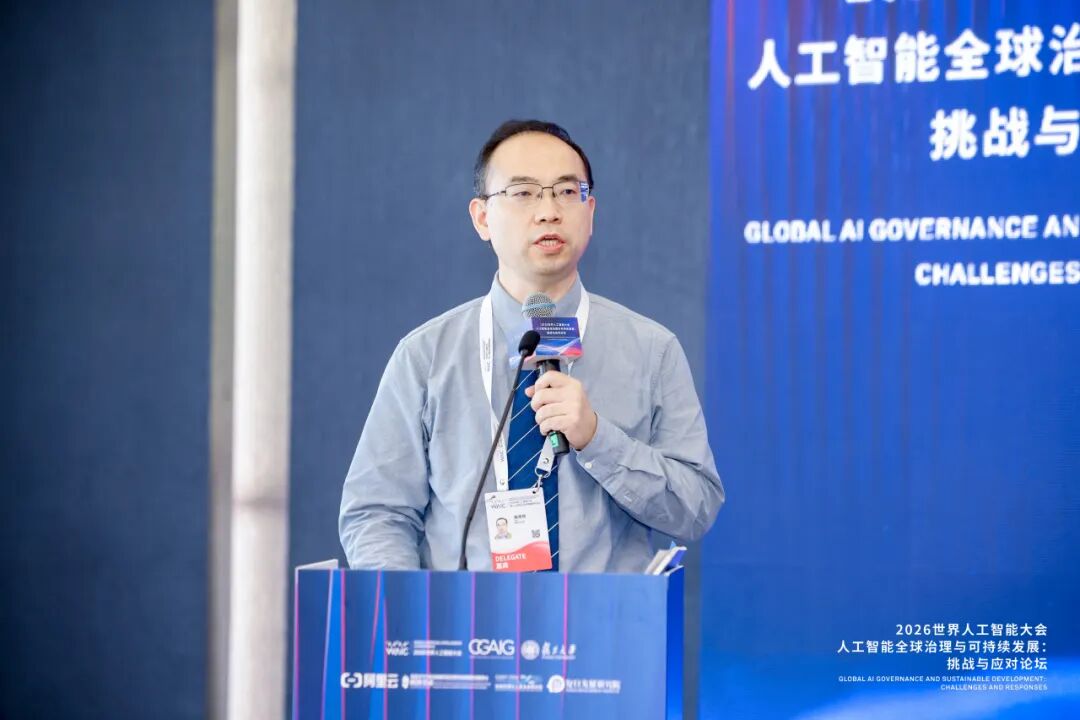
Gao Qiqi, Researcher at the Center for Global AI Innovative Governance and Professor at the School of International Relations and Public Affairs of Fudan University, introduces the Global Artificial Intelligence Governance Index Report and the series of AI governance and capacity-building intelligent agents.
To further promote global cooperation and innovation in artificial intelligence and advance fair and inclusive global governance, the Center has developed two flagship reports, seeking to provide a comprehensive overview of the current development of global AI governance.
Among them, Global Artificial Intelligence Governance Index (2026): A Global South Perspective and Capacity Building was led by Gao Qiqi, Researcher at the Center for Global AI Innovative Governance and Professor at the School of International Relations and Public Affairs of Fudan University.
The report moves beyond the perspective of a single capability competition and establishes an evaluation framework emphasizing four dimensions: capability, responsibility, inclusiveness, and sustainability. The index covers 40 representative economies worldwide, incorporates the perspective of the Global South into AI governance assessment, and seeks to present a more balanced and inclusive global picture, while revealing China’s approach to artificial intelligence governance.
The report Global AI Governance Trends: Observations Since the Action Plan for Global AI Governance was led by Yao Xu, Secretary-General of the Center for Global AI Innovative Governance and Associate Researcher at the Institute for Development Studies of Fudan University.
Using the Action Plan for Global AI Governance released at the 2025 World Artificial Intelligence Conference as its baseline, the report spent one year tracking global AI policies, multilateral mechanisms, competition among major powers, and development conditions in developing countries.
It presents multiple frontier and exclusive analyses, while simultaneously reviewing comprehensive cases of China’s promotion of inclusive AI development. The report provides a full picture of China’s practical pathway of narrowing the global intelligent divide and providing international public goods for artificial intelligence through genuine multilateralism.
Humanities at the Core: The Value of Deep Human Reflection in the Intelligent Era
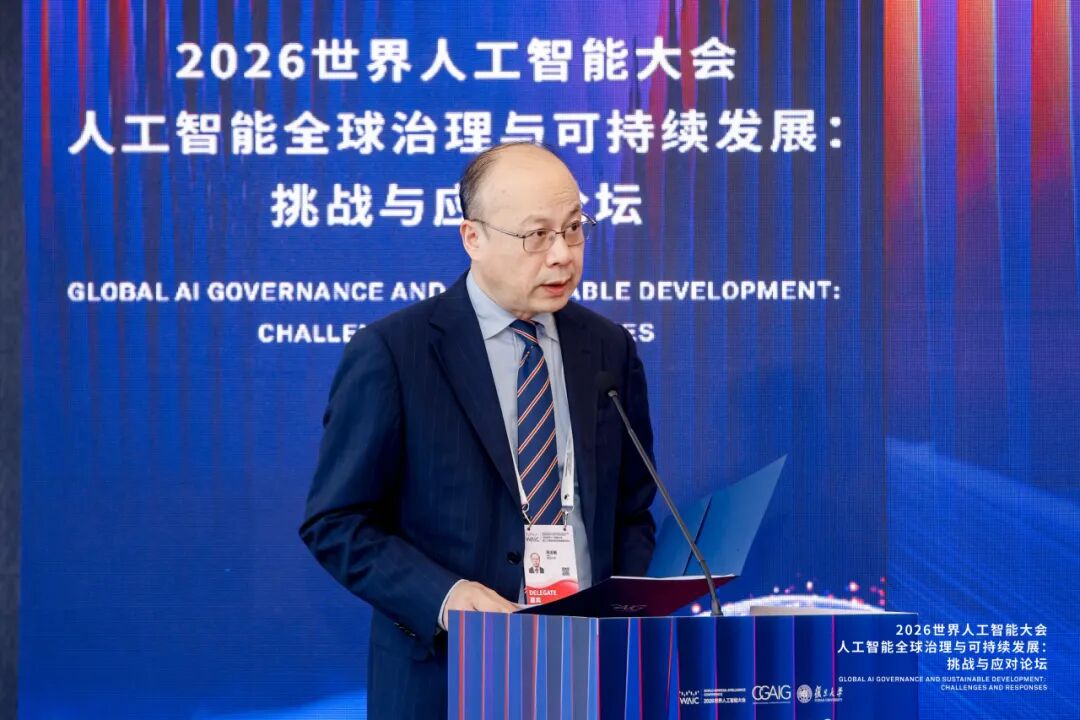
Chen Zhimin, Vice President of Fudan University and Executive Director of the Center for Global AI Innovative Governance, introduces the 2026 Blue Book on the Intelligent Development of Humanities and Social Sciences.
With the arrival of the intelligent agent era, the value judgment and direction-setting role of humanities and social sciences in AI development have become increasingly prominent. The English edition of the 2026 Blue Book on the Intelligent Development of Humanities and Social Sciences, themed “Rediscovering the Value of ‘Deep Thinking’,” was developed in response to this trend.
The blue book was compiled by the National Laboratory for Comprehensive Research on Development and Intelligent Governance of Fudan University, with contributions from scholars and experts both inside and outside the university.
Jin Li, President of Fudan University and Academician of the Chinese Academy of Sciences, served as the chief advisor, while Qiu Xin, Secretary of the CPC Fudan University Committee, wrote the preface.
The blue book highlights the concept of “mutual empowerment and integrated coexistence,” systematically reviews cutting-edge developments, organizational models, and institutional experiences in “AI + Humanities and Social Sciences,” and further explores how humanities and social sciences can understand AI, calibrate AI, guide AI, and empower AI.
It represents an important achievement of Fudan University’s innovative integration and development of the new liberal arts ecosystem.
The “China University AI4SSH Index” was released together with the blue book. It provides the first systematic observation of the level of intelligent development in humanities and social sciences at Chinese universities, offering references for identifying development foundations, comparing development pathways, discovering strengths and weaknesses, and promoting institutional development.
Collective Intelligence Through Publications: Mapping the Landscape of Governance Thought
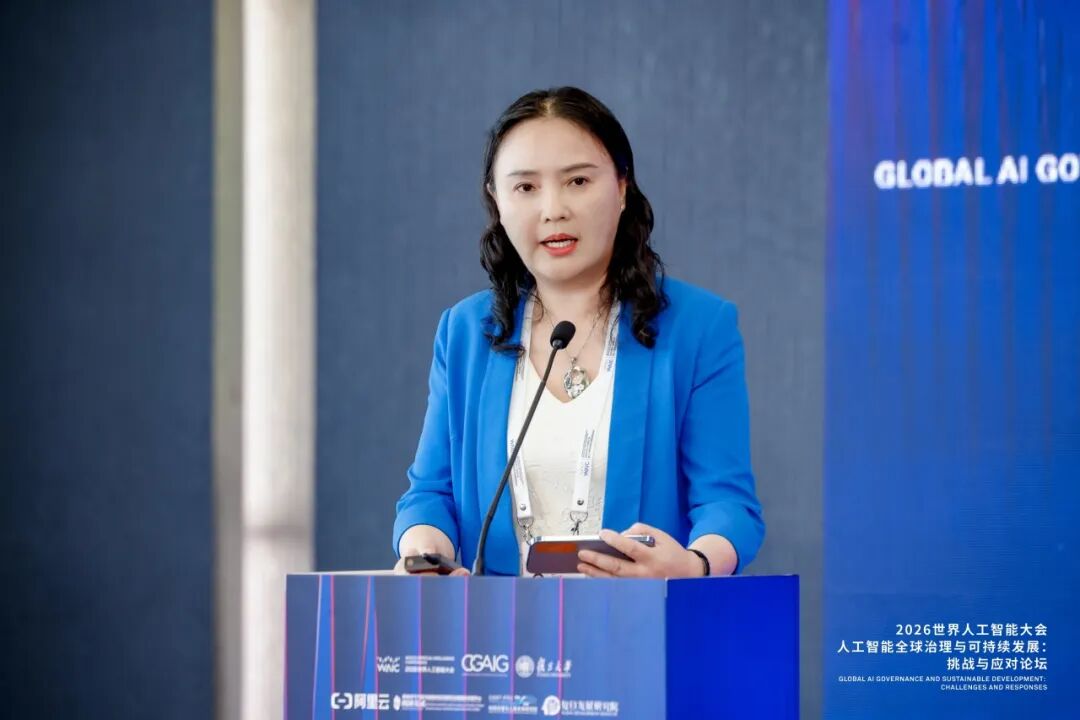
Cai Cuihong, Deputy Director of the Center for Global AI Innovative Governance and Professor at the Institute for International Studies of Fudan University, introduces the journal Global Artificial Intelligence Innovation Governance and the series of reports.
To focus on global governance in the intelligent era and build an important intellectual platform for continuous problem identification, knowledge accumulation, rule discussions, and intellectual exchange in the field of AI governance, the journal Global Artificial Intelligence Innovation Governance, sponsored by the Center for Global AI Innovative Governance and published by the Shanghai People’s Publishing House, will officially launch its first issue.
The journal is edited by Chen Zhimin, Vice President of Fudan University and Executive Director of the Center for Global AI Innovative Governance, with Cai Cuihong, Deputy Director of the Center for Global AI Innovative Governance and Professor at the Institute for International Studies of Fudan University, serving as deputy editor-in-chief.
The journal emphasizes academic depth, policy relevance, international perspectives, and interdisciplinary integration.
The inaugural issue focuses on three major sections: “Landscape and Framework,” “Actors and Pathways,” and “Issues and Rules.” It explores cutting-edge topics including United Nations AI governance, the role of international organizations, the European Union’s Artificial Intelligence Act, the Global South, data security, and labeling of AI-generated content.
The journal provides an in-depth discussion of how artificial intelligence is reshaping global governance and how China can participate in the global AI governance process in a more constructive manner. It contributes intellectual strength to building a global governance system in the intelligent era that is more just, inclusive, secure, and sustainable.
03
Representatives from Various Countries Discuss Global AI Governance and Capacity Development
The forum specially featured two roundtable discussions: “Ethics, Trust and Sustainable Development in Global AI Governance” and “Global AI Capacity Development Network and Capacity Building.”
Representatives from multiple member institutions of the Global AI Capacity Development Network, supported by the United Nations, gathered in Shanghai to share the latest progress in the development of the network.
Representatives from the United Nations system, as well as network partners from Asia, Africa, and other regions, engaged in dialogue at the same venue. They exchanged experiences and views on topics including capacity-building needs in different regions, talent cultivation, resource sharing, and cooperation mechanisms, further building consensus on cooperation.
As a Chinese representative institution and one of the founding members, the Center for Global AI Innovative Governance has been deeply involved in the establishment of the network. It has actively promoted key efforts including the design of cooperation mechanisms, capacity building, and the development of public goods, bringing together collective wisdom and strength from various parties to advance practical capacity building and jointly bridge the intelligent divide.
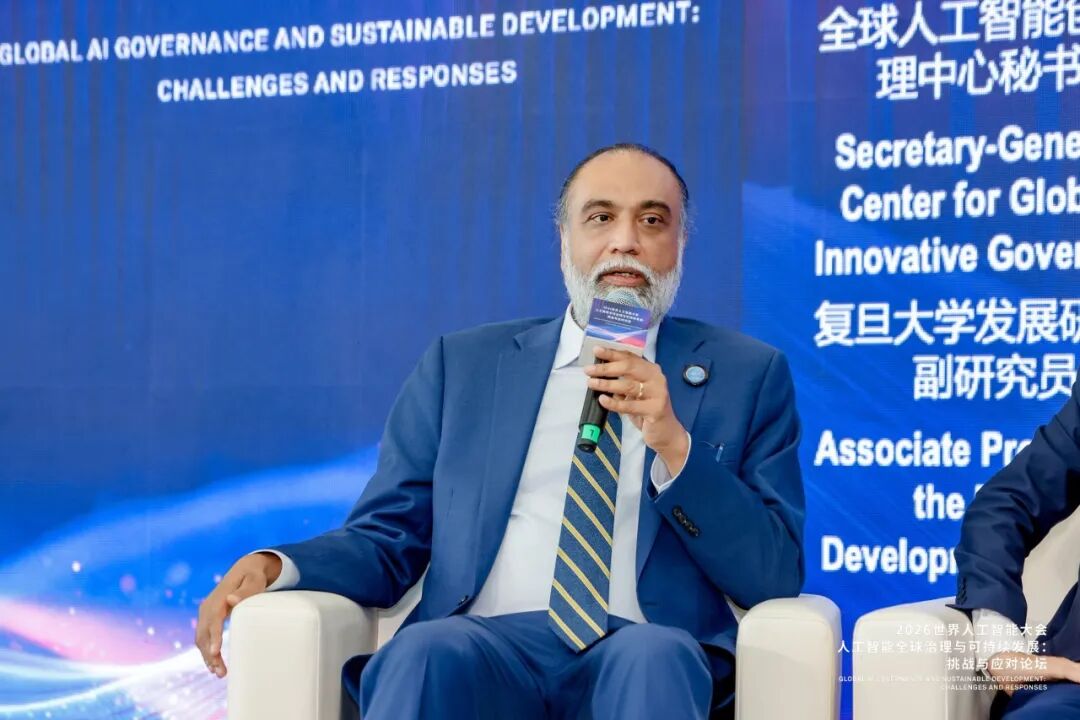
Amandeep Singh Gill, United Nations Under-Secretary-General and Special Envoy for Digital and Emerging Technologies, participated in the roundtable discussion on “Global AI Capacity Development Network and Capacity Building.”
During the roundtable discussion, Gill came to the venue and exchanged views with participating guests. He pointed out that global AI-related investment has approached one trillion US dollars this year, with capital flows directed toward infrastructure development. This is precisely an important moment for countries to support and learn from one another.
The Global AI Capacity Development Network, supported by the United Nations, will become an accelerator for AI capacity building, promoting the idea that technology should no longer be limited to a small number of countries and regions, while upholding core values of fairness, justice, dignity, and inclusiveness.
Jiang Changjian, Deputy Director of the Center for Global AI Innovative Governance and Associate Professor at the School of International Relations and Public Affairs of Fudan University, and Yao Xu, Secretary-General of the Center for Global AI Innovative Governance and Associate Researcher at the Development Studies Institute of Fudan University, respectively chaired the two roundtable discussions.
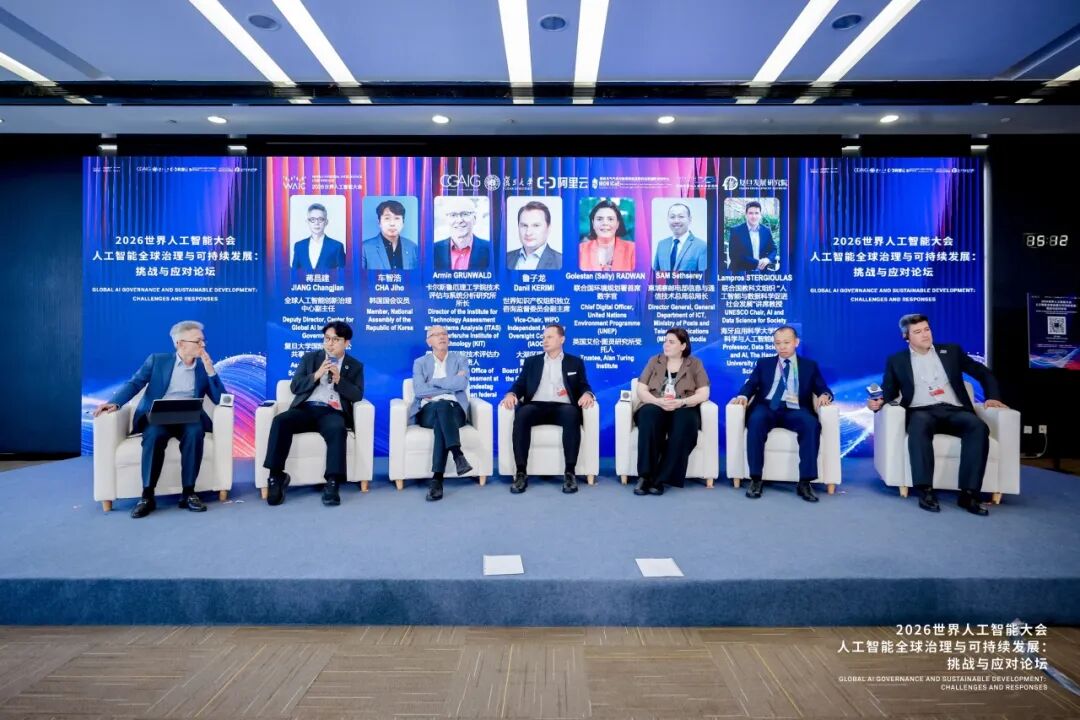
From the boundaries of technological ethics to trust gaps in cross-border cooperation and pathways for implementing sustainable development, participants in the roundtable discussion “Ethics, Trust and Sustainable Development in Global AI Governance” shared their perspectives on the present and future of AI governance from diverse viewpoints.
CHA Jiho, Member of the National Assembly of the Republic of Korea, stated that South Korea is responding to social transformation by building AI infrastructure, strengthening welfare protection, and supporting developing countries through promoting global AI multilateral cooperation.
The integration of AI with sustainable education can narrow gaps and provide a historic opportunity to reshape global fairness.
Armin GRUNWALD, Director of the Institute for Technology Assessment and Systems Analysis (ITAS) at Karlsruhe Institute of Technology (KIT) and Director of the Office of Technology Assessment at the German Bundestag (TAB), believes that AI has reshaped the relationship between humans and technology. Governance cannot rely solely on ethics; it also requires critical awareness and human oversight.
Human-machine interfaces should be strengthened while preserving human decision-making authority. The future should not be passively accepted but actively shaped through policy and economic choices. Greater emphasis should be placed on cultivating human judgment and preventing AI systems from being dominated by commercial interests.
Danil KERIMI, Vice Chairperson of the Independent Advisory Oversight Committee (IAOC) of the World Intellectual Property Organization (WIPO) and Board Member of the Council of the Great Lakes Region (CGLR), stated that since the emergence of AI, the creation of economic value has undergone fundamental transformation.
The proposal of new sovereign wealth funds based on AI rather than natural resources demonstrates historical changes in finance and governance. Meanwhile, innovation in AI governance is accelerating and has the potential for global application.
Golestan Sally RADWAN, Chief Digital Officer of the United Nations Environment Programme (UNEP) and Trustee of the Alan Turing Institute, stated that sustainable AI requires balancing resource consumption and social benefits, and urgently requires globally unified evaluation standards.
The United Nations Environment Programme is advancing relevant frameworks. Future actions should focus on gradual improvement rather than waiting for systemic problems to be fully resolved.
SAM Sethserey, Director General of the General Department of Information and Communication Technology of Cambodia’s Ministry of Posts and Telecommunications, stated that AI must serve human values and national goals while ensuring stability and sovereignty.
National strategies should align with development blueprints, and governance should be grounded in realistic risks. Building AI literacy among all citizens is an urgent task. Investment in frontier technologies should focus on national priority areas to ensure measurable development outcomes.
Lampros STERGIOULAS, UNESCO Chair in Artificial Intelligence and Data Science for Society and Professor of Data Science and Artificial Intelligence at The Hague University of Applied Sciences, stated that AI governance must move from principles to systematic implementation and establish trust through built-in constraint frameworks.
Innovation must remain people-centered and prioritize well-being. Governance speed must keep pace with technological development in order to prevent risks caused by delays. Global cooperation is urgently needed to address inequality. Trust is the core foundation for scaling up; without trust, pilot projects cannot generate value.
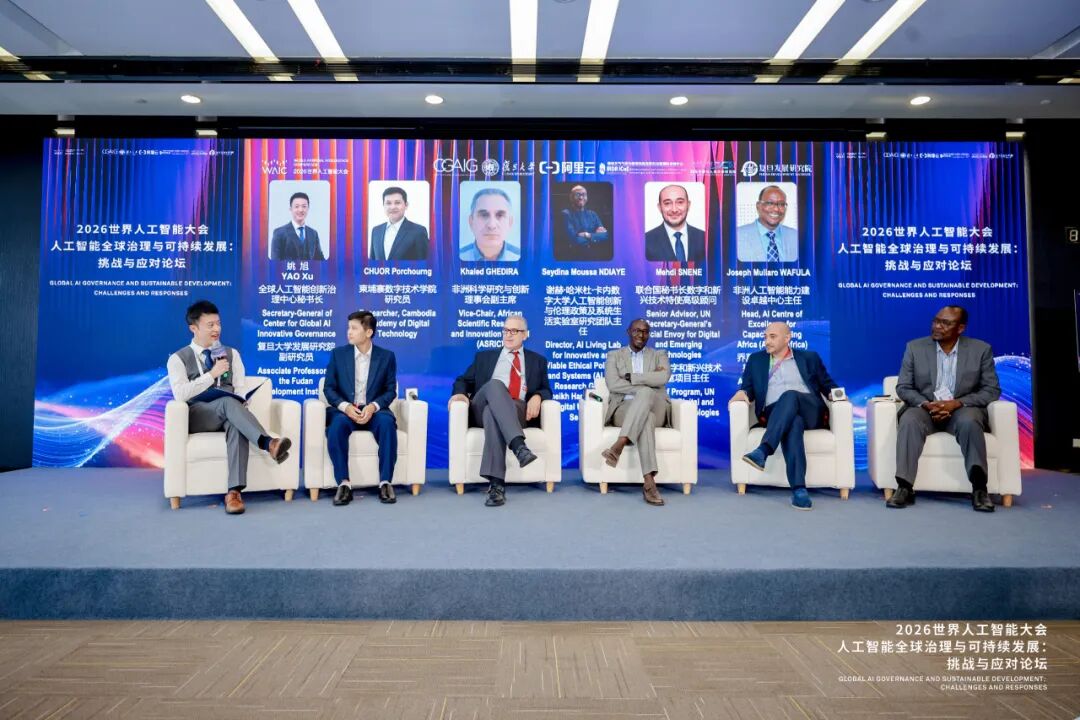
At the roundtable discussion “Global AI Capacity Development Network and Capacity Building,” participants conducted in-depth exchanges and practical discussions on topics including pathways for building the global AI capacity network, capacity-building needs of developing countries, and optimization of international cooperation mechanisms.
CHUOR Porchourng, Researcher at the Cambodia Academy of Digital Technology, discussed key bottlenecks currently facing the AI capacity development network, including shortages of AGI infrastructure, cultural biases in training data, and difficulties in producing high-quality localized content in the short term.
Khaled GHEDIRA, Vice President of the African Council for Scientific Research and Innovation, introduced that the African Academy Network consists of approximately 40 member institutions and is committed to conducting multi-level capacity-building cooperation. It has already trained teachers from 11 countries and will organize workshops to deepen cooperation in the next stage.
Seydina Moussa NDIAYE, Director of the AI Living Lab for Innovative and Viable Ethical Policies and Systems (ALIVE) Research Group at Cheikh Hamidou Kane Digital University, believes that promoting equitable dialogue among countries with different levels of capacity requires prioritizing the improvement of developing countries’ negotiation capabilities.
Support from highly capable countries is essential, and continued investment in institutional development is needed. The cooperation mechanism proposed by China fills gaps in the existing system and provides a new platform for expanding multilateral cooperation.
Mehdi SNENE, Senior Advisor to the UN Secretary-General’s Special Envoy for Digital and Emerging Technologies and Head of Program of the UN Office for Digital and Emerging Technologies (ODET), stated that the establishment of the Global AI Capacity Development Network aims to strengthen digital capacity exchanges in the Global South through cooperation between institutions and governments.
Its core is to promote technology-driven decision-making, uphold open data, open models, and cooperation, and advance equitable AI development and digital sovereignty.
Joseph Muliaro WAFULA, Head of the AI Centre of Excellence for Capacity Building Africa (AICEX-Africa) and Associate Professor at Jomo Kenyatta University of Agriculture and Technology, stated that the Global AI Capacity Development Network is based on a “contribution list,” clarifying the resources that members can provide and enabling transparent matching.
At present, the contribution list has been prioritized for implementation in places such as Kenya, promoting data sharing and AI development.
Original URL: https://mp.weixin.qq.com/s/Tbzl21VwcbJGsQPWtw7PDw