

On the afternoon of 17 July, with the support of the Center for Global AI Innovative Governance (CGAIG), faculty members and students participating in the 2026 Shanghai Summer School (BRICS Program) visited the 2026 World Artificial Intelligence Conference (2026 WAIC) and attended the forum “Global AI Governance and Sustainable Development: Challenges and Responses.”
The forum featured the launch of a series of flagship research outputs from CGAIG, including “Mirror” Ethical Review Agent System 2.0, the Global AI Governance Index (2026), a suite of AI Governance and Capacity Building Agents, AI Pioneer: Excellent AI Application Cases for SMEs in Shanghai, the 2026 Blue Book on the Development of AI for Social Sciences and Humanities, the inaugural volume of the Global AI Innovative Governance series, and five thematic reports. These publications span governance tools, evaluation frameworks, industrial applications, and academic research. Students from BRICS countries attended the forum throughout the day and expressed strong interest in the newly released achievements, commenting that they represented “cutting-edge technological developments that cannot be learned in a traditional classroom.”
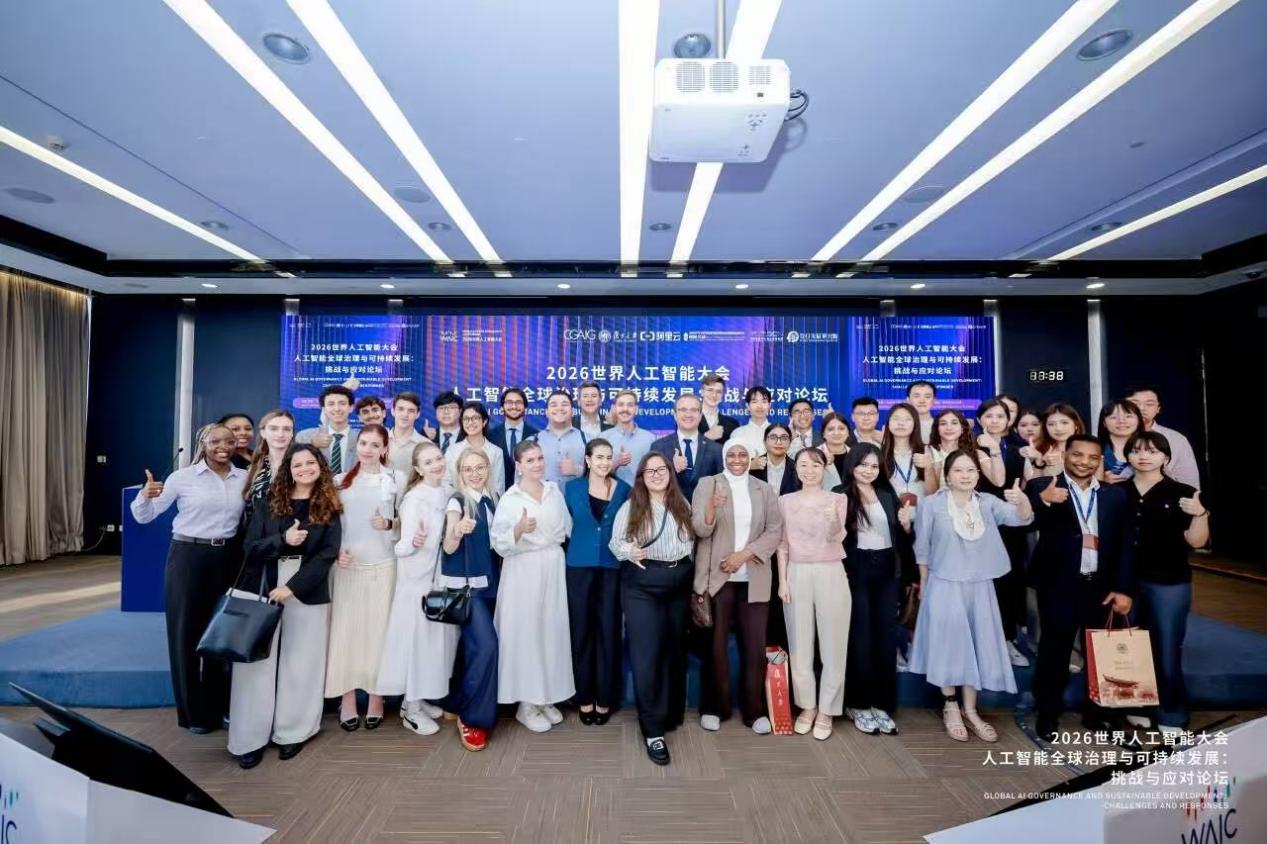
Participants of the 2026 Shanghai Summer School (BRICS Program) attend the forum “Global AI Governance and Sustainable Development: Challenges and Responses” at 2026 WAIC, 17 July 2026
Source: Center for Global AI Innovative Governance
During the event, Nikita Kornev, Director of the Center for Chinese Studies at Ural Federal University, and a participant from 2026 Shanghai Summer School (BRICS Program), was interviewed by Shanghai Dragon TV. He remarked: “I believe that with the establishment of the World AI Cooperation Organization, China and Russia will be able to deepen cooperation in areas such as the economy, food security, and agriculture, especially agriculture. Russia is already a major agricultural country, and with the support of China’s AI technologies, we can achieve even greater progress while sharing our respective experiences in agricultural development. In fact, many solutions are already in our ‘pockets.’ The AI models on our mobile phones and computers can provide solutions as long as we ask the right questions. That is why I particularly appreciate China’s approach to AI development—China is applying AI in a thoughtful and intelligent way.”

Source: Kankan News STV
Interview link: https://weixin.qq.com/sph/AzIr4qlmNk
Beyond the forum, on the afternoon of 27 July, the delegation visited the China–BRICS Artificial Intelligent Development and Cooperation Center at the invitation of the host institution. Experts from the Center introduced its establishment, organizational structure, major achievements, and multilateral cooperation initiatives. Guided by staff members, participants toured the exhibition hall and experienced MiniMax’s text-to-video generation technology, Tencent’s palm-payment system, several smart glasses developed by DreamSmart Group (Xingji Meizu), and ULS Robotics’ smart exoskeleton. Through hands-on demonstrations and firsthand experiences, the students gained a more intuitive understanding of AI technologies and their industrial applications.

Students from the 2026 Shanghai Summer School (BRICS Program) experience smart glasses during their visit to the China–BRICS Artificial Intelligent Development and Cooperation Center, 27 July 2026.
Source: Center for BRICS Studies, Fudan University
During the interactive discussion session, experts from the China–BRICS Artificial Intelligent Development and Cooperation Center introduced the “AI Navigator+” Agent, an intelligent assistant designed to support enterprises in international cooperation. They then invited participants to imagine what kind of AI agent they would like if they wished to better understand China: What knowledge should it possess? What capabilities should it have? The discussion quickly expanded from these questions to broader topics, including the data foundations required for AI agents, application scenarios, and the future boundaries of agent development. Students eagerly raised their hands to ask questions, with each inquiry proving more thought-provoking than the last. Responding to these questions which reflected the practical concerns of participants from different countries, Chinese experts provided detailed explanations of technical pathways while candidly sharing perspectives on international cooperation. The session was punctuated by laughter and applause, and one participant reflected afterward: “This wasn’t one-way knowledge transfer, it was genuine two-way dialogue.”
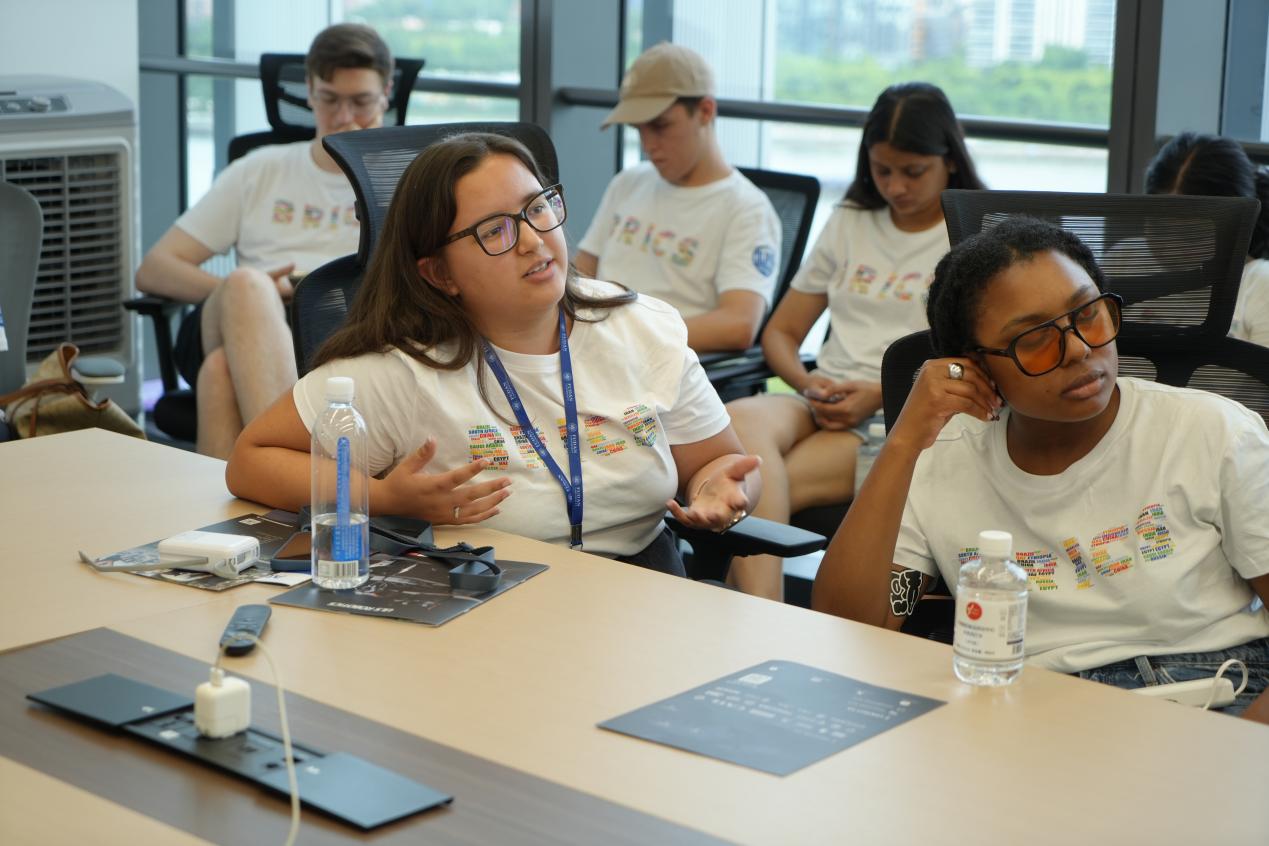
Students from the 2026 Shanghai Summer School (BRICS Program) engage in discussion with experts during their visit to the China–BRICS Artificial Intelligent Development and Cooperation Center, 27 July 2026.
Source: Center for BRICS Studies, Fudan University
From multilateral discussions on AI governance at WAIC to the practical technology demonstrations at the Shanghai operational base of the China–BRICS Artificial Intelligent Development and Cooperation Center, the itinerary traced a journey from governance frameworks to real-world applications. This progression embodied one of the central messages that the 2026 Shanghai Summer School (BRICS Program) hoped participants would take away: technology can naturally transcend national borders, but learning how to apply it wisely often begins with every sincere question asked and every open exchange of ideas.
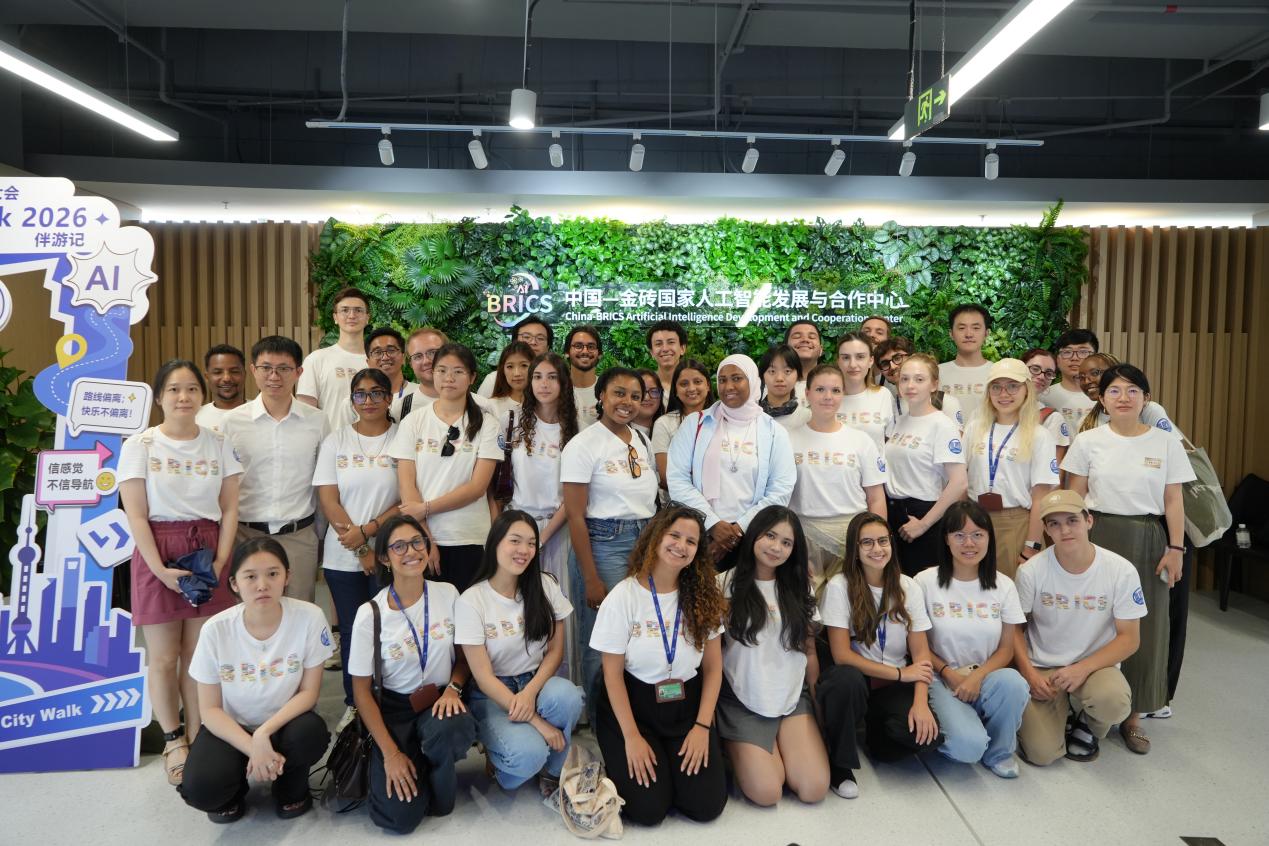
Group photo of participants from the 2026 Shanghai Summer School (BRICS Program) during their visit to the China–BRICS Artificial Intelligent Development and Cooperation Center, 27 July 2026.
Source: Center for BRICS Studies, Fudan University
Original URL:
https://mp.weixin.qq.com/s/NEG1FL02AgVlyFNT7o1g2Q