


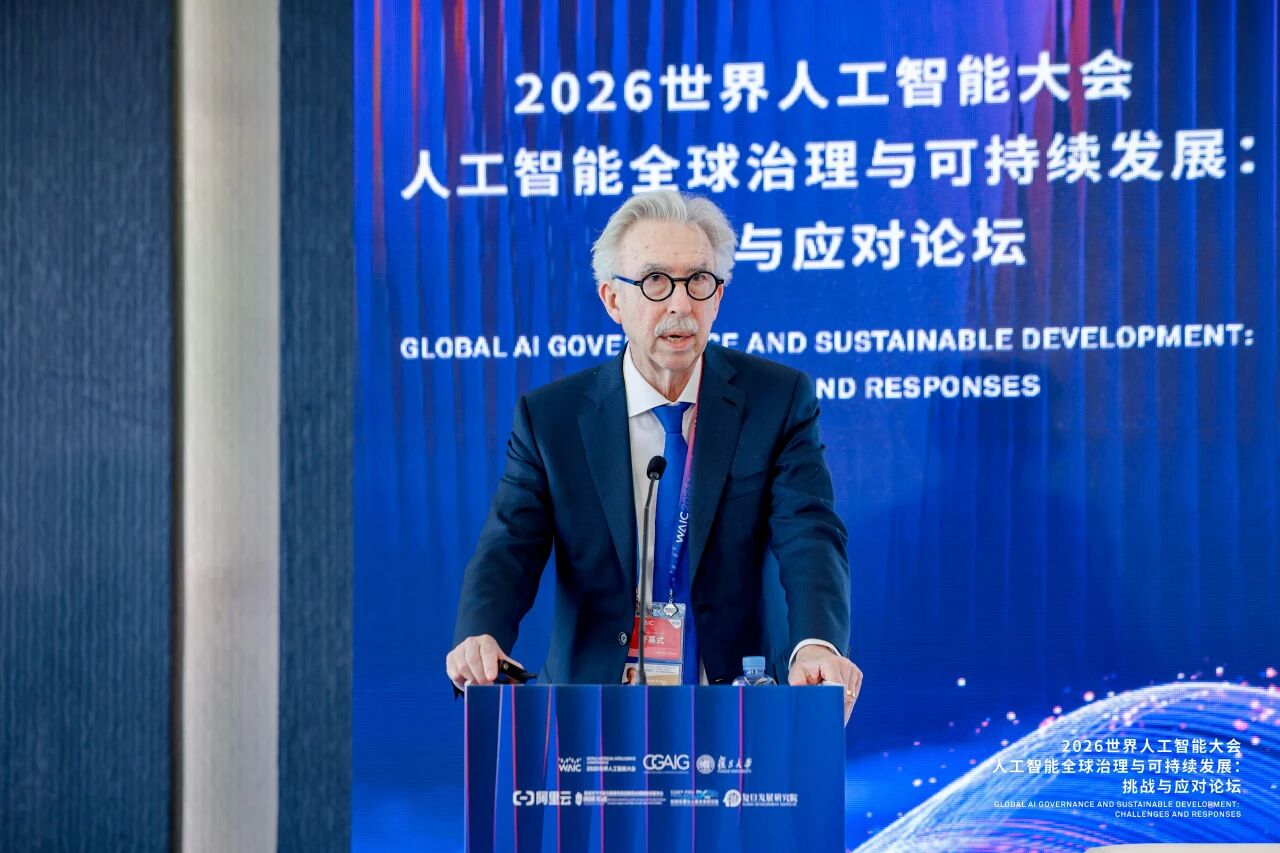
NICHOLAS B. Dirks
Co-Chair of the International Advisory Board of the Centre for Global AI Innovative Governance; President and CEO of the New York Academy of Sciences
Discussions of artificial intelligence are increasingly dominated by two competing narratives. One is triumphalist: AI will accelerate scientific discovery, increase human productivity and help address major social challenges. The other is considerably more dystopian: AI will undermine democracy, eliminate jobs, concentrate power, destabilize societies and perhaps even escape human control. Both narratives capture something important, but neither adequately reflects the profound uncertainty surrounding how AI development and adoption will actually unfold. AI governance must therefore move beyond general principles and predictions towards institutions, preparedness, shared values and lived human realities. AI may accelerate scientific discovery, but it may also reshape the relationship between theory and observation, the organization of research teams, peer review, credit for discoveries and scientific training. At the same time, companies are rewarded for growth and market share, governments for competitiveness and national advantage, and researchers for publication and discovery. These incentives are legitimate, but they are not fully aligned with long-term social outcomes and the public good. Governance cannot depend exclusively on those directly competing in the technological race. It requires independent institutions capable of external scrutiny and accountability. Good AI governance should be interdisciplinary, international, independent, focused on capacity-building and deeply human-centred. Our purpose is not to optimize machines; our purpose is to advance human flourishing.