

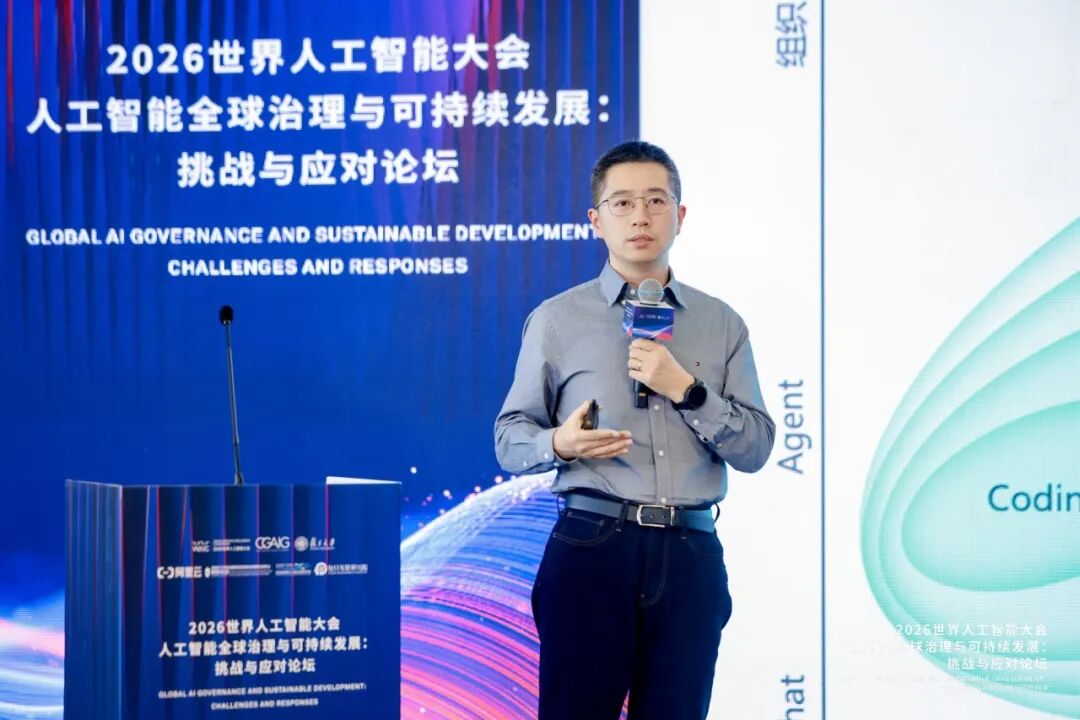
DING Yu
Vice President of Alibaba Token Hub; President of Qoder
Agents are moving from calling existing tools to creating tools of their own, using long-horizon reasoning to complete increasingly complex tasks. Their problem space is expanding from editing files, operating computers and connecting to the Internet towards completing production tasks from end to end. Agents will therefore not only redefine digital productivity, but also reshape the relations of production in the digital era. Coding provides an important foundation for this transformation because code offers high-quality data and relatively clear verification and feedback. Coding agents can consequently evolve into more general-purpose agents. Within the Qoder ecosystem, Qoder CLI adds model and agent capabilities to traditional software, Qoder Desktop equips developers with agent teams covering design, development, testing, operations and release, while QoderWake can operate as a digital employee undertaking long-term organizational roles. Future organizations may consist of both human and digital employees, giving rise to one-person teams, one-person organizations and one-person companies. However, productivity gains must be built on safety and trustworthiness. As agents gain deeper access to personal computers and organizational systems, they interact with more data, tools and high-risk operations. Safety cannot depend on a model’s own discretion; it must be built into the architecture through sandbox isolation, least-privilege access, authorization for high-risk operations, contextual injection protection, data and key protection, and enterprise-level management and auditing. Only when agents are safe and trustworthy will people be willing to use them. Only scaled adoption can create real value and turn tokens into productivity.