

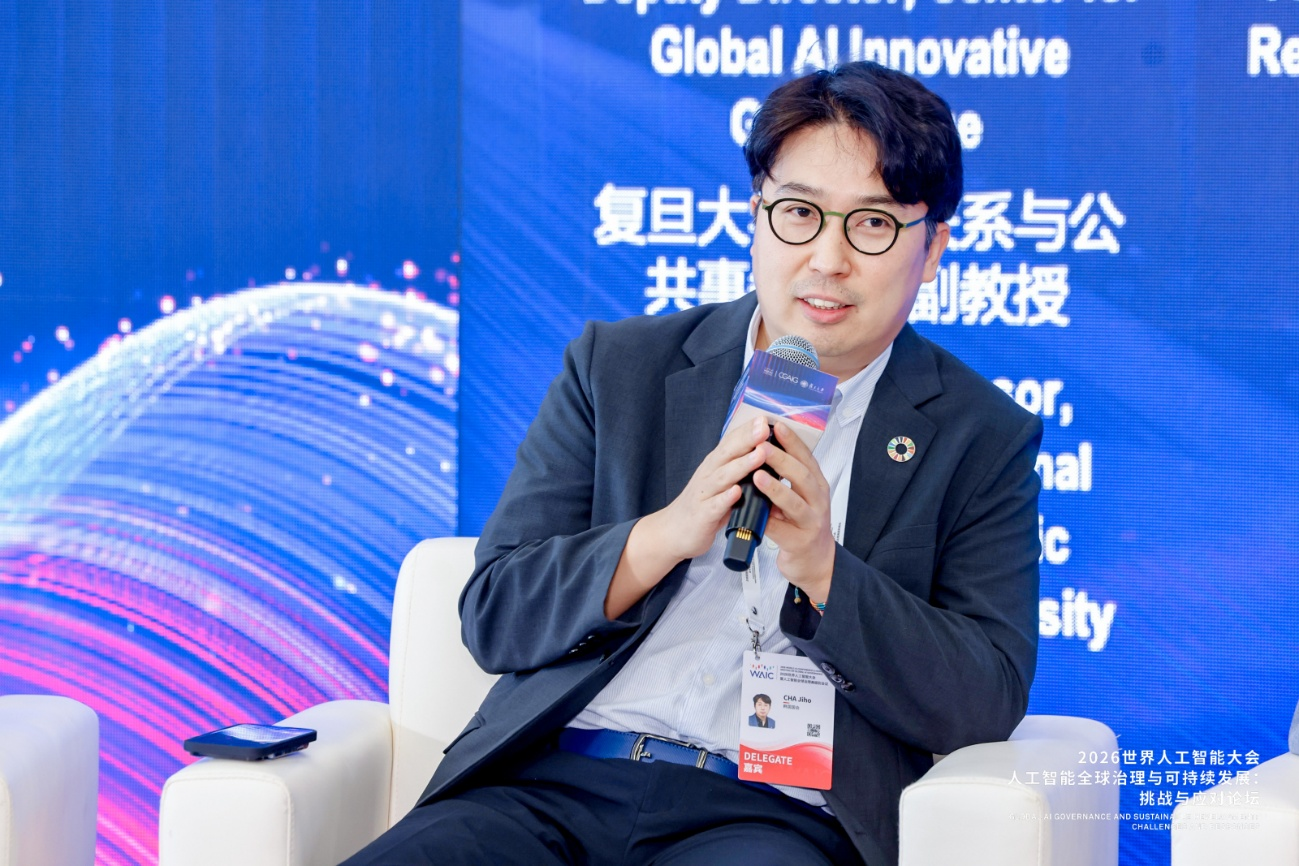
CHA Jiho
Vice President of Alibaba Token Hub; President of Qoder
The AI transformation is not merely an industrial transformation. It will systematically reshape social, economic and political structures. As production becomes less dependent on human labour, economic systems, labour institutions and social-protection arrangements that have sustained societies for centuries will come under increasing pressure. AI governance must therefore address not only technological risks and industrial competition, but also the design of the future social architecture. South Korea is developing the concept of an “AI Universal Basic Society,” in which AI is understood not merely as an industrial technology, but as a form of public intelligence and an intelligent infrastructure that can operate across borders. AI should first be used to strengthen the social safety net, including healthcare, education, inclusive finance and systems capable of identifying households in crisis before their circumstances deteriorate. At the global level, platforms such as a Global AI Hub could promote the sharing of infrastructure, tools and knowledge, helping developing countries overcome the limitations created by decades of insufficient human-capital accumulation and reducing the intelligence gap between countries. If AI is going to transform labour systems, economic systems and society as a whole, humanity should not passively accept the outcome. We still have the ability to make choices, redesign institutions and shape a more inclusive future.