

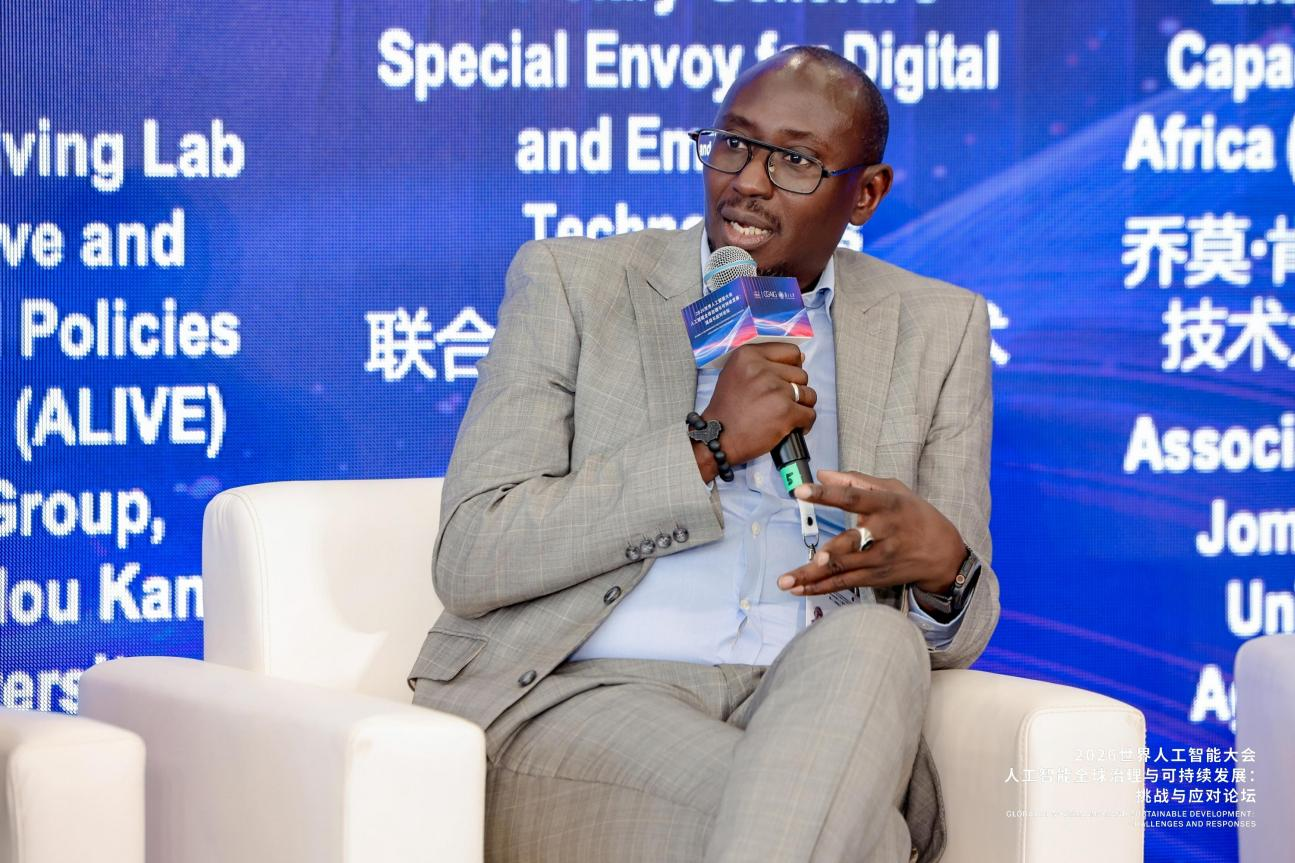
Seydina Moussa NDIAYE
Member of the International Advisory Board of the Centre for Global AI Innovative Governance; Director of the ALIVE AI Living Lab for Innovatve, and Viable Ethical Policies and Systems at Cheikh Hamidou Kane Digital University
Question: You have worked with the UN system for many years, participated in the High-level Advisory Body on AI and helped coordinate this network. In institutional and practical terms, what relationship should the capacity-building network develop with the United Nations system?
When countries have widely different AI capabilities, formal participation alone cannot produce a fair dialogue. The network's first responsibility is to help less-resourced countries develop the ability to understand, build and govern AI so that they can participate meaningfully in future international discussions. Projects should begin with needs identified by member states and be developed collaboratively by the participating centers, combining knowledge exchange with practical solutions. The network should also work closely with the United Nations system and other international mechanisms to address gaps in cross-institutional coordination. Each center must do more than strengthen its own organization: it should act as a national hub that brings government, academia, industry and civil society into a functioning AI ecosystem. Financial sustainability can likewise build on shared projects and the combined assets of the centers, including talent, expertise and local networks, thereby improving access to targeted funding. A fair Global North-Global South dialogue will only be possible when more countries possess the substantive capacity to take part.