

At the recent Silk Road Finance and Technology Forum (SRFTF) in Tashkent, Uzbekistan, Financial Times journalist Louise Lucas, who has long followed China's technology sector, posed a pointed question to Bobur Khodjaev, head of the Department of Financial Technologies, Digitalization and Artificial Intelligence of the Presidential Administration.
Europe places great emphasis on digital sovereignty. When it comes to AI technologies such as large models, will Uzbekistan remain neutral in its choice of technology sources and select the best available, or does it worry about binding itself to “Country A” or “Country B”?
The thrust of the question was clear: the implied “Country A” and “Country B” were none other than the United States and China.
Khodjaev's response was equally candid. As a developing country, he said, Uzbekistan wants access to all available technologies on the market. If comparing the United States and China specifically, American companies offer cutting‑edge AI chips and large models, while China provides open‑weight models at a far lower cost. Uzbekistan wishes to have access to both types of technology. At the same time, Uzbekistan is building its own sovereign AI infrastructure. The first supercomputer cluster has been launched at the Digital Government center last month, and computing power scale is planned to be tripled over the next 12 months. Uzbekistan is also developing its own domestic AI models for use in education, healthcare, public services, finance, and other sectors.

Local data center in Uzbekistan
Source: Serverspace
This exchange is highly representative. It directly reflects the genuine aspirations of Global South countries vis‑à‑vis Chinese and American AI companies: they want access to the most advanced and most affordable technologies without binding themselves to any single country or provider; they need external partnerships while gradually building their own controllable computing power, models, and application capabilities.
Two weeks ago, I was invited to participate in the AI for Developing Countries Forum (AIFOD) at the Palais des Nations in Geneva. Attendees included government officials and policymakers from Global South countries, as well as experts from AI companies, international organizations, universities, and research institutions. The discussions centered on how developing countries view and use AI.
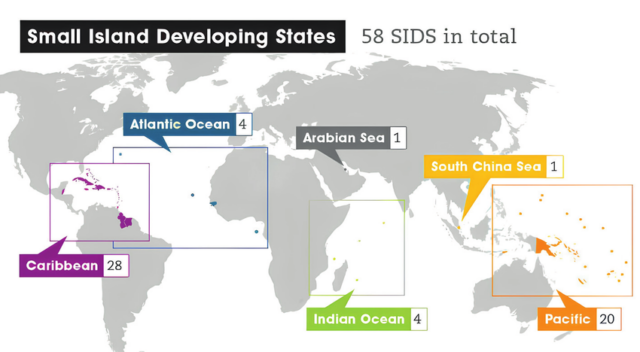
Many of these countries come from Africa, Small Island Developing States (SIDS), and Southeast Asia. They lack advanced chips and mature local cloud infrastructure, and their local language data is relatively scarce. The AI industries of China and the United States, and the broader Sino‑American technology competition, certainly formed an important backdrop. But the conference was not primarily concerned with who would win between China and the United States; rather, it focused on how Global South countries can leverage external technologies to build AI capabilities aligned with their own languages, resource endowments, and development objectives.
Source: thesustainableagency.com
Overall, several key impressions emerged from my participation:
First, many Global South countries expressed concerns about the entire AI industry chain being controlled by a handful of dominant companies. They worry about the difficulty of switching vendors after becoming overly dependent, and about AI systems becoming unusable if a vendor withdraws. Some experts noted, rather bluntly, that the model performance or open‑weight claims that large companies constantly emphasize become relatively less critical in the face of these concerns.
Second, the Global South's greatest expectation of Chinese AI companies is that they provide an alternative to the American tech giants. But their greatest concern is whether they will simply trade one set of dependencies for another. Experts at the conference pointed out that while Chinese open‑source models do have a clear cost advantage in the Global South, this advantage does not automatically translate into political trust. Simply replacing an American tech giant with a Chinese one does not truly solve the problem of over‑dependence. For example, a minister from Antigua and Barbuda noted that training and maintaining a model requires sustained investment, and inference services themselves cost money. If Chinese companies rely on low prices or even give away services for the long term, how will they form a sustainable business model? Will Chinese companies that now offer open‑weight models eventually close off their APIs? If we reduce our dependence on American companies, will we then become dependent on Chinese companies?
Third, model and token prices are only one factor among many for these countries, and often not the most important one. They care more about whether Chinese and American companies are simply selling models through cross‑border services trade, or whether they are willing to help build local AI capabilities—including local language adaptation, edge and offline deployment, data control, talent development, and the ability to nurture local businesses and developers. At a dialogue hosted by the ISEAS – Yusof Ishak Institute (ISEAS) in Singapore last year, ASEAN representatives raised similar concerns. Southeast Asia is linguistically diverse, and countries differ greatly in culture, institutions, and social context. A general‑purpose model trained in the United States or China, when transplanted directly, often fails to understand the local context properly and struggles to enter public services and daily production.

Source: OECD
Fourth, small models and edge AI have high practical value in the Global South. Many regions have limited electricity and network conditions and are ill‑suited for continuous invocation of large cloud‑based models. Models that can run on ordinary devices, operate with low bandwidth, process data locally, and continue functioning even when disconnected from the internet are often more valuable than those that top the leaderboards. Whether a model supports flexible replacement also directly affects whether customers are willing to adopt it over the long term.
Fifth, many experts, particularly those from small and medium‑sized enterprises in Global South countries, noted that government procurement could become an important tool for shaping the Global South AI market. Local enterprises generally hope that government procurement will not simply compare price and performance, but will also require local deployment, local data residency, local language support, and talent training. In some projects, technology transfer, system portability, and vendor exit arrangements could be included to prevent the entire system from becoming inoperable if a foreign vendor ceases service.

Source: OECD
Sixth, the Global South market places great importance on so‑called model portability and multi‑model architectures. Some participating experts pointed out that while model portability and multi‑model architectures do reduce customer dependence on any single model in the short term, in the long run they are more likely to build trust and reduce local government and public concerns about vendor lock‑in. For Chinese companies, if they want to make good progress in developing countries going forward, a more appropriate positioning would be not to make customers entirely dependent on their own models, but to become a very important supplier within an open, replaceable local AI ecosystem.
Seventh, computing power, energy, and water consumption are likely to become increasingly important issues. Multiple experts from the Global South stressed that discussions of green AI in their countries are no longer merely principled environmental concerns, but are gradually becoming actual procurement and regulatory requirements. In the future, governments and large clients will pay more attention to these aspects—such as how much computing power is needed to complete a given task, where the energy comes from, how much water is used, and what emission reduction measures have been taken. Therefore, small models and efficient architectures not only offer cost advantages but may also confer environmental competitiveness. For countries with strained electricity and water resources, model efficiency is itself a critical condition for project viability.
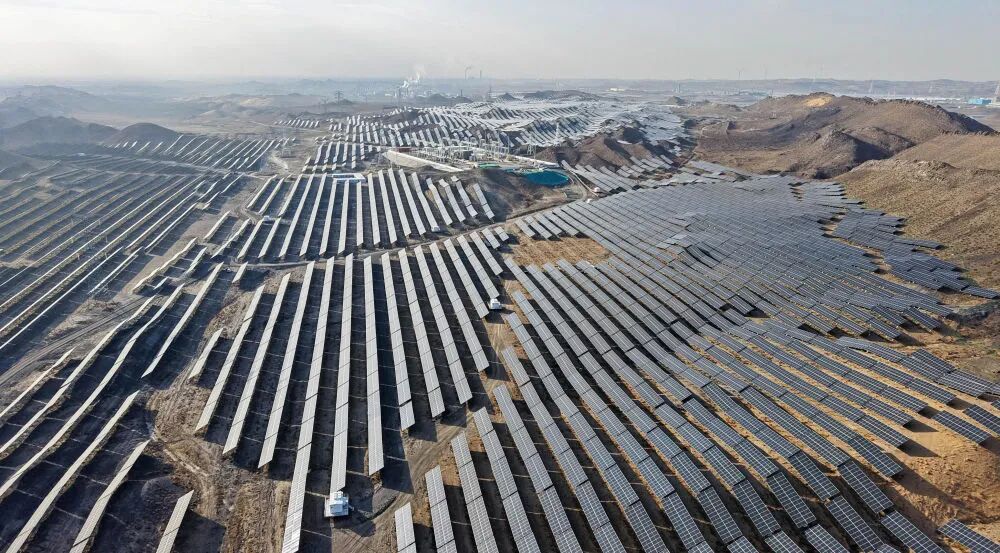
A 2‑million‑kW green‑power project supporting China Datang’s cloud data center near the Tengger Desert in Zhongwei, Ningxia Hui Autonomous Region.
Photo by Lu Yang/Xinhua
Eighth, the Global South acknowledges that AI can increase productivity and may create new technology and entrepreneurial jobs, but it is unwilling to simply accept a development model centered on layoffs and labor reduction. The approach they see as more aligned with Global South interests is one that uses AI to enhance workers' capabilities, support small and medium‑sized enterprises, protect data workers, train young people to become technology creators, and ensure that the skills, enterprises, and income generated by AI truly remain local.

Source: OECD
Given the current international landscape, Chinese models face clear geopolitical risks in entering the U.S. market. Outside the United States, the European Union is one of the most important high‑value markets, but Sino‑European relations remain highly uncertain, and market access and compliance costs are high. The Global South has thus become a critical region in the Sino‑American AI competition and the shaping of the global AI ecosystem. Carefully listening to the demands of these countries and designing cooperation programs tailored to their development stages, infrastructure, and governance needs is the proper meaning of “Token going global.”
In sum, the voices I heard at this UN conference were broadly consistent with the statements of the senior Uzbek official: many countries are not seeking to completely replace American models with Chinese ones, but rather to retain an alternative option alongside American suppliers. They are unwilling to entrust all their AI needs to a single country, let alone depend on a single company. For these countries, introducing Chinese models is both a technological and cost choice, and a way to diversify risk, preserve bargaining power, and maintain autonomy.
Chinese models are currently priced lower, which is an important advantage in competing for the Global South market. But whether this can be sustained over the long term bears watching. American companies are also continuously lowering invocation costs and launching cheaper small models; NVIDIA is expanding its ecosystem through open models like Nemotron. At the same time, DeepSeek recently raised some of its API prices. This illustrates that model pricing is always in flux: American companies will also open up and reduce prices, and Chinese companies must also find a balance between low‑price competition and commercial returns.
In the future, a tiered usage pattern may gradually take shape in the Global South. The most complex tasks with the highest requirements for capability and reliability will use the most powerful frontier models of the time; routine office work, local language tasks, and cost‑sensitive tasks will make greater use of cost‑effective or open‑weight models; and sensitive scenarios such as government, finance, and critical infrastructure will emphasize local deployment, data non‑export, and even completely disconnected operation. Of course, this division of labor will not necessarily follow strict national lines. American companies will also provide cheap open models, and Chinese models may also enter the frontier in areas such as programming, reasoning, and specific industries.
The trend toward “Sovereign AI” among Global South countries is already quite evident and has its own internal logic. After all, AI is too large and too important to be safely entrusted entirely to other countries. Representatives from some countries also noted that developing countries had already suffered in the internet era, becoming highly dependent on the hardware, software, and platform ecosystems of China and the United States, and must not let this happen again in the AI era.
Of course, sovereign AI does not mean that every country must train a large model from scratch. Most countries lack sufficient computing power, nor is it necessary. A more realistic goal for these countries is to control their own data and deployment environments, be able to adapt models to local languages and institutions, and retain the ability to switch models and vendors.

Source: OECD
This also requires us to rethink the way Chinese models go global. Selling model capabilities to overseas customers directly through APIs is relatively asset‑light and can scale quickly, but it has issues of trust, data security, and price competition. The switching cost for bare models is declining; once a product with better performance or a lower price appears, customers may choose a new supplier.
Of course, migrating a complete AI system is not easy. After a model enters a production environment, customers must also re‑adjust prompts, tool calls, knowledge bases, security testing, and workflows. Therefore, the stickiness in the future will lie in the systems and applications built around the model; the API itself will become less and less important.
Chinese companies need to be wary of a risk: if Chinese models only take on cheap, routine tasks over the long term, they may become locked into the low‑price market. Usage volume may be large, but profit margins and brand influence will be difficult to improve. A truly sustainable path is to enter the market with high cost‑effectiveness and open models, and then build revenue through deployment, updates, security, industry applications, and long‑term services. For example, participating in local language, government system, and industry application development can help companies move beyond pure price competition. Because in this case, what they are selling is not just tokens, nor a single model, but the capability to help customers run and develop AI over the long term.

Source: OECD
Participating in the “Sovereign AI” construction of Global South countries can allow Chinese companies to obtain broader revenue streams than model invocation fees. Model weights can be open‑sourced, and companies can still charge for local deployment, inference services, and long‑term operations and maintenance. Governments and large enterprises will also purchase security assurances, system updates, and local language adaptation. These projects have higher upfront costs and require cultivating local teams, but contracts typically last for several years and customer relationships are more stable. The margin per token may be smaller, but the revenue from the entire project and customer lifetime value may actually be higher.
NVIDIA's open‑sourcing of Nemotron is not primarily about making money from the model itself, but about using the model to drive demand for chips, software, and infrastructure. Microsoft offers sovereign clouds that can run locally or even completely offline, giving customers more control while Microsoft still earns revenue from software licensing, governance tools, and long‑term services. These can all provide some inspiration for Chinese companies.
But this model is not something that all Chinese model companies can directly replicate. Companies with cloud, chip, and data center capabilities are better positioned to drive demand for entire infrastructure suites through models. Companies that control industry customers and application scenarios can build stickiness through workflows. Pure‑play model companies, on the other hand, need to develop enterprise deployment, continuous updating, and security services, or partner with local cloud providers, telecom operators, and system integrators; otherwise, after open‑sourcing weights, most of the profits may be captured by partners.
Sovereign AI projects are not necessarily inherently high‑margin. They typically involve significant investment, long procurement cycles, and may involve local equity participation, technology transfer, and personnel training. If Chinese companies customize a complete system for each country they enter, they risk becoming low‑margin system integrators. Therefore, the core platform needs to be as standardized as possible, while local language, data, and industry functions are built as combinable modules.
It should be noted that Chinese companies do not need to choose between API and sovereign AI strategies. Companies can certainly test the market through APIs and managed services first, then offer local cloud regions or dedicated instances to large customers; for government and critical infrastructure customers, they can further provide open weights, local deployment, and long‑term partnerships, deeply participating in the construction of local sovereign AI.
Original Link: https://mp.weixin.qq.com/s/PjdB6t_CsAMiNUJouXo8WQ?scene=25&sessionid=#wechat_redirect