

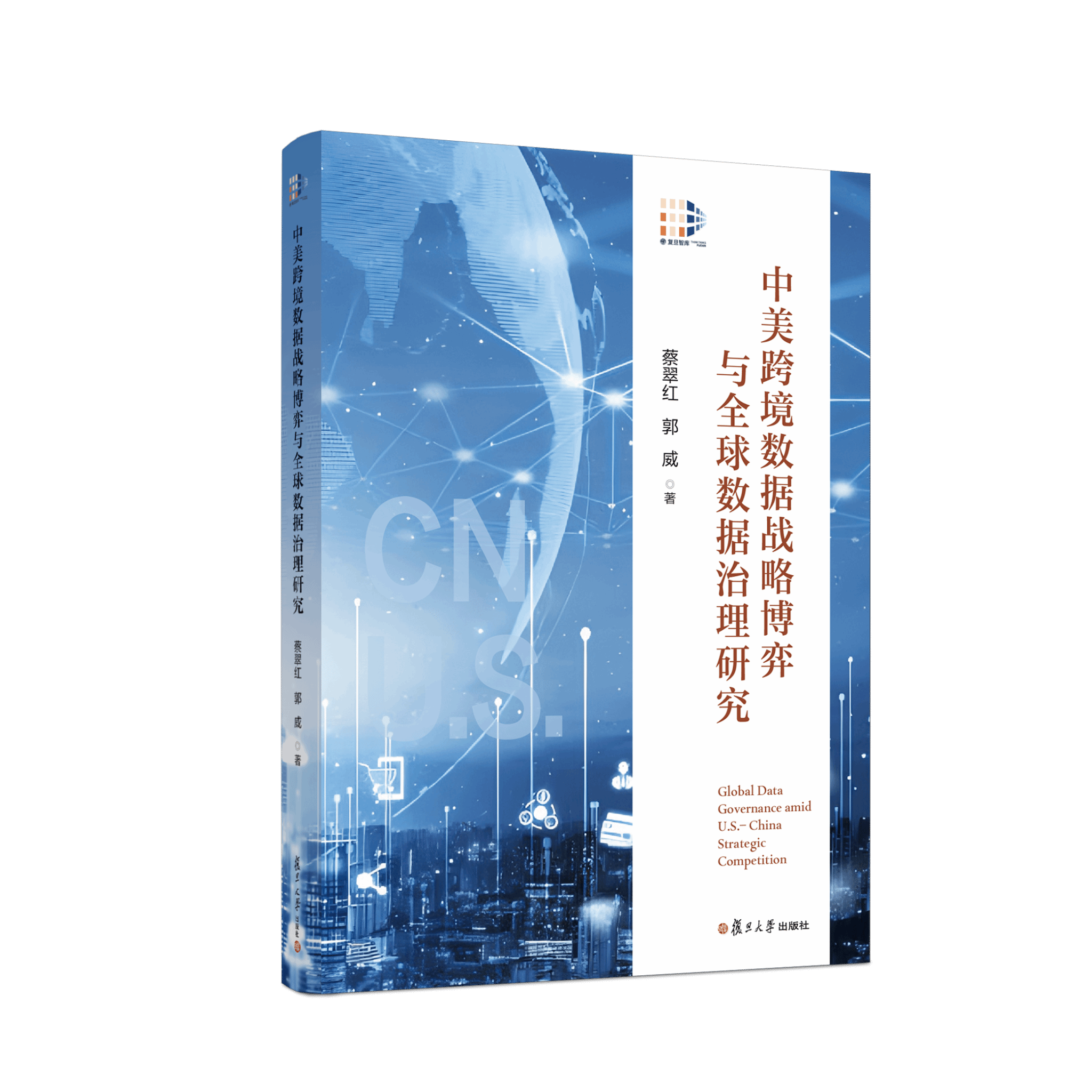
By CAI Cuihong and GUO Wei
Fudan University Press, September 2026
317,000 Chinese characters
01 About the author:
CAI Cuihong
CAI Cuihong is Deputy Director of the Center for Global AI Innovative Governance (CGAIG), Professor at the Center for American Studies, Fudan University, a doctoral supervisor, and holder of a Ph.D. in International Relations. Her research focuses on digital governance, digital strategy, cyber politics, and international relations. She has led more than ten research projects at the national and provincial or ministerial levels, including major and key projects funded by the National Social Science Fund of China and projects supported by the Ministry of Education.
Her Chinese-language monographs include Global Cyber Governance, Cyber Politics in U.S.–China Relations, Political Development in the Cyber Age, U.S. National Information Security Strategy, and Internet and International Politics. Her English-language books include Cyber Governance in China: Balancing State Centrism and Collaborative Dynamics and Cyber Politics in U.S.–China Relations. She has published over 150 academic articles in leading journals, including Social Sciences in China, World Economics and Politics, China International Studies, Qiushi, Asian Perspective, and Policy & Internet.
GUO Wei
GUO Wei holds a master's degree from the School of International Relations and Public Affairs, Fudan University. His representative publications include Comparative Analysis of Policies on Cross-border Data Flow between the U.S. and China and Cross-Border Data Regulation amid Geopolitical Competition: Drivers, Models, and Prospects.
02 About the book:
Cross-border data flows have become a key arena of international political and economic competition in the digital age. Focusing on strategic competition between China and the United States, this book examines how cross-border data flows have evolved from a technical and economic issue into a matter of national security, institutional competition, and global governance.
Drawing on a systematic review of data governance policies in China, the United States, the European Union, South Korea, Russia, India, and other major jurisdictions, the book compares the institutional principles, regulatory instruments, and strategic motivations underpinning different governance models. It maps the multipolar and fragmented landscape of global data governance, revealing the power dynamics and institutional differences underlying competition over data rules.
The book offers a valuable resource for researchers and policy practitioners in international relations, digital governance, cybersecurity, and international law, as well as readers interested in the evolving global digital order.
03 Foreword
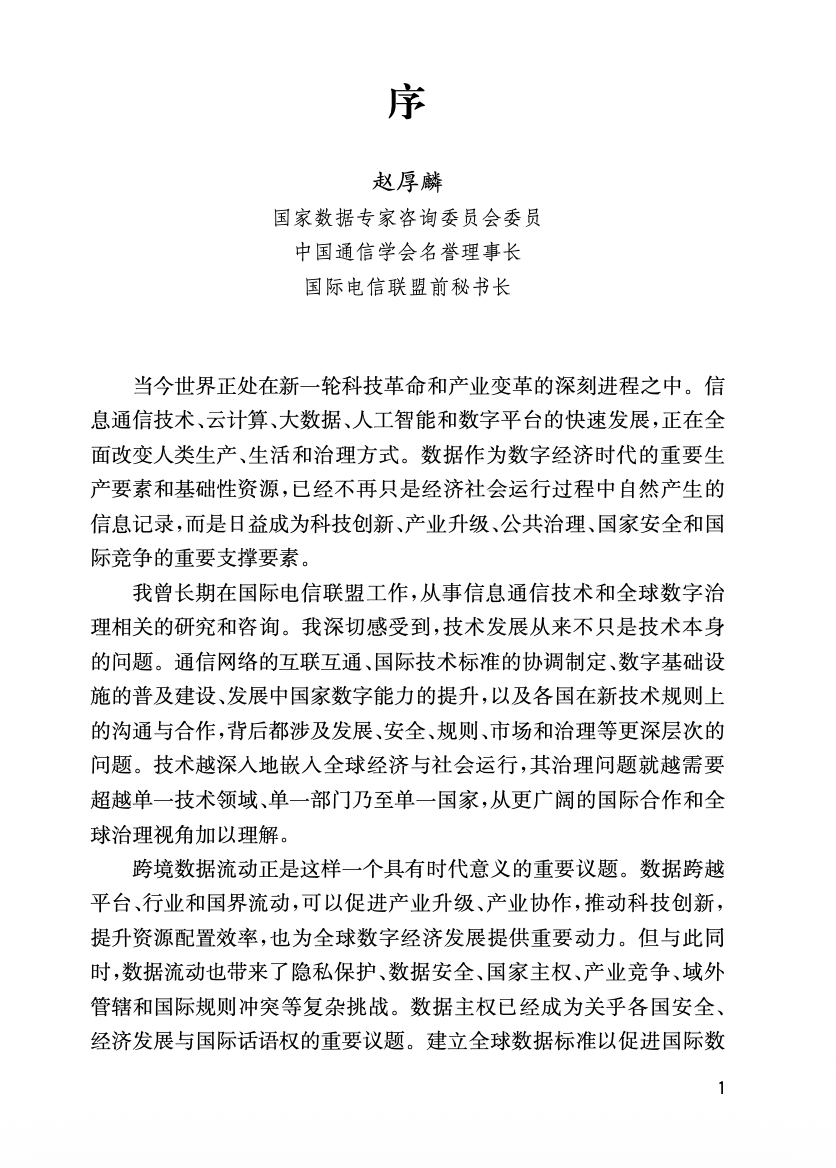
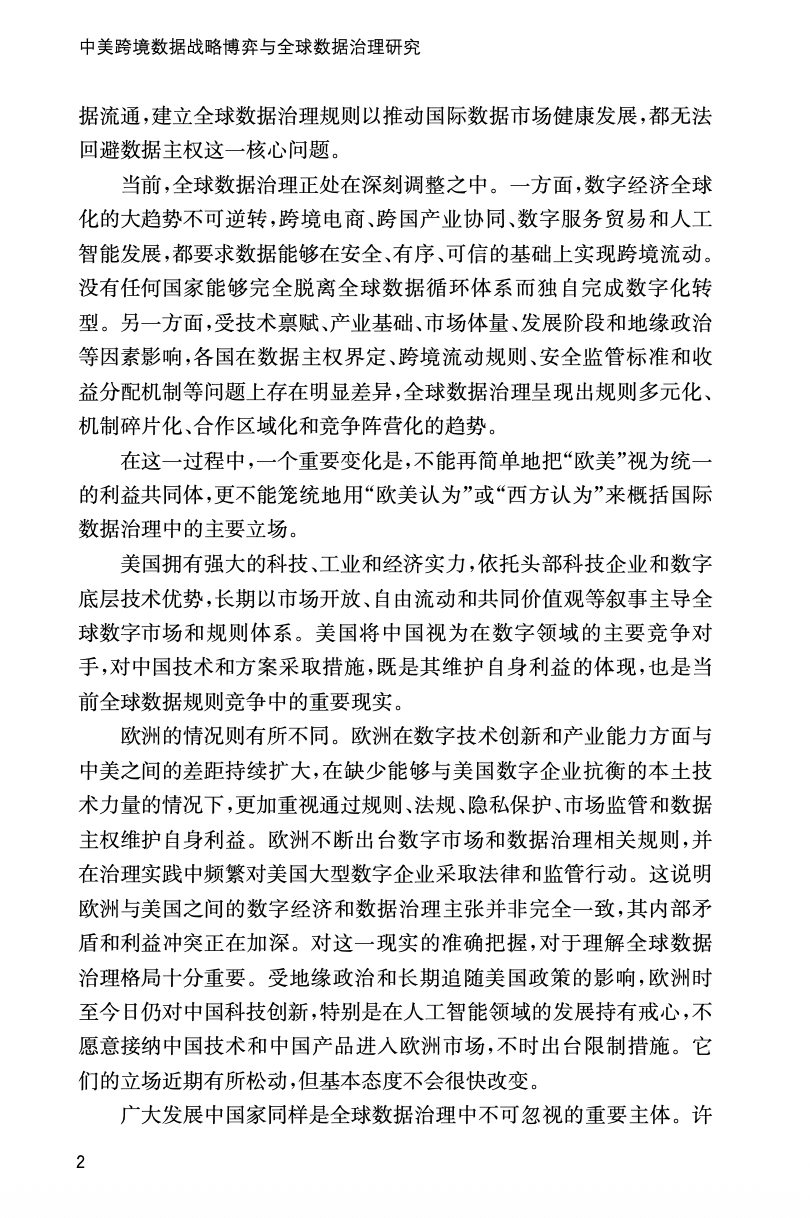
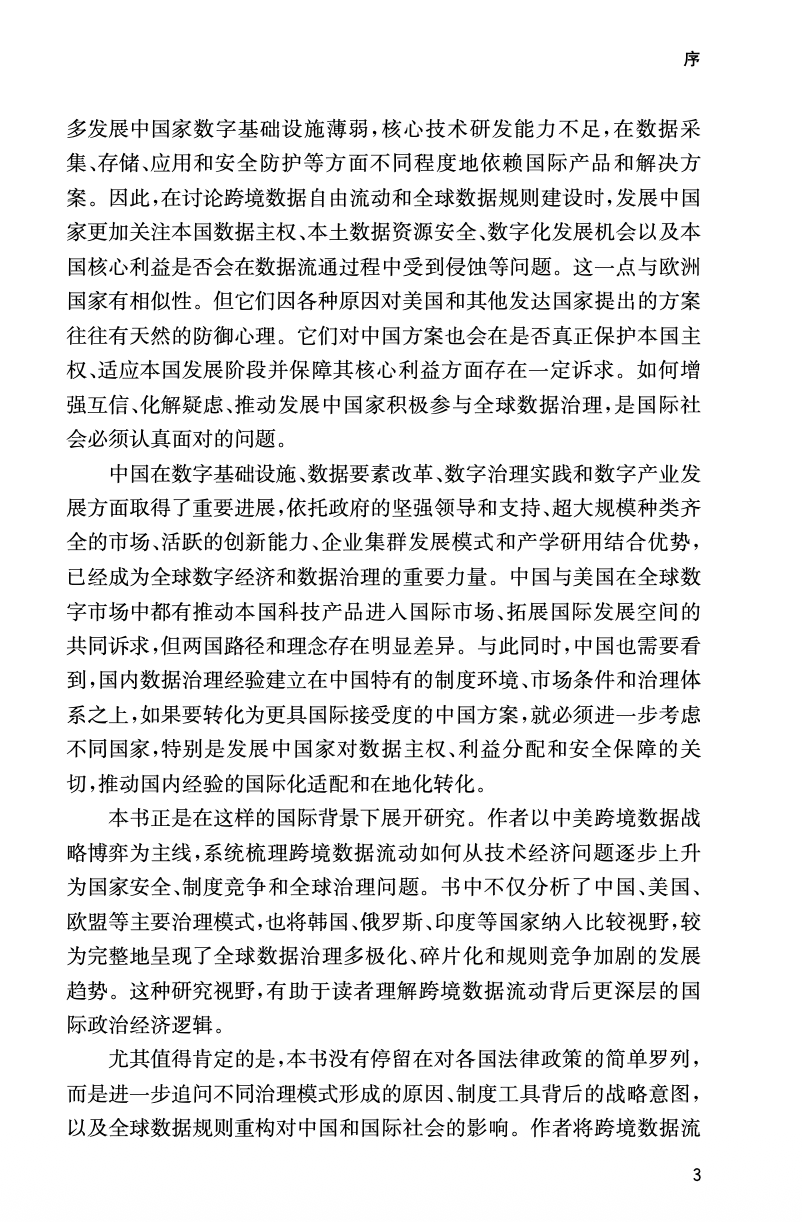
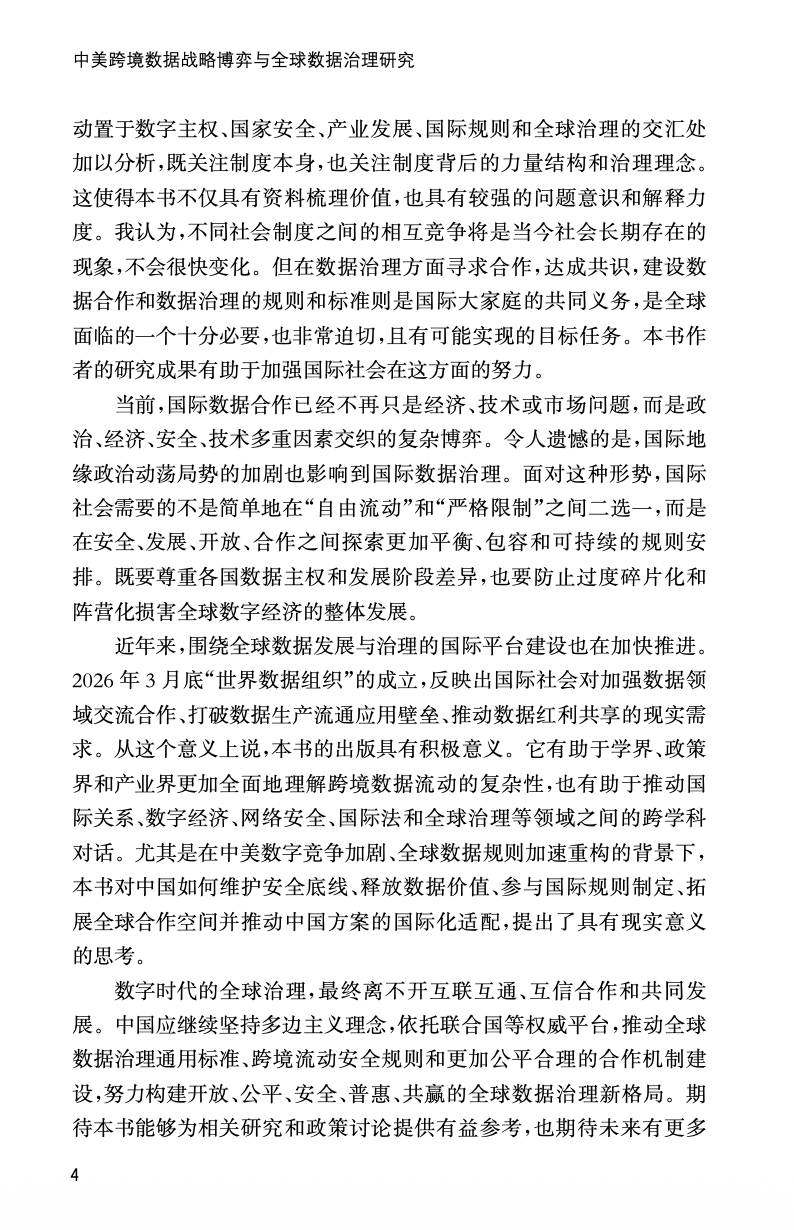
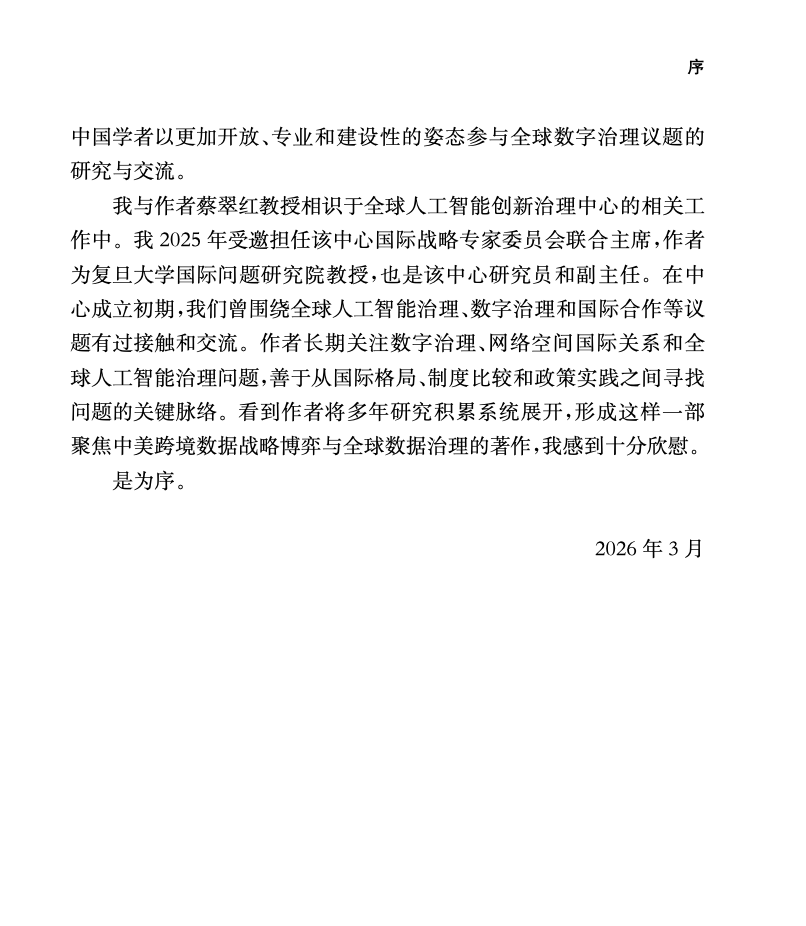
ZHAO Houlin
ZHAO Houlin is Co-Chair of the International Advisory Board of the Center for Global AI Innovative Governance(CGAIG); Former Secretary-General of the International Telecommunication Union (ITU); Honorary Chairman of the China Institute of Communications; Adjunct Professor at Fudan University. Zhao Houlin is an outstanding figure in China’s and the World’s telecommunications field. Over 36 years of service in ITU, and in particular during his tenure as Secretary General of the ITU from 2014 to 2022, he vigorously promoted the development of the global digital economy, facilitated the development of high-speed internet and smartphones globally, bridged the digital divide, and achieved the unification of global mobile communication standards. Furthermore, he dedicated himself to promoting the construction of information and communication infrastructure, achieving remarkable results, particularly in developing countries.
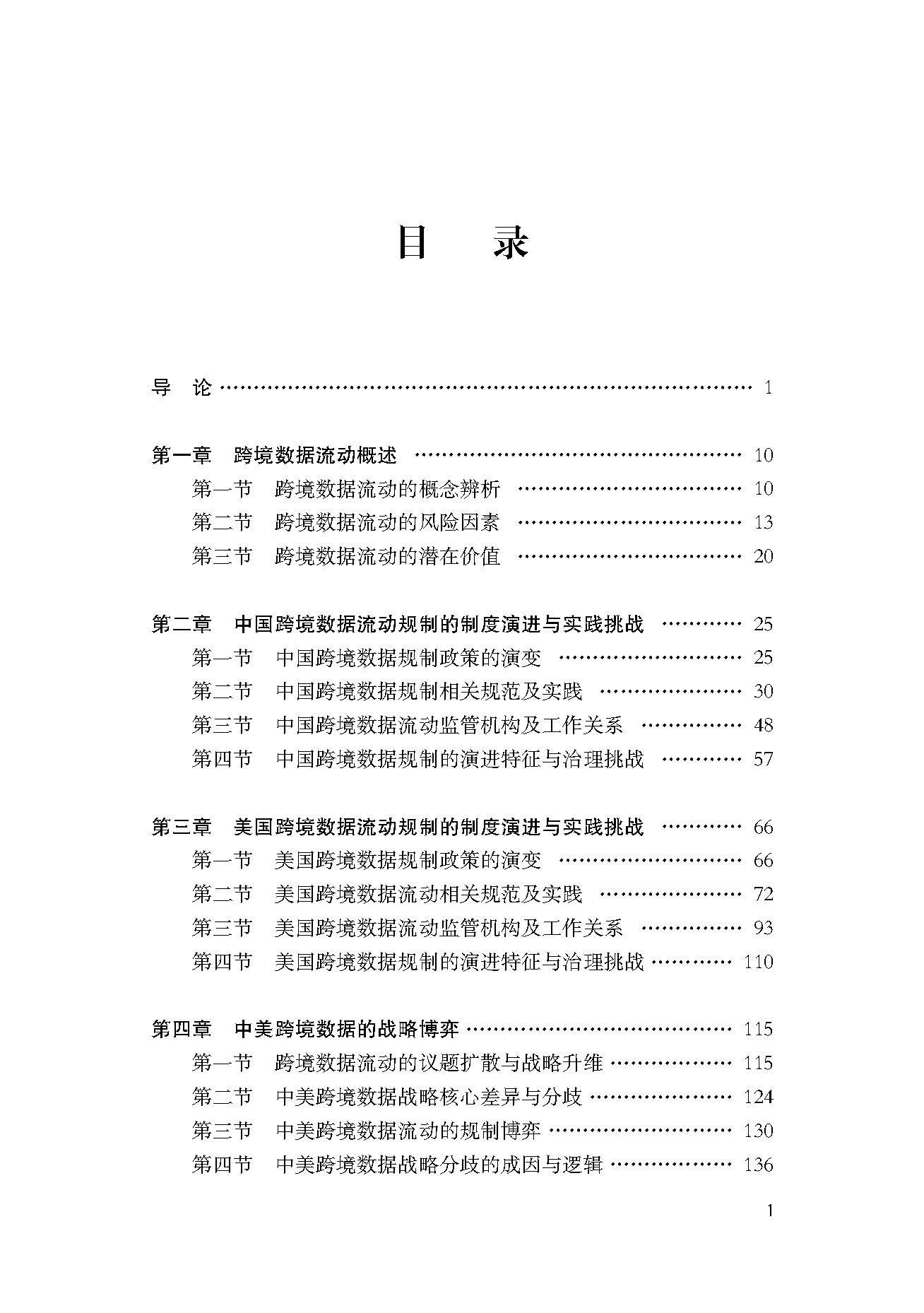
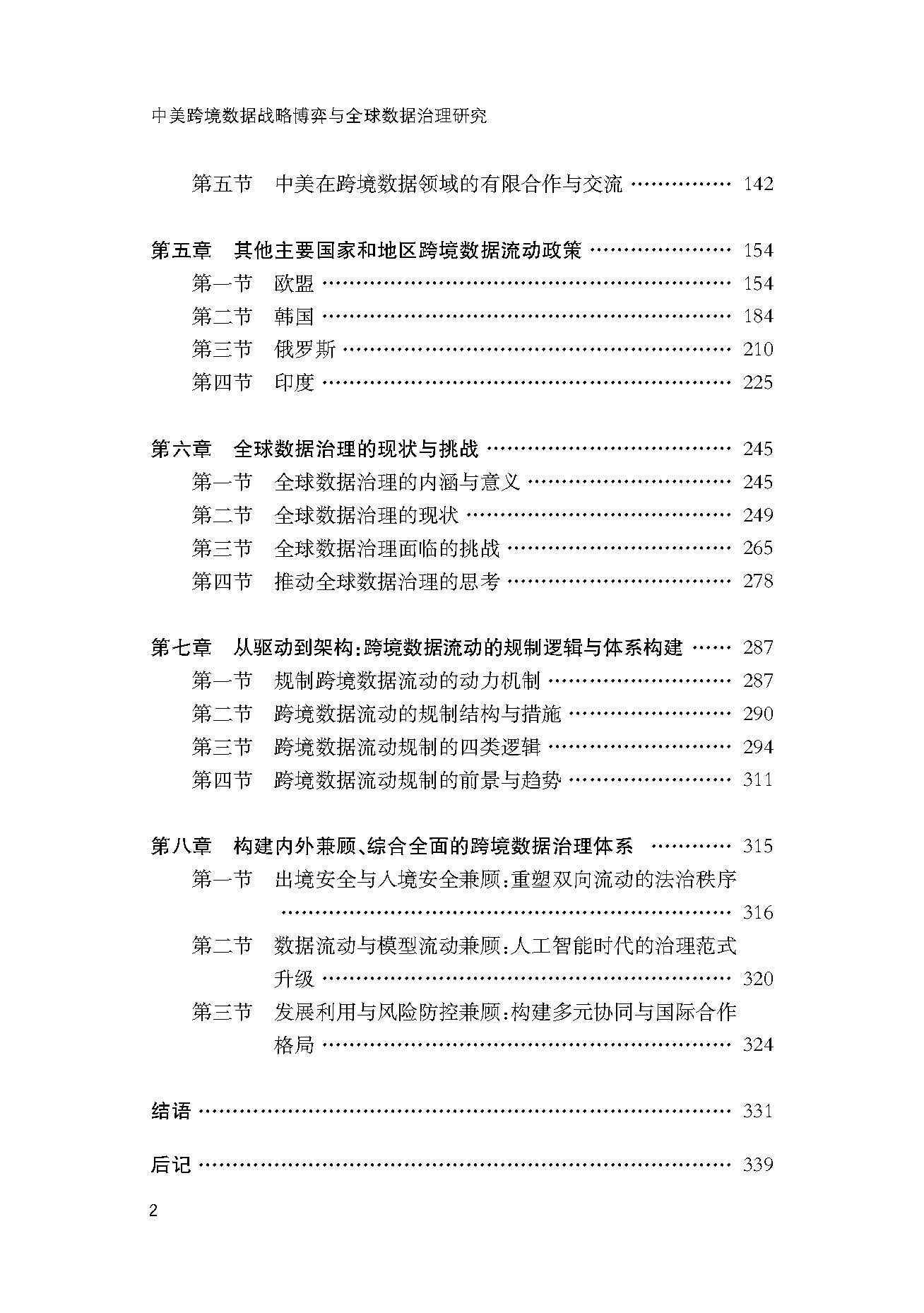
04 Catalog