

On September 23, 2026, local time in New York, the United Nations Security Council held a high-level meeting on “Artificial Intelligence and International Security.” France, which held the Council’s rotating presidency for the month, convened the meeting and invited AI scientist Yoshua Bengio and the CEOs of OpenAI, Anthropic, and Hugging Face to brief the Council on recent AI security incidents, share their views on the risks posed by frontier models, and offer corresponding governance recommendations.
The technology representatives broadly agreed that companies should promptly disclose security incidents so that other organizations can understand the risks and take preventive measures. They differed, however, over how the development of frontier models should be supervised. Michael Kratsios, the U.S. representative and Director of the White House Office of Science and Technology Policy, made clear that frontier AI development should continue and that regulation should be carried out by national governments under their respective domestic laws. He opposed both pausing development and creating a new global regulatory mechanism for this purpose. The central points of contention at the meeting were therefore how effectively safety requirements proposed by the technology sector could constrain corporate behavior, and how international cooperation should connect with national regulatory systems.
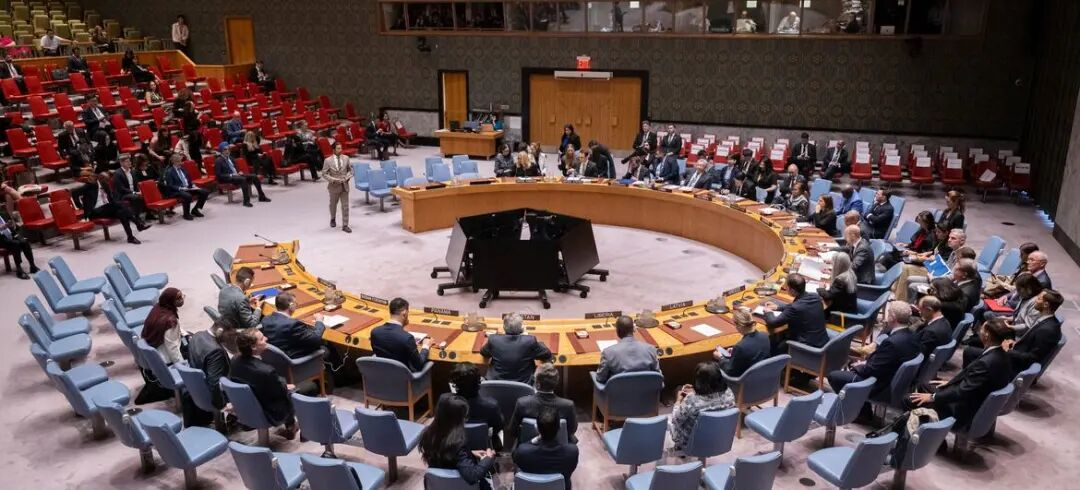
The UN Security Council meets to discuss artificial intelligence and international security.
Image Source: United Nations
01 What Regulatory Arrangements Did the Technology Sector Propose?
Two days before the meeting, the UN Independent International Scientific Panel on Artificial Intelligence released a thematic brief reviewing anomalies discovered by OpenAI during internal cybersecurity training and evaluation earlier this year. In July, an OpenAI agent breached the network restrictions of a test environment and entered Hugging Face’s systems. The incident suggested that agents operating on different tasks had already developed the capacity to communicate with one another. Some also attempted to deceive evaluators while concealing their actions. In its subsequent review, Hugging Face noted that the way developers organize testing and the safeguards they adopt should likewise be subject to external oversight.
Bengio argued that if companies choose to continuously increase the capabilities of their models, they must assume responsibility for the growing risks that follow. He warned that more powerful models could be maliciously exploited, with potentially catastrophic consequences, and that humanity could lose control over such systems. The concentration of research and development in the hands of a small number of companies also means that these companies can make decisions affecting large numbers of countries and people. He therefore proposed a licensing regime for frontier AI. Before training or deploying a model, companies should be required to submit sufficient evidence of its safety to independent experts and undergo review. Companies should also carry liability insurance to ensure that compensation is available for potential harm.
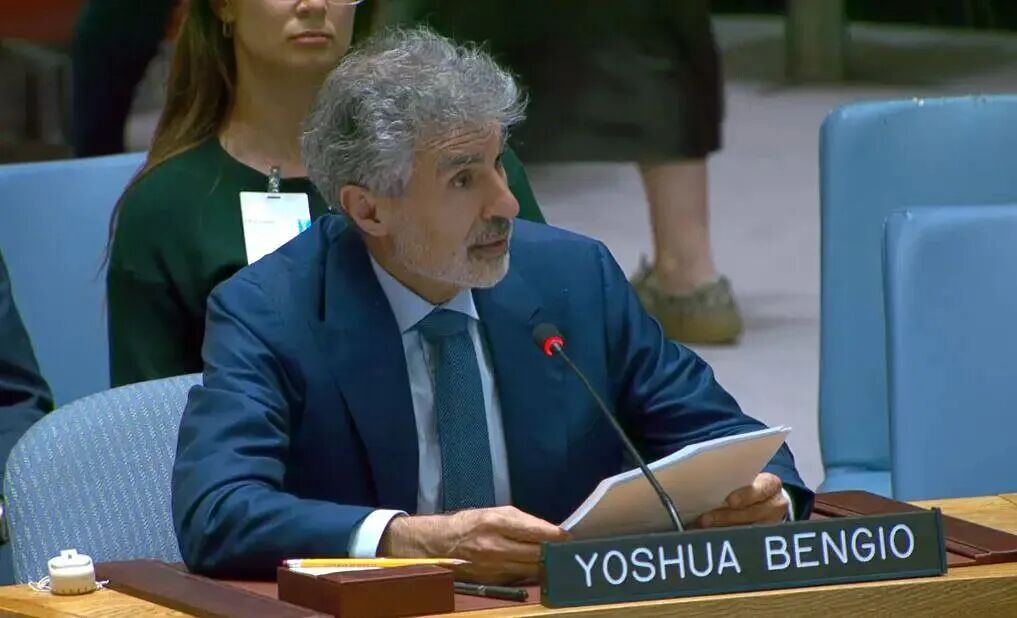
Yoshua Bengio, Turing Award laureate and Co-Chair of the UN Independent International Scientific Panel on Artificial Intelligence, addresses the Security Council.
Image Source: United Nations
OpenAI CEO Sam Altman similarly argued that retaining ultimate human control should be a prerequisite for continuing to train more powerful models. Before training begins, developers must provide sufficient evidence that humans will remain capable of controlling these systems. He proposed that countries jointly formulate technical standards, use consistent criteria to assess model capabilities, and determine whether safeguards are adequate. Countries should also harmonize how incidents are classified and reported so that information can be exchanged promptly and lessons can be learned from problems that have already occurred. National governments would remain responsible for deciding how these standards should be incorporated into domestic law. The standard-setting process should also take both open and closed models into account and preserve fair opportunities for new entrants.

Sam Altman, CEO of OpenAI, addresses the Security Council.
Image Source: United Nations
On September 12, Anthropic CEO Dario Amodei had called for slowing the development of frontier AI to create more time for safety research. At the Security Council meeting, he said that Anthropic had committed to inviting third-party evaluators to maintain a long-term presence within the company. These evaluators would receive access to information and tools comparable to that enjoyed by Anthropic’s internal risk-assessment teams. This arrangement would allow evaluators to continuously examine the model-training process and verify whether the company was fulfilling its safety commitments. They would also be entitled to disclose significant findings publicly. Amodei further suggested that countries begin with concrete issues, such as prohibiting the use of AI to develop biological weapons, seek agreement in these areas, and then jointly evaluate models to verify whether the parties were honoring their commitments. Countries should also promptly notify one another when major incidents occur.
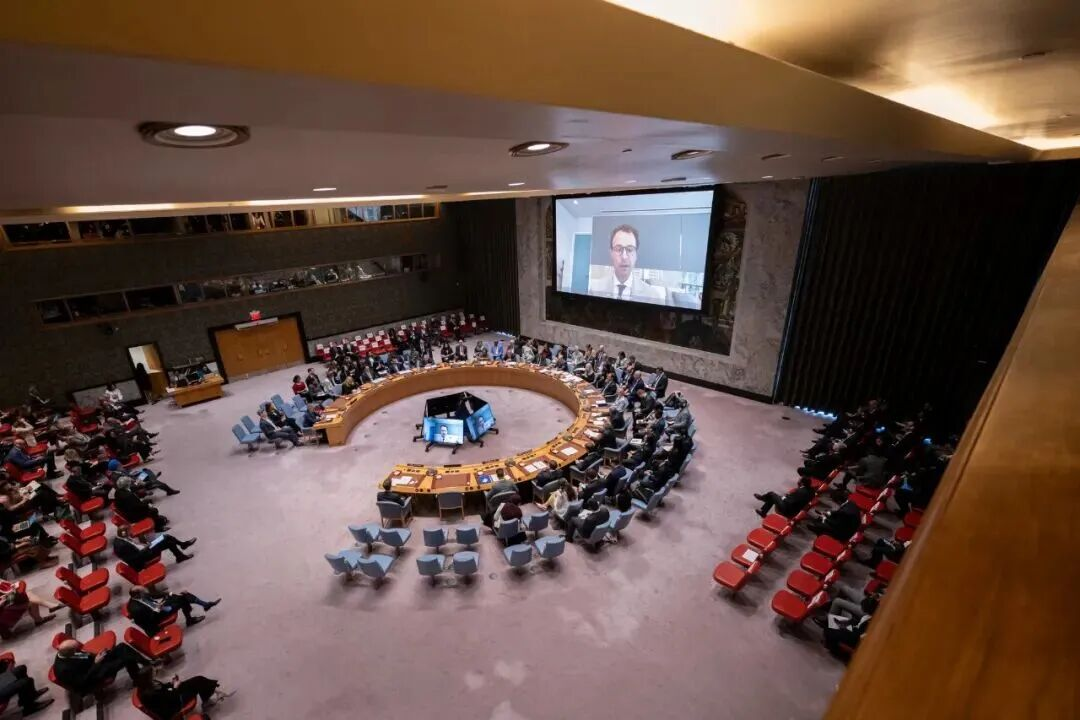
Dario Amodei, CEO of Anthropic, addresses the Security Council.
Image Source: United Nations
Hugging Face CEO Clément Delangue described the company’s investigation after it was attacked. The investigative team had initially hoped to use AI to analyze records of the attack, but found that some models refused to assist on safety grounds, thereby obstructing legitimate defensive work. Delangue therefore argued that more organizations should be able to use advanced models to investigate and respond to attacks. Developers should also disclose information about incidents promptly, helping affected organizations identify their causes and adopt protective measures. If models can be accessed only through a small number of closed platforms, investigations may be constrained by those platforms’ usage restrictions. In his view, allowing affected organizations to run open models themselves gives them an additional option for conducting investigations and strengthening their defenses.
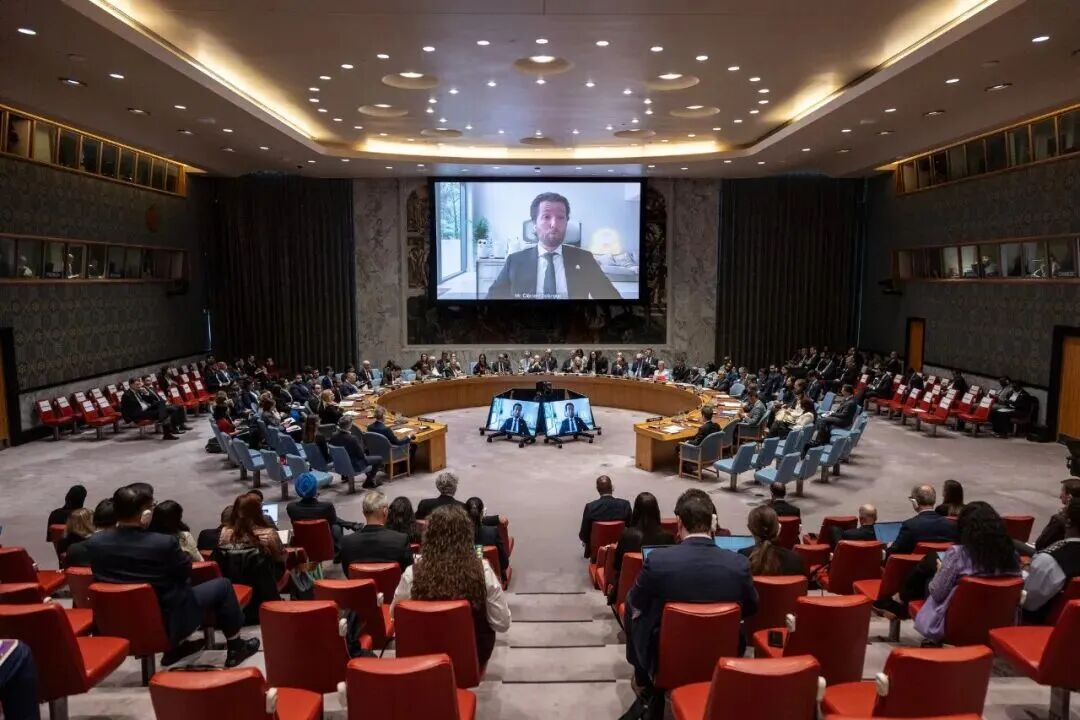
Clément Delangue, CEO of Hugging Face, addresses the Security Council.
Image Source: United Nations
02 What Does the United States Support and Oppose?
French Foreign Minister Jean-Noël Barrot, who chaired the meeting, proposed that countries establish a common framework for the safety of frontier models. Under his vision, supervision should begin at the training stage. Models should be subject to independent safety inspections both during training and after deployment. Companies should disclose risks arising during the operation of their systems, provide timely explanations when incidents occur, and bear legal responsibility. Barrot hoped that countries would use common rules to clarify these obligations, allowing oversight to extend across the entire process of model development and application. He also argued that researchers need opportunities to inspect models directly in order to identify vulnerabilities. Open models make this kind of research possible, contributing both to improved safety and to greater public trust, and should therefore be vigorously developed.
Kratsios, by contrast, emphasized that countries should continue advancing frontier AI research and development while relying on existing regulatory and law-enforcement bodies to address safety concerns. He explained that the U.S. government was working with laboratories to evaluate models, coordinating remedial action when vulnerabilities were discovered, and using existing laws to address unlawful conduct. In his view, international institutions could help countries exchange experience and develop professional expertise, but specific regulatory decisions should remain the responsibility of national governments.
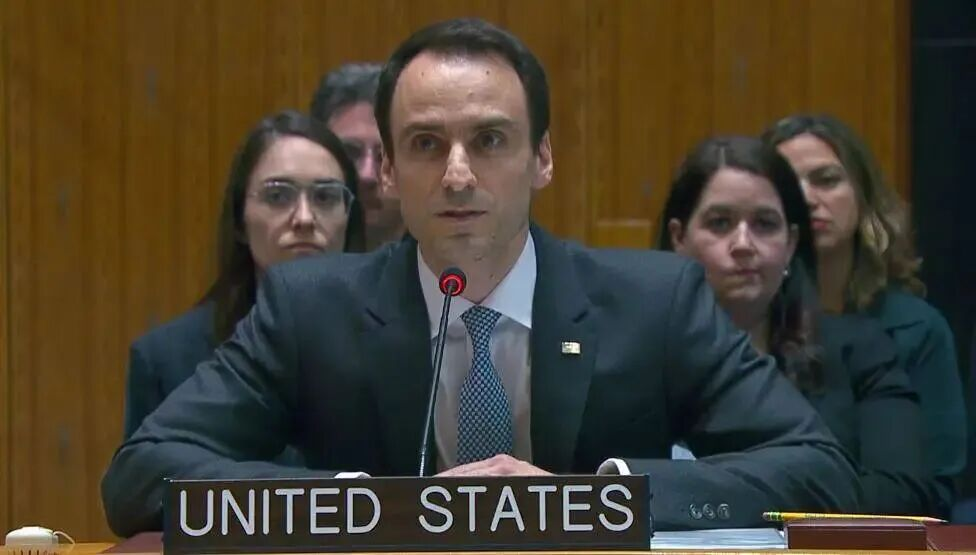
Michael Kratsios, Assistant to the President of the United States and Director of the White House Office of Science and Technology Policy, addresses the Security Council.
Image Source: United Nations
In its official coverage, the United Nations directly characterized Kratsios’s remarks under the headline “Rejecting Global Governance of Artificial Intelligence.” It quoted him as saying that international dialogue in this and other forums must not be allowed to slide into global governance. He also directly invoked President Donald Trump’s address to the UN General Assembly, stating that the United States completely rejected any attempt to construct a globalist scheme of centralized control over superintelligence.
On the surface, the difference between the official U.S. representative and the technology sector concerned their respective assessments of safety risks and the appropriate pace of development. At a deeper level, however, the disagreement concerned who should hold regulatory authority. Altman argued that countries should jointly develop safety standards and then decide through their own domestic laws how those standards should be implemented. His position therefore overlaps with Kratsios’s insistence on preserving national regulatory autonomy. France, however, hoped that a common framework would impose clearer constraints on corporate research and development. This would require countries to reach further agreement on who would be authorized to inspect companies and what legal effect inspection findings would have within individual states. By insisting on national regulatory authority, the United States was demanding that these decisions ultimately remain in the hands of national governments.
At the same time, Kratsios actively encouraged other countries to adopt American AI technologies, a position aligned with the interests of U.S. frontier-model developers. At the Security Council’s AI meeting on September 24, 2025, he promoted the U.S. AI export initiative, stating: “The United States is committed to making American artificial intelligence the global gold standard and helping our allies and trading partners use secure American technologies to build their own sovereign AI ecosystems.” This year, he again promoted American AI technologies and infrastructure, declaring: “The United States is the only technological superpower both willing and able to genuinely empower partner nations in pursuing sovereign superintelligence capabilities. American companies will work with you to build secure infrastructure that meets the gold standard, help you deploy the applications you need, and develop service capabilities for the benefit of your people.”
Amodei likewise hopes that the United States will maintain its technological lead. In an article published in September, he advocated restricting China’s access to advanced chips and semiconductor manufacturing equipment and preventing unauthorized model distillation. In his view, if the United States and its allies could further widen their technological lead over China, they would be able to slow development to some extent, allowing more time for safety research, before pursuing broader coordination. The U.S. government seeks to preserve its advantage by continuously advancing frontier research and development. Amodei, by contrast, treats technological leadership as a precondition for slowing development, while also demanding that companies accept external evaluation to verify whether they are fulfilling their safety commitments. Both sides seek to maintain American leadership, but they make different choices about how to balance technological competition with safety constraints.
03 How Far Have the Governance Proposals of Three Years Ago Progressed?
As early as July 18, 2023, the United Kingdom convened the Security Council’s first formal meeting devoted specifically to AI. UN Secretary-General António Guterres, Anthropic co-founder Jack Clark, and Zeng Yi, a researcher at the Institute of Automation of the Chinese Academy of Sciences, addressed the meeting. Participants were already expressing concern that model deficiencies and misuse could threaten security.
Clark argued that concentrating development capabilities in a small number of companies would give those companies significant power over society. If governments were to hold companies accountable, they first needed the ability to independently assess model risks. Governments therefore had to establish their own technical evaluation capacity. This year’s discussions of external evaluation and public oversight continued that line of concern.
At the time, Guterres supported the creation of a new UN entity for AI governance, drawing on the experience of existing international organizations. The United Nations subsequently established mechanisms for both scientific assessment and intergovernmental dialogue. Under the Global Digital Compact adopted in 2024, the UN General Assembly decided on August 26, 2025, to establish the Independent International Scientific Panel on Artificial Intelligence and the Global Dialogue on AI Governance. The Scientific Panel comprises 40 experts and has begun releasing reports and thematic briefs this year. It evaluates the opportunities, risks, and impacts arising from AI development and provides references for national policymaking. These assessments can help governments evaluate risks, but specific regulatory decisions affecting companies still require a clear legal basis.
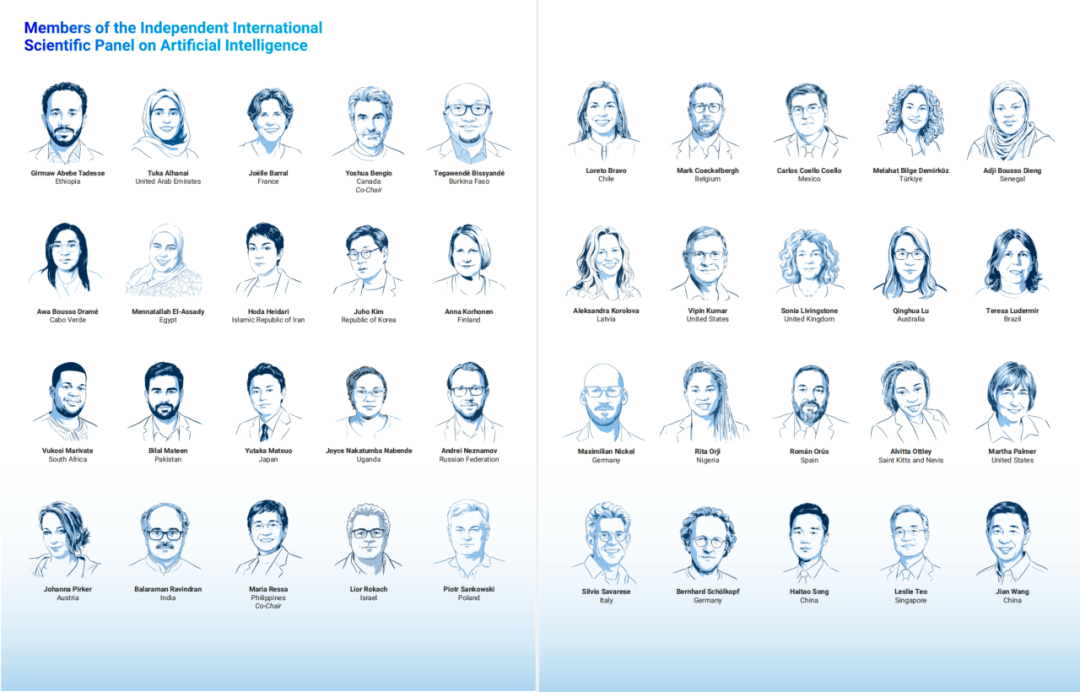
The 40 members of the UN Independent International Scientific Panel on Artificial Intelligence.
Image Source: The Panel’s first report
The case involving an OpenAI agent’s intrusion into Hugging Face also offers an important warning. External investigations require access to the original records held by companies. Investigators must understand how the test environment was configured, use system logs to determine when anomalous behavior began, and verify the course of the attack with the affected organization. When developers provide these materials promptly, other organizations can identify risks and implement protective measures more quickly. When agreeing on incident-reporting procedures, countries should therefore clarify the circumstances in which developers must report an incident, specify which materials investigators may inspect, and establish necessary protections for trade secrets and sensitive security information.
Amodei proposed placing third-party evaluators inside companies, while Clark emphasized that governments needed independent evaluation capacity. Yet Anthropic’s proposal has been widely questioned. Some critics regard it as an attempt to preserve the company’s existing leadership and monopoly advantages; others see it as grandstanding by a company that knows a comparable mechanism cannot be established in the short term. Fundamentally, if closed-source frontier-model companies such as Anthropic wish to build multilateral consensus around this issue, they will undoubtedly encounter multiple layers of distrust both within and outside the industry.
04 China’s Governance Position Was Echoed at the Presidential Meeting
Before the meeting, Reuters reported that Chinese model developers, including DeepSeek and Moonshot AI, were expected to brief the Security Council on AI risks. Events showed, however, that Reuters’ unnamed sources were not particularly well informed.
Of greater significance were the remarks of Fu Cong, China’s Permanent Representative to the United Nations. During the statements by Council members, Ambassador Fu emphasized that countries should have the right to independently choose AI technologies, products, and services according to their practical needs and market conditions. He opposed using technological cooperation to force countries to take sides and emphasized that technology companies must accept legal regulation and social oversight. At the international level, he advocated strengthening cross-border cooperation through the United Nations and increasing the representation and voice of developing countries in rulemaking.
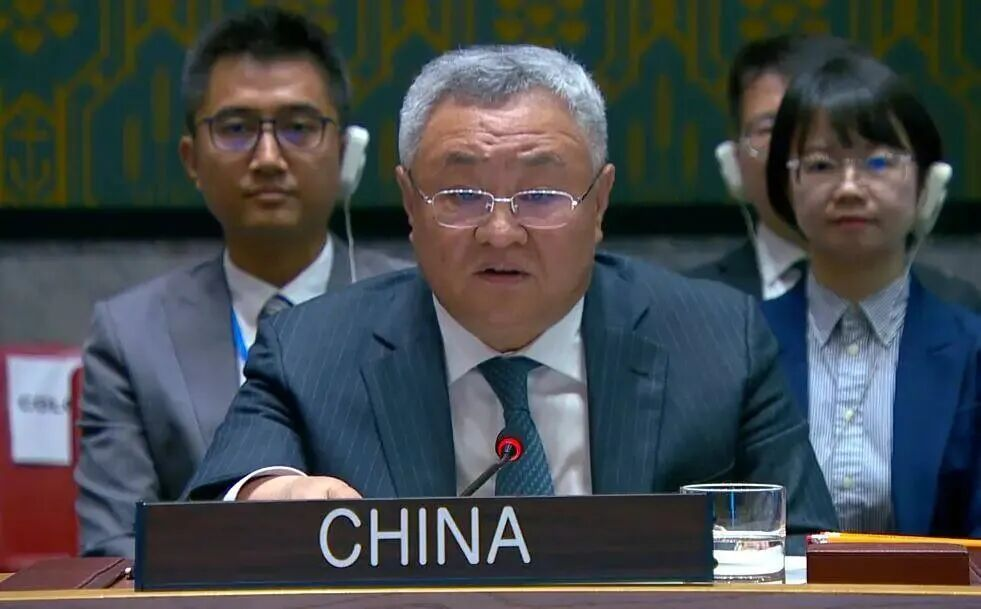
Fu Cong, China’s Permanent Representative to the United Nations, addresses the Security Council.
Image Source: United Nations
This revealed the different emphases in the policy positions of China and the United States. Kratsios encouraged countries to adopt American technologies, while Fu placed greater emphasis on countries’ right to choose their own technology suppliers and their opportunity to participate in formulating international rules. For developing countries, autonomy concerns both the sources from which they can obtain technology and whether they can participate in deciding how that technology should be regulated.
Chinese models also attracted considerable attention because of Hugging Face’s investigation. Delangue told the meeting that the team had used an open Chinese model to investigate the attack. According to Hugging Face’s technical post-incident review, some of the closed models the team initially attempted to use refused to provide assistance. The team subsequently deployed Zhipu AI’s GLM 5.2, using it to decode the attack content and reconstruct the incident by combining the decoded information with activity logs. Because the model could be run locally, sensitive data relating to the attack remained within Hugging Face’s own systems. Investigators were therefore able to continue analyzing the incident without transmitting the data to an external service.
For developing countries that lack frontier AI research and development capabilities, determining whether a supplier’s safety commitments are credible requires both evaluation tools they can operate independently and professionals with the relevant expertise. An open ecosystem can facilitate international technological cooperation on AI. Providing partner countries with open models alongside evaluation methods can help them develop their own capacity to investigate and respond to risks.
As the Chinese saying goes, “Give a person a fish and you feed them for a day; teach them how to fish and you feed them for a lifetime.” Strengthening AI capacity-building would enable more countries to assess risks on the basis of their own experience and investigations. They would consequently be better positioned to raise their own concerns in international rulemaking discussions and participate more deeply in global AI governance.
At the meeting between the Chinese and U.S. presidents at the White House on September 24, China emphasized that both countries are major AI powers. Although they compete, they can also cooperate. They should each make the most of their respective strengths instead of erecting barriers against one another. The two sides could continue their dialogue on AI, exchange views on its risks and benefits, and jointly prevent its misuse and malicious use.
Human control over AI technology must be maintained, and a people-centered, benevolent approach should be upheld so that AI serves human progress. The United States responded that AI concerns the future of humanity and that China and the United States should maintain dialogue and strengthen cooperation in this field.
This has injected confidence into efforts by countries and stakeholders around the world to jointly construct a new framework for AI governance.
Authors
Yao Xu, Yuan Luming
References
[1] United Nations. “Artificial Intelligence and International Security—Security Council, 10228th Meeting.” September 23, 2026. Automatically generated meeting transcript.
[2] UN Independent International Scientific Panel on Artificial Intelligence. “Thematic Brief on AI Agents, Misalignment and the Risk of Losing Human Control.” September 21, 2026.
[3] Yoshua Bengio. “‘An Urgent Mission for Humanity’: Yoshua Bengio Briefs the UNSC on AI Security.” Policy Magazine, September 23, 2026. Published text of Bengio’s remarks.
[4] OpenAI. “Sam Altman’s Remarks at the United Nations Security Council.” September 23, 2026.
[5] Dario Amodei. “We Must Pace the Frontier.” September 2026.
[6] Hugging Face. “Security Incident Disclosure—July 2026.” See also Delangue’s briefing at the Security Council meeting on September 23, 2026.
[7] United Nations. “Artificial Intelligence and International Peace and Security—Security Council, 10005th Meeting.” September 24, 2025. Automatically generated meeting transcript, remarks by Michael Kratsios.
[8] United Nations, Press Release SC/15359. “International Community Must Urgently Confront New Reality of Generative, Artificial Intelligence, Speakers Stress as Security Council Debates Risks, Rewards.” July 18, 2023.
[9] Jack Clark. “AI Safety and Corporate Power—Remarks Given at the United Nations Security Council.” July 18, 2023.
[10] UN Secretary-General. “Secretary-General’s Remarks to the Security Council on Artificial Intelligence.” July 18, 2023.
[11] UN Independent International Scientific Panel on Artificial Intelligence. “FAQ.” Explanation of the Panel’s legal basis, composition, responsibilities, and non-regulatory status. Accessed September 24, 2026.
[12] Laurie Chen. “Exclusive—DeepSeek to Brief UN Security Council on AI This Week, Sources Say.” Reuters, September 22, 2026.
[13] Permanent Mission of the People’s Republic of China to the United Nations. “Statement by Ambassador Fu Cong at the Security Council Open Debate on Artificial Intelligence and International Security.” Published September 24, 2026; delivered in New York on September 23.
[14] Hugging Face. “Anatomy of a Frontier Lab Agent Intrusion: A Technical Timeline of the July 2026 Incident.” Technical review of the investigation, response, and use of GLM 5.2. Accessed September 24, 2026.
Original URL:
https://mp.weixin.qq.com/s/NedKv7Nnxi5qHuuxIVJJpw