

On September 11, Professor CHEN Zhimin, Executive Director of the Center for Global AI Innovative Governance (CGAIG) and Vice President of Fudan University, and YAO Xu, Secretary-General of CGAIG and Associate Professor at Fudan Development Institute, attended the Ninth China Think Tank Construction and Evaluation Summit Forum by invitation. Together with representatives of think tanks from research institutes, universities, macroeconomic policy research departments and centrally administered state-owned enterprises, as well as experts and scholars engaged in think tank evaluation and research, they discussed the opportunities, approaches, boundaries, evaluation and governance associated with building “AI Plus” think tanks.
During the keynote session, Professor CHEN Zhimin, Executive Director of CGAIG, drew on Fudan University’s exploratory work to present specific approaches to using AI in philosophy and social science research. He shared experience gained in humanities and social science laboratories, global governance platforms and ethics research. He proposed continued exploration through platform development, the provision of public goods and institutional integration, with the aim of establishing a new system of think tank knowledge production based on human–AI collaboration.
The Ninth China Think Tank Construction and Evaluation Summit Forum was held in Beijing on September 11, 2026. Hosted by the Chinese Academy of Social Sciences Evaluation Studies (CASSES) and organized by its Department of Institutional and Think Tank Evaluation, the forum took “AI Plus Think Tanks: Exploration, Practice and Prospects” as its theme. Participants included representatives of think tanks from the social sciences, universities, macroeconomic policy research departments and centrally administered state-owned enterprises across 26 provinces, autonomous regions and municipalities directly under the central government. Representatives of think tank oversight bodies, experts and scholars engaged in think tank evaluation and research, and professionals from the media and publishing sectors also attended. Over the course of the day, they discussed the opportunities, approaches, boundaries, evaluation and governance involved in using AI to support think tank development.
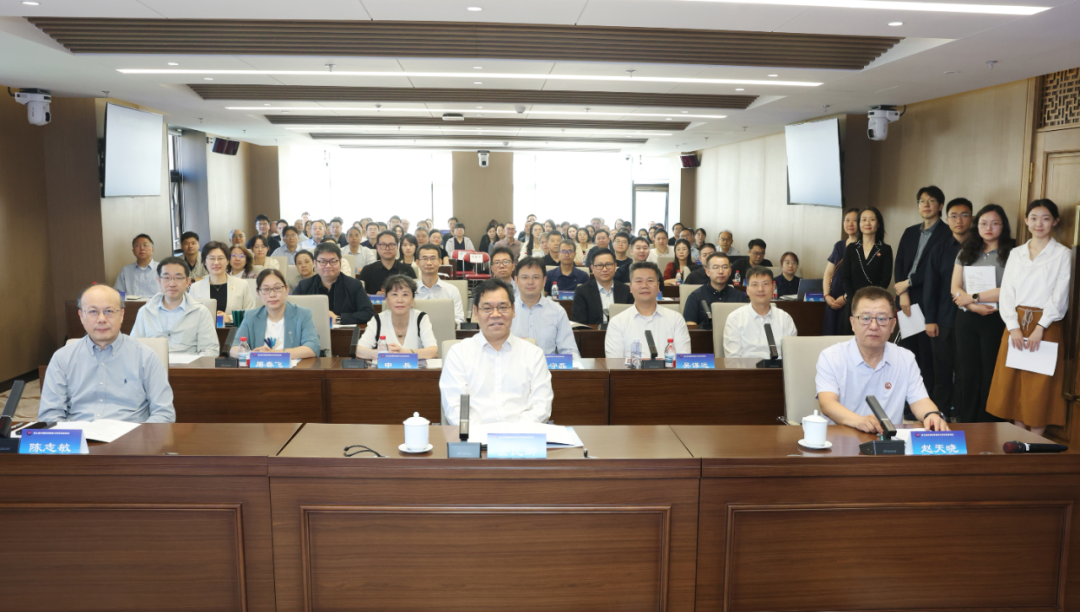
The Ninth China Think Tank Construction and Evaluation Summit Forum
JIN Minqing, a member of the Leading Party Members Group of the Chinese Academy of Social Sciences (CASS) and Director of the Institute of Contemporary China Studies, attended the opening ceremony and delivered remarks. He noted that AI, with its unprecedented dynamism, is becoming an important engine for developing new quality productive forces and a powerful driver of Chinese modernization. For think tanks, “AI Plus” offers valuable opportunities to improve research efficiency and expand capabilities, while also placing greater demands on safeguards against risks such as model hallucinations, algorithmic black boxes and data bias. He stressed that the think tank community must address a defining question of our time: how to embrace technological change and realize its benefits while maintaining intellectual resolve and upholding essential quality standards.
JIN Minqing stated that new types of think tanks with Chinese characteristics should be guided by Xi Jinping Thought on Socialism with Chinese Characteristics for a New Era, adhere to the correct political direction, academic orientation and values, and actively lead paradigm innovation in AI-assisted think tank research. In doing so, they should fulfill their responsibilities in accelerating the development of China’s independent knowledge system. They should embrace technological change with an open mind, promote paradigm shifts and deeper integration across think tank research, development and evaluation, and make AI a genuine multiplier of quality and efficiency. They should actively participate in global AI governance and contribute to global agenda-setting with a broader perspective and stronger capabilities, effectively communicate China’s stories and wisdom, and continue to enhance the international influence and voice of Chinese think tanks. He also called for the proactive incorporation of standards for AI use into evaluation indicators, methods and ethics, alongside stronger mechanisms for science and technology ethics and security governance. Evaluation should encourage innovation while preventing risks, and serve to promote development and improvement, thereby supporting the steady, sustainable progress of “AI Plus” think tanks.
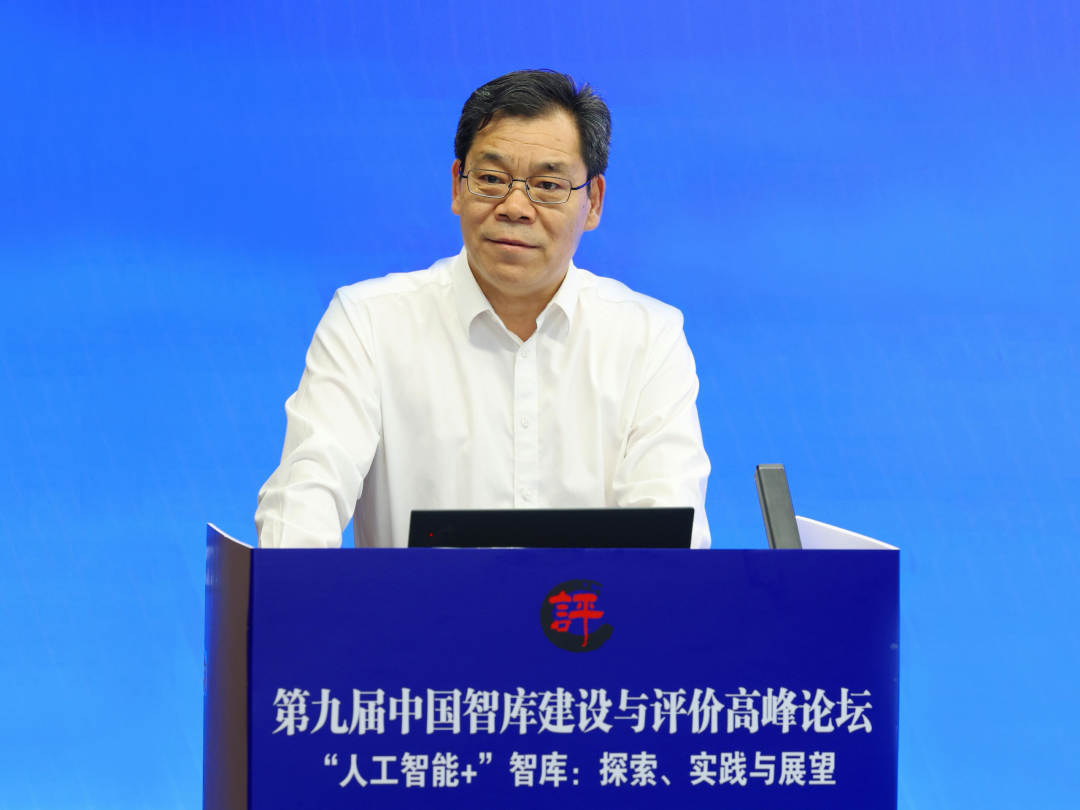
JIN Minqing, Member of the CASS Leading Party Members Group and Director of the Institute of Contemporary China Studies
The opening ceremony was chaired by ZHAO Tianxiao, Secretary of the CPC Committee of CASSES. He observed that the new wave of scientific and technological revolution and industrial transformation, represented by AI, is profoundly changing how think tanks produce knowledge, operate as organizations, and conduct evaluation and governance. The think tank community must jointly address how AI can be effectively integrated into research while preserving the central value of ideas as efficiency improves, and how researchers’ agency and strategic judgment can be maintained amid technological change. CASSES continues to fulfill its evaluation responsibilities of setting standards, organizing evaluations, conducting inspections and oversight, and ensuring quality, as well as its responsibilities for managing research integrity. The forum aimed to bring together insights from diverse sectors to inform the deeper integration of AI into think tank development and advance the high-quality development of new types of think tanks with Chinese characteristics.
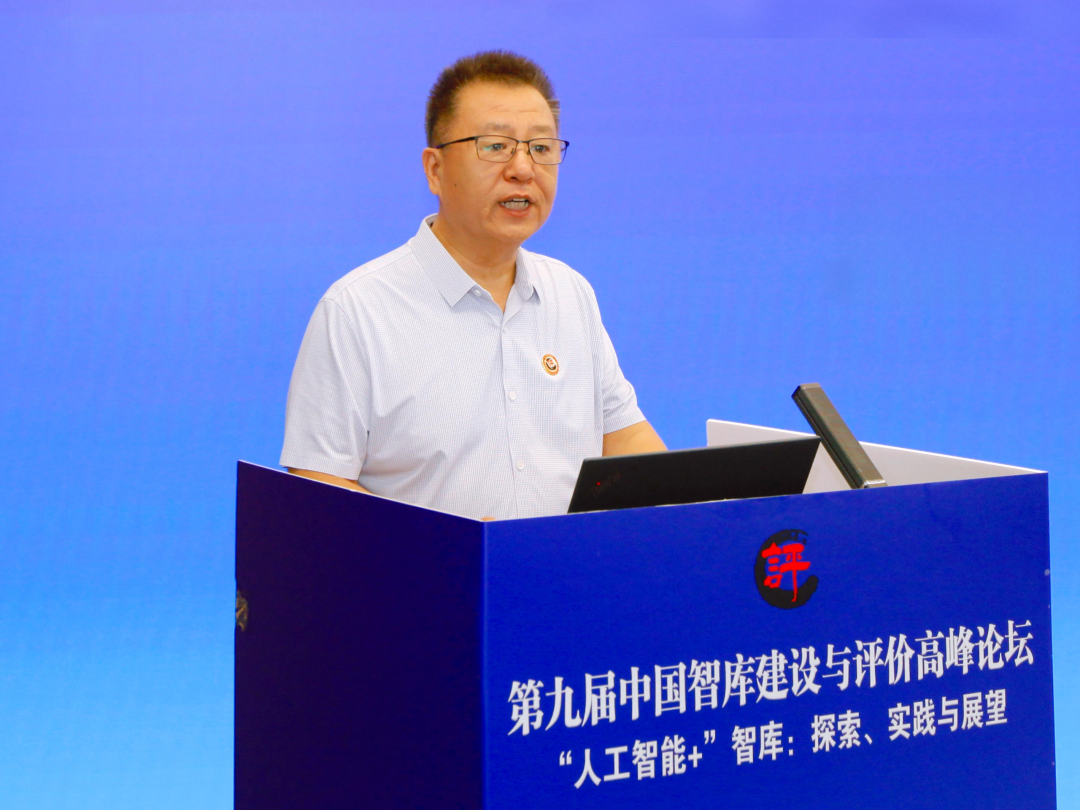
ZHAO Tianxiao, Secretary of the CPC Committee of CASSES
The keynote session was chaired by SU Jinyan, Vice President of CASSES. Speakers included MA Shoulei, Deputy Director of the Center for Strategic Studies of the Chinese Academy of Engineering; SHEN Bing, Director of the Research Management Department at the Chinese Academy of Macroeconomic Research; WU Mouyuan, Vice President of the CNPC Economics & Technology Research Institute; CHEN Zhimin, Vice President of Fudan University and Executive Director of CGAIG; TU Chunfei, a member of the Leading Party Members Group and Vice Chair of the Zhejiang Federation of Social Science Associations; XU Zhiyuan, Deputy Chief Engineer of the China Academy of Information and Communications Technology (CAICT); and HU Wei, Director of the Department of Institutional and Think Tank Evaluation at CASSES.
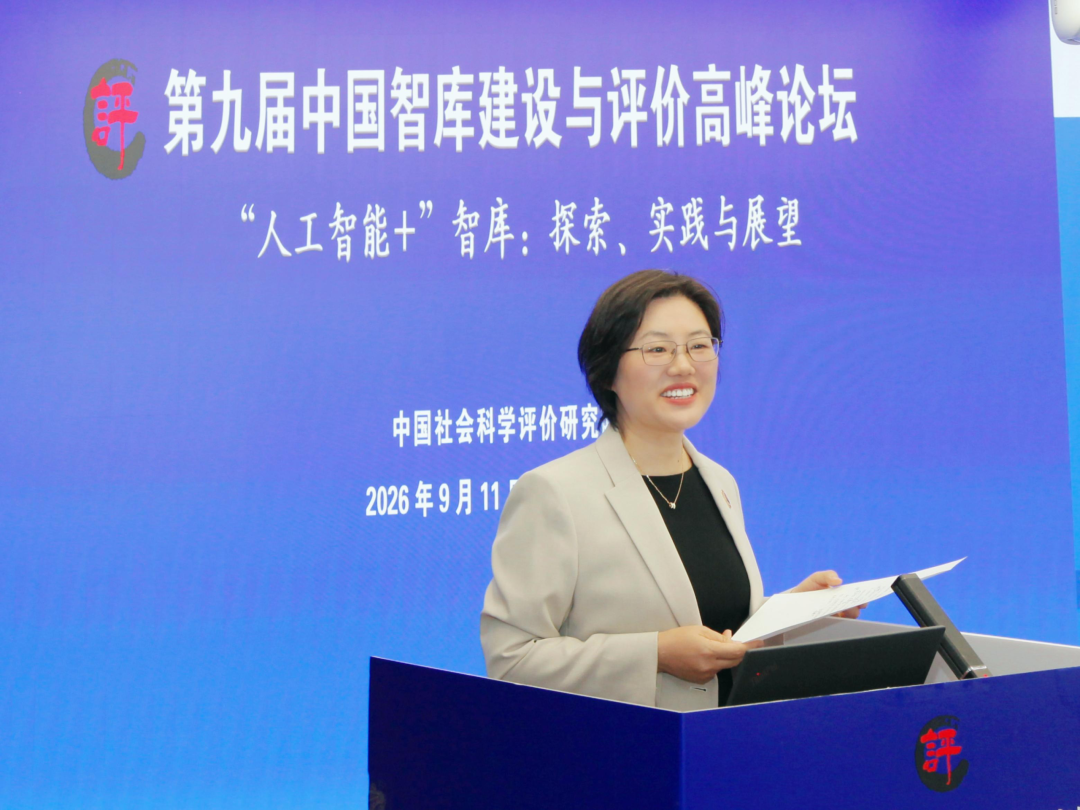
SU Jinyan, Vice President of CASSES
MA Shoulei discussed the challenges and boundaries facing the strategic judgment of the national science and technology think tank in the AI era. He identified three trends in the deeper integration of AI into think tank development: a shift from building systems to upgrading paradigms, from human–AI cooperation to joint advancement, and from tool-based skills to intellectual self-awareness. He called on think tanks to plan ahead for intelligent infrastructure and continuously strengthen their capacity to provide intellectual leadership and support decision-making.
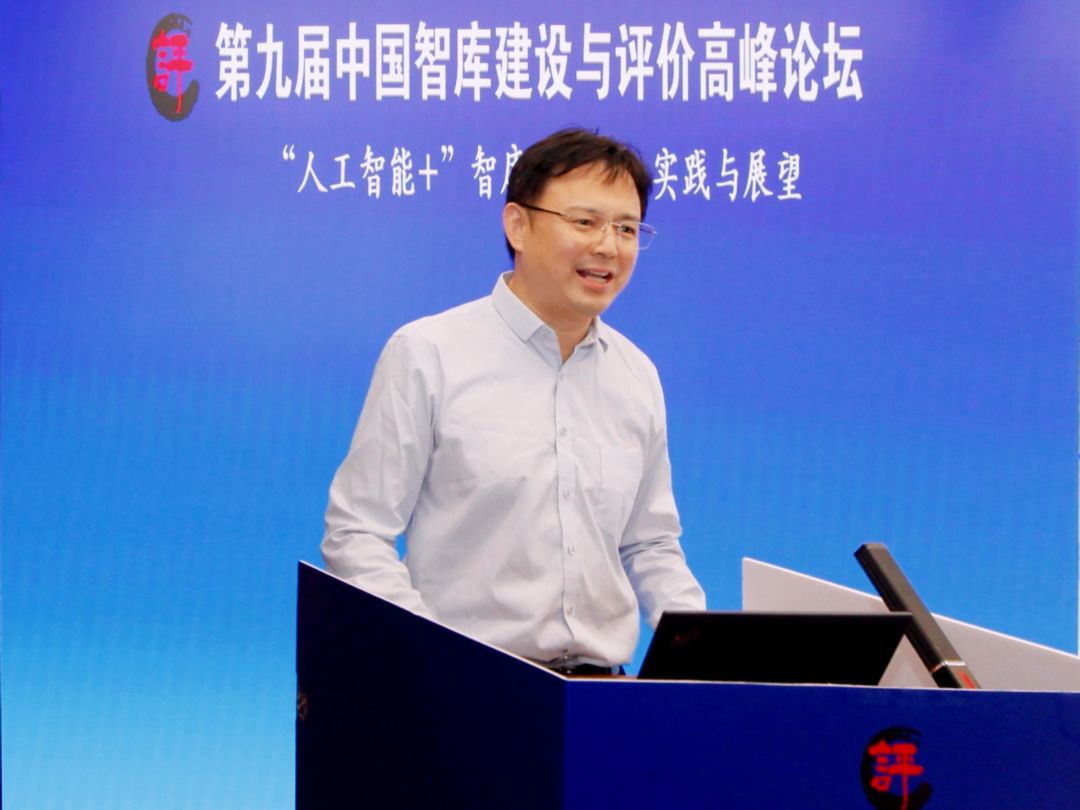
MA Shoulei, Deputy Director of the Center for Strategic Studies of the Chinese Academy of Engineering
SHEN Bing provided a systematic analysis of the application scenarios, practical bottlenecks and implementation pathways for integrating AI into think tank development. He stressed the need to clearly define AI’s role in supporting think tanks, actively explore effective approaches to AI-enabled development of humanities and social science think tanks, and promote coordinated changes in technology applications, research methods and organizational capabilities.
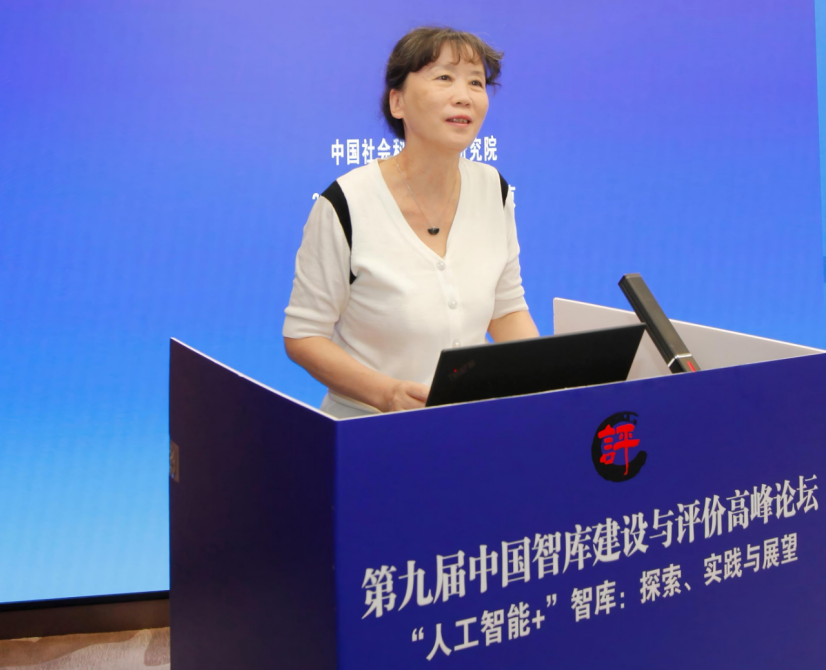
SHEN Bing, Director of the Research Management Department at the Chinese Academy of Macroeconomic Research
WU Mouyuan discussed practical efforts to use AI in developing high-end national think tanks. He introduced the CNPC Economics & Technology Research Institute’s exploration of “Kunlun Wence,” an intelligent research assistant built on a unified knowledge base for energy soft science research. These efforts use accumulated knowledge to support research innovation and intelligent tools to improve research efficiency, providing useful experience for AI-enabled development of high-end national think tanks.
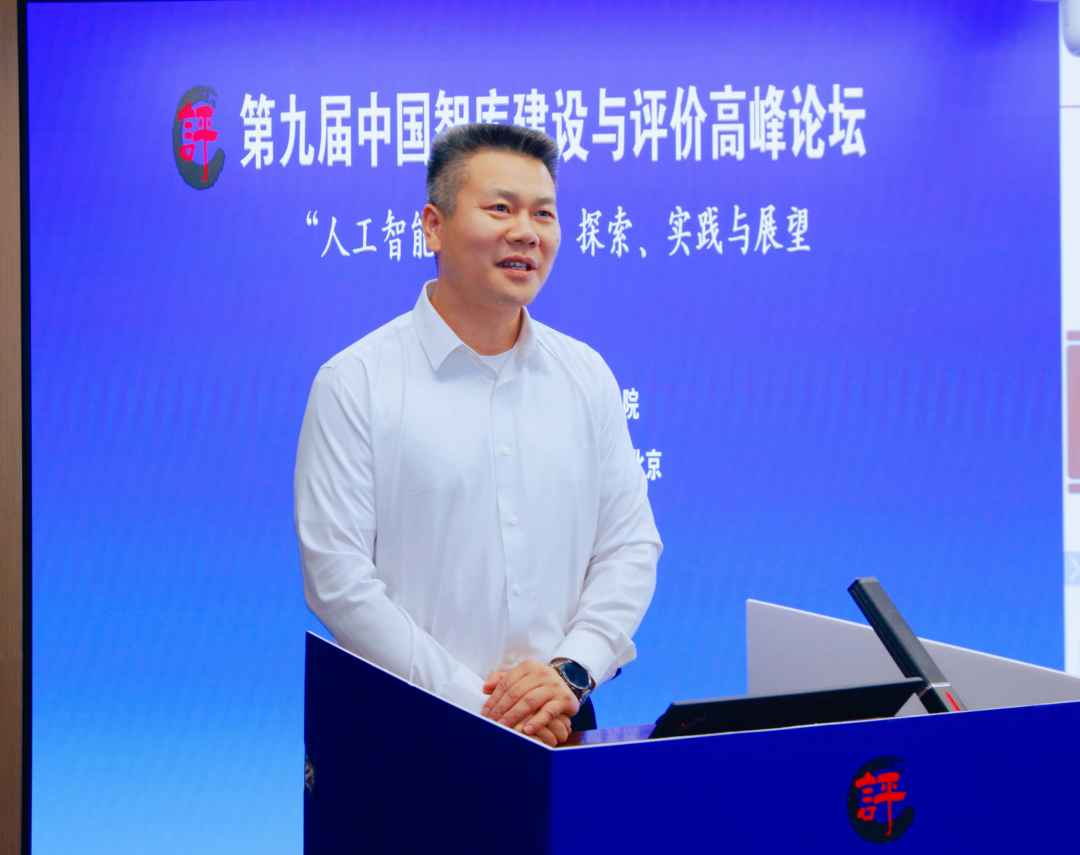
WU Mouyuan, Vice President of the CNPC Economics & Technology Research Institute
Drawing on Fudan University’s exploratory work, CHEN Zhimin presented specific approaches to using AI in philosophy and social science research. He shared experience gained in humanities and social science laboratories, global governance platforms and ethics research. He proposed continued exploration through platform development, the provision of public goods and institutional integration, with the aim of establishing a new system of think tank knowledge production based on human–AI collaboration.
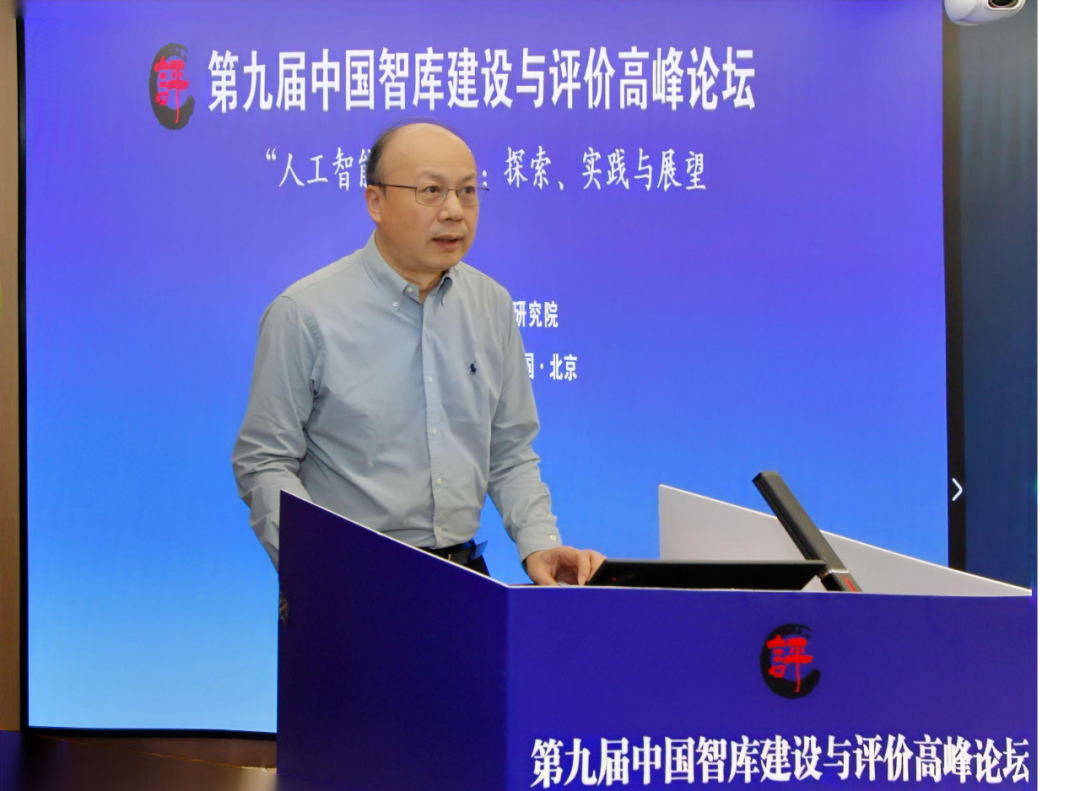
CHEN Zhimin, Executive Director of CGAIG and Vice President of Fudan University
TU Chunfei discussed Zhejiang’s experience in think tank management in the digital and AI era. He outlined the province’s key measures and coordinated plans for developing a network of new types of think tanks and philosophy and social science laboratories, as well as its major initiative to promote integrated innovation through “AI Plus Social Sciences.” These efforts offer practical lessons for the digital and intelligent transformation of local think tanks.
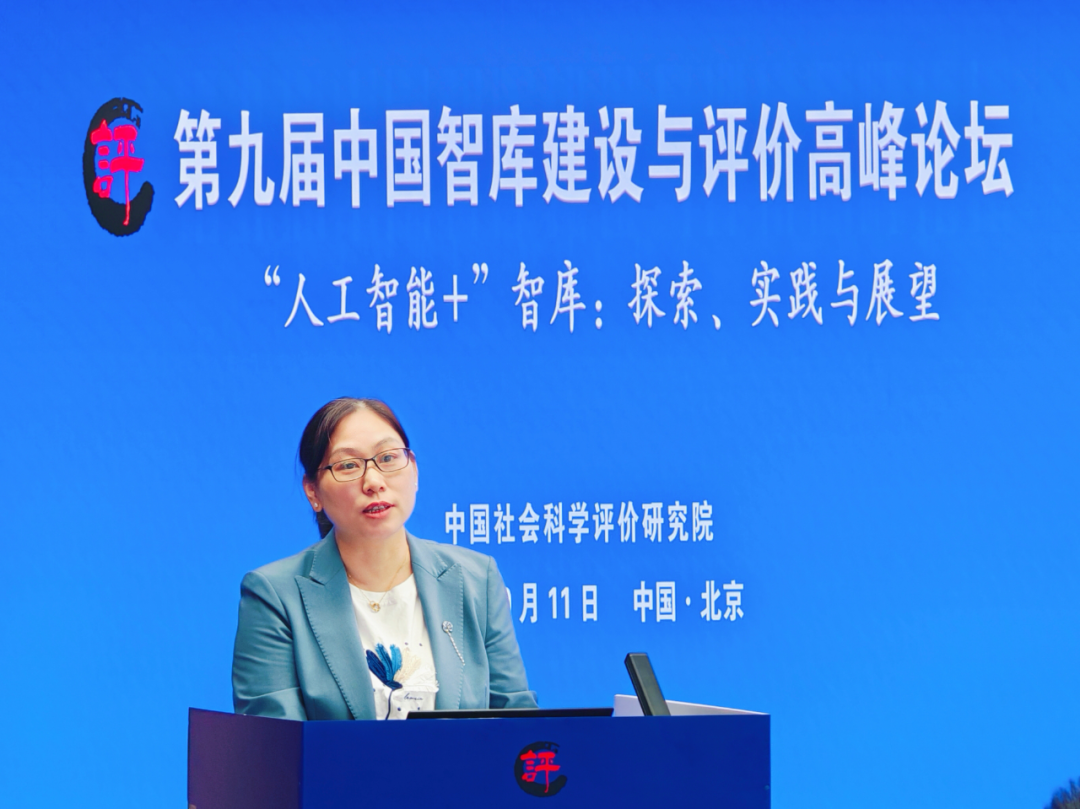
TU Chunfei, Member of the Leading Party Members Group and Vice Chair of the Zhejiang Federation of Social Science Associations
Drawing on CAICT’s role as a high-end specialized national think tank and a platform for industrial innovation and development, XU Zhiyuan introduced its exploratory efforts in AI research planning, policy research and industry services. He emphasized the need for a clear understanding of AI’s capability boundaries and for continuous improvements to data protection, human review and ethics review mechanisms.
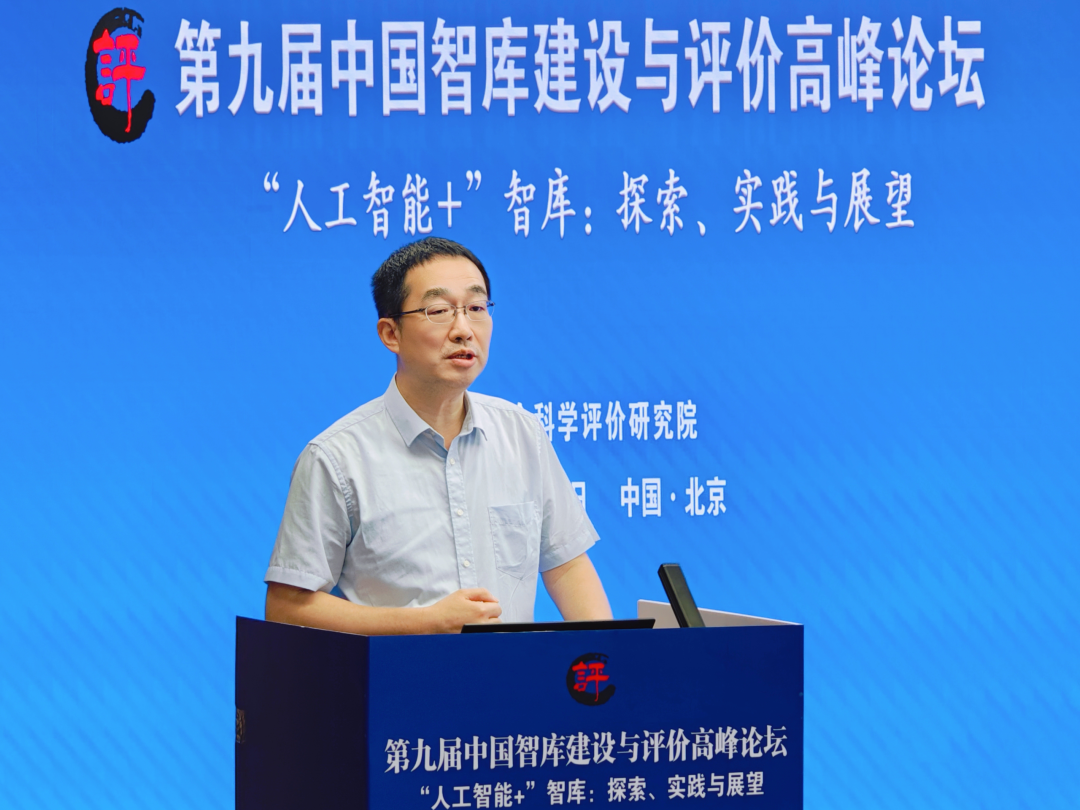
XU Zhiyuan, Deputy Chief Engineer of CAICT
Drawing on think tank evaluation practice, HU Wei systematically examined the opportunities for transformation that AI brings to think tank research and development, and offered an objective assessment of current practical challenges. Her analysis provided important guidance for determining the direction of development and defining the boundaries of practice, as well as feasible pathways for think tanks to transform and upgrade in the AI era.
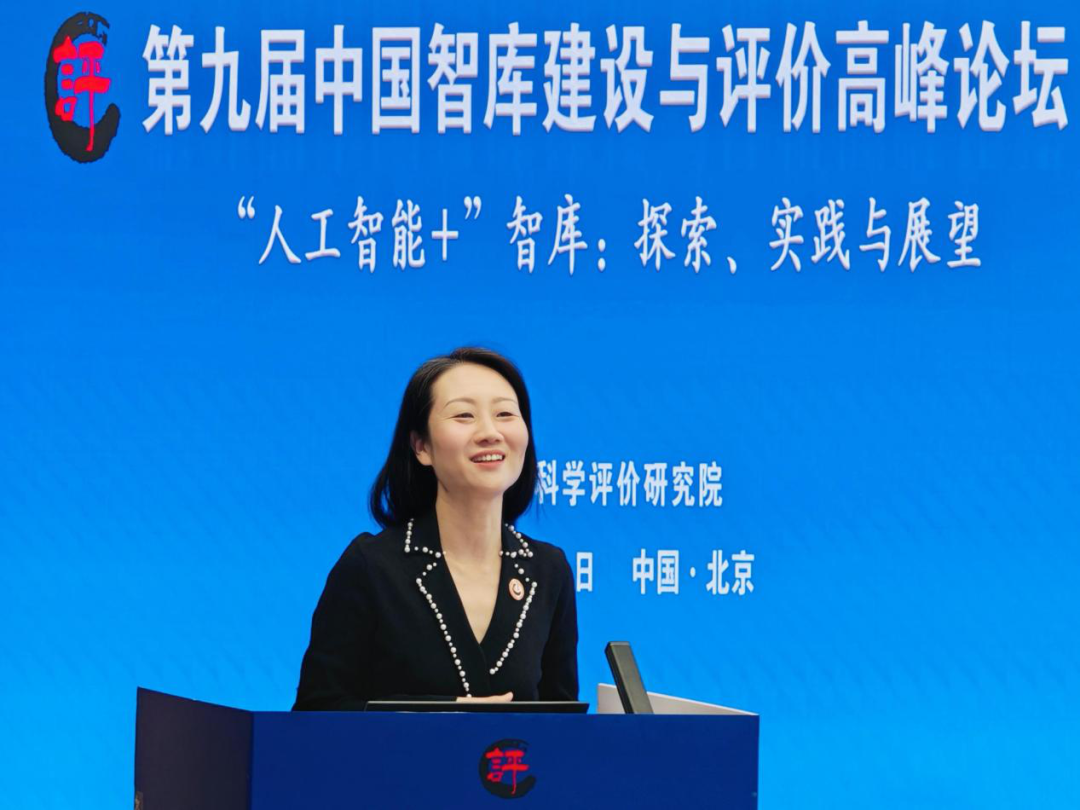
HU Wei, Director of the Department of Institutional and Think Tank Evaluation at CASSES
Two thematic panel discussions followed the keynote session.
The first panel was chaired by XU Ning, Deputy Director of the Yangtze Industrial Development Institute at Nanjing University. LI Feihu, Deputy Director of the World Affairs Research Center of Xinhua News Agency; CHEN Yiyi, Deputy Director of the China–Central Asia Big Data Research Institute at Lanzhou University; and HUANG Rihan, Director of the Maritime Silk Road Institute at Huaqiao University, shared their experience and reflections on specific applications and practical pathways for AI-enabled think tank development.
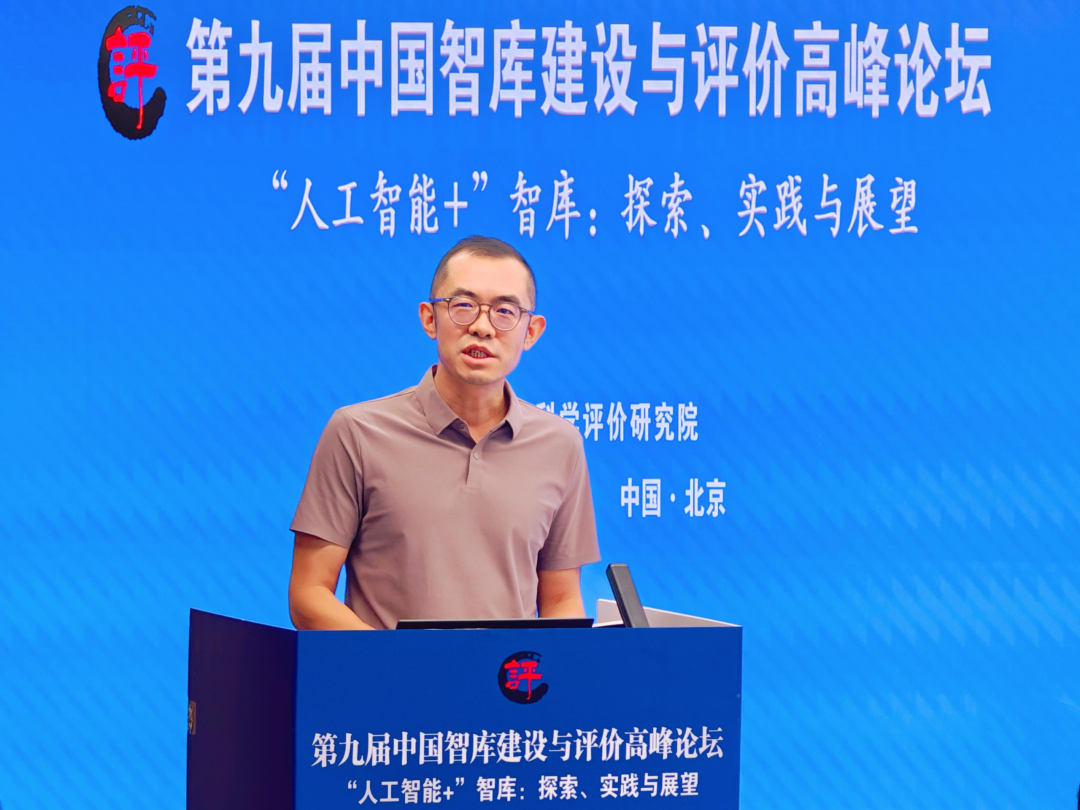
XU Ning, Deputy Director of the Yangtze Industrial Development Institute at Nanjing University
LI Feihu explored practical pathways for AI-assisted research on international affairs. He noted the substantial potential of AI in this field, while highlighting obstacles and risks related to obtaining original overseas source materials, handling sensitive issues and protecting research intentions. These require careful management in practice.
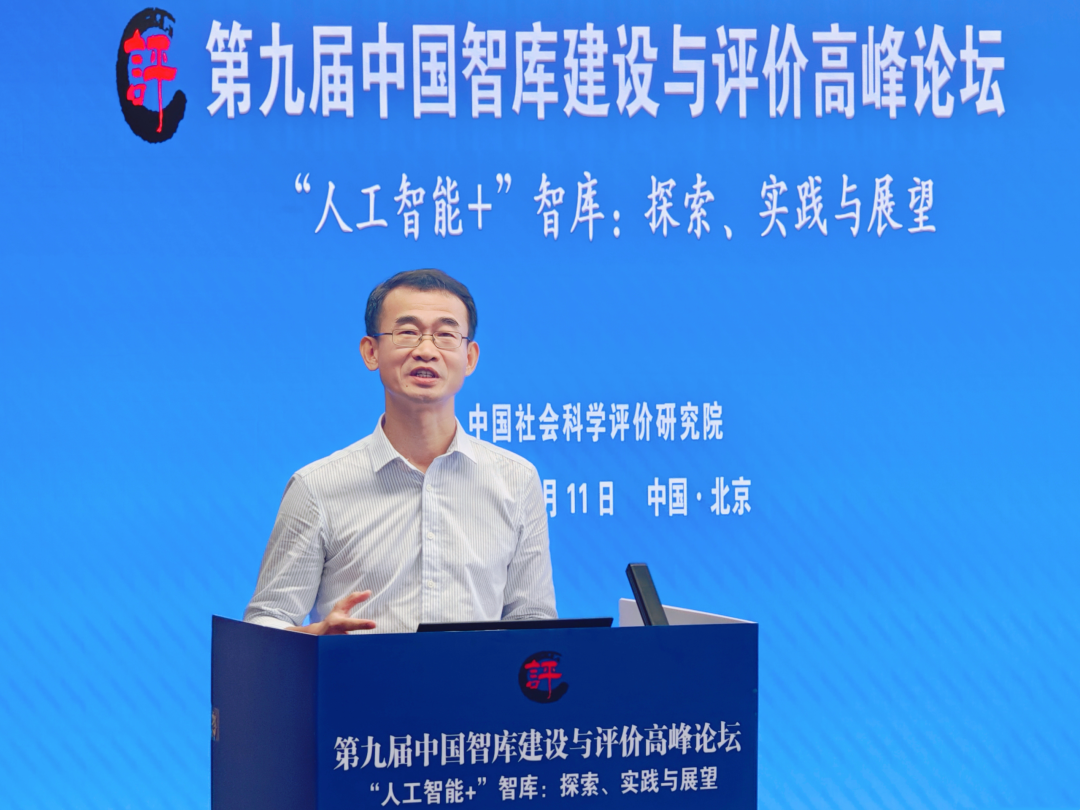
LI Feihu, Deputy Director of the World Affairs Research Center of Xinhua News Agency
CHEN Yiyi focused on data collection and use in AI-enabled area and country studies. He analyzed how AI affects data-related work in this field, as well as hybrid approaches to data collection and use. He explored practical ways for AI technologies and fieldwork experience to complement and cross-check each other, offering methodological insights for area and country studies.
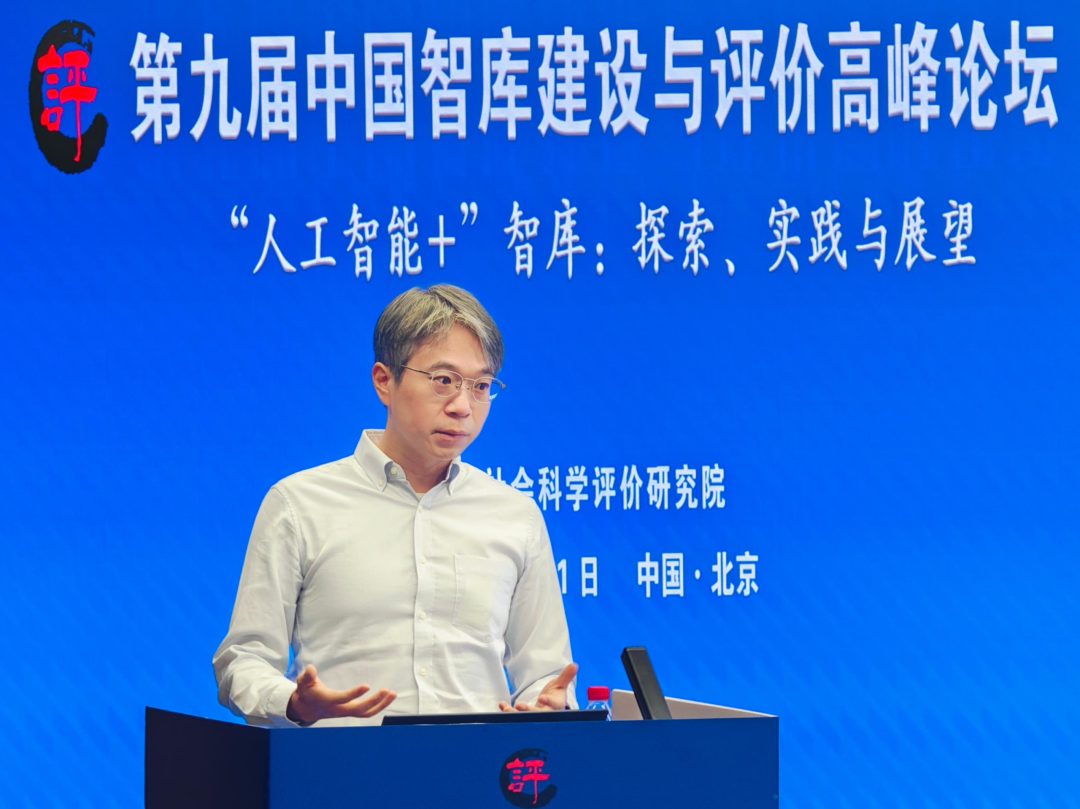
CHEN Yiyi, Deputy Director of the China–Central Asia Big Data Research Institute at Lanzhou University
HUANG Rihan discussed practical pathways for AI-enabled think tank development, including the use of AI in drafting specialized policy reports, collecting and analyzing open-source intelligence, and preventing information leaks. He also considered the prospects for AI-enabled international communication. He proposed that AI should serve as an “external brain” for think tanks, rather than replace their own “brain.”
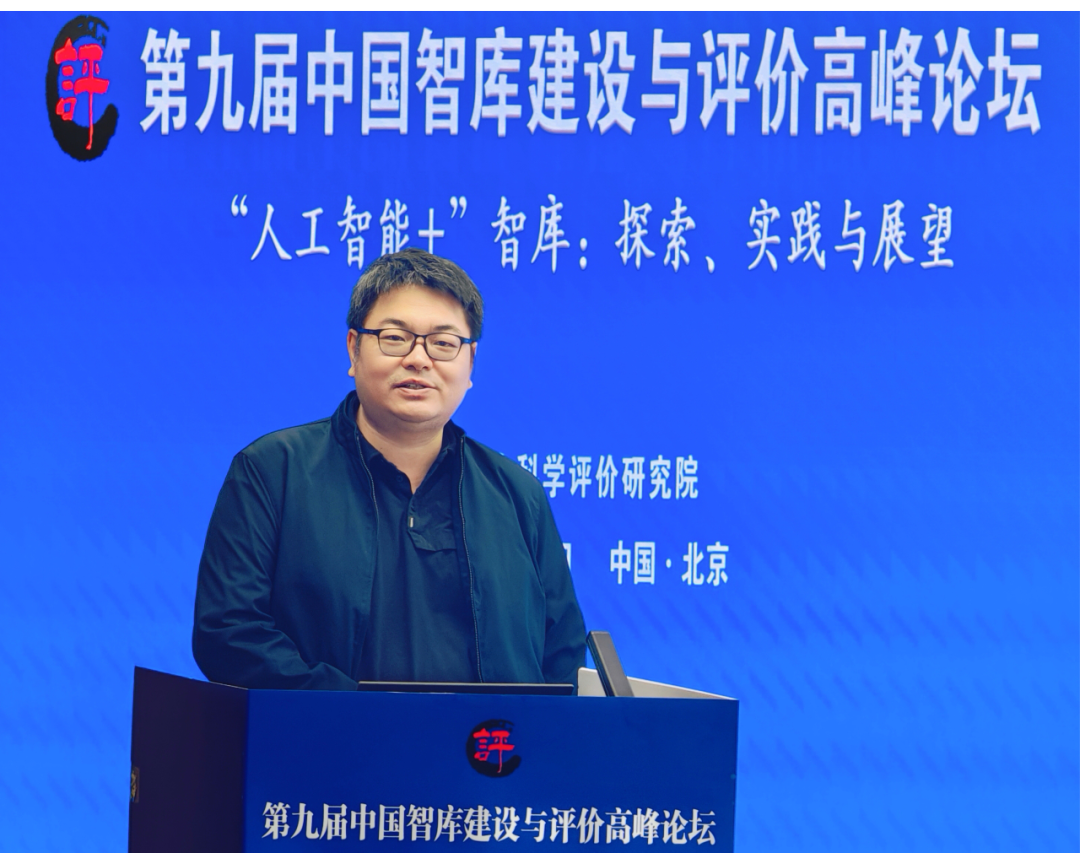
HUANG Rihan, Director of the Maritime Silk Road Institute at Huaqiao University
The second panel was chaired by YAO Xu, Secretary-General of CGAIG and Associate Professor at Fudan Development Institute. Participants included SONG Lu, Executive Dean of the Institute for Smart Governance Strategy at Renmin University of China; ZHOU Hao, Assistant to the Director of the Center of Tsinghua Think Tanks; NI Kaomeng, Vice President of the Party School of the CPC Wenzhou Municipal Committee; LIN Zhiwen, a member of the CPC Committee and Chief Accountant of China Southern Power Grid Energy Development Research Institute Co., Ltd.; ZHONG Houtao, Deputy Director of the School of National Security at the University of International Relations; LI Yan, Director of the Institute of Science, Technology and Cybersecurity at the China Institutes of Contemporary International Relations (CICIR); WANG Chengren, Director of the Internal Policy Briefs Division at the China Center for International Economic Exchanges, listed in the source as affiliated with CASS; and XU Ning, Deputy Director of the Yangtze Industrial Development Institute at Nanjing University. They shared their experience of preserving think tanks’ agency and developing practical approaches in the AI era.
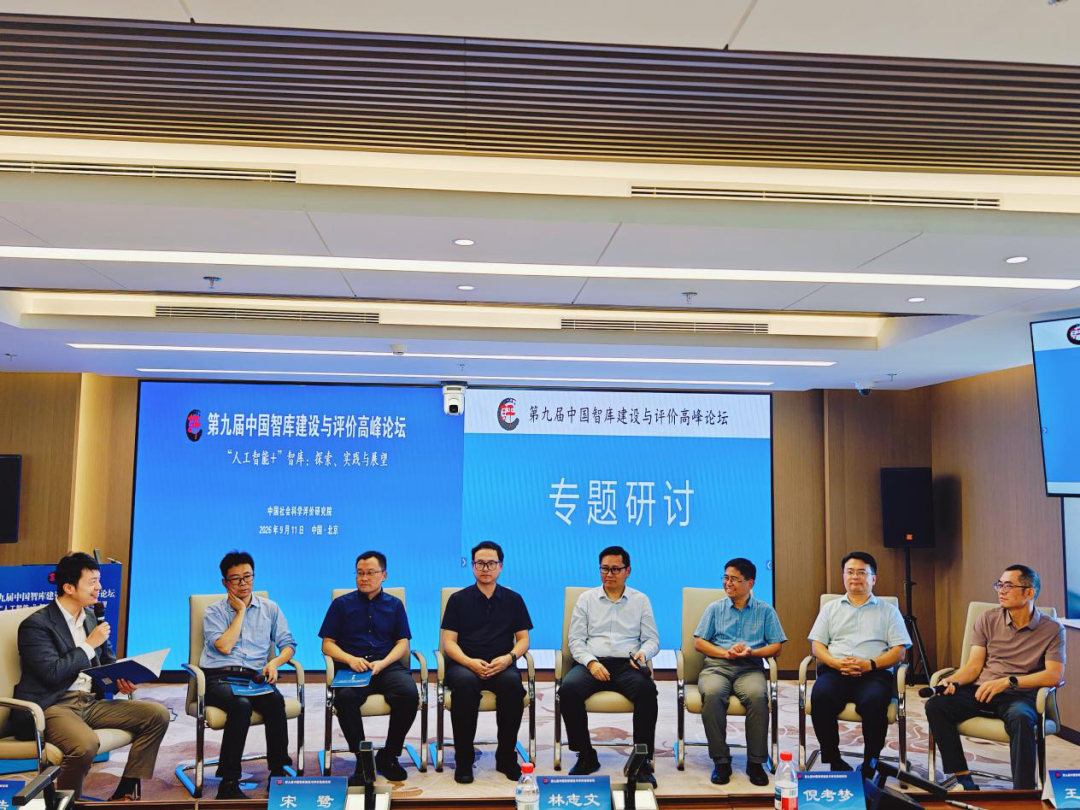
The second thematic panel at the Ninth China Think Tank Construction and Evaluation Summit Forum
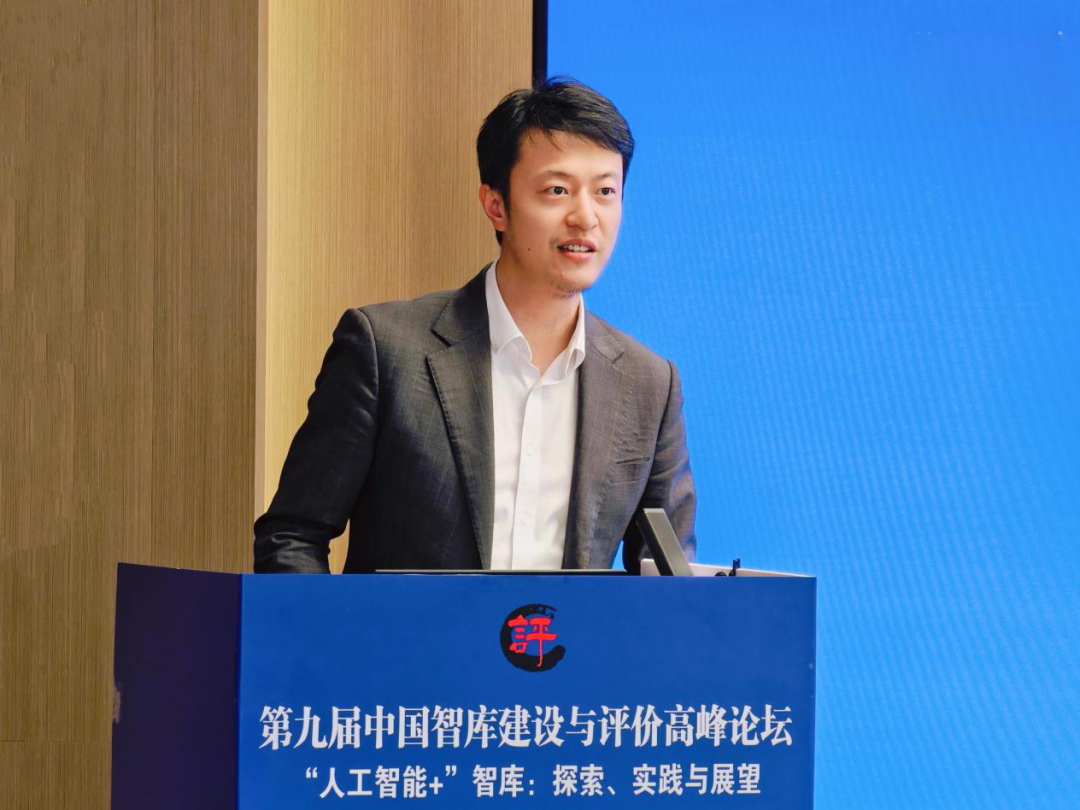
YAO Xu, Secretary-General of CGAIG and Associate Professor at Fudan Development Institute
SONG Lu discussed the development and application of large models for decision support in think tanks. SONG introduced the Institute for Smart Governance Strategy at Renmin University of China’s research and development efforts in this area and explained how technologies such as large models and AI agents can be applied to think tank research. SONG also explored approaches to developing proprietary large models in terms of theoretical foundations, application needs and technical architecture.
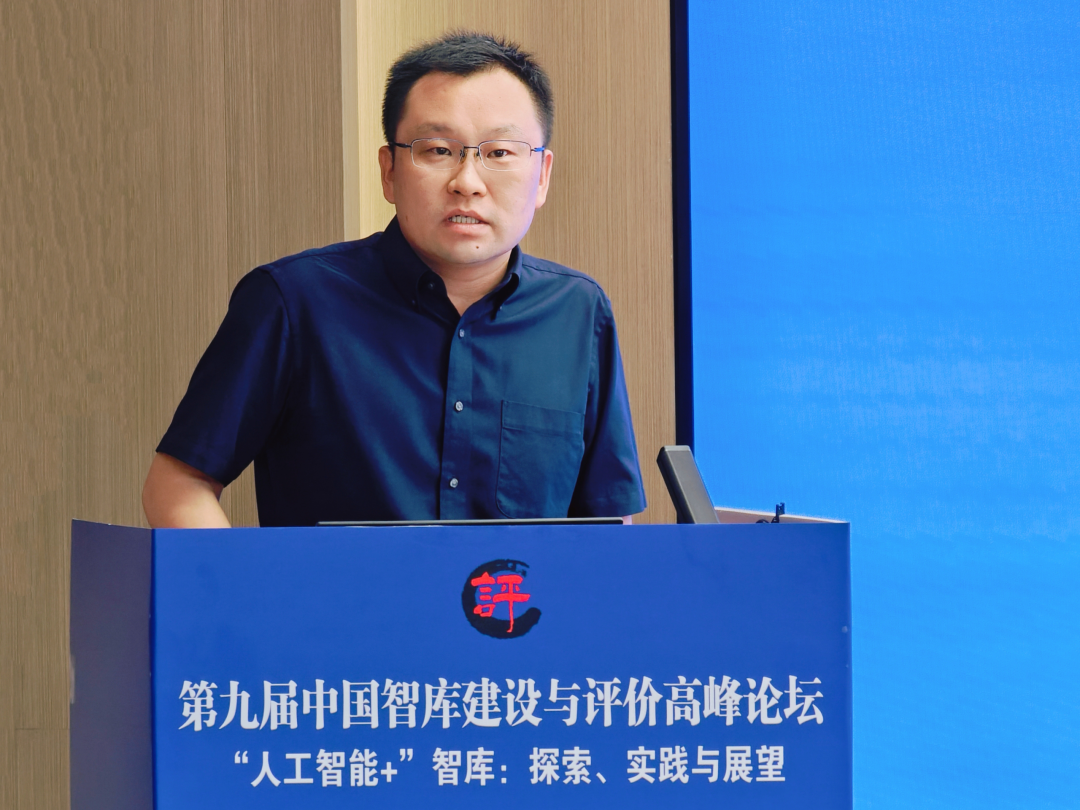
SONG Lu, Executive Dean of the Institute for Smart Governance Strategy at Renmin University of China
ZHOU Hao focused on the development of intelligent think tank research systems. He presented the Center of Tsinghua Think Tanks’ three-stage plan for using AI to support such systems, covering knowledge-based question answering, expert profiling, report generation, editing, proofreading and review. The plan offers a reference for integrating intelligent technologies throughout think tank knowledge production and across the full chain of organizational management.
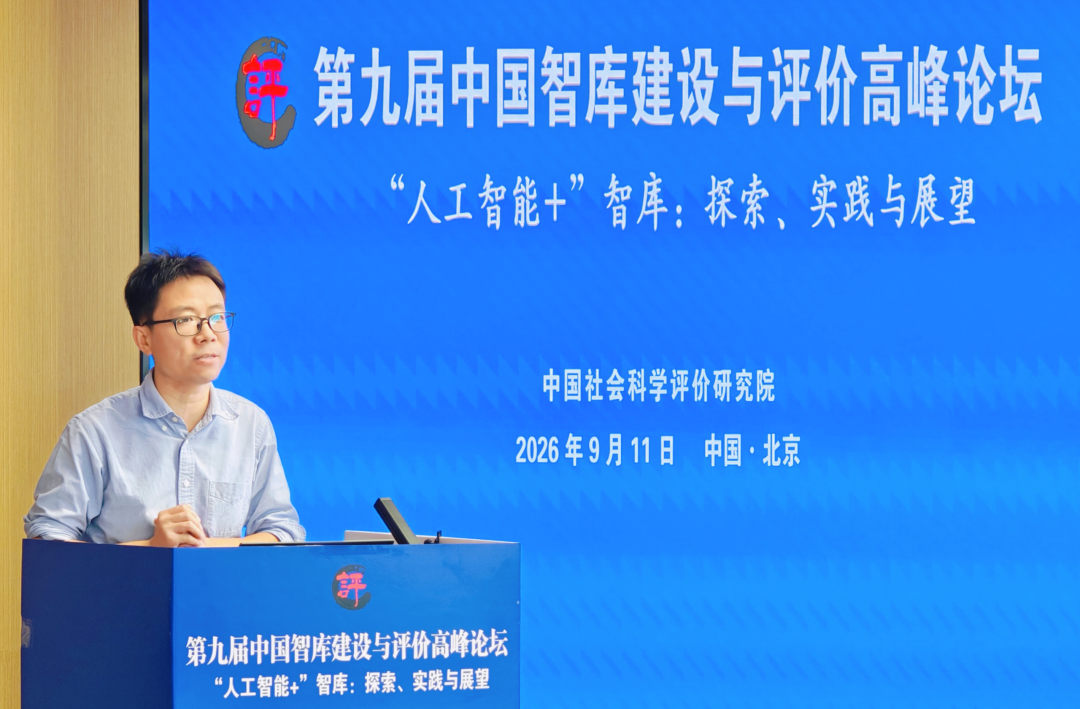
ZHOU Hao, Assistant to the Director of the Center of Tsinghua Think Tanks
Drawing on the experience of the Party School of the CPC Wenzhou Municipal Committee, NI Kaomeng explored specific pathways for AI-enabled research and policy advice. He advocated combining expert knowledge with AI computing power to reshape the entire research and policy advisory process through human–AI collaboration. At the same time, he stressed the need to uphold core values, maintain the Party school’s allegiance to the Party, place scholarship in the leading role and technology in a supporting role, and preserve human agency throughout.
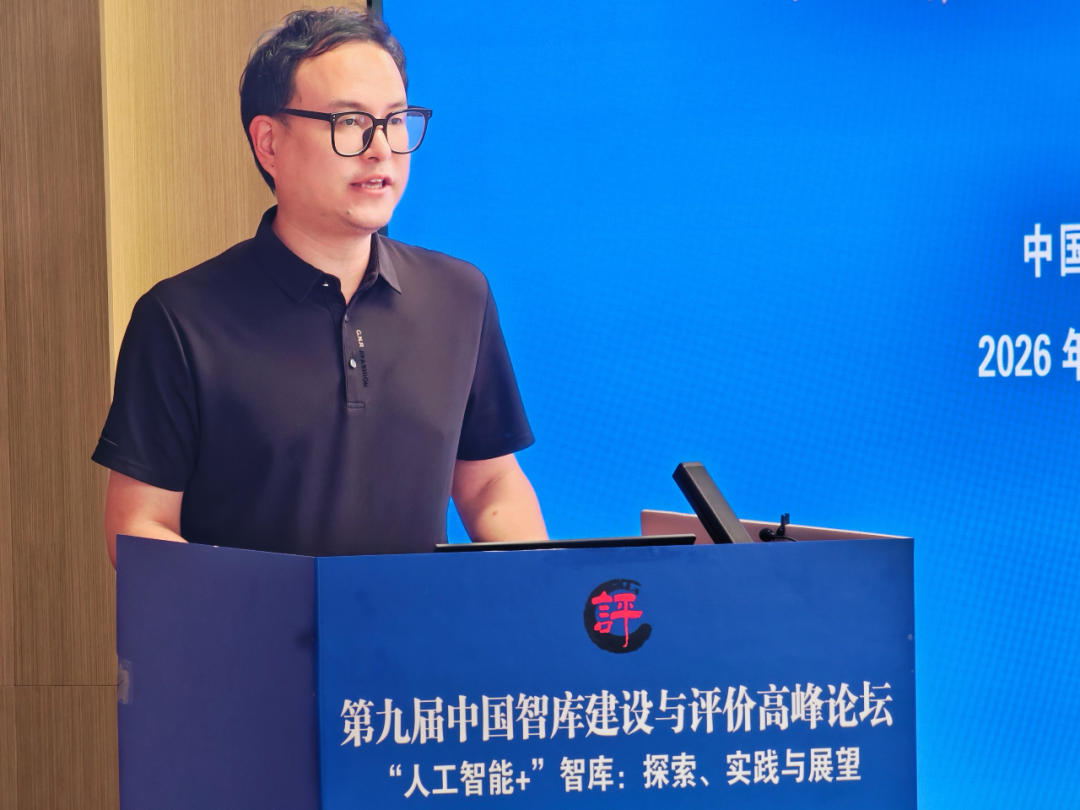
NI Kaomeng, Vice President of the Party School of the CPC Wenzhou Municipal Committee
LIN Zhiwen discussed exploratory work and practice in developing digital and intelligent think tanks in the context of AI. Drawing on the requirements for new types of think tanks within centrally administered state-owned enterprises during the 15th Five-Year Plan period, he introduced the China Southern Power Grid Energy Development Research Institute’s approach to collaborative, digital and intelligent, and ecosystem-based development. Its new model of human–AI collaboration combines digital and intelligent analysis with expert assessment, offering a reference for centrally administered state-owned enterprises seeking to build world-class energy think tanks.
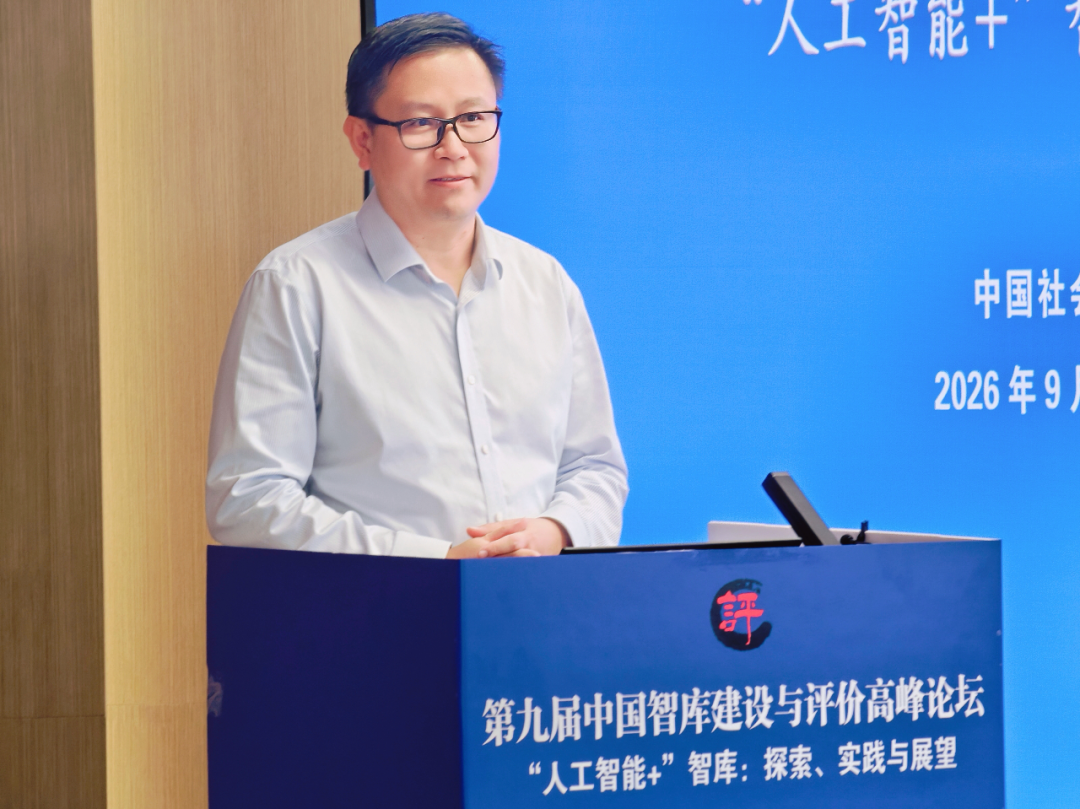
LIN Zhiwen, Member of the CPC Committee and Chief Accountant of China Southern Power Grid Energy Development Research Institute Co., Ltd.
ZHONG Houtao discussed potential risks in applying AI to research on Taiwan-related issues and ways to address them. He emphasized that researchers must uphold the one-China principle, strictly limit AI to a supporting role, verify its output through human review, rigorously control the input of sensitive data, and ensure that researchers themselves make core judgments.
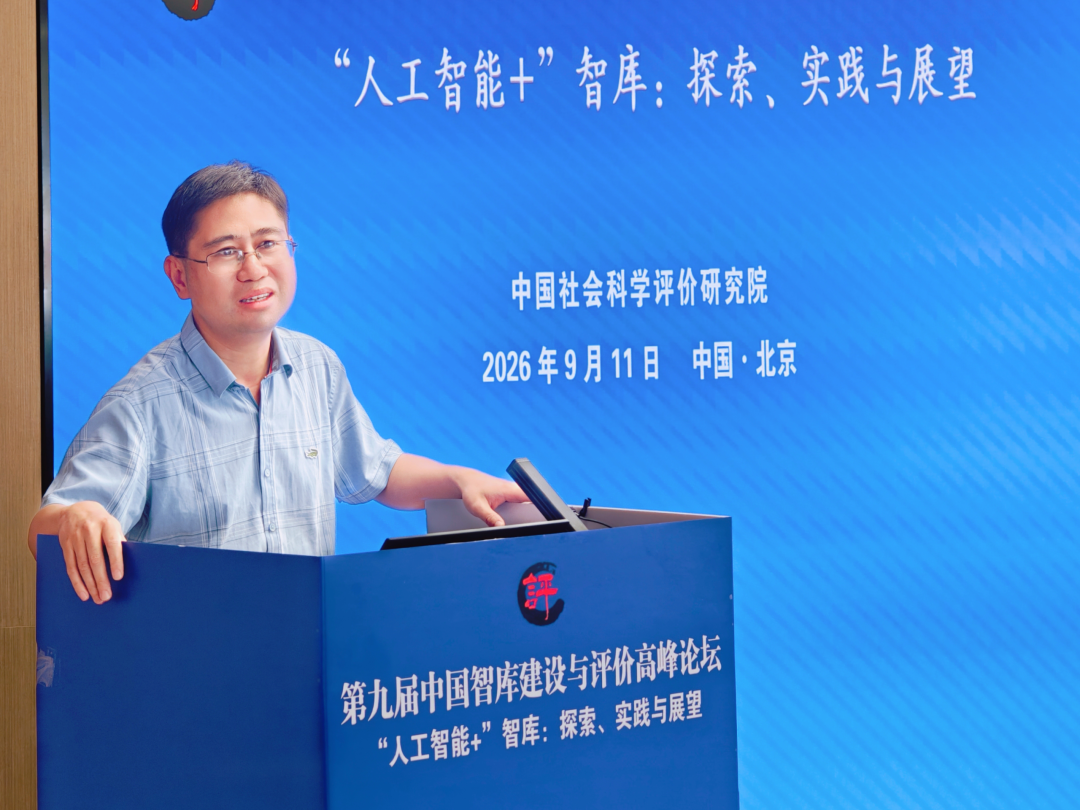
ZHONG Houtao, Deputy Director of the School of National Security at the University of International Relations
LI Yan analyzed the appropriate extent of AI involvement in think tank work and the boundaries of human–AI cooperation. She proposed that, while AI can help with foundational tasks such as organizing materials and running data-based simulations, researchers’ agency must be safeguarded so that they can carry out core tasks such as strategic assessment, value judgments and adapting analysis to national conditions.
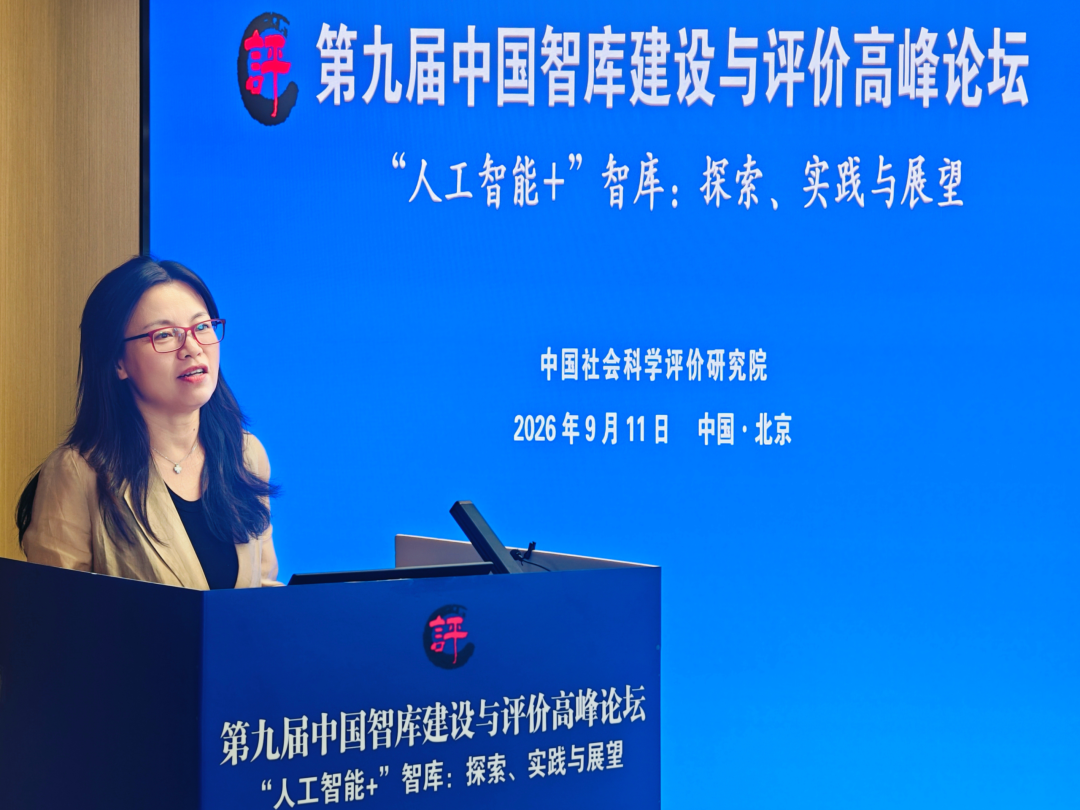
LI Yan, Director of the Institute of Science, Technology and Cybersecurity at CICIR
From the perspective of a frontline researcher and practitioner working on internal policy briefs, WANG Chengren analyzed AI’s systemic effects on think tank research paradigms, technical approaches and forms of research output. He emphasized the need to preserve ideas as think tanks’ core competitive strength and to better fulfill their role in advising policymakers and informing the public.
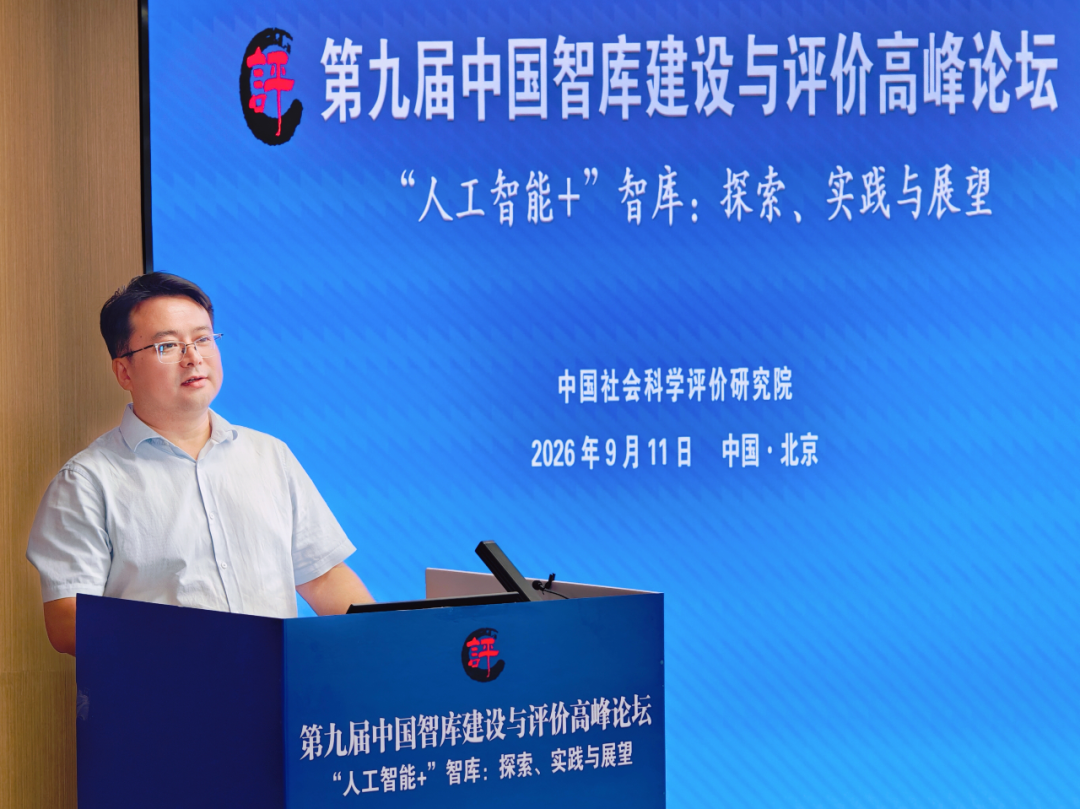
WANG Chengren, Director of the Internal Policy Briefs Division at the China Center for International Economic Exchanges, listed in the source as affiliated with CASS
XU Ning discussed AI-enabled digital innovation and development in think tanks. He introduced the Yangtze Industrial Development Institute at Nanjing University’s systematic exploratory work, which follows a three-stage progression from informatization to data-driven operations and then to intelligent operations, drawing on Nanjing University’s academic strengths in AI. These efforts offer practical approaches to digital innovation and development for new types of think tanks with Chinese characteristics.
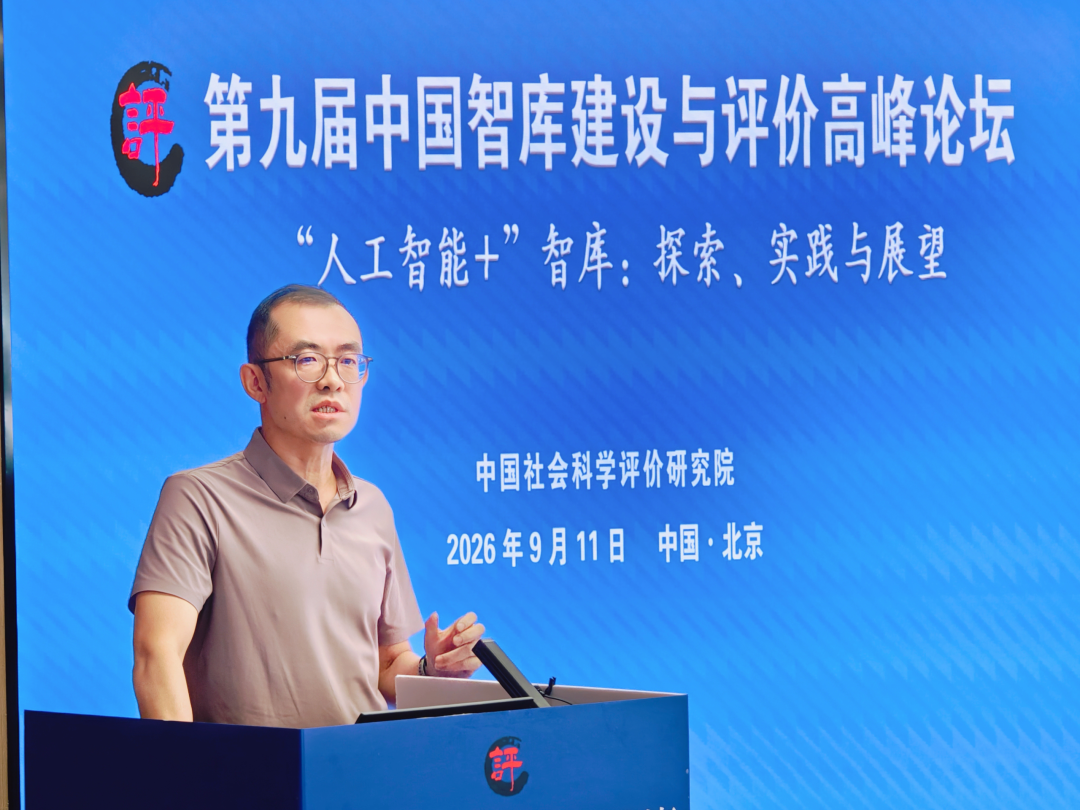
XU Ning, Deputy Director of the Yangtze Industrial Development Institute at Nanjing University
HU Wei, Director of the Department of Institutional and Think Tank Evaluation at CASSES, delivered the closing summary. She stated that the discussions had produced three important points of consensus. First, AI is a major factor reshaping think tanks’ knowledge production, organizational operations and decision-support services. Second, the deeper AI becomes integrated into think tank work, the more important it is to strengthen researchers’ central role and uphold essential standards concerning political direction, academic quality, data security and ethics. Third, AI-enabled think tank development must extend beyond isolated applications to integrated development of data, platforms, talent, institutions and evaluation, so that technological efficiency can translate into better ideas and more effective governance.
The China Think Tank Construction and Evaluation Summit Forum is a signature event that CASSES has developed over successive years. Focusing on “AI Plus” think tank development, this year’s forum brought together participants to assess trends from strategic and theoretical perspectives, share experience from different types of think tanks, and examine risks. The forum facilitated the exchange of emerging ideas and practical experience, and strengthened a shared commitment to combining technological innovation with enduring values, and human–AI collaboration with responsibility on the part of human actors. It provided fresh momentum for the deeper integration of AI into think tank development, and for improving the research quality and decision-support capabilities of new types of think tanks with Chinese characteristics.
Original Link: https://mp.weixin.qq.com/s/jqxWLcEroGmd8HMu-XCXKQ?scene=25&sessionid=#wechat_redirect