


Artificial intelligence is profoundly transforming contemporary society. From autonomous driving, medical diagnosis, financial decision-making to generative language models, AI technologies have become deeply embedded in everyday life, industrial practices, and public governance. At the same time, algorithmic discrimination, privacy violations, accountability, labor displacement, and conflicting values have become increasingly prominent, placing AI ethics at the forefront of research in the ethics of science and technology. Ethical ideas, however, are inherently shaped by cultural contexts. Different civilizations, institutional systems, and value traditions often hold divergent understandings of concepts such as the good, responsibility, risk, justice, autonomy, and freedom. AI ethics, therefore, cannot be defined solely through a single cultural perspective or theoretical framework.Instead, it calls for cross-cultural dialogue to identify shared concerns, recognize differences, and foster cooperation grounded in respect for diversity.
Against this backdrop, the Institute of Technology Ethics For Human Future and the School of Philosophy at Fudan University jointly organized the Conference on Cross-Cultural Dialogue on AI Ethics from April 24 to 26, 2024. More than 40 scholars from the United States, Germany, Austria, Russia, and China gathered to discuss the principles, practices, and governance of AI ethics. AI Ethics: A Cross-Cultural Dialogue is one of the major outcomes of this conference. Rather than simply comparing “Eastern” and “Western” intellectual traditions, the book centers on contemporary theoretical perspectives and real-world challenges, illustrating how scholars from diverse cultural backgrounds can collectively reflect on the ethical challenges posed by artificial intelligence.
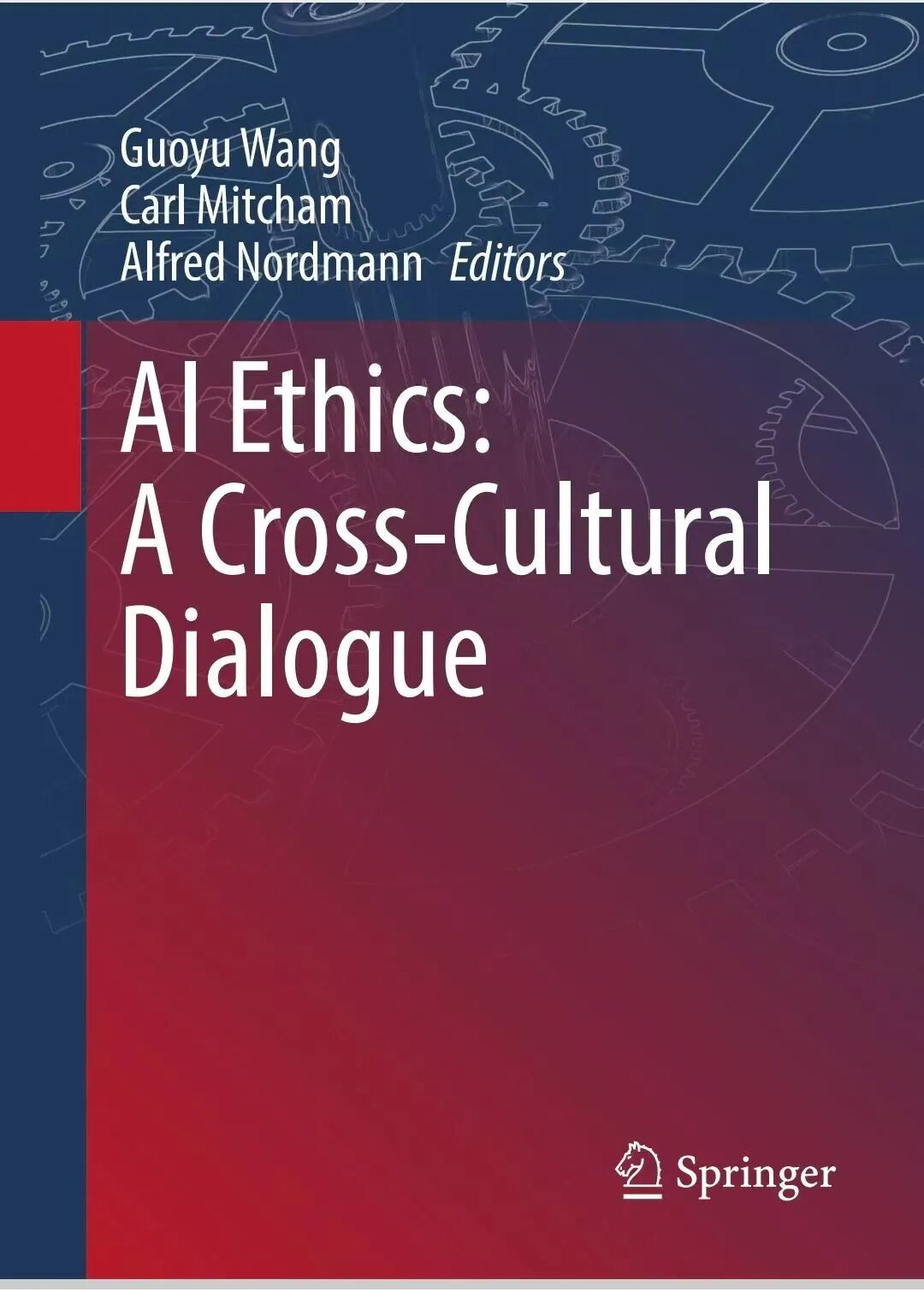
01 Publication Information
Editors: Guoyu Wang, Carl Mitcham, Alfred Nordmann
Publisher: Springer Nature Singapore Pte Ltd.
Publication Year: 2026
02 About the Editors
Guoyu Wang

Guoyu Wang is the Vice Chair of the International Advisory Board of Center for Global AI Innovative Governance, Professor at the School of Philosophy, Fudan University, and Director of the CAST-Institute of Technology Ethics For Human Future, Fudan University. She is also a Member of the Academic Advisory Committee of the Chinese Academy of Medical Sciences, a Member of the Medical Ethics Subcommittee of the National Ethics Committee, Chair of the National Steering Committee for Graduate Education in Applied Ethics, and a Member of the Shanghai Expert Committee on Artificial Intelligence Governance.
Carl Mitcham
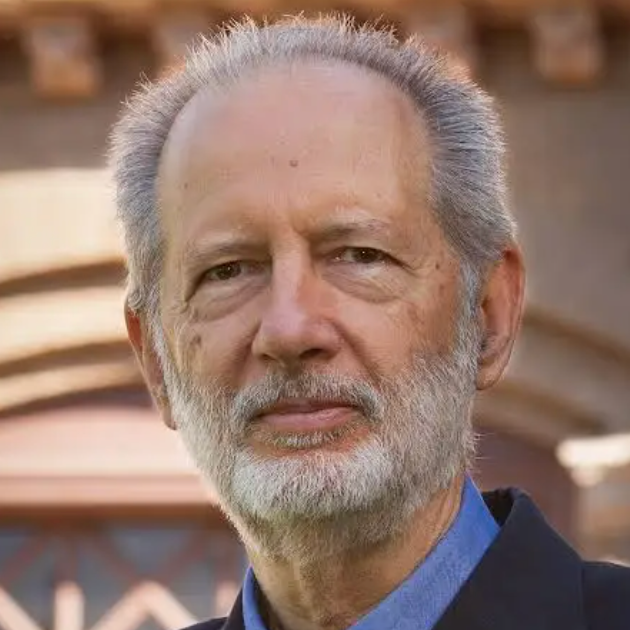
Carl Mitcham is Professor Emeritus in the Department of Humanities, Arts, and Social Sciences at the Colorado School of Mines, United States. He is a distinguished scholar in the philosophy of engineering and technology. His research primarily focuses on the philosophy and ethics of science, technology, and engineering.
Alfred Nordmann

Alfred Nordmann is Professor Emeritus in the Department of Philosophy at the Technical University of Darmstadt, Germany. His primary research interests include the philosophy of science, the philosophy of technology, particularly the philosophy of nanotechnology, and complexity science.
03 Overview of the Book
The central premise of this book is that while AI ethics must aspire to a degree of universality, such universality should not be presumed to constitute an already established consensus. Rather, it must emerge through dialogue, disagreement, and mutual learning. Even a seemingly fundamental question such as “What is AI ethics?” involves differences in engineering cultures, corporate interests, philosophical traditions, and political values. The development of artificial intelligence is unfolding in an increasingly multipolar world, shaped by complex dynamics involving platform competition, data governance, export controls, privacy policies, environmental costs, and international political relations. AI ethics, therefore, extends beyond managing the risks associated with technological applications. It also constitutes a cross-cultural conversation about values, power, social order, and visions of the future.
The book comprises 21 chapters organized into three parts. It primarily examines frameworks for the ethical principles of artificial intelligence from cross-cultural perspectives, exploring various forms of human–AI coexistence, as well as issues of narrative, epistemic justice, and decision-making in the age of AI. The authors further extend the discussion of AI ethics into the realms of politics and governance, comparing cultural understandings of technological progress, possibilities of value alignment, and trust in artificial intelligence in the digital era. Drawing on realist theories of international relations, the book also critically reflects on the possibilities and limitations of cross-cultural approaches to evaluating AI ethics.
Taken as a whole, this book is not only an academic collection on AI ethics, but also represents an international dialogue on technology, culture, and politics. It demonstrates that research on AI ethics should not be confined to abstract principles or checklists of technological risks. Instead, it calls for a comprehensive examination of value differences, institutional contexts, cultural traditions, global competition, and human–AI relationships. By bringing together diverse perspectives, the book illuminates the complexity of ethical reflection in the age of artificial intelligence and provides an important starting point for future research on the ethics of science and technology across cultural boundaries.
04 Catalog
1.Introduction
Guoyu Wang, Carl Mitcham, and Alfred Nordmann
——1
Part I Ethical Principles Responding to New Technology
2.Artificial Intelligence and the Common Good: A Cross-Cultural and Intercultural Exploration
Mark Coeckelbergh
——11
3.Explicability or Openness as the Fifth Principle in AI Ethics: A Proposal and Critique
Xiangtong Jia
——21
4.An Enhancement Alternative to the Principled Approach to AI Ethics
Bin Ye
——39
5.Refining the Ethical Guidelines for Conversational AI by Distinguishing Human Communication from Human-AI Interaction
Guoyu Wang and Yiqin Cao
——51
6.AI Ethics in the Context of Information
Tianen Wang
——67
7.Ethical Reflections on Persuasive Technology
Sumei Cheng
——77
8.AI for Moral Genealogy
Jinglin Zhou and Teng Zhou
——91
Part II Human-AI Interactions
9.Author and Scribe: Authoring and Authorizing With and Without Generative AI
Daria Bylieva, Alfred Nordmann, and Karina Vida
——109
10.Technology in the Anthropocene: Relationship and Symbiosis
Haosheng Wang and Hengwei Li
——127
11.Can We Place Epistemic Trust in AI?
Ju Wang
——145
12.Benevolent Deception and the Potential Conflicts Between Medical AI and Chinese Family-Oriented Decision Making for the Elderly
Hanhui Xu
——161
13.Epistemic Injustice in Mixed Traffic
Huiren Bai and Linfan Zhu
——173
14.The Social Process of AI-Fueled Digitalization: A Philosophical View
Armin Grunwald
——195
15.AI Narratives for an Ethical Relationship with Superintelligence
Qingfeng Yang
——205
Part III Politics and Governance of AI
16.A Critique of the Western Understanding of Technology in the Age of AI
Christopher Coenen
——219
17.Liberal and Limitist Approaches to the Development of Socially Beneficial Artificial Intelligence
Yongmou Liu and Yinghui Bai
——233
18.AI Cultures in Comparison: Theoretical-Methodological Approaches
Aleksandra Kazakova
——253
19.Rejuvenating Confucianism in the Digital Age
Yingjin Xu
——263
20.Rethinking the Phenomenon of Deceptive Value Alignment with Technological Logic
Hongxiu Yan and Yang Li
——279
21.Pathways, Limitations, and Future Directions for Embedding Values in Large Models
Ying Zhou and Yan Teng
——293
22.The Realist Perspective on Cross-Cultural AI Ethics
Carl Mitcham
——307
Original Link: https://mp.weixin.qq.com/s/8ZE0f5E_SplhRlW-N67zsg?scene=1