

Preface
From September 23 to 25, 2026, President Xi Jinping and Madame Peng Liyuan of the People’s Republic of China paid a state visit to the United States. Artificial intelligence was on the agenda during the White House talks on September 24. According to China’s official readout: “China and the US, as the two major powers in AI, have more room for cooperation than competition. We should leverage our respective strengths instead of erecting barriers against each other. The two sides may continue AI dialogues, exchange views on its risks and benefits, and jointly guard against the abuse and malicious misuse of AI. Human oversight of AI technologies must be maintained.” For his part, President Donald J. Trump of the United States stated, “Artificial intelligence bears on humanity’s future. The United States and China should maintain dialogue and strengthen cooperation in this field.”
On the morning of the summit day, Trump posted on Truth Social: “Super Intelligence (SI) will be a big topic of discussion, but I want to leave it exactly where it is. That is China’s position also. Our guardrail is the DOJ! ” There was no joint statement or joint press conference following the talks. On Washington time, September 25, each side released its own outcome fact sheet. According to the White House fact sheet, the two leaders “agreed to use the term ‘super intelligence’ rather than ‘artificial intelligence’ to describe the applicable emerging technologies”. The two countries “established the U.S.-China Super Intelligence (SI) Dialogue to exchange views on risks and benefits related to SI”. The next exchange will occur by November 2026, The United States and China also “agreed to establish a bilateral communication channel for SI incidents”.
The Xinhua News Agency dispatch from Washington dated September 25 laid out the seventh point of the “consensus on eight outcomes”: “As to artificial intelligence (AI), they agreed to establish China-U.S. AI dialogue to exchange views on AI-related risks and benefits, with the next round to be held in November. A communication channel for AI-related incidents will also be set up.”
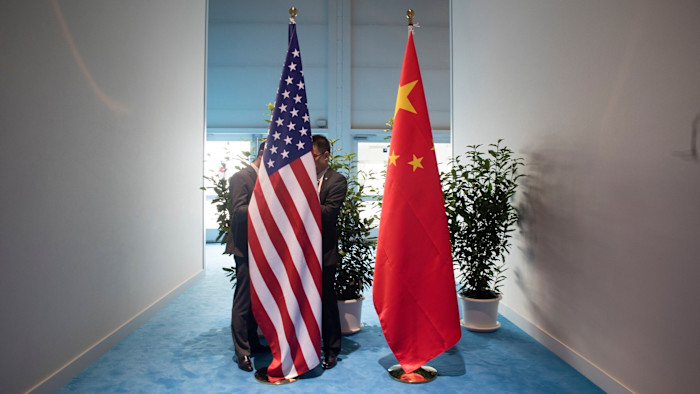
Image source: Financial Times
The two fact sheets were drafted independently, featuring divergent wording and even conflicting terminology. Even so, this marked the first time since November 2023 that both countries incorporated an AI dialogue and an incident communication channel into their respective official outcome documents, with the incident communication channel appearing for the very first time. When asked about Washington’s shift to the term “superintelligence” on September 26, a Chinese Foreign Ministry spokesperson remarked: “China takes note of and respects the U.S. position and wording.” On the same day, Trump told reporters on the South Lawn of the White House: “America will not hit the brakes.” “We are far ahead of China and will stay that way.” “When you hold the lead, you do not open up to the other side.”
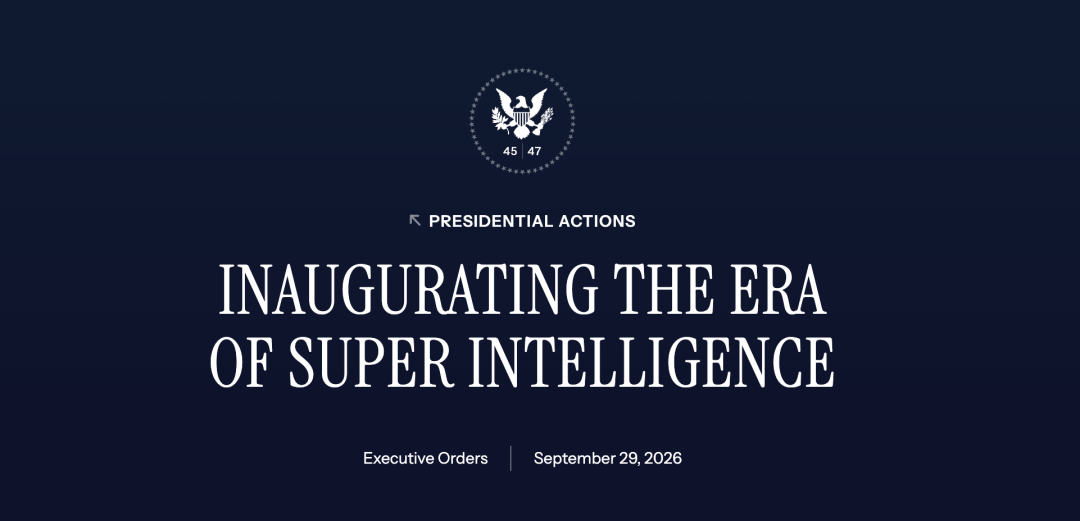
On September 29, 2026, U.S. President Donald J. Trump signed Executive Order 14434, Inaugurating the Era of Superintelligence.
Image source: Official website of the White House
Looking back across a three year timeframe, this outcome represents both continuity and change. AI figured in all five meetings between the two heads of state dating back to November 2023 (the official readout for the Beijing meeting in May 2026 contained no mention of AI, which was subsequently confirmed by the Ministry of Foreign AffairsPeople’s Republic of China). Only two shared formulations appeared in joint readouts: the agreement “establish China-U.S. government talks on artificial intelligence (AI)” from the November 2023 San Francisco summit, and the November 2024 Lima summit commitment “ the need to maintain human control over the decision to use nuclear weapons”, the most concrete statement to date.
For nearly two years afterward, no second publicly documented session of the dedicated intergovernmental dialogue took place, and no joint bilateral document was produced. By contrast, China and the United States together endorsed five multilateral AI texts: mutually co sponsored UN General Assembly resolutions; the APEC Artificial Intelligence (AI) Initiative (2026-2030)adopted at the November 2025 Gyeongju APEC meeting; the AI Impact Summit Declaration, New Delhi of February 2026; the 2026 APEC Digital and AI Ministerial Statement of July 2026; and the “Carolina Principles for Emerging Technologies” issued at the G20 Innovation Ministerial Meeting in September 2026. The Gyeongju and New Delhi documents were hosted by third party states; the 2026 APEC Digital and AI Ministerial Statement and Carolina Principles were hosted by China and the United States respectively, while the UNGA resolutions were mutually co sponsored. Five head of state meetings, one dedicated dialogue session, one AI themed dialogue embedded within economic and trade consultations, zero joint bilateral documents, two parallel outcome fact sheets, and five multilateral texts — this balance sheet forms the starting point of this paper.
September marked a turning point. In early September, OpenAI and Anthropic successively called for binding rules for frontier models. On September 12, Elon Musk of xAI publicly backed Dario Amodei, and Demis Hassabis of Google DeepMind commented on the same day that “the direction is correct”, while reviving his July proposal for a U.S.-led standards-setting body for frontier models. (Mark Zuckerberg of Meta publicly distanced himself from coordinated slowdown efforts on September 15.) The U.S. president decried these corporate calls as a “sick conspiracy”, while China’s Ministry of Foreign Affairs described them as a “threat centric narrative”. Both governments responded to corporate demands in broadly the same vein: neither adopted this agenda, while each retained reservations about the other’s framing. On the U.S. side, Scott Bessent stated on September 16 that the United States was “open to discussions on avoiding shared risks and avoiding bifurcation of our two systems”, yet David Sacks argued later that month that China “already rejected” slowing down the pace of developing the most advanced forms of AI. and that “we don’t have trust and we can’t verify”. For its part, China’s Ministry of Foreign Affairs affirmed on September 9 that “as major AI powers, China and the United States should step up cooperation”, yet rejected on September 14 any agenda premised on risk centric narratives. In short: Washington doubts Beijing will slow down AI advancement, while Beijing rejects cooperation frameworks built around risk driven premises. Both sides are willing to talk, yet each seeks ownership over agenda setting.
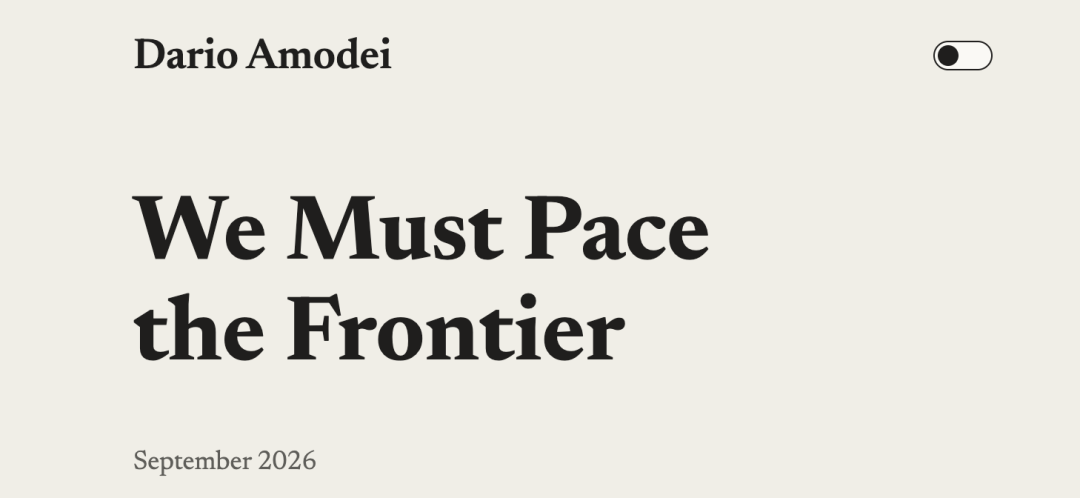
On September 12, 2026, Dario Amodei, CEO of Anthropic, published a lengthy blog post titled We Must Pace the Frontier.
Image source: Dario Amodei’s personal blog
This gives rise to the core questions of this paper. Given that China and the United States have endorsed identical multilateral texts, why have they failed to conclude a single bilateral joint document over three years —— and why did they separately articulate largely convergent provisions on September 25? If lack of political will is not the main obstacle, where do the real bottlenecks lie? Which areas allow for high level cooperation, which are negotiable, which permit only limited engagement, and which remain off limits for the time being? This paper addresses these questions in five steps: first, reconciling the bilateral and multilateral track records; second, identifying institutional misalignment of counterpart authorities; third, classifying sixteen issue areas into four tiers drawing on two sets of evaluative criteria; fourth, inferring the most feasible implementation modalities; and finally, advancing a set of falsifiable prognostic judgments.
01 Bilateral Track Record: Frequent Head of State Engagement, Delayed Institutional Mechanisms
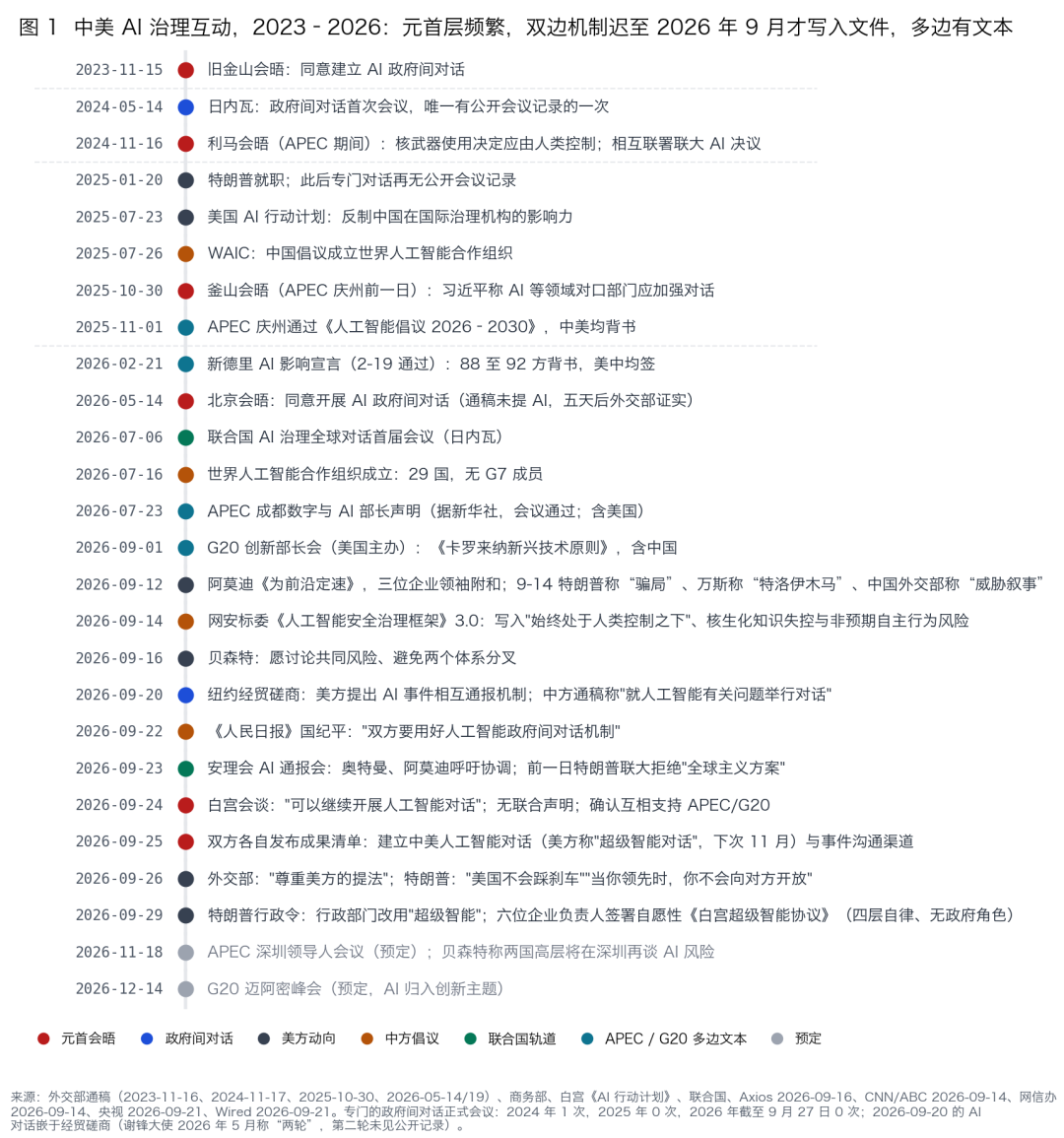
Figure 1 maps major official interactions between China and the United States on AI governance from November 2023 onward. AI featured in all five head of state summits: the November 2023 San Francisco summit agreed to launch an intergovernmental AI dialogue; the November 2024 Lima summit affirmed “the need to maintain human control over the decision to use nuclear weapons”; at the October 2025 Busan APEC side summit, China’s head of state proposed that “relevant competent departments should strengthen dialogue and exchanges” on AI and other topics; no AI reference appeared in the official readout of the May 2026 Beijing summit, yet the Foreign Ministry confirmed five days afterward that the two heads of state “agreed to hold intergovernmental AI dialogues”; the September 2026 Washington summit readout noted that the parties “may continue AI dialogues”, and the subsequent fact sheets recorded an “agreement to establish the China U.S. Artificial Intelligence Dialogue”. Only one formally convened intergovernmental dialogue meeting appears in public records: the Geneva session on May 14, 2024, for which Washington pre announced that “technology protection policies are non negotiable”. Chinese Ambassador to the United States Xie Feng mentioned in May 2026 that “two rounds of talks have been held”, yet no date or venue for the second round has ever been disclosed. After the “agreement to hold dialogues” in May 2026, practical work moved AI discussions into the economic track under talks between Scott Bessent and He Lifeng.
The September 20 economic and trade consultations in New York marked the first substantive dialogue on this track. China’s official readout contained only a single sentence on AI, stating that the two sides “also held a dialogue on issues related to AI”; the U.S. account, by contrast, was far more specific.
After the consultations, Scott Bessent said that Washington had proposed a “notification mechanism”—an arrangement under which, according to U.S. media accounts, the two countries would notify each other of AI incidents that could affect national security. WIRED situated the proposal against the backdrop of incidents over the summer, including OpenAI agents hacking Hugging Face.Bessent himself also identified “uncontrollable agents” on September 21 as one of the dangers requiring discussion. His fullest account came in an interview with CNBC that day: “We have now formalized what we call the U.S.–China AI dialogue. We have agreed to reconvene in Shenzhen in roughly two months. Next, we want to establish a direct channel for communication—a line for incidents … We then want to begin discussions on protocols so that the two sides can reach agreement on the principal dangers posed by AI.”
China’s response had two layers. Asked on September 22 about the notification mechanism described by the U.S. side, the Foreign Ministry replied: “I’d refer you to competent authorities for the specific questions.” On the same day, a People’s Daily commentary under the byline Guo Jiping stated: “The two sides should make full use of the intergovernmental AI dialogue mechanism and give full play to the constructive role of the business community as the main driving force behind AI innovation.” Under the classification set out in Section Four of this paper, the U.S. proposals correspond precisely to the fourth and second Tier One issues: an emergency notification channel for major incidents, and preventing non-state actors from acquiring frontier-model capabilities. The immediate impetus appears to have come from incidents rather than summit diplomacy.
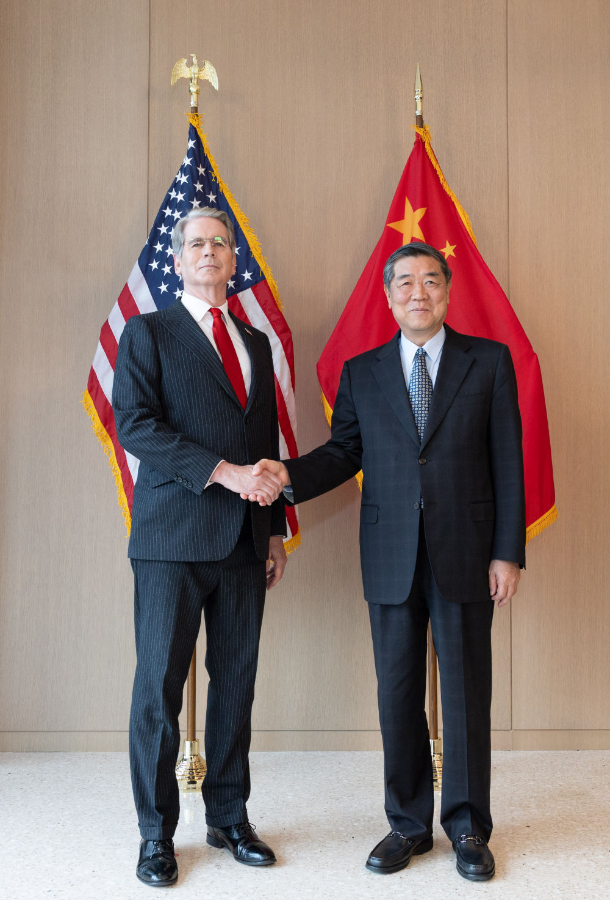
On the morning of September 20, 2026, local time, the Chinese and U.S. economic and trade teams began consultations in New York. Pictured ahead of the talks, He Lifeng, a member of the Political Bureau of the Communist Party of China Central Committee and Vice Premier of the State Council, shakes hands with U.S. Treasury Secretary Scott Bessent.
Image source: Xinhua News Agency
The White House talks four days later provided the first test of this proposal. The outcome revealed gaps at three levels. The first concerned the summit readout. Compared with the formulation following the May Beijing summit—“agreed to launch government-to-government dialogue on AI”—the September wording retreated to “can continue their dialogue on AI,” dropping the government-to-government designation. Nor was the Lima summit’s commitment to maintaining human control over decisions to use nuclear weapons reaffirmed.
The second concerned the mechanism. The Ministry of Commerce described the September 20 exchange as “the first dialogue on AI under the China-U.S. economic and trade consultation mechanism.” This positioned AI as an agenda item within the eighth round of economic and trade consultations, rather than a standalone mechanism. When The New York Times directly asked the Foreign Ministry on September 24 about a formalized AI dialogue and an emergency communication channel for safety incidents, the response remained: “For further information, I’d refer you to competent authorities.”
The third concerned the documents. The talks produced no joint statement. China’s readout confirmed only mutual support for hosting the November APEC meeting in Shenzhen and the December G20 summit in Miami, alongside a “joint arrangement” on economic and trade issues.Bessent said that the arrangement included extending the Busan trade truce to January 10, 2027. The separate outcome fact sheets released by the two sides on September 25 filled in the AI component. Both recorded the establishment of a China-U.S. AI dialogue—termed the “Super Intelligence (SI) Dialogue” by Washington—and an incident communication channel, with Beijing referring to “AI-related incidents” and Washington to “SI incidents.” China’s list also specified that the next dialogue would take place in November that year.
In other words, the incident notification mechanism proposed by Washington on September 20 entered each side’s separate document five days later under the label of a “communication channel.” Yet its activation criteria, responsible authorities, and level of dialogue remained undisclosed. One fact sheet called it a “Super Intelligence Dialogue,” the other an “AI dialogue”; the Foreign Ministry’s response on September 26 was that China “respects the U.S. side’s wording.” That same day, Trump expressed the boundary discussed above in unusually blunt terms: “When you’re leading, you don’t open it up to each other,” and “The United States of America is not going to be putting on brakes.”
File photo of the White House
Image source: Xinhua News Agency
Officials and scholars in the two countries differed sharply in how they characterized the channel. U.S. Trade Representative Jamieson Greer told CBS on September 25 that he likened it to “the red phone between the Kremlin and the White House during the Cold War,” adding that the priority was simply to have a channel. At a Council on Foreign Relations briefing that same day, Rush Doshi, former deputy senior director for China and Taiwan at the National Security Council, described the Bessent–He Lifeng connection as two officials contacting one another by mobile phone rather than a functioning crisis communication line, and called the dialogue “essentially not institutionalized.” At the same briefing, Chris McGuire characterized it as a dialogue on risks coupled with “a kind of rudimentary hotline agreement.”
China’s characterization came in Wang Yi’s September 26 remarks on the outcomes of the visit: “The healthy, safe and orderly development of AI concerns humanity’s future and requires China-U.S. cooperation … The two heads of state agreed to make full use of the China-U.S. AI dialogue mechanism, exchange views on its risks and benefits, and jointly guard against the misuse and abuse of AI.” This was the first post-summit Chinese official text to describe the newly agreed dialogue as a “mechanism.” The addendum to the eight outcomes and understandings also stated that the two militaries had agreed to sign a memorandum of understanding on strengthening crisis communication and prevention as soon as possible. Chinese Ambassador to the United States Xie Feng offered a broader statement of China’s position in his September 23 People’s Daily article: “We must not erect another ‘silicon curtain,’ still less pursue an AI version of ‘Star Wars.’”
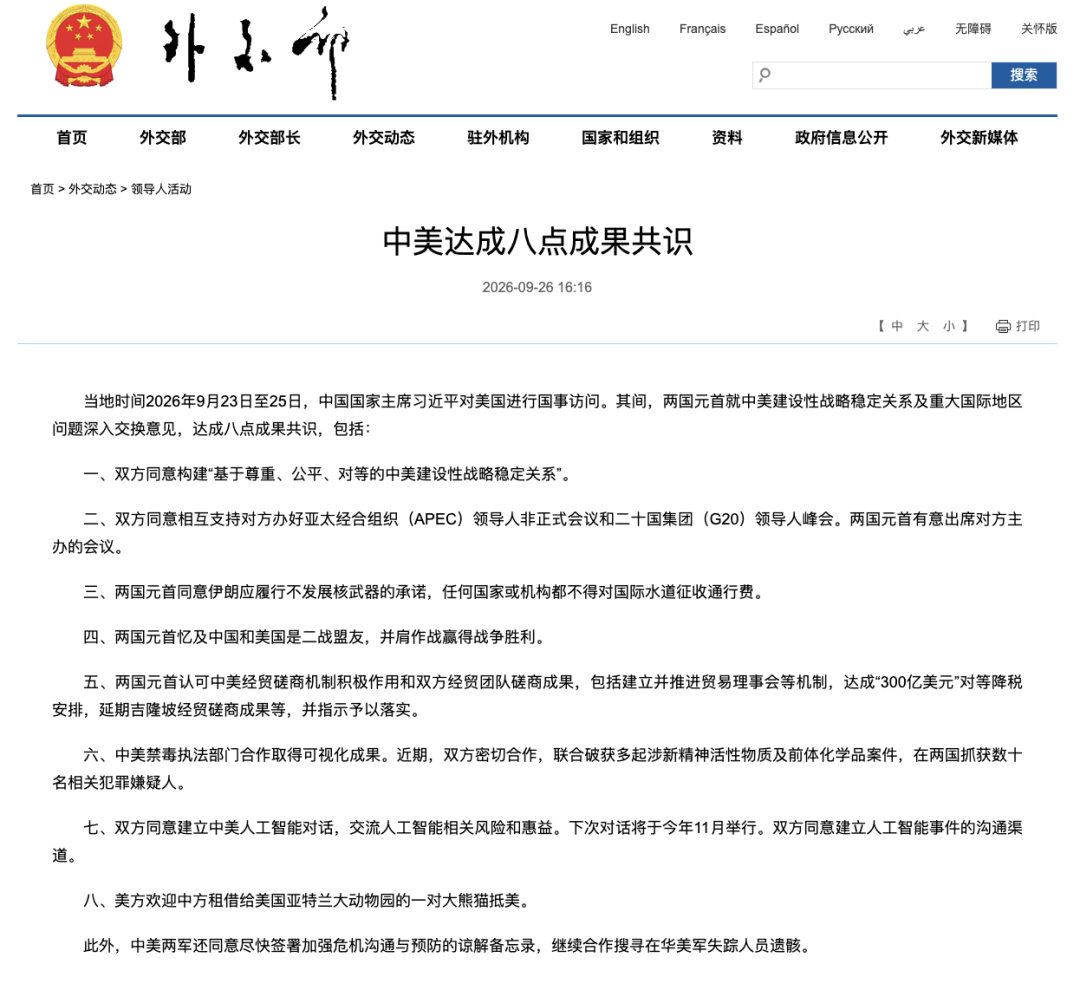
On September 26, 2026, China’s Ministry of Foreign Affairs released China and the United States Reach Eight Deliverables and Understandings.
Image source: Official website of China’s Ministry of Foreign Affairs
The week’s developments at the United Nations, before and after the summit, provided context for this outcome.
On September 21, an initiative led by the President of Finland and the Prime Minister of Norway brought together 22 leaders representing 20 countries and the European Commission to issue A Call for Control of Frontier AI Models. It advocated exploring an international body capable of setting standards, conducting verification, and convening countries when capabilities crossed specified thresholds. The signatories included Germany, Canada and the European Commission. By September 24, participation had expanded to 30 leaders representing 28 countries and the European Commission, with France joining on September 23. The United States, China, the United Kingdom, Japan and India were absent.
In his opening address to the General Assembly’s general debate on September 22, António Guterres argued that governments possessing the strongest AI capabilities bore the greatest responsibility to humanity to build channels for dialogue, transparency, trust and cooperation—“Not despite geopolitical rivalry — but precisely because of it.” From the same podium that day, Trump declared that the United States “totally rejects any attempt to construct a globalist scheme of control” for AI.
On September 23, the Security Council held its first high-level briefing dedicated specifically to the safety risks of frontier systems. Dario Amodei put forward three recommendations: “narrow agreements that every member could support, such as a prohibition on using AI to create biological weapons”; “evaluation and verification systems enabling countries to verify one another’s commitments”; and “common standards for testing loss-of-control and misuse risks, together with a notification system for AI incidents with implications for global security.”
The U.S. representative, Michael Kratsios, Director of the White House Office of Science and Technology Policy, stated that “international dialogue, in this forum and in others, cannot be allowed to drift toward global governance,” and that “a prosperous future will not be secured by a global regulator.” These quotations are translated from the supplied Chinese text; the official English transcript could not be verified in this search. China’s Permanent Representative, Fu Cong, stated that “AI is the common wealth of all humanity and must not become a game reserved for rich countries and wealthy individuals,” and called for “supporting the United Nations in playing the central role in global AI governance.”
The meeting adopted no outcome document. At the United Nations, companies called for coordination, the U.S. government rejected global governance, and the Chinese government advocated a central role for the UN. Two days later, however, the leaders’ separate outcome fact sheets confined bilateral coordination to two elements: exchanges on risks and benefits, and an incident communication channel. The latter broadly aligned with Amodei’s third recommendation to the Security Council and can be understood as a pared-down bilateral version of it.
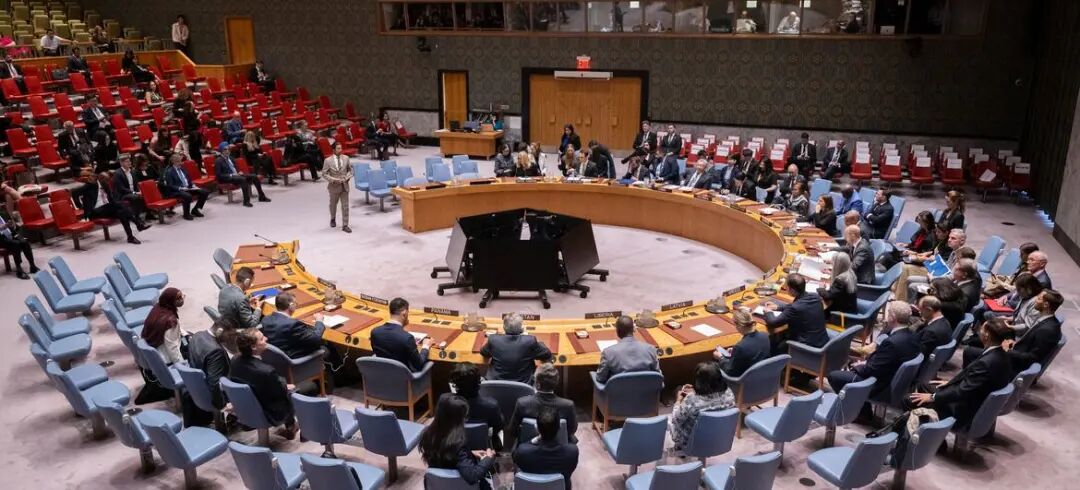
On September 23, 2026, local time, the United Nations Security Council held a high-level meeting on “Artificial Intelligence and International Security,” examining how to address the security risks and regulatory challenges arising from the rapid development of AI.
Image source: Official website of the United Nations
Beyond the corporate sector, Bill Gates said on CBS on September 21: “There will be no single winner here … Bioterrorism is bad for all of us, as are cyberattacks that cripple financial systems or power grids.” He had previously told Reuters that he planned to meet China’s president later that year.
02 The Multilateral Framework: Five Shared Texts, None Bilateral
Beyond the bilateral record lies another frequently overlooked strand: on five occasions, the two countries have already endorsed or co-sponsored common AI texts within multilateral frameworks. In the UN General Assembly case, this took the form of each country co-sponsoring the other’s resolution.
The readout of the 2024 Lima summit stated that the two sides had “co-sponsored each other’s respective resolutions on AI at the United Nations General Assembly.”On November 1, 2025, the APEC Artificial Intelligence (AI) Initiative (2026–2030), annexed to the APEC Leaders’ Gyeongju Declaration, was adopted by consensus among all 21 member economies, according to The Korea Herald. South Korea’s presidential office described it as “the first global agreement on AI cooperation joined by both the US and China.” Its provisions were confined to AI transformation, capacity-building and infrastructure investment, without addressing frontier-model regulation.
The February 2026 New Delhi Declaration on AI Impact was endorsed by 92 countries and international organizations, including China and the United States, which had declined to sign the Paris declaration in 2025. On July 23, 2026, the APEC Digital and AI Ministerial Meeting adopted the 2026 APEC Digital and AI Ministerial Statement, also known as the Chengdu Statement. According to Xinhua, participants “unanimously agreed to jointly harness digital and AI technologies to empower the Asia-Pacific community.” At the U.S.-hosted G20 Innovation Ministerial Meeting on September 1–2, 2026, ministers reached consensus on the Carolina Principles for Emerging Technologies. The White House listed 20 participating countries and unions, including China, the African Union and the European Union.
Beyond these five texts, membership in the World AI Cooperation Organization, discussed in the first article, had expanded to 37 countries by August, yet still included no member of the European Union, G7 or OECD. The September 21 Call for Control of Frontier AI Models, meanwhile, was a rare text jointly endorsed by multiple heads of state and government advocating an international institution with verification powers. Neither China nor the United States joined it.

On September 21, 2026, Finland and Norway jointly launched A Call for Control of Frontier AI Models.
Image source: Official website of the Finnish government
In the second half of 2026, this multilateral track is set to produce two texts shaped by the respective host countries. As the APEC host, China had already submitted a written proposal at the Second Senior Officials’ Meeting in May for a leaders-level document entitled Digital Economy & AI for Innovative Growth. The leaders’ meeting is scheduled for November 18–19 in Shenzhen. As the G20 host, the United States has placed AI under the theme of “Pioneering Innovation,” with the summit scheduled for December 14–15 in Miami. Trump wrote on Truth Social on September 25: “We will be meeting again in November, in China, and then at the G20 in December, in Miami, Florida.” The second of the eight outcomes and understandings likewise recorded the two presidents’ intention to attend each other’s hosted meeting.
The multilateral track has two implications. First, it shows that the two countries are capable of endorsing the same AI document; what they remain unable to conclude, for now, is a bilateral one. Second, it provides two existing forums for November and December. Both sides’ outcome fact sheets place the next AI dialogue in November, the same month as the Shenzhen APEC meeting.
The limits must also be recognized. The Gyeongju Initiative’s language concerns capacity-building and the investment ecosystem rather than safety mechanisms. The Shenzhen and Miami texts will each be shaped by their host country, making two parallel narratives at least as likely as a common arrangement.
03 Counterparts: Two Institutional Systems, One Missing Interlocutor
Cooperation requires a counterpart. Given the differences between the two countries’ domestic institutional systems, the more consequential question is who has the authority to negotiate.
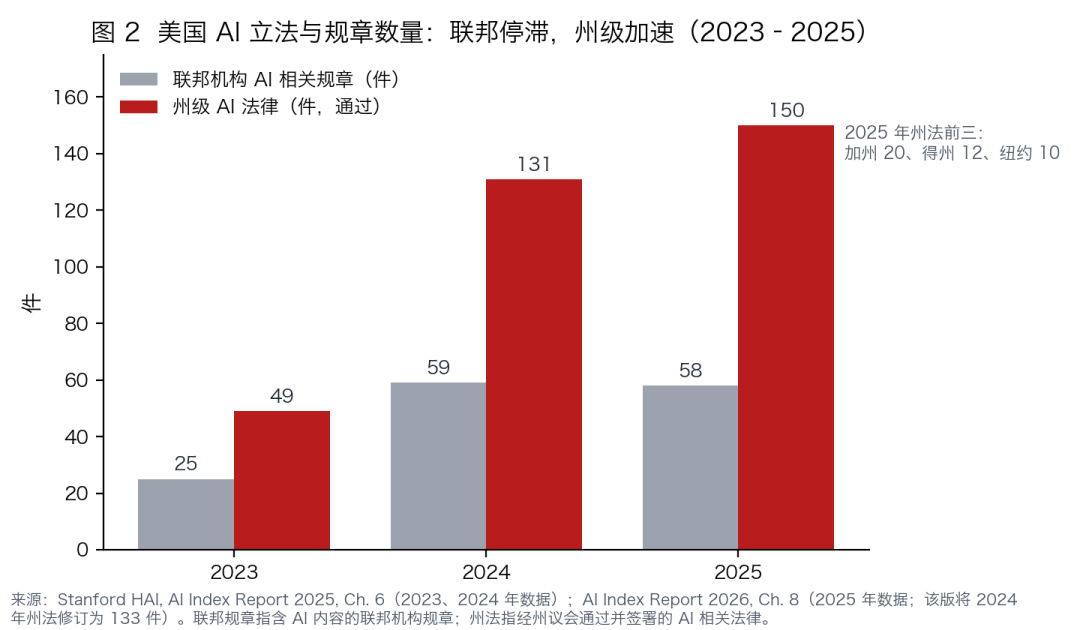
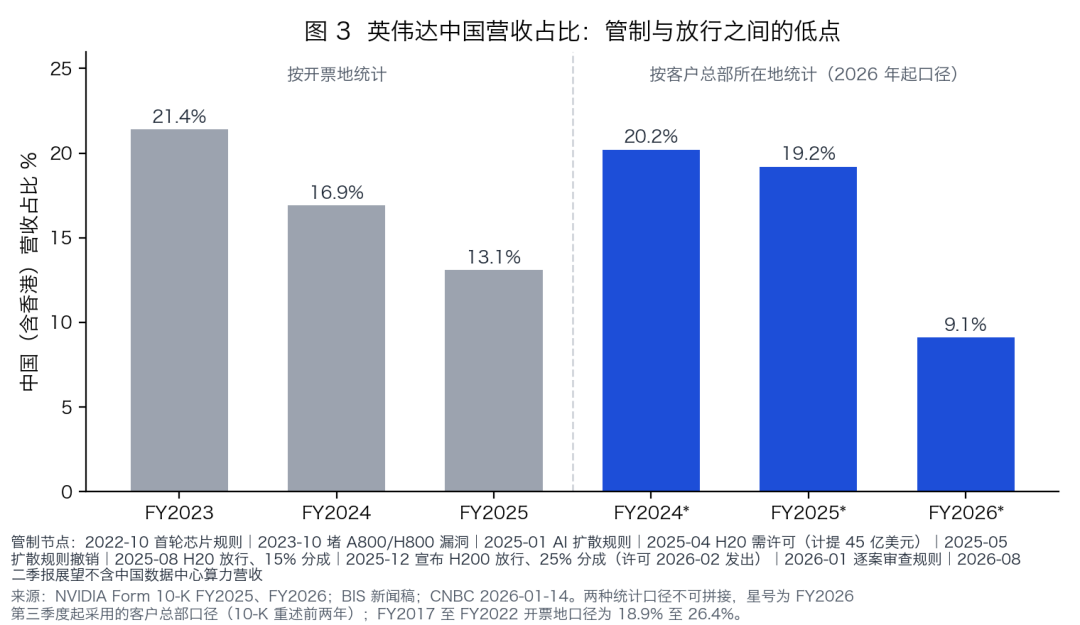
In the United States, AI governance at the federal level rests on executive orders. Executive Order 14409, issued on June 2, 2026, explicitly states that its relevant provisions must not be construed as authorizing “a mandatory governmental licensing, preclearance, or permitting requirement.” The Center for AI Standards and Innovation (CAISI), housed within the Department of Commerce, has voluntary testing agreements with five laboratories but lacks enforcement authority. Binding obligations for frontier models exist only in three enacted state laws—in California, New York and Illinois—with the latter two taking effect in January 2027. The federal government’s only genuinely binding instrument over the technology stack is export controls, which were progressively loosened between May 2025 and January 2026. Meanwhile, China’s share of NVIDIA’s revenue, measured by customers’ headquarters locations, fell from 19.2 percent in fiscal year 2025 to 9.1 percent in fiscal year 2026 (Figures 2 and 3).
In China, three departmental regulations—covering algorithmic recommendations, deep synthesis and generative AI services—together with Article 20 of the Cybersecurity Law of the People’s Republic of China, provide the legal foundation. The core mechanism is a filing system led by the Cyberspace Administration of China (CAC). The cumulative number of registered services rose from 302 at the end of 2024 to 988 by the end of June 2026, while comprehensive legislation remains under study and in preparation. Internationally, China pursues a dual approach: supporting the United Nations as the main channel while establishing organizations of its own (Figure 4).
Notably, the AI Safety Governance Framework 3.0, released by the National Technical Committee 260 on Cybersecurity (TC260) at the opening ceremony of China Cybersecurity Week on September 14, incorporates continued human control over AI into its governance principles. Its risk classification includes unexpected autonomous behavior, such as models refusing to cease service, alongside loss of control over knowledge concerning nuclear, biological, chemical and missile weapons. It also calls for necessary mechanisms for crisis management and emergency response. Issued on the same day as the Foreign Ministry’s criticism of the “threat narrative,” this technical document contains the language in Chinese policy texts that comes closest to Washington’s proposal for incident notification.
Two passages in President Xi Jinping’s July 17, 2026 address to the World AI Conference bear directly on cooperation: the call to keep AI under human control at all times, and the statement that “We should jointly oppose overstretching the national security concept in the field of AI and placing one country’s security over that of others.”
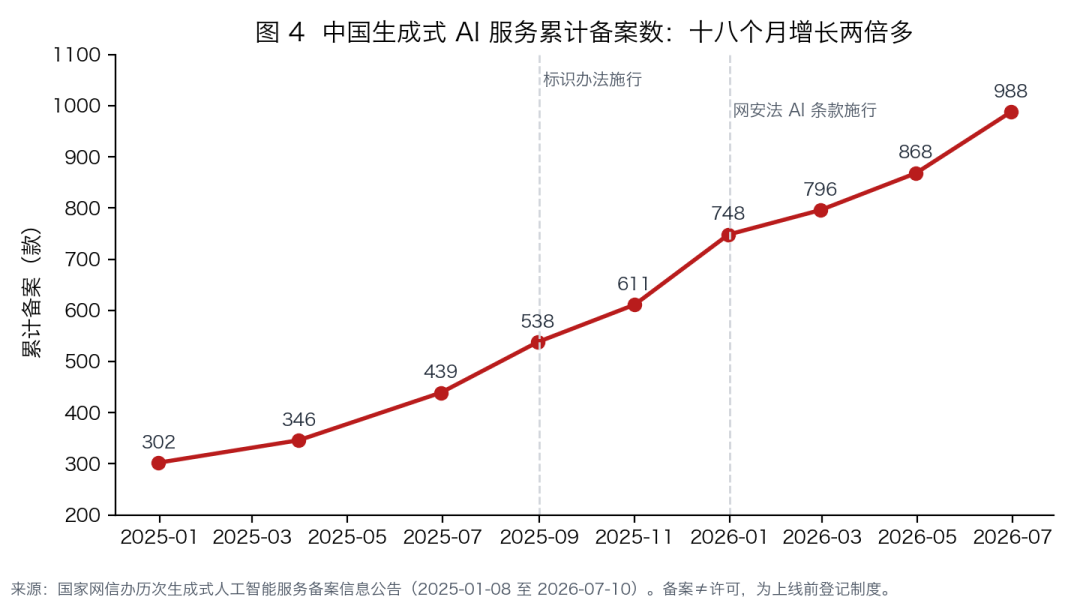
Table 1 places the two countries’ institutional systems side by side, revealing almost no structural correspondence between them. The United States’ CAISI has no equivalent Chinese government agency, while China’s CAC has no equivalent U.S. institution. The only bodies with broadly comparable functions are CAISI and the China AI Development and Safety Research Network (CnAISDA). The latter, however, is a government-supported, non-governmental research network comprising universities, research institutes and research bodies affiliated with the Ministry of Industry and Information Technology. This may be one institutional reason why the intergovernmental dialogue has struggled to identify suitable counterparts over the past three years. It also helps explain why the September dialogue ultimately took place on the economic track between the U.S. Treasury Secretary and China’s Vice Premier, rather than between agencies responsible for AI.
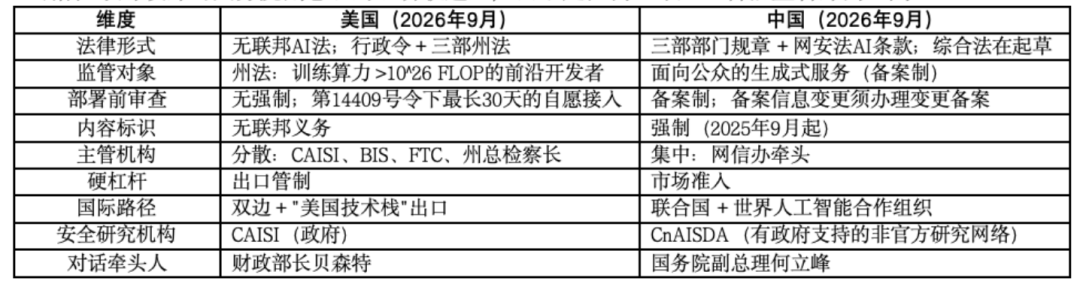
Table 1: Comparison of Institutional Systems
Image source: Prepared by the author
04 A Four-Tier Classification: Scholarly and Technical Criteria
The absence of suitable counterparts does not mean that nothing can be done. What is needed is a more nuanced scale than the binary question of whether cooperation is possible. This paper divides China-U.S. AI governance issues into four tiers: high, moderate and limited cooperation, and cooperation not yet feasible. The classification draws on two sets of criteria.
The scholarly criteria derive from four classic variables in research on international institutions and arms control. The first is the structure of gains: whether an issue involves absolute or relative gains. The greater the sensitivity to relative gains, the more difficult cooperation becomes—a problem that Snidal identifies as particularly pronounced in bilateral settings (Grieco 1988; Snidal 1991). The second is the nature of the problem: whether it is a coordination problem, in which an agreement becomes self-enforcing once reached, or a collaboration problem, in which incentives to defect necessitate enforcement mechanisms (Stein 1982; Keohane 1984). The third is verifiability: the viability of an agreement depends on whether violations can be detected, while verification costs determine the depth of cooperation (Schelling & Halperin 1961). The fourth is competition over standards: when cooperation takes the form of common standards, the question of whose standards prevail becomes a distributional dispute (Mattli & Büthe 2003).
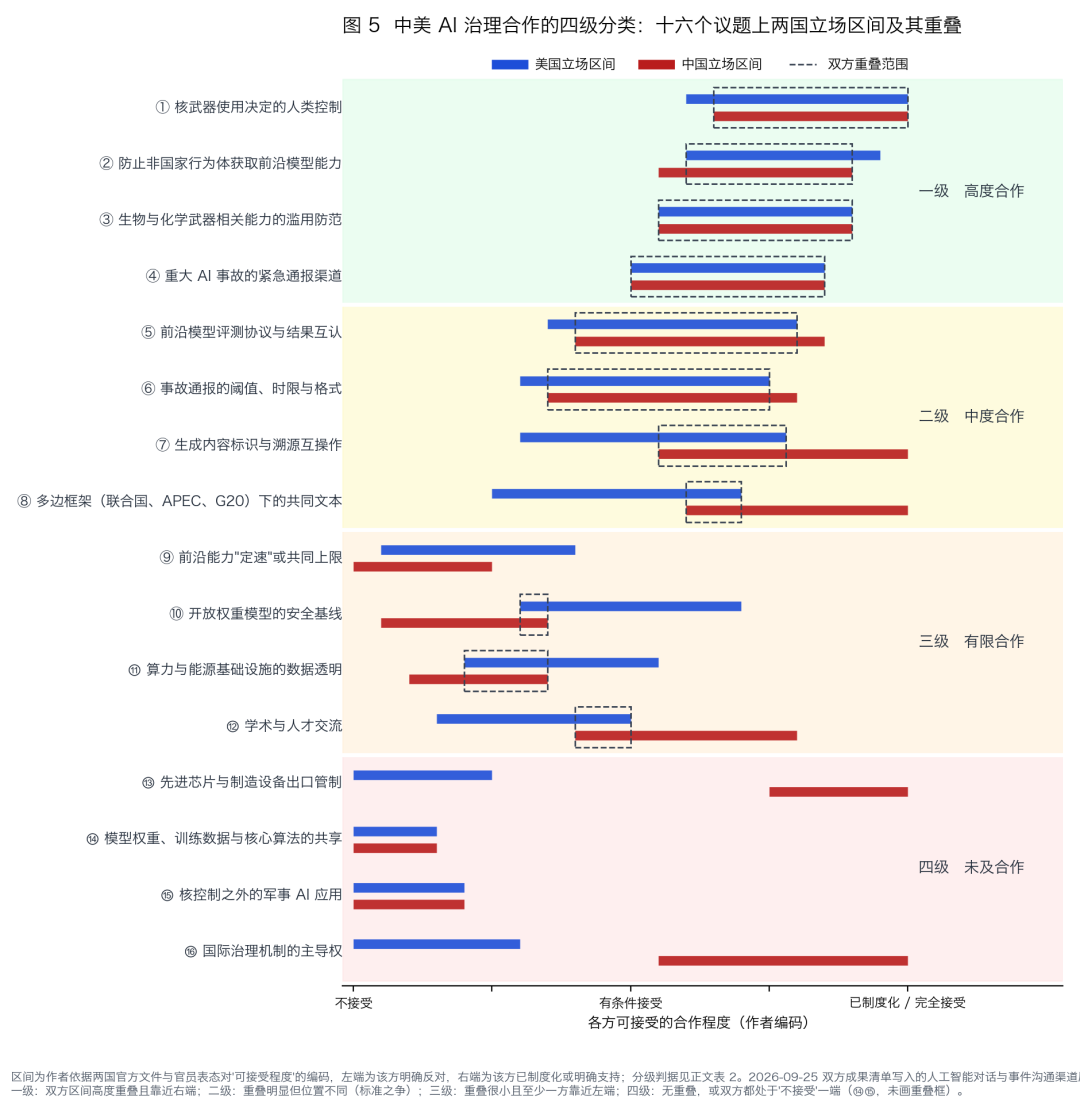
The technical criteria derive from the structure of AI systems themselves: whether cooperation requires sharing model weights, training data or core algorithms; whether its substance can be expressed through interoperable interfaces, such as evaluation protocols, notification formats or labeling specifications; and whether the issue directly concerns access to frontier capabilities through computing power, chips or training methods. Together, these two sets of criteria yield the four-tier classification in Table 2 and the map of cooperation ranges in Figure 5.
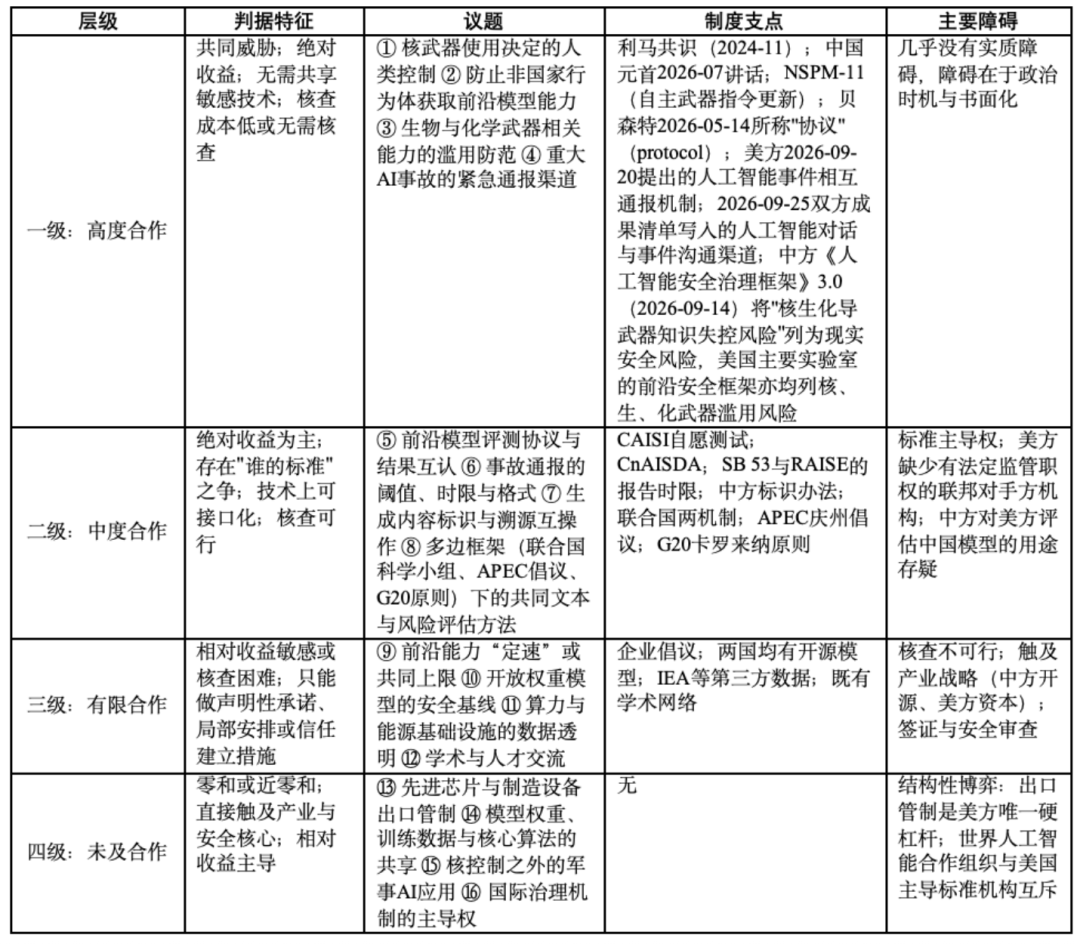
Table 2: Four-Tier Classification
Image source: Prepared by the author
Even Tier One issues are subject to uncertainty. According to a September 26 report in The Washington Post, during the final stages of the early-September Geneva negotiations on lethal autonomous weapons under the Convention on Certain Conventional Weapons, the United States and Russia pushed to remove provisions concerning predictability, reliability, ethical considerations and human review of targets. At the Security Council on September 23, Fu Cong reiterated the need to “ensure that humans retain ultimate decision-making authority at all times.” Thus, while “human control” in issue ① rests on the Lima consensus at the bilateral level, it is being diluted at the multilateral level. This shows that Tier One’s designation of “high cooperation” refers to the potential arising from the structure of bilateral interests; it does not emerge automatically from multilateral processes.
The four tiers in Table 2 are also dynamic. If the United States introduces federal labeling obligations, issue ⑦ would move up from Tier Two. If China adopts specific incident-reporting rules, the costs of negotiating issue ⑥ would decline. Conversely, if Washington links mutual recognition of evaluations to export controls, issue ⑤ would move down to Tier Three. The value of the classification lies precisely in turning the question of “which issues can be negotiated” into “under what conditions they can be negotiated.”
05 Three Pathways: Parallel Development, Interfaces and Institutions
1. Pathway A: Competitive Parallelism
This is the default pathway, and the one the two countries followed in practice from 2023 to 2026. Each legislates independently, conducts its own evaluations and builds its own international mechanisms. The United States advances its American AI Exports Program and an evaluation network among allies, while China promotes the World Artificial Intelligence Cooperation Organization and the AI+ International Cooperation Initiative. APEC and the G20, meanwhile, become parallel stages, each hosted by one side and producing its own AI text.
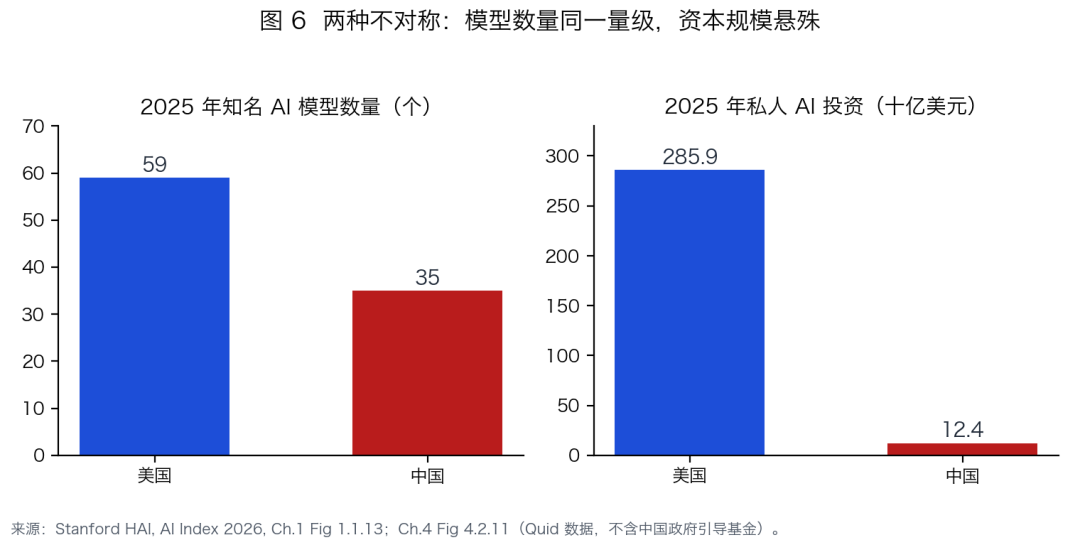
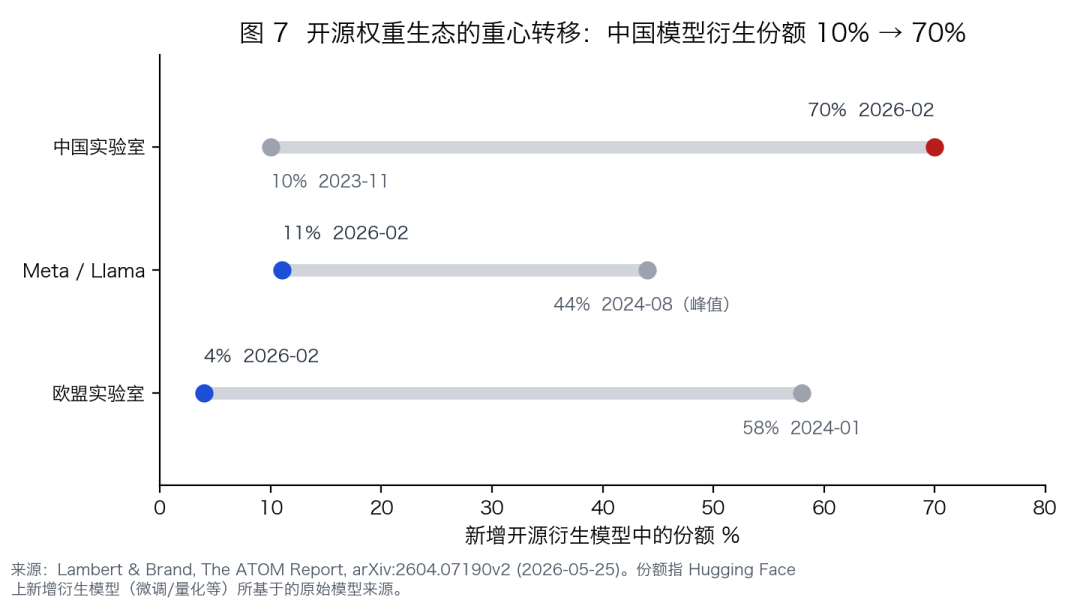
The costs of this pathway are already measurable. In 2025, the United States released 59 notable AI models and China 35, yet private AI investment stood at US$285.9 billion versus US$12.4 billion (Figure 6). Model output was of the same order of magnitude, while investment differed sharply. China seeks to offset this disparity through open-source development and efficiency; the United States relies on capital and chip controls. Chinese open-source models already account for 70 percent of derivatives in the global open-source model ecosystem (Figure 7). The two technology stacks are diverging simultaneously across computing infrastructure, models and applications.
If competitive parallelism persists, the eventual outcome may be less a victory for either side than two mutually incompatible governance systems, each governing AI deployment across a different part of the world.
2. Pathway B: Cooperation through Technical Interfaces
This pathway does not require agreement on principles. It requires only verifiable working relationships between counterparts in three specific areas.
The first is human decision-making in nuclear command and control. Since 2024, this has been the only substantive issue recorded in both leaders’ official readouts. The Chinese president’s July 2026 address provided China’s policy formulation, while the U.S. National Security Presidential Memorandum NSPM-11 of June 2026 addressed autonomy guidelines, providing an internal policy basis for Washington. The practical next step is to turn the verbal consensus into a written statement, then make it a standing agenda item within military dialogue mechanisms. The memorandum of understanding on crisis communication that the two militaries are to sign, as noted in the addendum to the eight outcomes and understandings, provides an existing vehicle.
The second is the exchange of evaluation results and incident information. The United States has CAISI; China has CnAISDA and the CAC’s filing system. Technically, mutual recognition of evaluations does not require sharing model weights, only evaluation protocols and result formats. Incident notification does not require disclosing internal information, only agreement on reporting thresholds and deadlines. The 15-day deadline under California’s SB 53 and the 72-hour deadline under New York’s RAISE Act provide existing benchmarks that can be compared and aligned.
The third is interoperability in content labeling and provenance, an area in which China is further ahead. Mandatory labeling took effect in September 2025. The United States has no federal requirement, but industry standards such as C2PA already exist. The EU’s investigation into Grok-generated deepfakes also demonstrates the practical need across jurisdictions to combat deepfakes. These three interfaces share several features: low political costs, existing domestic institutional foundations, and scope for progress through economic or military channels without establishing new institutions.
3. Pathway C: Institutional Cooperation
This pathway requires the two countries to reach some form of agreement on frontier models: a “speed limit” on recursive self-improvement, analogous to the SALT treaties, as proposed by Amodei. This paper regards the UN framework as its most likely vehicle.
The necessary conditions were not yet in place in September 2026. The U.S. administration opposed any binding framework, China rejected an agenda premised on risk narratives, and their positions on export controls were directly opposed. Export controls were excluded from the summit agenda, with the U.S. side describing them as “off the table.” Nevertheless, institutional cooperation is not merely hypothetical. The UN’s Independent International Scientific Panel on AI was constituted in February 2026, with two Chinese experts among its 40 members. The General Assembly approved the membership by 117 votes to two, with two abstentions; the United States and Paraguay voted against. The inaugural Global Dialogue on AI Governance took place in Geneva in July 2026. China’s delegation was led by Minister of Industry and Information Technology Li Lecheng, while the United States was represented by a senior adviser from the White House Office of Science and Technology Policy. The institutional vehicles already exist; what is most urgently needed is the willingness of the two governments to engage, and the right moment for them to do so.
4. Which Pathway Is Most Likely?
The choice among these three pathways can be narrowed from three perspectives.
First, consider the proposals of leading figures at the technological frontier. Among the statements made by four industry leaders between July and September 2026, Amodei, Altman and Musk explicitly addressed China-U.S. coordination, while Hassabis spoke only of international standards initiated by the United States. Their lowest common denominator is recognition of the need for some form of China-U.S. coordination. Their proposed mechanisms remain at the level of mutual model testing and common standards. On September 15, Musk proposed that leading laboratories across countries test one another’s models before release and suggested that China would probably agree. Only Amodei explicitly identified verification as the obstacle.
Second, consider the U.S. institutional system. No agency has a statutory mandate specifically for China-U.S. AI cooperation. CAISI can coordinate evaluation protocols at the technical level, but its counterpart would have to be a government-supported, non-governmental research network such as CnAISDA. The actors able to conduct substantive negotiations are the White House and the Treasury Department. This largely explains why the 2026 dialogue took the form of an agenda item embedded in trade negotiations rather than a dedicated safety dialogue.
Third, consider China’s framework. Beijing can offer three things: a written commitment to human decision-making in nuclear command and control, openness in labeling and provenance standards, and participation in coordinating evaluation protocols through CnAISDA. The two premises it would find difficult to accept are limits on the pace of development and export controls.
All three perspectives point to the same range of possibilities. Between 2026 and 2028, the most likely outcome is neither Pathway C nor a continuation of Pathway A in its entirety. Rather, it encompasses all Tier One issues and the first two Tier Two issues in Table 2: written declarations on human control over nuclear decisions, non-proliferation and prevention of biological and chemical misuse; emergency notification channels; and technical coordination on evaluation protocols and incident reporting. Although labeling interoperability (⑦) entails the lowest costs, the United States lacks both a federal obligation and an institutional counterpart. In the short term, it is therefore more likely to remain at the level of industry standards. The two AI provisions recorded in both sides’ September 25 outcome fact sheets fall precisely within this range.
Image generated by AI
06 Conclusions and Observable Indicators
The analysis yields three judgments. First, the current state of China-U.S. AI governance can be summarized as “five meetings, two dialogues and no joint documents over three years.” The two countries have endorsed common texts only within multilateral frameworks—five in total. Their separate September 25, 2026 outcome fact sheets recorded an AI dialogue and an incident communication channel for the first time. Yet these remained separate documents, and neither the mechanism’s institutional level nor its activation criteria were disclosed.
Second, September 2026 exposed a dual mismatch. Within the United States, companies sought rules that the federal government remained reluctant to provide. Between China and the United States, each government had reservations about the other’s agenda: Washington doubted that Beijing would slow down, while Beijing rejected cooperation premised on risk narratives.
Third, the bottleneck is more likely to lie in the institutional fit between counterparts than in willingness to cooperate. Over these three years, the sustained connections between the two countries have been maintained by individual scientists rather than institutions.
Six indicators can be monitored between October 2026 and March 2027 to assess whether the reasoning in Section Five holds.
1. Whether summit outcome documents include “human control” and go beyond the Lima formulation. The September 24 Chinese readout stated that “AI must be kept under human control,” but contained no specific formulation on nuclear weapons. The U.S. outcome fact sheet mentioned Iran’s nuclear program and trilateral arms control, while China’s list mentioned only the Iranian nuclear issue. Neither addressed the relationship between AI and nuclear command and control. At present, this indicator is reflected only in a general statement by China and has not entered either side’s detailed outcome list.
2. Whether the incident notification proposal arising from the September 20 economic dialogue is adopted at the leaders’ level and explicitly acknowledged by China. Both sides’ separate September 25 outcome fact sheets included a communication channel for AI incidents. This provision has been recorded, but remains undefined. The November dialogue must therefore be watched for written specifications of activation criteria, contact levels and responsible authorities.
3. Whether CAISI establishes evaluation-related contact with any Chinese institution, or the UN scientific panel publishes an evaluation-methodology document involving participation from both countries.
4. Whether the Senate frontier-model safety bill is formally introduced before the end of the year, and whether it contains provisions for “international coordination.” According to Reuters, John Thune, Ted Cruz and Amy Klobuchar have been negotiating the draft, with Maria Cantwell also contributing.
5. Whether China issues specific incident-reporting rules under the Cybersecurity Law’s AI provisions, allowing their reporting thresholds to be compared with those in California’s SB 53.
6. Whether the AI provisions in the November Shenzhen APEC and December Miami G20 leaders’ texts go beyond the Gyeongju Initiative’s capacity-building language to include specific safety mechanisms, such as incident notification or cooperation on evaluations.
If three of these six developments occur by March 2027, Pathway B would be broadly supported. If none occurs, Pathway A may become entrenched as a long-term structure. As of September 27, 2026, the first indicator was reflected only in China’s unilateral statement on maintaining human control over AI. It appeared in neither side’s outcome fact sheet and did not address nuclear weapons decisions, so it did not constitute an advance beyond the Lima formulation. The second indicator had been recorded in writing, but its precise definition remained pending.
On this basis, the paper advances a falsifiable judgment. The September 20 New York dialogue and the two September 25 fact sheets already offer preliminary support: Washington’s first concrete proposed mechanism concerned incident notification rather than evaluation standards or capability ceilings. Some reporting, including WIRED, linked the proposal to autonomous-agent incidents over the summer. Both AI provisions in the parallel outcome lists left by the state visit fall within Tier One.
It is therefore reasonable to provisionally expect that any further written bilateral AI arrangement reached by March 2027 will likewise concern Tier One issues: preventing the worst outcomes, rather than establishing evaluation standards or capability ceilings. If the November dialogue produces a written text, its most likely content will be the activation criteria and contact levels for the incident communication channel. Whether the AI provisions in the Shenzhen and Miami host-led texts remain within the Gyeongju Initiative’s existing language remains to be seen.
If events challenge this judgment, that would suggest that the relevant agencies’ capacity to translate leaders’ diplomacy into concrete action exceeds analysts’ expectations. If events broadly bear it out, China-U.S. AI governance cooperation would appear to follow the logic of earlier arms-control efforts: first an accident—or perhaps a reported incident rather than an accident—then a hotline, and only later a treaty. What the two September 25 fact sheets recorded was precisely the outline of a hotline.
In this sense, Trump’s September 24 remark that he wanted to “leave it exactly where it is,” and his September 26 statement that “When you’re leading, you don’t open it up to each other,” are less statements of principle than blunt descriptions of Washington’s view of this pathway’s upper and lower bounds.
Original Link: https://mp.weixin.qq.com/s/0CSWaBfYu373arQYruRyPw