


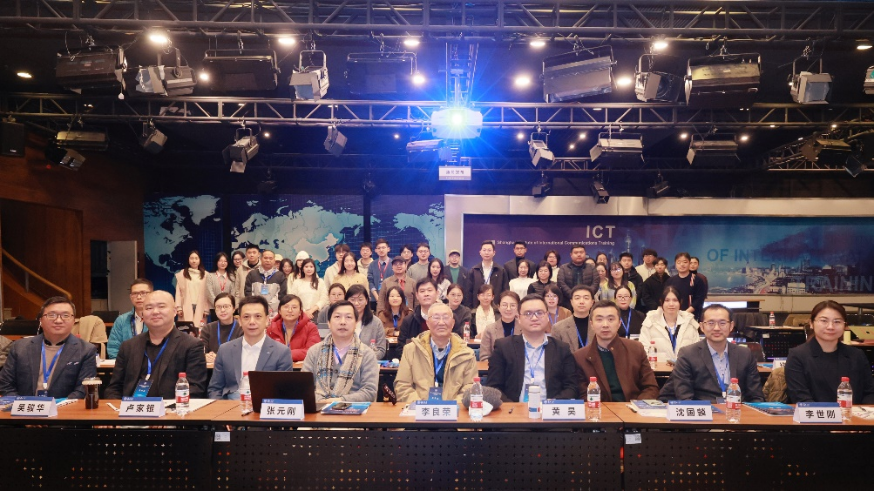
On December 13, 2025, the 10th Forum on Communication and State Governance was held at Fudan University. Themed “When Platforms Meet AI: Shifts in Cyberspace Governance,” the forum was hosted by the Center for Communication and State Governance Research of the Fudan Development Institute (FDDI) and the School of Journalism at Fudan University, with co-organization by the Fudan University Information and Communication Research Center.
Experts from academia and industry across journalism and communication, law, public administration, and computer science gathered to discuss transformations in cyberspace governance.
Governance Transformation Driven by the Integration of Platforms and AI
“The deep integration of platforms and AI has brought about many frontier governance challenges, driving changes in the logic of cyberspace governance,” said Zhang Zhian, Director of the Center for Communication and State Governance Research (FDDI) and Professor at the School of Journalism at Fudan University, who presided over the opening ceremony.
He noted that while governance in the platform era centered on spatial governance at the infrastructure level, holistic ecosystem governance has become increasingly critical in the AI era. Beyond visible communication elements, deeper dynamics—such as algorithm-driven distribution and interaction mechanisms, and the transformation of communication forms brought by large language models (LLMs)—require joint exploration by academia and industry.

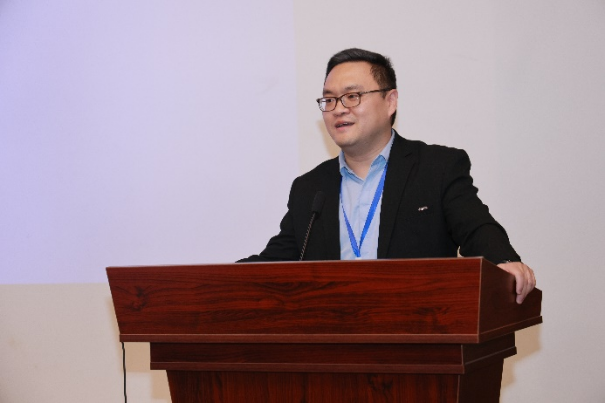
Huang Hao, Vice President of FDDI, stated in his remarks that the institute, with its 28 sub-institutions, has built a research matrix characterized by both depth and breadth. He described the Center for Communication and State Governance Research as both a “founding” and “high-performing” unit within this matrix, long committed to forward-looking, strategic, and long-term academic research and decision-making consultancy.
“The speed of technological development ensures that reflections on governance never cease, providing the humanities and social sciences with constant new momentum,” he said, expressing hope that the Center would continue to facilitate interdisciplinary integration and contribute more significantly to cyberspace governance and international AI governance.
Zheng Wen, Vice Dean and Professor at the School of Journalism at Fudan University, introduced the school and welcomed guests. She observed that the integration of platforms and AI is generating new governance challenges across the information ecosystem, algorithmic regulation, and data security, which urgently require interdisciplinary collaboration.
She expressed hope that the forum would deepen understanding of internet governance, distinguish risks from opportunities, and explore forward-looking, inclusive, and actionable governance pathways rooted in Chinese practice with a global perspective, contributing insights to the modernization of China’s national governance system and capacity.
“Technology is the armor, while values are the core we must protect,” said Wu Junhua, Vice President of iFLYTEK Co., Ltd., in the keynote session. He proposed the “NewsOS” five-layer architecture, covering factual intelligence, intelligent co-creation, intelligent distribution, AI governance, and national strategy.
Entering the AI-native era, he argued, AI is no longer merely an auxiliary tool but is becoming the “soil” on which the industry stands and the “air” it breathes; existing production relations must adapt to transformations in productive forces. He emphasized that AI’s mission is to enhance news value, with the core goals of “making the truth clearer, public perception steadier, and national narratives more powerful.”

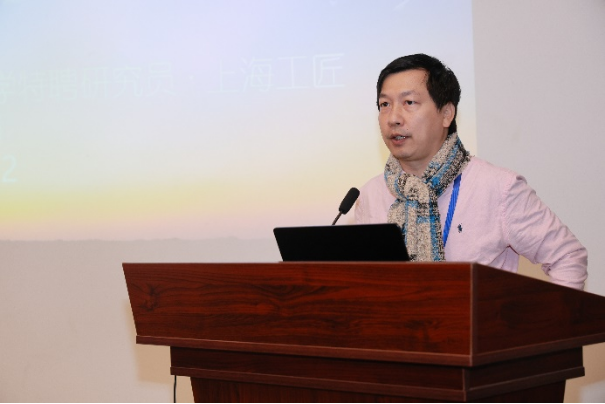
Zhang Yuangang, Vice President of the Shanghai IT Talent Association and a “Shanghai Artisan,” drew on more than two decades of programming experience to discuss technological trajectories. In his view, China–U.S. AI competition revolves around three pillars—computing power, algorithms, and data—yet follows distinct strategic paths. Using autonomous driving as an example, he suggested that the United States, leveraging computing advantages, has developed “Intelligence Mode” and “God Mode,” while China has pursued breakthroughs through vehicle–road coordination (a V2X approach). “The AI era is not a binary opposition of 0 and 1; rather, it creates a probabilistic state akin to a ‘door left ajar,’” he said. He further proposed a “Six Dimensions of Openness” initiative—covering energy, computing power, models, data, governance, and application products—to ensure that technological advancement aligns with humanistic values and societal needs.
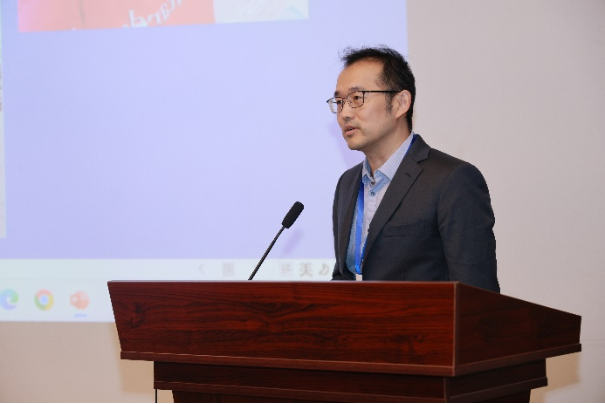
Addressing disputes triggered by AI, Li Shigang, Vice Dean and Professor at the Fudan School of Law, pointed to emerging challenges such as difficulties in evidence collection and low infringement costs. Citing cases involving assisted-driving accidents, infringement disputes over AI-generated works, and deepfake fraud using portraits and voices, he argued that traditional legal logic for determining liability remains viable. He identified two major challenges: first, the sharp increase in difficulty of fact-tracing and verification after misinformation is disseminated through AI; and second, the lowered threshold for infringement and crime, which can lead to widespread violations of portrait and voice rights. “The law should make infringement more difficult and fact-finding simpler,” he said, calling for an improved rule-of-law safeguard system for the AI era through interdisciplinary collaboration.
This year, the Center for Global AI Innovative Governance (CGAIG) was officially launched at the opening of the World AI Conference and established at Fudan University, with the aim of building a platform linking Shanghai, China, and the world for global AI governance and industry–academia–research collaboration. Xin Yanyan, Deputy Secretary-General of CGAIG and Assistant Researcher at FDDI, observed that global AI governance currently features simultaneous consensus-building and fragmentation, while the “intelligence divide” in the Global South remains prominent. She noted that a series of global AI governance initiatives proposed by China are gradually being integrated into broader global governance agendas, and that the Center continues to advance research and international cooperation. Looking ahead, she argued that strengthening an international discourse system for AI governance will require broader stakeholder participation and improved mechanisms for discourse translation and external communication, enhancing the global communication effectiveness of a “people-centered” governance philosophy through vivid Chinese practice.

Governance Issues in the Development of Digital-Intelligent Societies
From a governance perspective, what new challenges and transformations are AI and LLMs bringing to cyberspace governance? From a social perspective, what urgent risks must be addressed during the transition to a digital-intelligent society?
A roundtable session moderated by Professor Zheng Wen featured Professor Lu Jiayin of Renmin University of China, Professor Niu Jing of Huazhong University of Science and Technology, and Professor Peng Guibing of East China University of Political Science and Law.
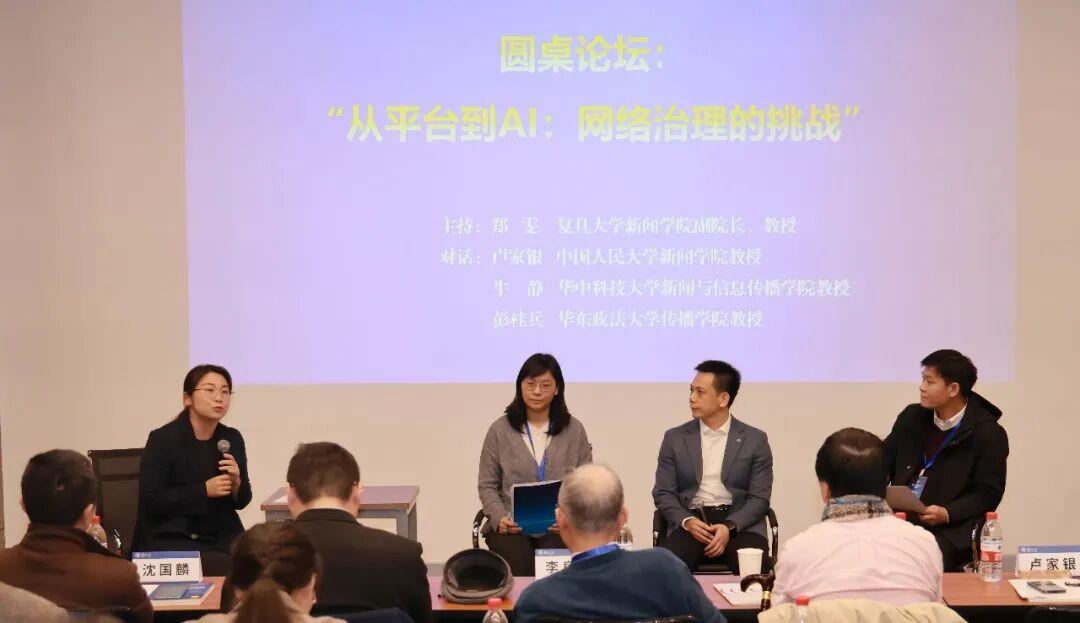
Professor Lu Jiayin argued that AI is significantly reshaping power relations and social cognition in cyberspace. In terms of power relations, AI intensifies interest-based bargaining among stakeholders in cyberspace governance, further destabilizing existing power structures. In terms of social cognition, lowered costs and thresholds for forgery, coupled with the “intelligentization” of information production, make truth harder to identify and increase the difficulty of public understanding. This, he noted, calls for a renewed examination of journalism’s public functions and platforms’ public attributes, encouraging stakeholders to prioritize the public interest, present facts, engage in rational dialogue, and jointly foster a clean and healthy cyberspace.
“AI hallucinations,” “trust paradoxes,” and “dependency risks” are reshaping public perception and pushing technical governance issues into the ethical realm. Professor Niu Jing suggested that AI ethics is no longer only about “whether it violates rules,” but increasingly about “what values the system itself is steering,” and that governance should shift from “regulatory constraints” toward “value embedding,” with reflection on the internal value structures of technology.
Professor Peng Guibing observed that the core of governance is shifting from maximizing distribution efficiency toward ensuring content authenticity in complex environments characterized by multiple stakeholders, multiple modalities, and scalable systems. He argued that governance should move upstream, enhancing the identifiability of AI-generated content (AIGC), safeguarding journalistic truth, and ensuring the free flow of valid information.

In the concluding remarks, Li Liangrong, Founding Director of the Center for Communication and State Governance Research (FDDI) and Professor at the School of Journalism at Fudan University, noted that rapid advances in AI increase global uncertainty and social complexity, and that many technology-induced problems cannot be solved by technology alone. Regarding deeper issues such as AI’s influence on youth social interaction, he cautioned against blind or excessive intervention and emphasized respecting developmental dynamics. He argued that crises involving news authenticity, public cognition, and social governance require more precise understanding of social mentality and value orientations, and that cross-disciplinary research is essential to advancing effective governance practice.
The Blue Book: Internet and State Governance Development Report (2025) Highlights New Trends
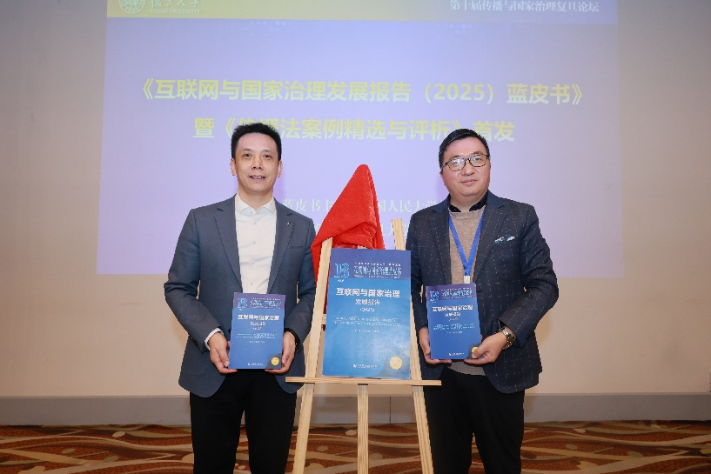
The forum also launched the Blue Book: Internet and State Governance Development Report (2025), published by Social Sciences Academic Press (SSAP). As a major annual report in China’s internet and state governance field, this marks its eleventh consecutive year of publication and is coordinated by the Center for Communication and State Governance Research of the Fudan Development Institute (FDDI). The editors-in-chief are Professor Zhang Zhian (Fudan University) and Professor Lu Jiayin (Renmin University of China), with Professor Zhong Zhijin, Dean of the School of Journalism and Communication at Sun Yat-sen University, serving as associate editor.
According to Professor Lu Jiayin, the Blue Book consists of a general report and 18 specialized studies, focusing on profound transformations in internet governance in the AI era and on emerging governance dynamics shaped by the interplay of technological iteration and institutional innovation. Using a combination of qualitative and quantitative methods, it systematically examines core topics including AI governance, cross-border data flows, and governance of the online content ecosystem. The report both maps the past year’s theoretical and practical developments and analyzes frontier challenges and international experience, providing academic support for modernizing China’s cyberspace governance system and capacity, and serving as an important reference for advancing new pathways in digital-era national governance.
The report notes that governance challenges are increasingly concentrated in content security, data security, and algorithmic fairness associated with generative AI. Deepfake audio has become a major risk point, and regulatory boundaries and remedies require further refinement. Algorithmic discrimination, with its hidden nature and spillover effects, calls for strengthened corporate technical audits and government oversight to improve transparency in algorithmic governance.
On the demand side, the report finds that the spiritual and cultural structure of youth is undergoing significant change. Based on a decade of cross-platform data, it identifies the “pursuit of spiritual wealth” as an important cultural trend among young netizens, raising new questions for platform content supply and youth communication strategies.
Looking ahead, the report recommends advancing institutional innovation in AI governance, content ecosystem optimization, and data and privacy protection, refining governance mechanisms for deep synthesis and platform responsibility systems, strengthening multi-stakeholder collaboration, and building a more intelligent, law-based, and sustainable cyberspace governance framework.
In closing, Professor Zhang Zhian noted that cyberspace governance is moving toward “intelligent communication governance,” shifting from platform governance centered on human interaction to governance of human–machine interaction within a symbiotic framework—an area his team is actively exploring.
Two parallel sub-forums were held in the afternoon. Participants discussed AI-related copyright infringement, legal regulation, regulatory practice, and international comparisons, as well as social media information dissemination, digital economic inequality, and mainstream media’s platform dependency.
Established in 2012, the Center for Communication and State Governance Research of the Fudan Development Institute (FDDI) is China’s first research institution dedicated to “Communication and State Governance.” Integrating strengths from journalism and communication, economics, political science, computer science, sociology, law, and philosophy, the Center is committed to building a first-class new-type university think tank. It conducts research on major topics related to communication and state governance and provides comprehensive, strategic, and forward-looking policy consultation for China’s participation in global governance, major institutional reforms, and policy implementation. The Center features four major research directions, a flagship forum, two book series, and an annual Blue Book. Over more than a decade, it has developed distinctive and leading research capabilities in four areas: online social mentality, domestic and international public opinion, online governance (e-governance), and cyberspace security.