


Authors
Li Yaqi, Research Assistant of CGAIG
Yao Xu, Secretary-General of CGAIG and Associate Professor at FDDI
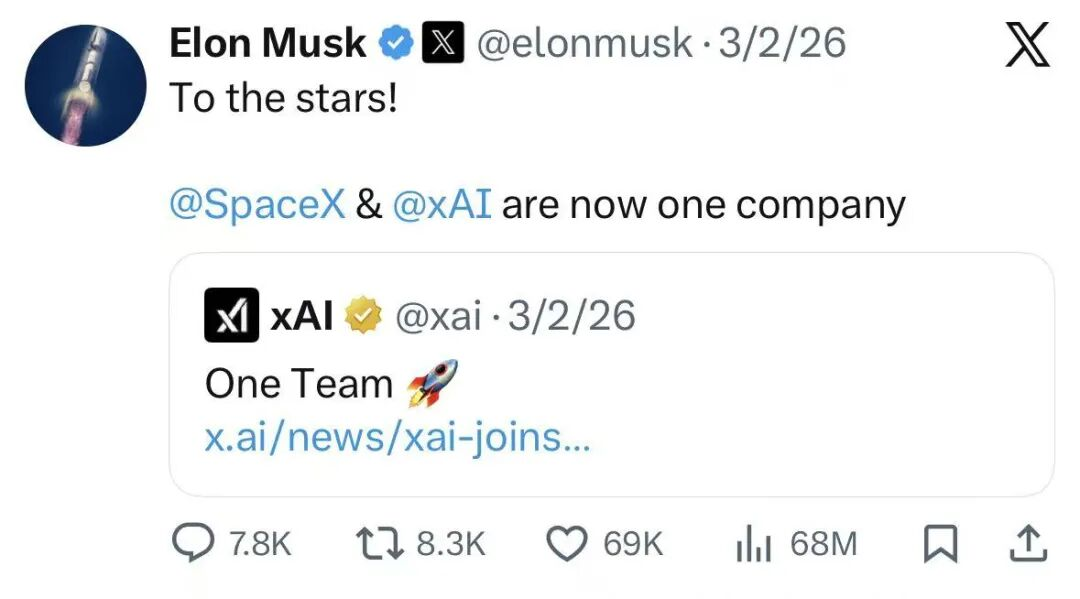
The February 2, 2026 merger between SpaceX and xAI sent shockwaves through global capital markets—but this $1.25 trillion transaction extends far beyond conventional corporate consolidation. In Elon Musk's strategic vision, this landmark deal signifies humanity's compute infrastructure breaking free from terrestrial constraints, embarking on a historic structural migration to low Earth orbit.
This article deconstructs the tripartite dynamics at play—compute capacity, energy resources, and space infrastructure. As Moore's Law encounters diminishing returns against ground-based power shortages and thermal limitations, orbital data centers enabled by the Starship ecosystem could emerge as the ark sustaining AI's exponential evolution.
Yet this technological breakthrough carries profound geopolitical implications. Infrastructure power is concentrating in private hands at unprecedented speed, exposing regulatory vacuums within international bodies such as the International Telecommunication Union. Meanwhile, great power competition—both technological and military—is escalating to new dimensions. The race for space-based compute sovereignty has begun.
Original Link:https://mp.weixin.qq.com/s/CBIT6ZvxAEI6vsdSdskh-Q