

Today's artificial intelligence, like a new wave of technological revolution, is propelling human society towards an intelligent era. Rapidly advancing AI is penetrating every sphere of human life in various forms, while simultaneously embedding itself extensively across different industrial ecosystems. Consequently, the potential risks associated with it are escalating quickly. The increasingly complex international landscape and the strategic games between major powers have also become critical factors that AI governance must take into account.
Standing at a crossroads where development opportunities and risks coexist, China, guided by its strategic commitment to balancing development and security, is making significant strides and taking proactive measures in AI governance. At the international level, it has proposed Chinese initiatives and participated in shaping global rules. Domestically, it is refining laws, regulations, and standards while cultivating a robust industrial ecosystem. At the local level, various regions are pioneering pilot programs and establishing exemplary demonstration zones. Particularly against the backdrop of the collective rise of the Global South—which has become an important force for maintaining world peace, promoting common development, and improving global governance—China is actively exploring a path for the rapid, safe, and healthy development of AI, while simultaneously contributing its wisdom and providing public goods to global governance.
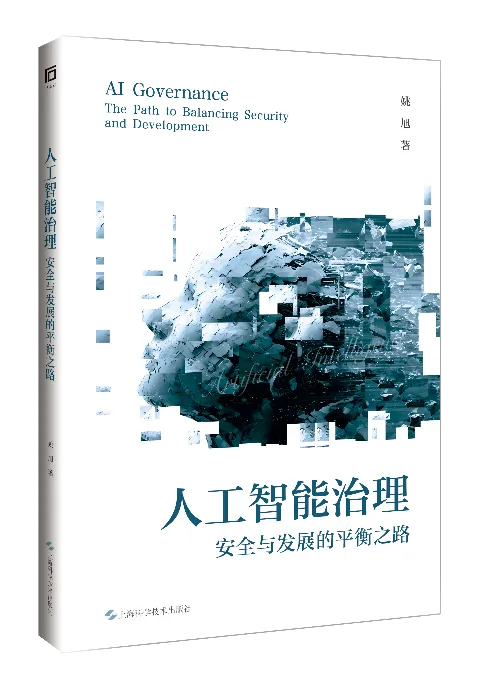
Front Cover Flap
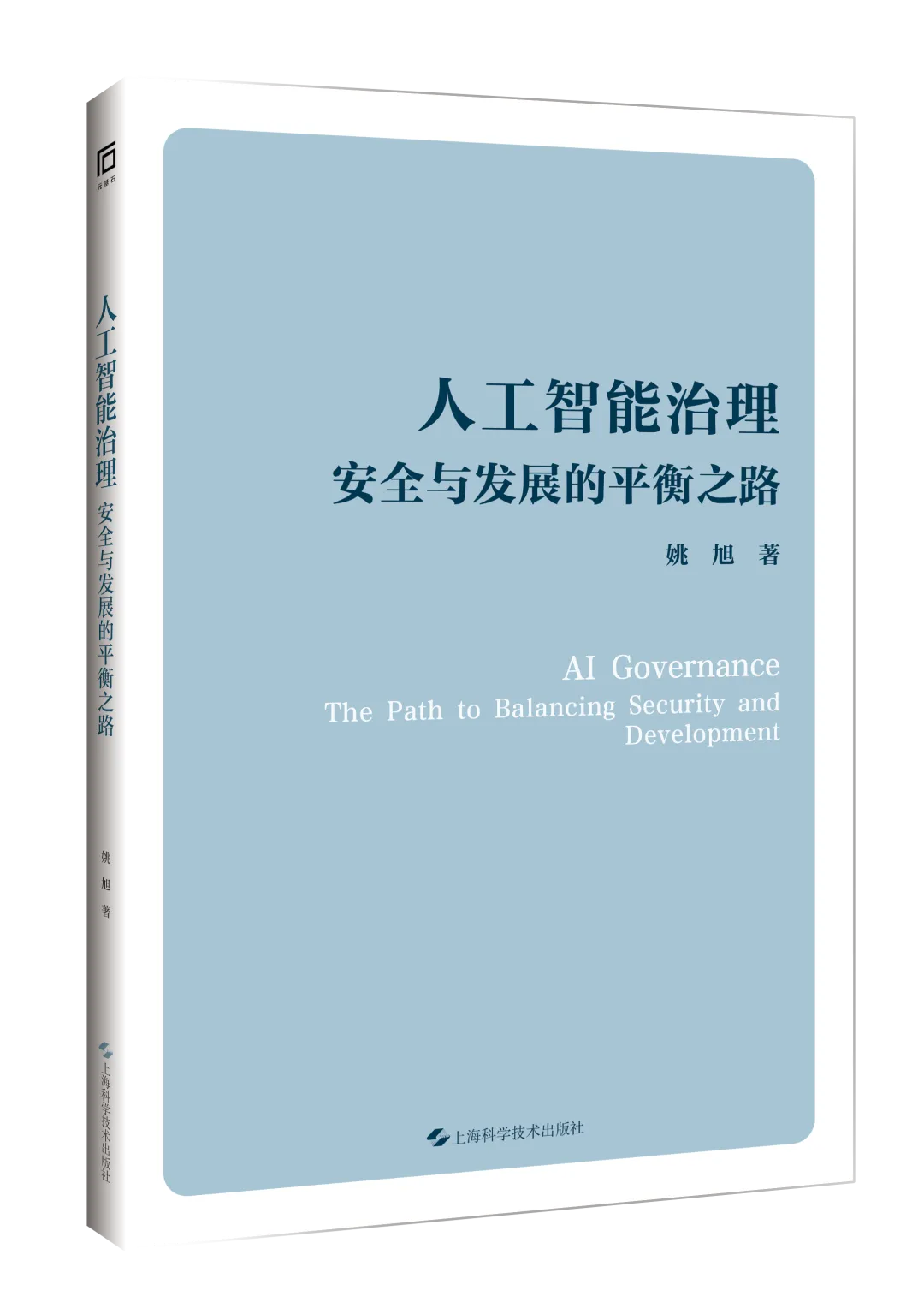
Cover
AI Governance: The Path to Balancing Security and Development
By Yao Xu
Shanghai Scientific & Technical Publishers
ISBN: 978-7-5478-7451-6
Price: ¥65.00
Publication Date: January 2026
Binding: Paperback with Dust Jacket
Format: Trade Paperback
About the Book:
This book offers readers a systematic and comprehensive overview of the entire chain of AI governance. It integrates risk ethics, institutional design, industrial advancement, and international collaboration into a unified analytical framework, addressing the shortcomings of existing research, which often separates development from security and fails to connect institutional design with practical implementation.
For Academia and Think Tanks: It provides reusable analytical paradigms and evaluation tools, advancing research from problem identification towards solution comparison and effectiveness validation.
For Policymakers and Local Practice: It distills a phased, actionable, and measurable governance roadmap that can be directly translated into refining regulations, developing standards, optimizing supervisory processes, and organizing pilot initiatives.
For Industry Stakeholders: It offers a reference framework for compliance management, data governance, and standard alignment, helping enterprises enhance their governance capabilities and market resilience within a complex international environment.
For International Cooperation: Centered on institutional mutual recognition and rule coordination, it responds to the capacity-building needs of the Global South, enhancing the visibility, persuasiveness, and scalability of the Chinese approach in global AI governance.
Overall, this is a timely work that promotes high-quality governance based on the principles of securing the baseline and ensuring inclusive benefits, published at a critical moment when AI is becoming deeply embedded in the economy and society.
About the Author:
Dr. Yao Xu is a Young Associate Professor at the Development Institute of Fudan University, Secretary-General of the Global AI Innovation and Governance Center, and a Youth Elite scholar at the Shanghai Municipal Government Decision-Making Consultation Research Base. He serves as a council member of the Shanghai Digital Trade Association and a Research Fellow at the Center for European Studies at Fudan University. Dr. Yao was previously seconded to the Department of Digital Technology and Infrastructure Development at the National Data Administration.
His research focuses on global AI governance, the development of the digital technology industry, and data governance. He has led over 20 projects at the national level, as well as for various ministries and commissions and relevant Shanghai municipal departments. He is the author of the monograph “Governing Cross-Border Data Flows in the EU: Balancing Free Flow and Regulatory Protection”. Dr. Yao has authored more than 400 policy reports, published over ten academic papers in both Chinese and English, and contributed numerous opinion columns to renowned domestic and international media outlets.
Original link:
https://mp.weixin.qq.com/s/FpdVUOr2LED7WuHX4fNEnw