

Abstract
The focus of discussions on AI governance is shifting from abstract issues such as ethics and security to technological competitiveness and application implementation. Regions like Central Asia are also actively embracing AI. However, the global governance system still faces two major difficulties: first, some government officials find it difficult to keep up with technological iterations in a timely manner; second, existing initiatives lack implementation and supervision mechanisms. Looking ahead, governance may follow a parallel track: on the one hand, through mechanisms such as the Alliance of Small States, targeted agreements that are more beneficial to small and medium-sized countries will be promoted; on the other hand, long-term dialogues will continue to be carried out on platforms such as the United Nations. Overall, global AI governance requires collaboration among multiple parties. Governments, the private sector, and academia need to leverage their respective strengths and work together.
Interviewee Profile
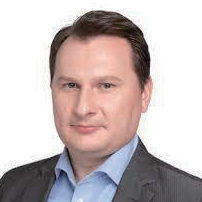
DanilKerimi
Senior Consultant,
United Nations Office for Digital and Emerging Technologies
Interviewer
Jiang Junji
Research Assistant at the Center for Global AI Innovative Governance
Interview
We believe that the following key events have occurred in the field of global artificial intelligence governance over the past year:
The rapid advancement of AI technology has propelled AI governance discussions into the mainstream of international agendas. Early leadership from UN agencies like UNESCO—one of the first to recognize AI's strategic importance—has expanded to include the OECD, G20, G7, and regional bodies like ASEAN. It's really hard to see a single organization or multilateral development bank or any other grouping that has not talked about AI and therefore also about AI governance now. At the national level, AI has moved from a domain of scientists or perhaps ICT ministers to the whole of government approach. There were a couple of very important global, regional or national initiatives last year, for example, EU AI Act, Korean AI law and so on. The Shanghai Declaration on Global AI Governance was a very important step forward and brought in a very interesting concepts like symbiotic relationship which were not there before. In my view, an interesting observation is that the debate of AI governance has shifted from abstract concept competition about ethics, safety and security towards more competitiveness focused field and practical aspects.
In fact, everybody views AI as a threat and opportunity at the same time. Everybody is thinking about how can I deploy this technology in a responsible way that will help me to achieve my own objectives and how can I make sure the deployment of this technology does not actually bring negative impacts or how can we minimize negative impacts. Meanwhile, the view depends on where you sit. I am originally from Central Asia where there was a feeling that perhaps it's too new to engage. But the Central Asian region is extremely interested in, and I would say overwhelmingly positive about, the artificial intelligence trends now. As a matter of fact, one of my neighbor countries, Tajikistan, is now trying to sponsor the third United Nations resolution on creating a regional center of excellence on AI capacity building. It's a tremendous opportunity. Many countries in the Global South, or middle countries, are also thinking from a leading perspective. At the United Nations level, it's Costa Rica and Spain that have taken a leading role in the international scientific panel on AI.
The global governance is what we should be striving for, but it's faced with challenges. On the one hand, many countries in the Global South, even in the Global North and developed world, many government officials and company executives are struggling to keep up with the mere sheer volume and velocity of change. In many Global South countries, they just don't have capacity even to process this much of information, or to attend every gathering. On the other hand, while numerous global initiatives are announced, few mechanisms exist to track their implementation—such as whether pledged funds for AI development are actually disbursed or how effectively capacity-building programs operate. This lack of oversight undermines trust in multilateral processes.
Regarding the status and role of the United Nations, the United Nations is obviously the organization that is universal. We don't have any other organization that is as universal as the United Nations. There are so many different ways that the United Nations could play a role. It provides a platform for communication, coordination, and capacity development. Notably, I think it play a critical role as the lighthouse to those countries that exactly are struggling to understand where the things are moving. The United Nations has representatives on the ground in all member states. It helps national governments and other stakeholders understand the rapid change of this technology, such as what it means and how the countries can adjust.

Illustration:Bloomberg
Global AI governance is at a crossroads. In the future, I think there will be some sort of parallel track, through which small country groups, regional bodies, or other formats can foster targeted agreements for smaller nations—simply because it is more manageable. But at the same time, there will be processes at the United Nations and many other places that will be universal, that perhaps will take longer and be a little bit harder to advance, because the UN is a much bigger ship that takes into account millions of people. But those processes will have to happen as well.
Global AI governance hinges on multistakeholder collaboration, where governments, private sector, and academia leverage their unique strengths. It is worth noting that nations can take the lead at the national, regional and international level. At the national level, I think there has to be even further. There should be consultative mechanisms for all the stakeholders within the national societies to understand what the impact of AI could be on those countries. If there's a way to work at the regional level, that's great. The private sector, in particular, should transcend short-term profit motives. While some firms actively shape governance agendas, others require support to understand how participation can mitigate risks. All sectors play really critical role. You have to show up. You have to be prepared. You have to be constructive and engaged in terms of making sure that we can all benefit from this great tech, but it can also hurt us all. We have to be working together hand in hand.