

Abstract
Over the past year, AI governance has entered a critical turning point, urgently requiring expanded global collaboration to achieve inclusive development. Currently, AI governance faces four major challenges: widening the intelligence gap, data security and sovereignty, insufficient AI explainability, and ethical risks. The core tension in global cooperation lies in balancing regulation and innovation, while the United Nations plays a vital role in promoting inclusive, multi-stakeholder dialogue. Looking ahead, only sustained cooperation can effectively address these challenges. The Shanghai Declaration and UN resolutions provide a crucial starting point, signaling a degree of international consensus. Their effectiveness hinges on translating dialogue into concrete norms and actionable standards.
Interviewee Profile
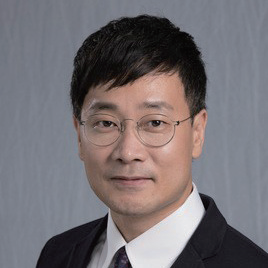
JungYounbo
Associate Professor, Wee Kim Wee School of Communication and Information, Nanyang Technological University
Interviewer
Yang Zhao
Research Assistant at the Center for Global AI Innovative Governance
Interview
The past year marks a critical transition in artificial intelligence governance, requiring us to strengthen global cooperation and promote the development of Inclusive AI. As technological advancements accelerated, driven primarily by private sector, technology development and global initiatives emerged to address AI's profound societal implications. Key milestones like the Shanghai Declaration on Global AI Governance (Shanghai Declaration) and the United Nations resolution on Enhancing International Cooperation on Capacity-Building of Artificial Intelligence (UN resolution) signal a pivotal shift, the recognition that steering AI's trajectory requires multidisciplinary collaboration beyond technical development. Historically, new technologies follow a pattern, initial engineering breakthroughs necessitate broader societal frameworks for responsible adoption. AI has reached this juncture. Its rapid integration into daily life demands inclusive, international dialogue to ensure it benefits humanity, not merely advances capability. These nascent governance efforts represent an essential, albeit challenging, beginning toward setting shared directions amid corporate ambitions.
The Shanghai Declaration and the UN resolution are foundational steps. The Shanghai Declaration's emphasis on cooperation, development, governance, and capacity building establishes a necessary framework for discourse. The UN's role is uniquely vital due to its capacity for inclusiveness. As a platform, the UN enables participation from developing nations and regions not leading AI development. This inclusiveness is crucial because AI's impact transcends borders and its development by individual companies carries international consequences. However, these initiatives are just at the initial stage. Their true influence hinges on evolving into actionable guidelines through sustained, interdisciplinary effort involving not just engineers, but experts from social science and humanities altogether. While setting universal standards remains difficult and companies may resist compliance, starting this inclusive conversation early is paramount to shaping the future of AI to be beneficial to humanity.
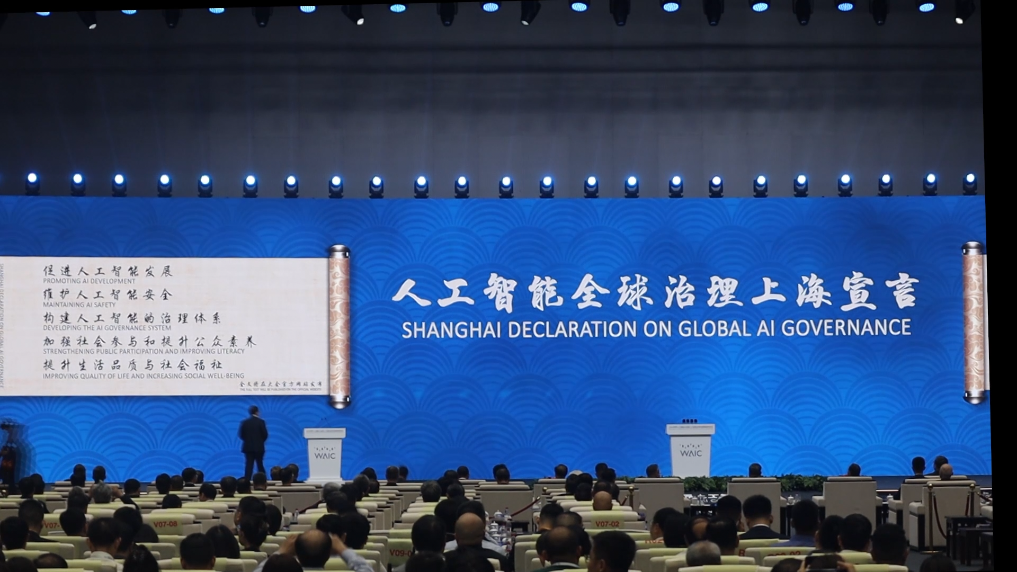
On July 4, 2024, the 2024 WAIC issued the Shanghai Declaration on Global AI Governance.
Image source:Xinhua News Agency
Currently, there are four interconnected issues dominate the governance landscape.
First, Digital Divide. The gap between those with access to AI and those without is widening dramatically, especially in the Global South, due to AI's unprecedented pace and productivity-enhancing potential. Developing nations lack access to costly network resources and expertise. If unaddressed, this could leave them further behind, unable to catch up. Proactive measures, potentially inspired by the concept of universal service, are needed to ensure AI's benefits are not confined to technologically advanced regions.
Second, Data Security and Sovereignty. AI's need for vast, quality data clashes with legitimate concerns about privacy, misuse, and breaches. Ambiguity persists over how companies handle sensitive or classified user data. This necessitates exploring the blockchain technology as a safeguard. Blockchain's shared ledger offers immutability and resistance to hacking. Coupling it with AI could enhance data security and enable algorithmic agreements to ensure transactional safety, for example, reducing fraud in commerce without costly intermediaries. However, corporate adoption requires policy pressure, as companies may resist due to costs and desire for unfettered data access.
Third, Explainable AI (XAI). The black box nature of advanced AI systems obscures decision-making processes. Current XAI methods, using secondary AI to interpret primary models, are inherently limited, providing guesses rather than true explanations. Developing robust XAI is essential for accountability, trust, and identifying bias in critical applications.
Last but not the least, Ethical Dilemmas. AI's deployment raises persistent ethical dilemmas, particularly regarding harmful content amplification, for instance, social media algorithms promoting unhealthy material. Determining the responsibilities of companies like TikTok or YouTube in content recommendation and user protection is unresolved. Governance must clarify ethical boundaries and shared accountability.
For global AI governance, a core tension lies in balancing regulation with innovation. Governing data access and usage is necessary for security but risks slowing AI progress, which relies heavily on data quantity and quality. Similarly, digital sovereignty concerns must be addressed without unduly restricting development during AI's infant stage. The solution isn't binary. Technologically, integrating blockchain can mitigate security risks without limiting data utility. Politically, international bodies must provide guidelines compelling corporate adoption of such safeguards. Private companies, currently driving development for business objectives, naturally resist transparency and costly compliance. Nevertheless, the scale of potential harm necessitates governance frameworks that incentivize or mandate responsible practices.

On September 25, 2025, UN Secretary-General António Guterres delivered a speech at the high-level meeting launching the Global Dialogue on AI Governance mechanism.
Image source: Xinhua News Agency
The UN's primary function is facilitating inclusive and multi-stakeholder dialogue. Its broad membership allows it to counteract perceptions that governance directions are set solely by dominant AI powers for their benefit. By involving diverse nations, including those in Asia, Africa, and other developing regions, the UN helps ensure global perspectives to shape norms. Looking ahead, governance must evolve to handle AI's practical implementation challenges. As technologies like autonomous vehicles mature, complex questions around liability, including accident responsibility involving manufacturers, software firms and insurers, demand holistic solutions from policymakers, legal experts, and industry stakeholders. This suggests multi-level governance, with international bodies setting broad directions, regional actors (like Shanghai Declaration participants) fostering deeper cooperation, and national governments adapting frameworks locally. Private sector leadership will continue, but coordinated oversight is essential to navigate ethical and safety pitfalls.
Addressing AI's challenges requires persistent global cooperation, despite inherent difficulties. Countries seek leadership roles, and companies guard competitive advantages. Yet, the transnational nature of AI's impact, from data flows to economic disruption, demands collective action. The Shanghai Declaration and UN resolution are vital starting points, proving a shared recognition exists. Their success depends on transforming dialogue into concrete norms and standards. While perfect agreement is elusive, the very act of inclusive discussion can make the difference. It accelerates accessibility, incorporates diverse viewpoints, and ultimately steers AI towards its rightful purpose, benefiting humanity equitably. The journey of global AI governance has begun, rooted in the multidisciplinary and inclusive spirit reflected in the past year's milestones, is humanity's best hope for harnessing this transformative power responsibly.