

Abstract
Over the past year, significant progress has been made in global artificial intelligence governance. With the United Nations at the core, the role of multilateral mechanisms such as the G20 and BRICS has continued to strengthen, while the voice of Global South countries in UN discussions on AI governance has been increasingly amplified. Looking ahead, AI sovereignty is expected to emerge as a new focal point in global AI governance, with smaller-scale mechanisms such as bilateral or minilateral initiatives likely gaining greater traction. To this end, there should be active development of bilateral and minilateral cooperation mechanisms to propel global AI governance steadily forward.
Interviewee Profile

Ingrid Torquato Oliveira, Non-Resident Specialist, Observa China (Brazil)
Interviewer
Wu Chenmiao
Research Assistant at the Center for Global AI Innovative Governance
Interview
Over the past year, significant progress has been made in the field of global AI governance, with the United Nations at its core, and the role of multilateral mechanisms such as the G20 and BRICS steadily increasing. The adoption of the G20 Maceió Ministerial Declaration on Digital Inclusion for All represents a significant milestone. This initiative aims to advance discussions on AI inclusivity, Global South participation, and the equitable nature of AI governance debates, with a particular focus on the interests of the Global South. In fact, since last July, the Global South has significantly strengthened its voice in UN discussions on AI governance, and countries like Brazil have actively called for their inclusion in these core discussions. These developments signify a new phase for the AI governance agenda within the UN and other multilateral platforms such as the G20. Furthermore, the 2024 WAIC adopted the Shanghai Declaration on Global AI Governance, which strongly promoted multilateral coordination in global AI governance, thereby further strengthening the UN's central role in such discussions.
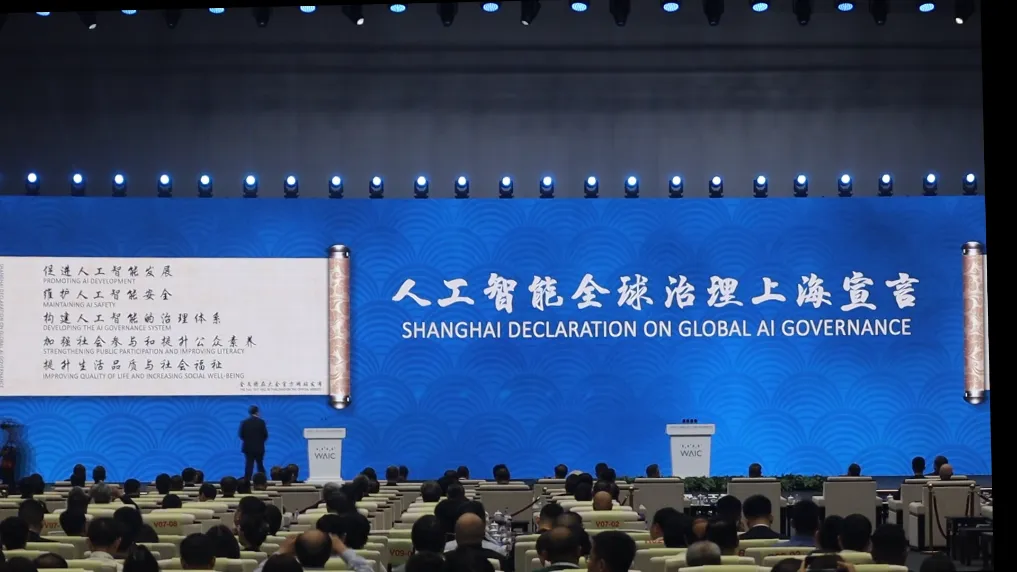
2024 World Artificial Intelligence Conference Releases Shanghai Declaration
Image credit: Xinhua News Agency
However, it cannot be overlooked that AI governance still confronts numerous potential challenges. From Brazil's perspective, challenges primarily concentrate on aspects such as digital sovereignty, infrastructure development, computing power, broadband penetration, and data storage accessibility. Despite Brazil having emerged as a model in the Latin American region, it still urgently needs to strengthen its digital infrastructure and enhance its problem-solving capabilities. For example, regarding education and workforce training, Brazil currently offers a limited number of AI-related courses, and its potential for workforce training remains largely unexploited. At the level of international AI cooperation, taking Sino-Brazilian collaboration as an example, although Brazil has partnered with Chinese companies like Lenovo and Huawei, regulatory uncertainties and an incomplete legal framework, which have not yet provided sufficient certainty for China's private sector, could potentially hinder their investments in Brazil's AI sector.
Looking ahead, the characteristics and trends of global AI governance will display multifaceted changes. Firstly, AI sovereignty is expected to emerge as a new focal point, particularly for Brazil, which will help elevate its influence in global AI governance dialogues. Secondly, smaller-scale collaborations, exemplified by bilateral or mini-lateral initiatives, are likely to be more purposeful and practical in AI governance in the coming years. Brazil could draw upon China's experience, bringing other Latin American countries into relevant dialogues through smaller and more focused agreements. Furthermore, leveraging AI governance to address environmental and climate issues holds significant importance for South American countries. This approach can both foster relevant infrastructure development and effectively tackle the major climate challenges facing the region. Based on these trends, the future avenues for global AI governance cooperation could encompass: developing international cooperation grounded in bilateral or mini-lateral initiatives, establishing financial investment instruments for digital infrastructure, such as investments from multilateral banks, and ideally, ensuring broader participation from the Global South, including those in Latin America, Africa, etc.