

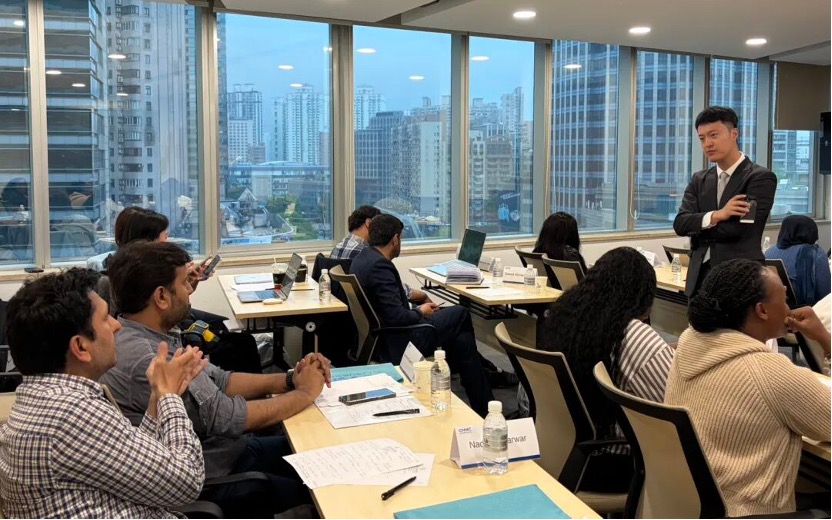
From April 11 to 25, the International Training Program on Artificial Intelligence Capacity Building for Developing Countries was held in Shanghai. The program was hosted by the Department of International Cooperation of Ministry of Science and Technology of the People’s Republic of China, guided by the Department of International Cooperation of the Ministry of Industry and Information Technology of the People’s Republic of China, and organized by the China Internet Network Information Center. A total of 21 participants from 12 developing countries took part, including Pakistan, Brunei and Indonesia in Asia, as well as Ethiopia, Gambia, Kenya and Rwanda in Africa.
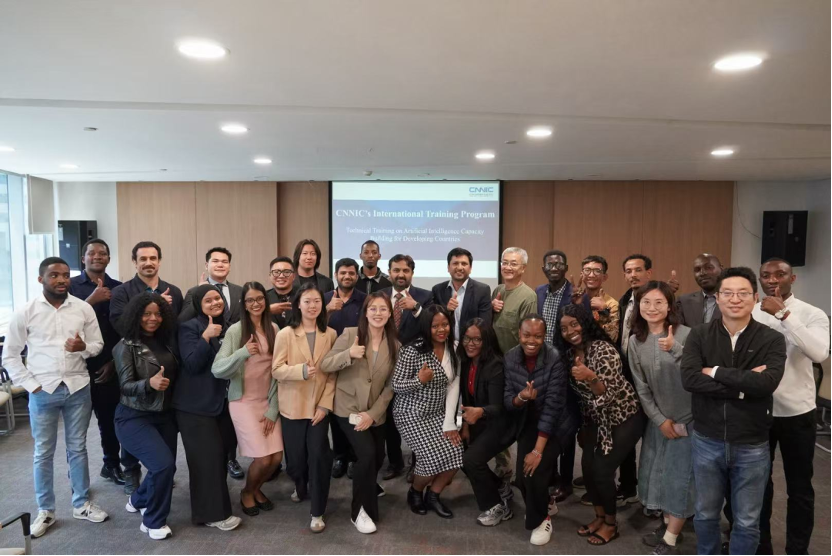
Closing Ceremony of the Training Program
The program focused on strengthening AI capabilities in developing countries and brought together 18 lecturers from 17 research institutes, universities and companies.
Yao Xu, Secretary-General of the Center for Global AI Innovative Governance (CGAIG) and associate professor at the Fudan Development Institute, examined the underlying logic of balancing development and security in China’s AI governance.
On “macroeconomic strategy and frontier theory in AI”, Zhang Rongxian, president of the Macao Association for Internet Research, discussed the construction of closed-loop AI systems. Zhang Yitian from Harbin Institute of Technology, addressed the integration of AI with the real economy. Li Ling, associate dean of the School of Marxism at Fudan University, examined recent advances in AI and their relationship with what is described as China’s governance model. Liu Dian, associate research fellow at the China Institute of Fudan University, outlined approaches to advancing both theoretical and practical innovation in AI. Zhang Zhongwen, associate professor at the School of Applied Economics, Renmin University of China, explored the relationship between the digital economy and AI development.
On “AI applications and industrial practice”, Yang Quan, professor at the Institute of Engineering Technology, University of Science & Technology Beijing, discussed intelligent sensing and decision-making in steel production. Qi Peng, professor at Tongji University, presented on building smart healthcare ecosystems in developing countries using AI and robotics. Pan Xiao, an associate professor at Chengdu University of Technology, examined AI applications in seismic exploration. Jiang Ruoxi, assistant professor at the Artificial Intelligence Innovation and Incubation (AI3) Institute of Fudan University, addressed developments in machine vision in the context of next-generation AI. Chen Xiaochun, director at OPPO’s AI Technology Center, discussed business models for AI-enabled smartphones. Liu Xiaoke, data science director at ByteDance, outlined AI applications in the internet sector. Yan Zhihao, a global commercial operation expert of MiniMax, reviewed multimodal AI applications and market trends, while Bai Zegang, chief AI expert of FiberHome Telecommunication Technologies examined the relationship between AI and network intelligence.
On “AI standardization”, Cui Jing, director of the Standard Innovation Service Center at the China Electronics Standardization Institute, introduced ongoing efforts related to AI standards.
On “AI safety and governance”, Ma Liang, professor at the School of Government, Peking University, discussed the intelligent transformation of public governance. Wu Lin, international business director at Midu Technology Co., outlined emerging approaches to information management in the AI era.
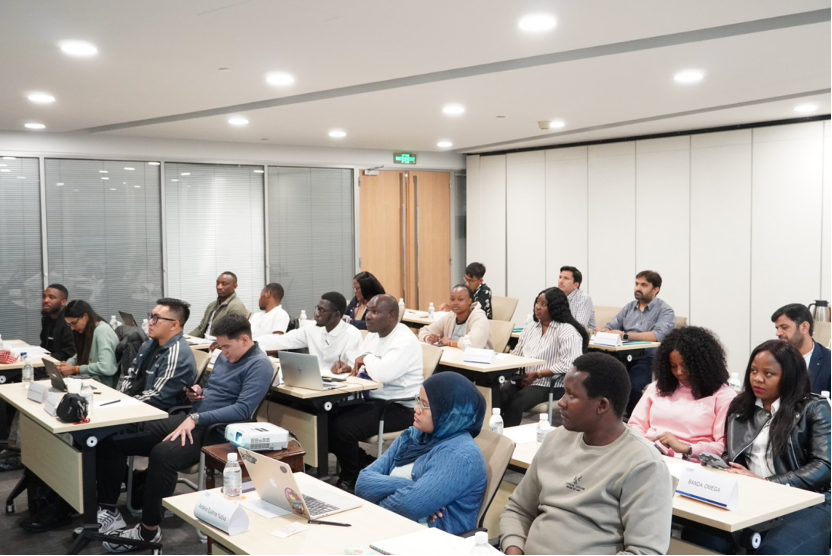
Participants Attending Artificial Intelligence Training Course
The program also included visits to Fudan University, Ant Group and ZKH Industrial Supply, where participants were able to observe research and industrial applications first-hand and gain exposure to recent technological developments.
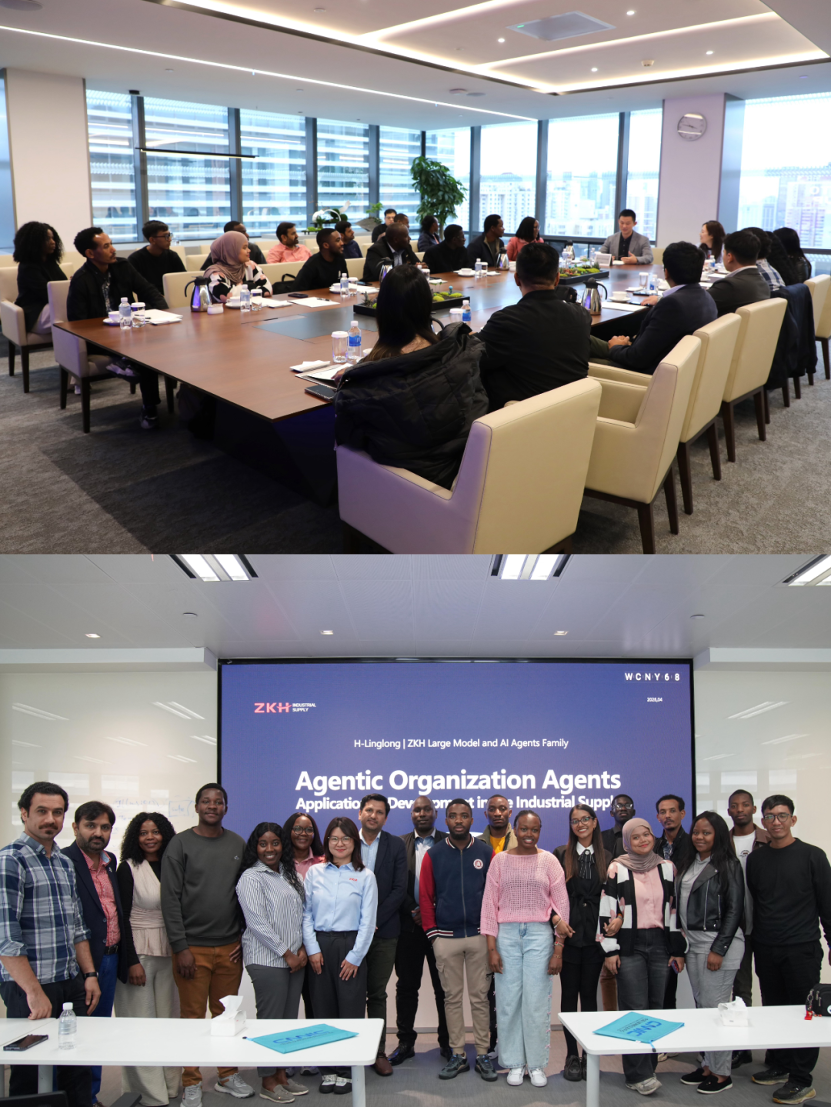
Participants Visiting Ant Group and ZKH
The training program forms part of a broader initiative by the Ministry of Science and Technology of the People’s Republic of China aimed at supporting technical training for developing countries. It is intended to help cultivate technical talent, strengthen scientific and technological capacity, and enhance indigenous innovation capabilities, thereby contributing to local economic and social development. Through the program, participants have gained a deeper awareness of China’s AI industry development, governance framework and practical experience. Several participants indicated that they see the program as a starting point for advancing AI capacity-building in their home countries and expressed interest in further cooperation with Chinese institutions in areas such as joint research and talent development.
As the organizer, the China Internet Network Information Center has long been involved in promoting international technical exchanges and cooperation in the internet sector. It is also engaged in advancing AI-related industries and conducting forward-looking research in areas such as next-generation domain name resolution technologies and agent-based network architectures, in what is described as an effort to support international cooperation in AI and related external engagement in the industrial and information technology sectors.
Original link:
https://mp.weixin.qq.com/s/oTE5ZfujwvxtFL6jiSmHUA?scene=25&sessionid=#wechat_redirect