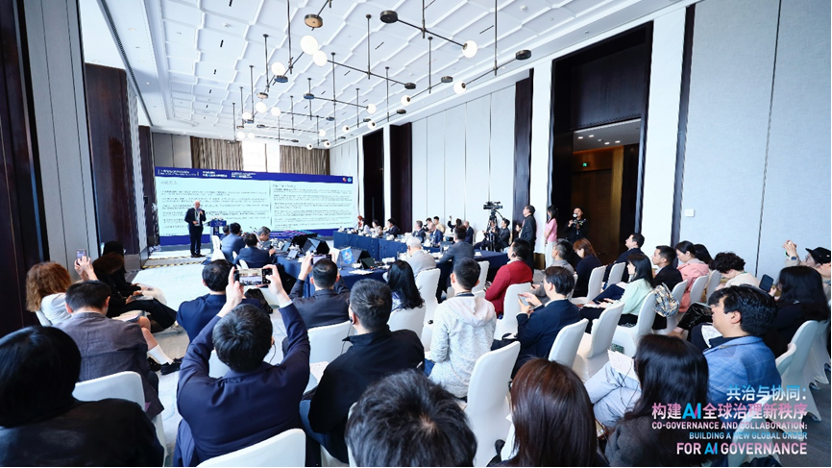


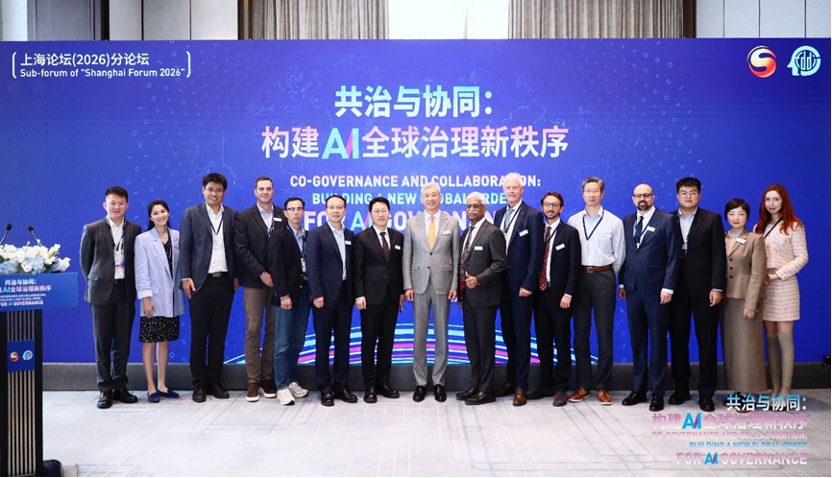
On the afternoon of April 24, 2026, the Shanghai Forum 2026 sub-forum on “Co-Governance and Coordination: Building a New Global Order for AI Governance” was held at The Grand Halls in Shanghai. The forum was hosted by the Research Center for Technological Innovation Strategy, Fudan University and co-organized by the Global Industry Organization (GIO) and Wanbang New Energy Investment Group Co., Ltd. Focusing on key issues such as governance of generative artificial intelligence, regulatory upgrades in the age of AI agents, the development of trusted data spaces, applications of privacy-enhancing technologies, and innovation in global cooperation mechanisms, the forum brought together leading experts, scholars, industry leaders, and representatives of international organizations from around the world to discuss the practical challenges and future pathways of global AI governance.
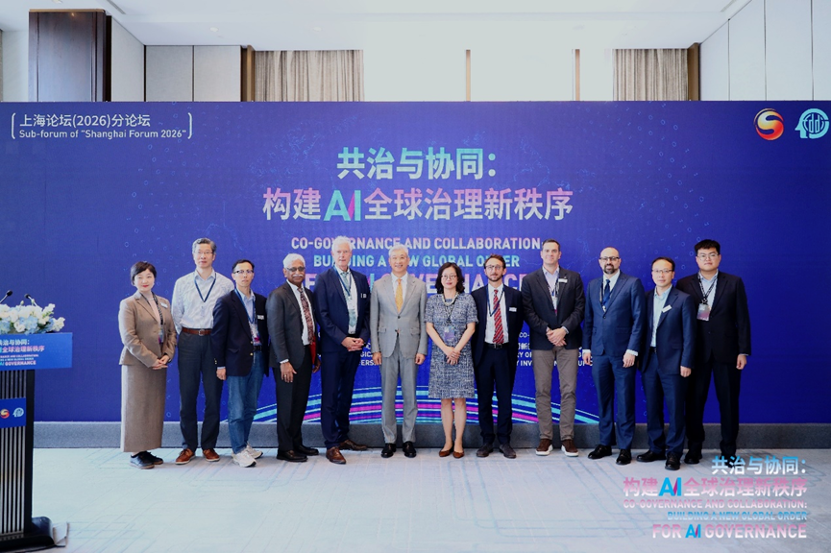
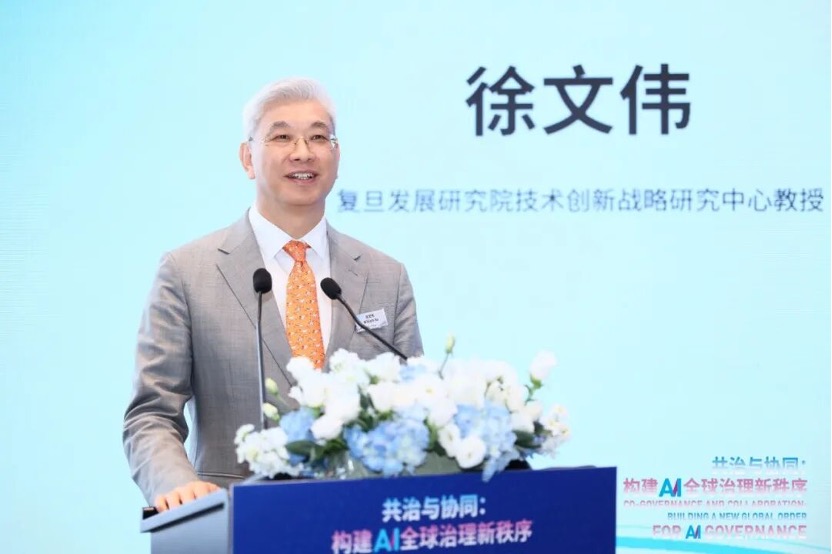
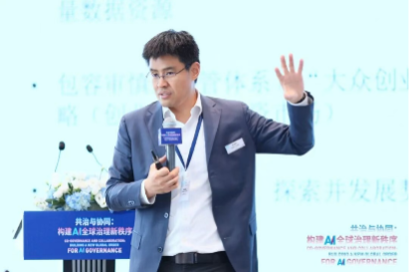
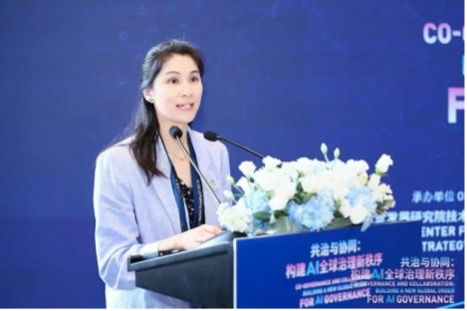
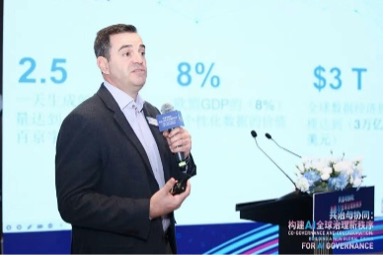
The sub-forum was chaired by Professor Xu Wenwei of the Research Center for Technological Innovation Strategy, Fudan University. Professor Zhang Yi, Executive Dean of the Fudan Development Institute, attended and delivered opening remarks. Keynote speakers and panel participants included Juergen Grotepass, Industry Advisor on Digitalization and AI-Driven Innovation; Chandrasekaran Mohan, Member of the U.S. National Academy of Engineering and Fellow of the Indian National Academy of Engineering; Professor Chen Yubo, Coca-Cola Chair Professor at the School of Economics and Management, Tsinghua University, and Director of Center for Internet Development and Governance; Piercosma Bisconti, Project Lead for the European Standard The AI Trustworthiness Framework; Wei Kai, Director of the Artificial Intelligence Research Institute at the China Academy of Information and Communications Technology (CAICT); Paulo Lopes, China Country Head at the Institution of Engineering and Technology (IET); Professor Minos N. Garofalakis of the School of Electrical and Computer Engineering, Technical University of Crete (TUC), Co-Founder and Head of Research at Agora Labs; Professor Jong Hee Park of the Department of Political Science and International Relations, Seoul National University; Professor Yao Xin, Vice-President (Research and Innovation) and Tang Tian-Sean Chair Professor of Machine Learning at Lingnan University; Mr. Hu Yonghui, Head of the Process and Digitalization Center of Wanbang Digital Energy Co., Ltd.; and Ms. Fang Jing, COO of the Global Industry Organization (GIO).
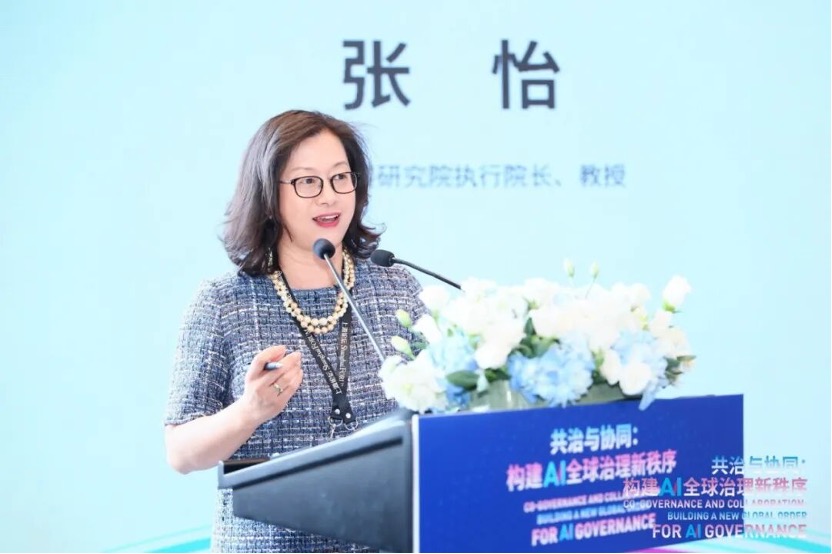
In her remarks, Professor Zhang Yi noted that artificial intelligence is profoundly reshaping knowledge production, economic operations, and social governance systems, and has become a critical public issue concerning development, security, and rule-making. Facing the new reality of rapid technological evolution alongside rising governance demands, she emphasized the need to uphold systems thinking and dynamic governance, balancing innovation and risk prevention, technological capability and institutional support, as well as local practice and global coordination. She stated that university think tanks should further serve as bridges and platforms, promoting AI governance from conceptual discussion to institutional design, and from principle-based advocacy to practical implementation.
Professor Xu Wenwei stated that artificial intelligence is currently at a critical stage of transition from “tool-assisted support” to “autonomous agents.” Technological progress not only drives productivity growth and industrial transformation, but also raises new governance requirements regarding responsibility attribution, human-machine relations, and organizational structures. He highlighted two priorities of the forum: first, promoting global governance from fragmented responses toward coordinated co-governance, addressing practical issues such as fragmented rules, incompatible standards, and restricted data flows; second, exploring dynamic upgrading pathways for governance systems to address new risks brought by highly autonomous AI systems and to establish more forward-looking and executable institutional arrangements.
Discussions at the forum showed that, with the rapid development of generative AI and AI agents, global AI governance is shifting from principle-based advocacy to institutional construction, and from broad discussions to more targeted rule design. Abstract principles alone are no longer sufficient to address governance needs in complex real-world scenarios. Building systematic frameworks around risk classification, testing and evaluation, transparency enhancement, accountability implementation, and continuous monitoring has become a broad consensus among participants.
Data governance and trusted circulation constituted another major focus of the forum. Participants noted that high-quality data is the critical foundation for AI development, while data security and personal privacy protection are essential prerequisites for technological application and cross-border collaboration. The construction of trusted data spaces is becoming a key pillar connecting technological innovation, industrial application, and governance mechanisms. Privacy-enhancing technologies such as federated learning, secure computation, differential privacy, and synthetic data provide new pathways for resolving the tension between data usability and data protection. Advancing data-space development, strengthening standards alignment, and improving interoperability were regarded as essential foundations for cross-institutional, cross-industry, and cross-regional cooperation.
Regarding the new risks brought by generative AI, the forum pointed out that governance priorities are gradually extending from risk prevention at the single-model level to full-process governance covering research and development, deployment, application, and feedback. Problems such as the spread of disinformation, identity manipulation, model opacity, and unclear accountability boundaries are becoming increasingly prominent. There is an urgent need to further improve mechanisms for risk identification, evaluation and testing, transparency disclosure, accountability tracing, and incident response, so as to establish a governance framework covering the entire technology lifecycle and better balance security and development.
Regarding the governance upgrade brought by AI’s transition from tools to agents, participants proposed that as systems acquire stronger capabilities for autonomous decision-making, autonomous execution, and continuous learning, traditional regulatory approaches are facing new pressures of adaptation. Future governance should focus not only on model capabilities themselves, but also on the degree of system autonomy, behavioral boundaries, human-machine collaboration, and responsibility allocation. Participants called for exploring tiered regulatory pathways corresponding to different levels of autonomy, promoting governance frameworks to evolve from static rules to dynamic assessment, and from single-point supervision to systemic governance.

At the level of global governance, the forum noted that although countries and regions differ in institutional environments, stages of development, and governance pathways, there is broad consensus on promoting the safe, trustworthy, inclusive, and sustainable development of artificial intelligence. Facing the new reality of both technological competition and governance demands, the international community should uphold open dialogue and pragmatic cooperation, strengthen rule coordination, experience sharing, and capacity building, and promote a more inclusive, resilient, and trust-based global governance landscape.
The forum also focused on the regulated and responsible application of artificial intelligence in scientific research and public sectors. Participants believed that AI is profoundly changing knowledge production and the organization of scientific research. While improving research efficiency and expanding the boundaries of innovation, it also brings a series of new challenges related to transparency, academic integrity, bias control, and accountability. There is a need to further improve ethical norms, application boundaries, and responsibility mechanisms, so as to promote the standardized development of AI in research, education, and broader public scenarios, and better unleash the value of technology.
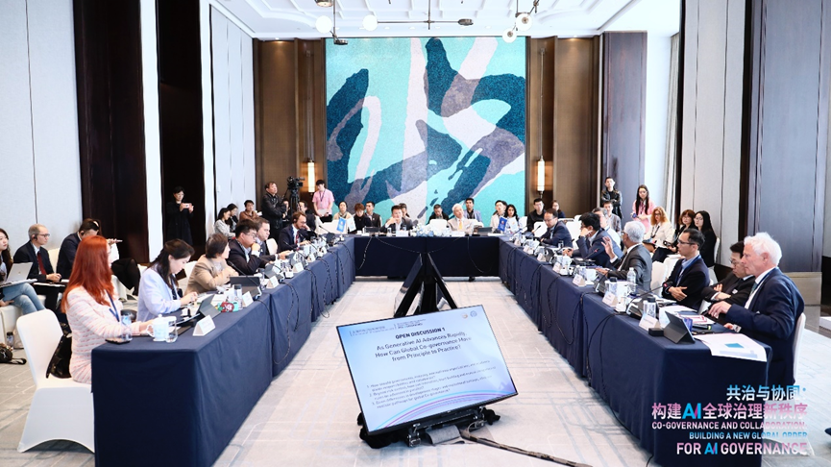
During the sub-forum, open discussions were also held around two topics: “How Global Co-Governance Can Move from Principles to Mechanisms amid the Rapid Development of Generative AI” and “From Tools to Agents: How Should AI Governance Frameworks Be Upgraded?” Participants exchanged views based on international governance practices, industrial application scenarios, and technological evolution trends, discussing how multiple stakeholders can divide responsibilities and collaborate, how innovation and risk can be balanced, and how rule alignment and governance upgrading can be promoted. The discussion concluded that AI governance cannot be accomplished independently by a single country, institution, or department; instead, it requires multi-stakeholder participation and coordinated co-governance to build a more forward-looking, inclusive, and actionable global governance system.

Looking ahead, participants agreed that interdisciplinary, cross-sector, and cross-border dialogue and collaboration should continue to be strengthened. Continuous efforts should be made in standards development, institutional innovation, risk governance, and capacity building, so as to inject greater stability and constructive momentum into building an open, inclusive, trustworthy, and sustainable global AI governance system.