

Amid what is widely seen as a new phase of rapid advancement in global artificial intelligence technologies, the challenge of how to reconfigure governance frameworks across different actors, bridge the so-called intelligence divide, and strengthen North–South dialogue are increasingly viewed as pressing issues for the international community.
On the morning of 25 April 2026, the sub-forum “Global AI Governance: Bridging the Intelligence Divide and Strengthening North–South Dialogue (I)” was held at Yifu Building of Science and Technology on Fudan University’s Handan Campus as part of Shanghai Forum 2026. The event was co-chaired by the Center for Global AI Innovative Governance and the Fudan Development Institute, in collaboration with the University of Oxford. It was co-chaired by Jörg Friedrichs, Associate Professor of Politics, University of Oxford, and Cai Cuihong, deputy director of the Center for Global AI Innovative Governance and professor at the Institute of International Studies, Fudan University. More than a dozen scholars from leading universities and think tanks took part in discussions on core issues including the ontological foundations of AI governance and systemic approaches to regulation.
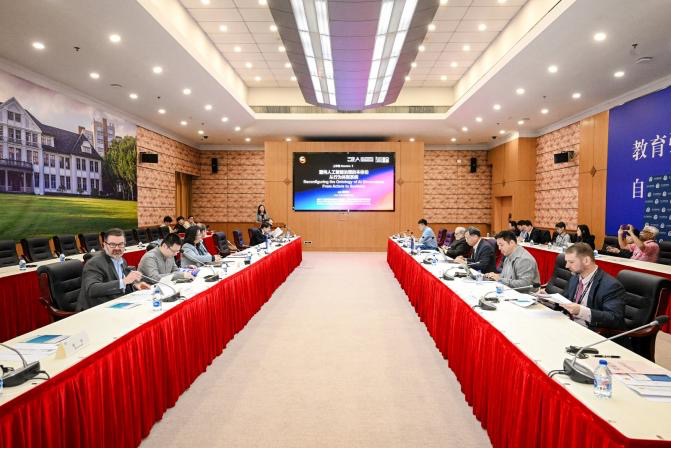
The sub-forum “Global AI Governance: Bridging the Intelligence Divide and Enhancing North–South Dialogue (I)” was held at Yifu Building of Science and Technology on Fudan University’s Handan Campus
01 Reconfiguring the Ontology of AI Governance: From Actors to Systems
The first session, chaired by Cai Cuihong, deputy director of the Center for Global AI Innovative Governance and professor at the Institute of International Studies, Fudan University, focused on the theme of “Reconfiguring the Ontology of AI Governance: From Actors to Systems”.
Jörg Friedrichs,associate professor of politics at the University of Oxford, delivered a keynote address from an infrastructure perspective. Drawing comparisons with the steam engine, electricity and the internet, he suggested that disruptive technologies tend to evolve from diffusion to infrastructure formation and eventually to institutionalized governance. Large language models, he argued, evolving into into foundational technological platforms, with governance logics that may resemble those of power grids and telecommunications networks. As AI becomes increasingly dependent on computing power, electricity and data centers, governance priorities are likely to shift towards critical AI infrastructure, where states could play a more central institutional role.
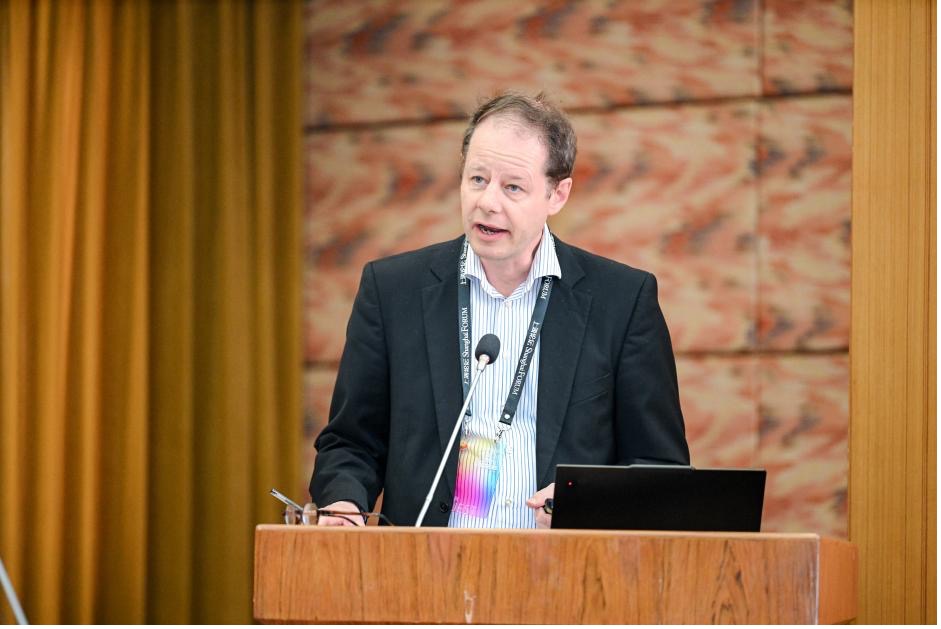
Jörg Friedrichs, Associate Professor of Politics, University of Oxford
Maximilian Mayer, Junior-Professor of International Relations and Global Politics of Technology at the University of Bonn,approached the issue from a constitutionalist perspective. He argued that AI governance should be understood not merely as a technical issue but as a composite of legal, social and technological dimensions. He called for exploration of higher-level constitutional frameworks beyond national regulation to address the ways in which large language models may reshape social order.
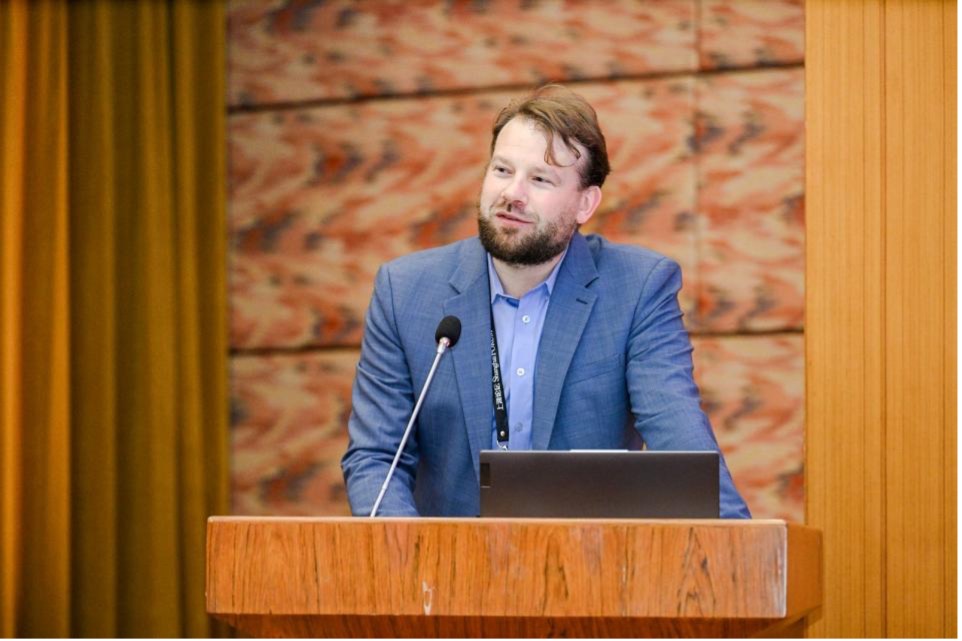
Maximilian Mayer, Assistant Professor of International Relations and Global Politics of Technology, University of Bonn
Karson Elmgren, senior researcher at the Institute for AI Policy and Strategy (IAPS), examined the complexity of AI systems from a technological governance perspective. He noted that large language models exhibit high levels of complexity and “black box” characteristics. Drawing on the Chinese idiom “using barbarians to govern barbarians”, he suggested that AI models themselves could be used to monitor and manage large-scale AI systems. At the same time, he emphasised the need for stronger coordination among national governance bodies to address emerging systemic risks.

Karson Elmgren, Senior Researcher, Institute for AI Policy and Strategy (IAPS)
Xiao Qian, deputy director at the Center for International Security and Strategy at Tsinghua University, argued that current AI risks are global and systemic in nature, particularly in areas such as cybersecurity and biosecurity. She suggested that governance approaches may need to shift away from competitive narratives towards systemic risk management, with greater emphasis on institutionalizing global responses and building interconnected, cross-border cooperation frameworks.
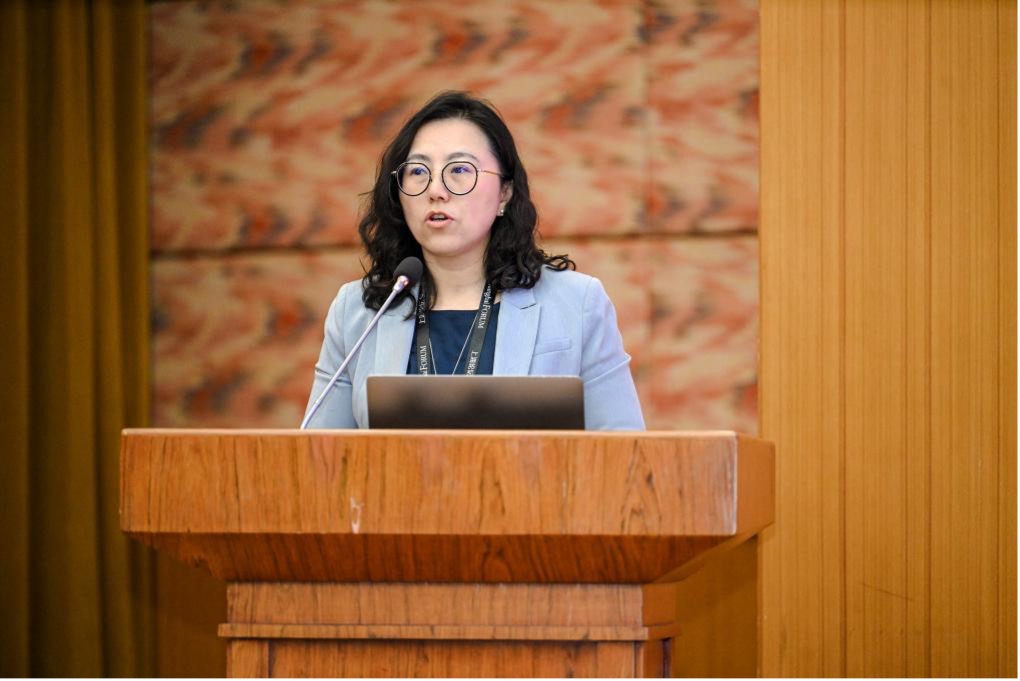
Xiao Qian, Deputy Director, Center for International Security and Strategy, Tsinghua University
Yoo Chandong, professor at the School of Electrical Engineering at Korea Advanced Institute of Science and Technology (KAIST), highlighted disparities between the global North and South in computing power, data, infrastructure and educational resources, which he said constrain AI adoption in developing countries. He suggested that greater provision of resources such as computing capacity and open-source models from developed economies, combined with demographic advantages in developing countries, could help expand AI applications in areas such as education and healthcare.
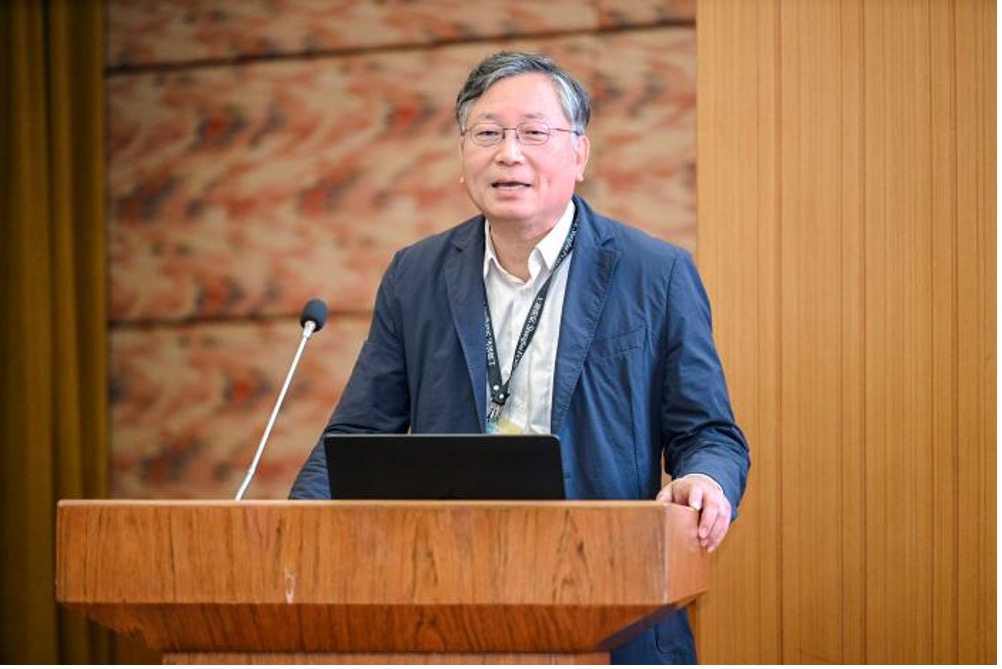
Yoo Chandong, Professor at the School of Electrical Engineering, Korea Advanced Institute of Science and Technology (KAIST)
Lu Chuanying, vice dean at School of Political Science & International Relations, Tongji University, examined differences between China and the United States in approaches to artificial general intelligence (AGI). He noted that the US tends to emphasize model-centric development, while China is more application-driven. These differences, he suggested, do not necessarily imply confrontation and could potentially converge over time, with governments playing a role in coordinating resources and shaping institutional frameworks.
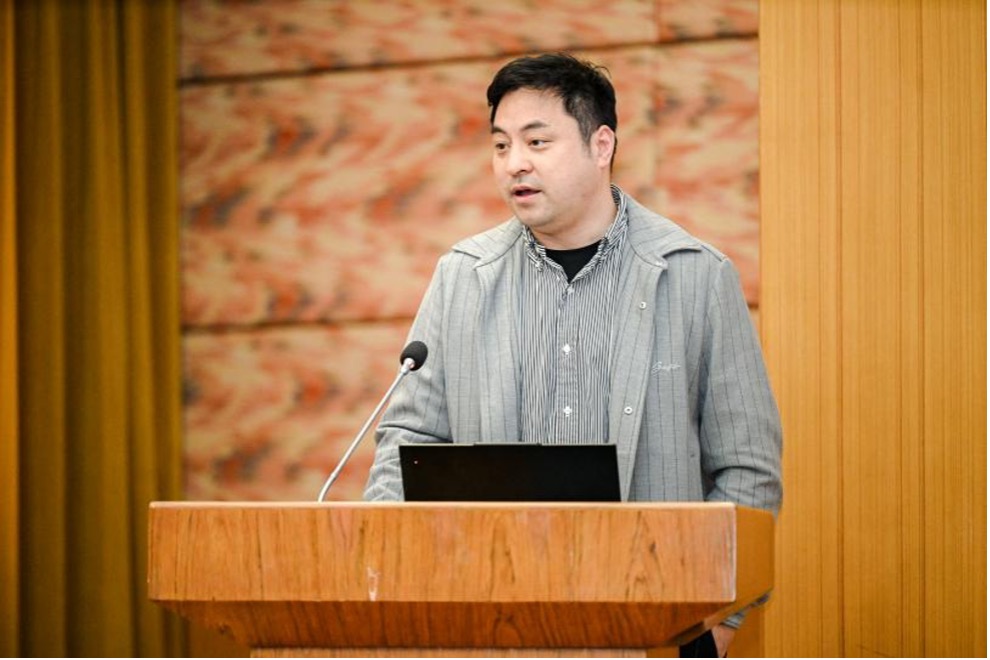
Lu Chuanying, Vice Dean, School of Political Science & International Relations, Tongji University
During the discussion session, attending guests exchanged views on issues including the definition of governance objects, military applications, ethical boundaries and coordination among Global South countries. Several speakers suggested that as AI systems become more complex, governance efforts may need to balance attention across models, actors and broader socio-technical systems, while improving the identification and management of systemic risks. They also called for more pragmatic governance tools and stronger coordination among developing countries to enhance fairness and resilience in global governance.
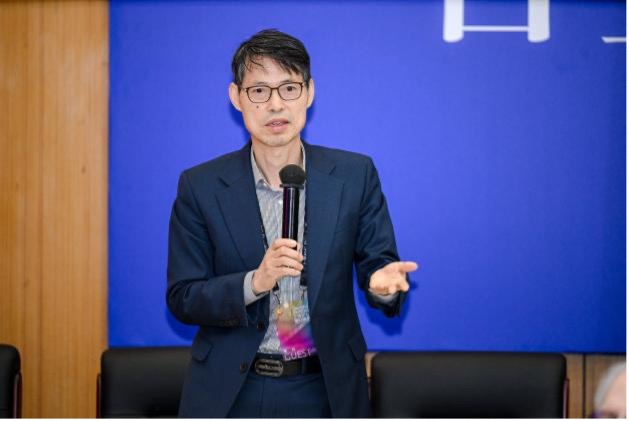
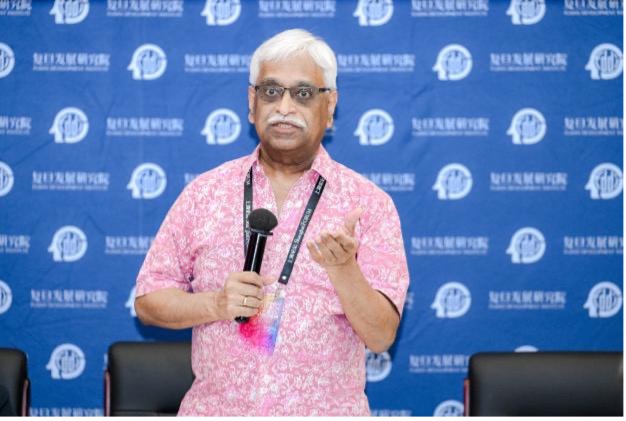
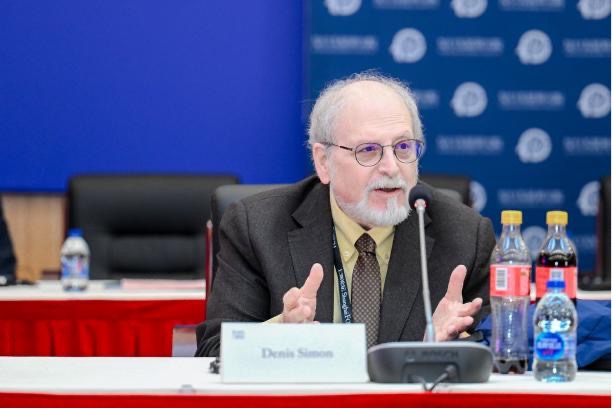
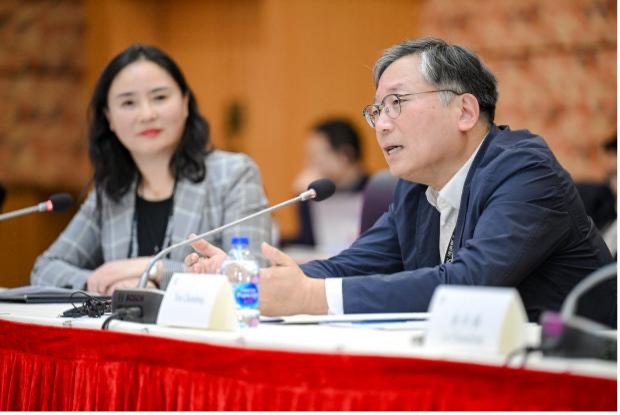
Attending Guests Engage in an In-depth Discussion
02 Governing AI Systems: Risk, Trust, and Institutional Capacity
The second session, chaired by Jörg Friedrichs, associate professor of Politics at the University of Oxford, focused on “Governing AI Systems: Risk, Trust, and Institutional Capacity”.

Jörg Friedrichs, Associate Professor of Politics at the University of Oxford, Chaired the Second Session
Denis Simon, holder of the Bank of America Chair in International Finance at the Schwarzman College of Tsinghua University and senior fellow at the Quincy Institute, analysed AI development from the perspective of talent structures. He suggested that global competition may be shifting from technology to talent, with talent mobility and training systems likely to shape both development trajectories and governance models. He emphasised the importance of more open and flexible talent systems and stronger transnational knowledge networks.

Denis Simon, Holder, Bank of America Chair in International Finance, Schwarzman College at Tsinghua University and Senior Fellow, Quincy Institute
Li Wenlong, research professor at Guanghua School of Law, Zhejiang University, examined governance and regulation of AI-generated content (AIGC) identification from a global perspective. He noted that labelling and detection of AIGC are emerging as central regulatory issues, with jurisdictions including China, parts of the United States, the European Union and Brazil advancing legislation and standards. Given the cross-border nature of AI applications and content dissemination, he suggested that international cooperation is likely to be necessary, while also outlining current challenges in harmonizing standards.
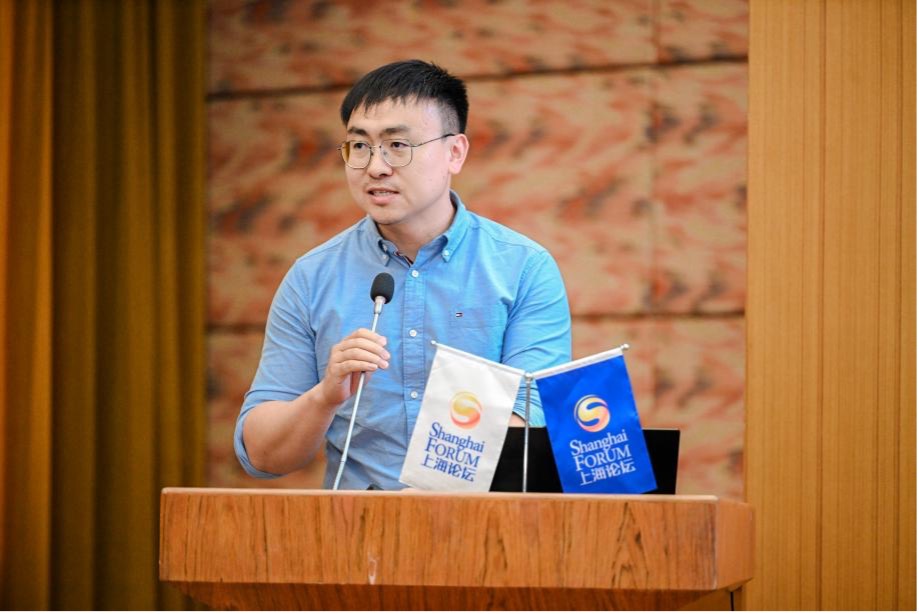
Li Wenlong, Research Professor, Guanghua School of Law, Zhejiang University
On behalf of Jia Kai, professor at the School of International and Public Affairs of Shanghai Jiao Tong University, doctoral student Tan Bohao presented research on the evolution of China’s open-source AI ecosystem. Referring to an Ant Group medical large-model application, he argued that AI governance should not be limited to risk regulation but also include the cultivation of social trust under conditions of uncertainty where risks cannot be fully controlled.
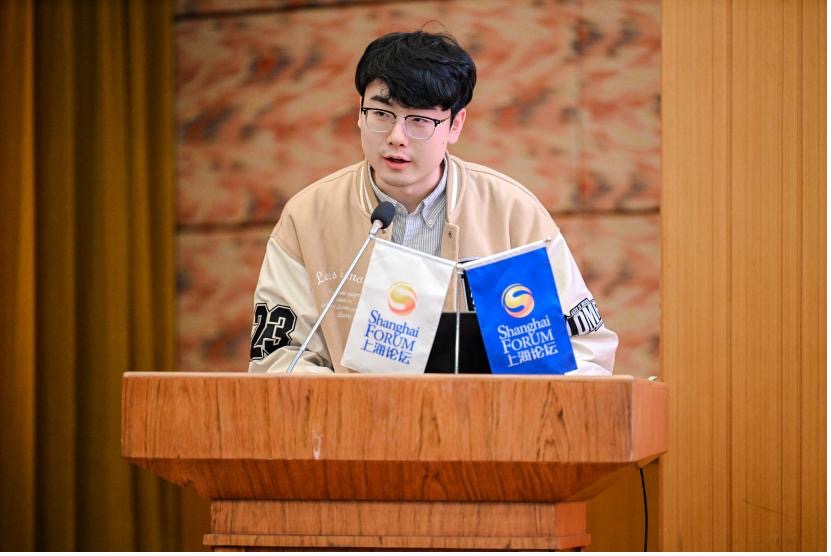
On behalf of Jia Kai, Professor at the School of International and Public Affairs of Shanghai Jiao Tong University, Doctoral Student Tan Bohao Delivered a Keynote Speech
Baek Seoin, Associate Professor at the College of Global Culture and Commerce, Hanyang University, used South Korea’s national AI strategy as a case study to examine what he described as the “sovereign AI” dilemma faced by middle powers. He suggested that navigating this challenge requires balancing domestic innovation with international cooperation, as well as reconciling goals of autonomy, inclusiveness, security and technological progress. He called for interoperable international rule systems.
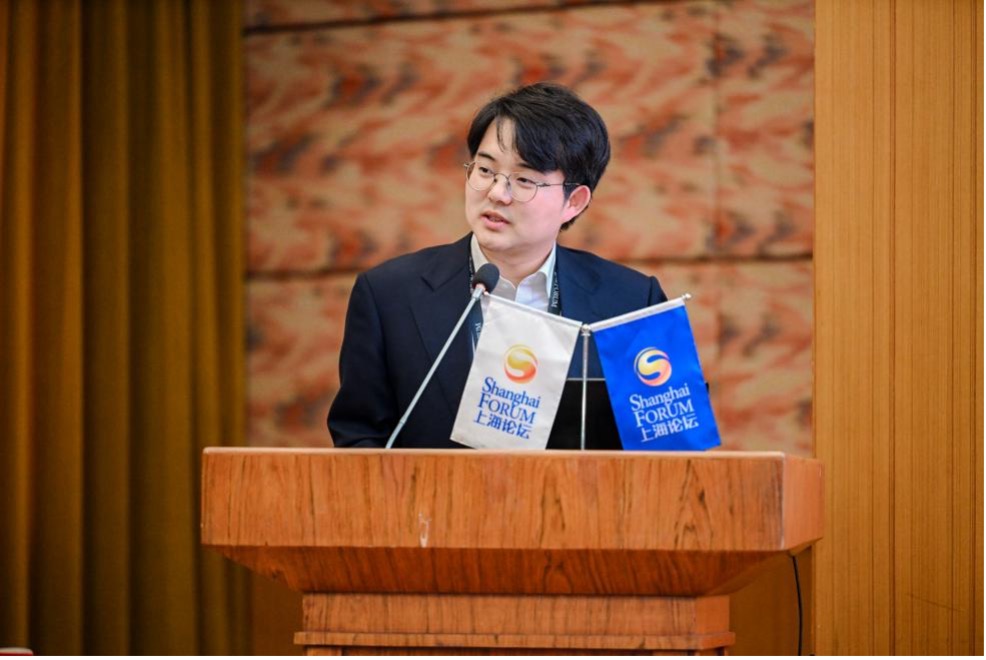
Baek Seoin, Associate Professor, College of Global Culture and Commerce, Hanyang University
In her concluding remarks, Cai Cuihong, deputy director of the Center for Global AI Innovative Governance and professor at the Institute of International Studies, Fudan University, argued that a key issue in global AI governance may be shifting from a “lack of institutions” to a mismatch between institutional expansion and governance capacity. While regulations are increasing, incidents such as AI-related risks and data misuse appear to persist, suggesting that the quantity of rules does not necessarily translate into effective governance. Without corresponding improvements in capacity, she warned, institutional expansion could lead to structural distortions. She called for coordinated development of technical, institutional and cooperative capacities to avoid what she described as a “rules without capability” dilemma.
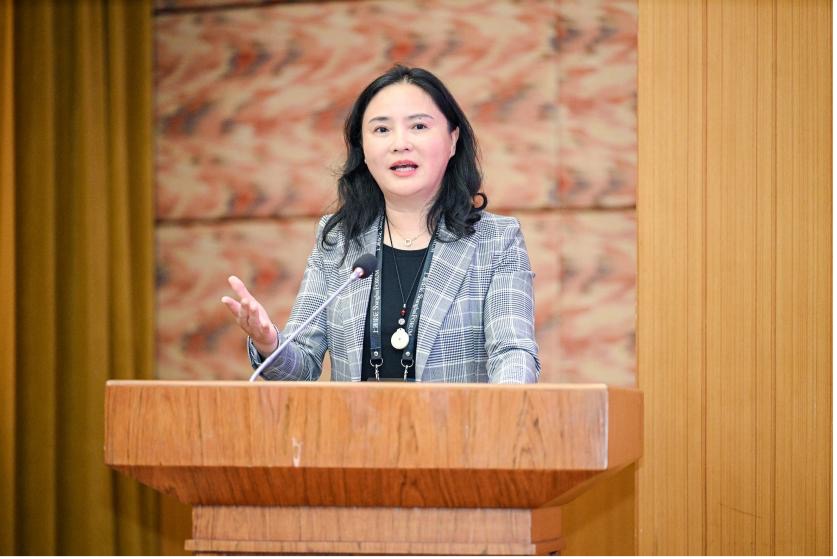
Cai Cuihong, Deputy Director, Center for Global AI Innovative Governance and Professor, Institute of International Studies, Fudan University
During the Q&A session, Chinese and international scholars discussed topics including China–US cooperation in AI governance, regulatory challenges posed by open-source models, and mechanisms for cross-border communication. Several speakers suggested that dialogue and cooperation mechanisms between China and the US could be revived, alongside broader multilateral engagement, to avoid zero-sum dynamics. They also argued that governance frameworks for open-source large models may need to be more forward-looking, flexible and adaptive.
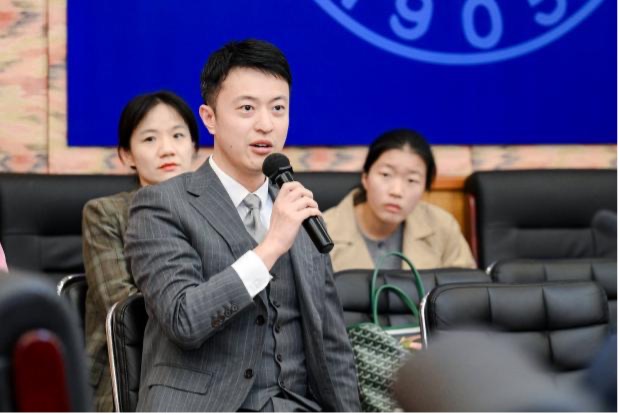
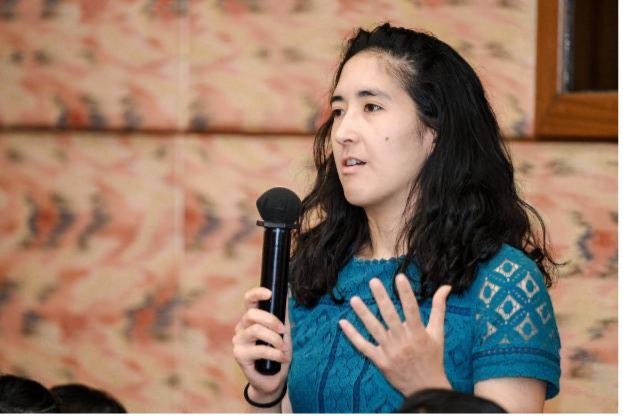
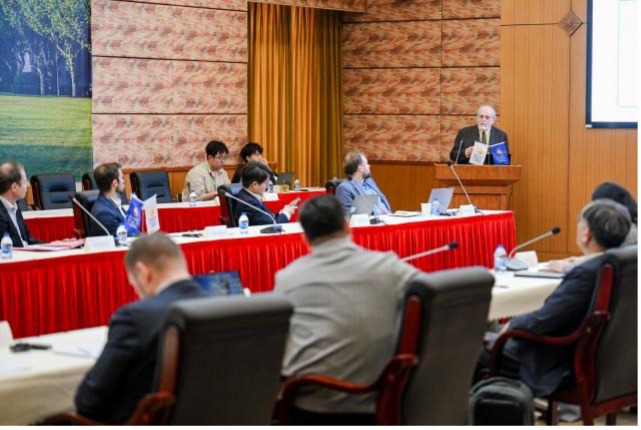
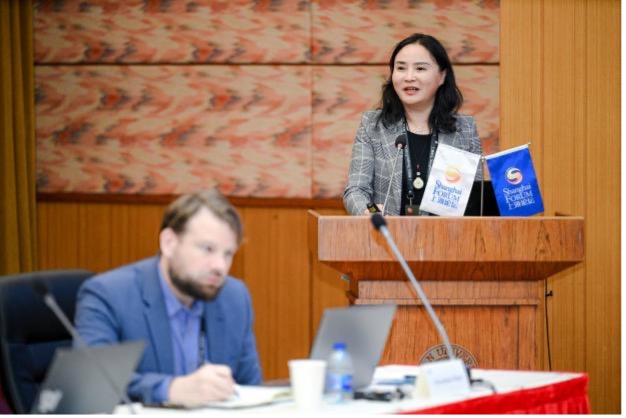
Attending Guests Engage in an In-depth Discussion
The sub-forum brought together Chinese and international scholars to examine emerging trends and requirements in global AI governance from multiple perspectives. It is seen as contributing to broader consensus-building on AI governance and providing support for efforts to bridge the intelligence divide and strengthen North–South dialogue.
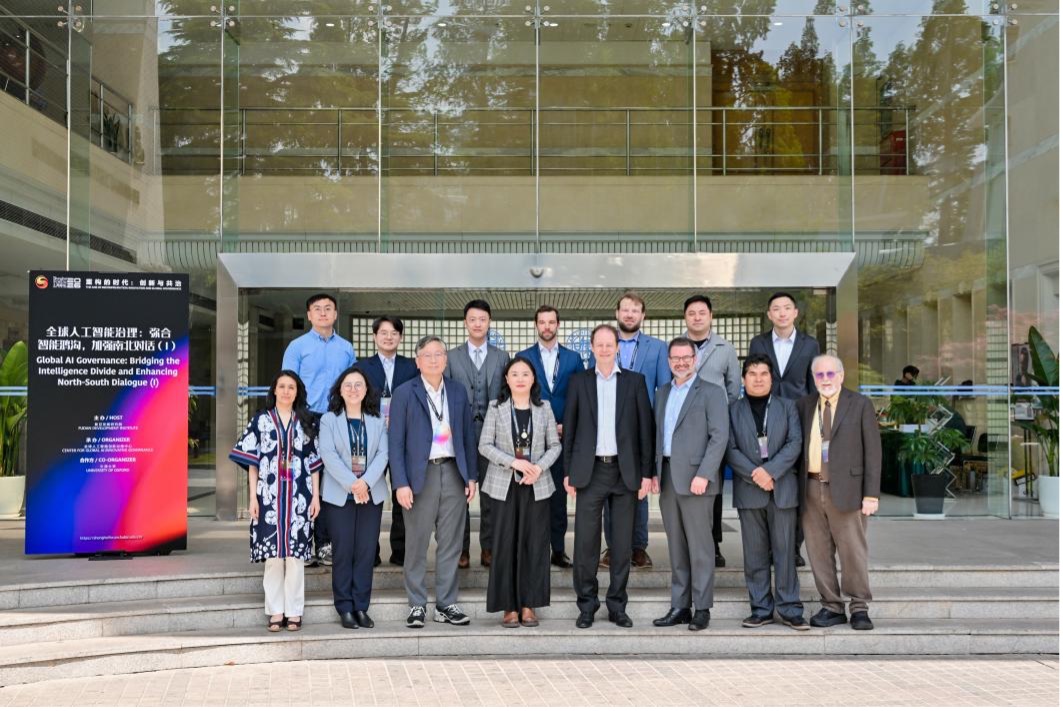
Attending Guests Taking a Commemorative Group Photo