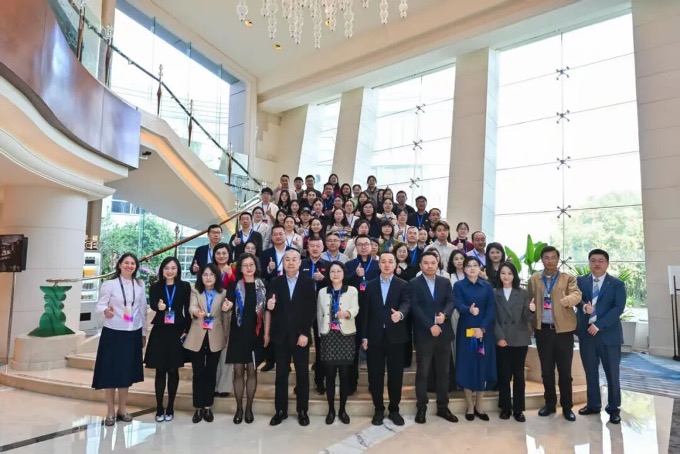


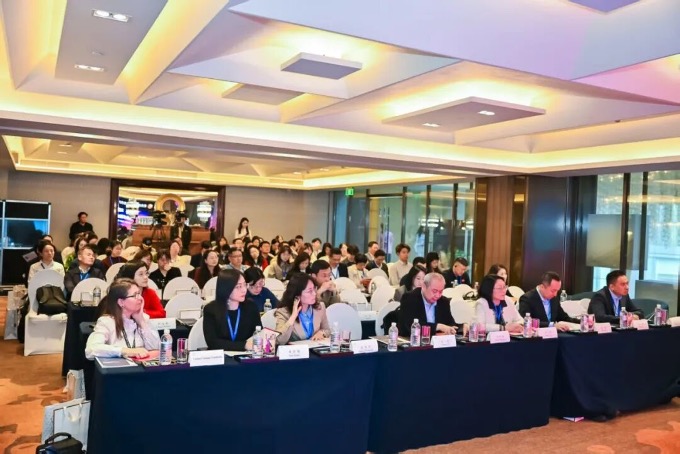
On April 25, the “Upgrading Health Governance Through Digital and AI Technologies” sub-forum of the 2026 Shanghai Forum was held at the Fudan University International Academic Exchange Center. The event was co-hosted by the Digital Health and Governance Innovation Center (Shanghai Jiading-Fudan International Education, Science and Technology Innovation Center), the Shanghai Municipal Center for Disease Control and Prevention (SCDC), and the Fudan Development Institute (FDDI). It was organized in collaboration with the Chronic Disease Committee of the Shanghai Preventive Medicine Association and the CDC Branch of the China Association for Health Promotion and Education.
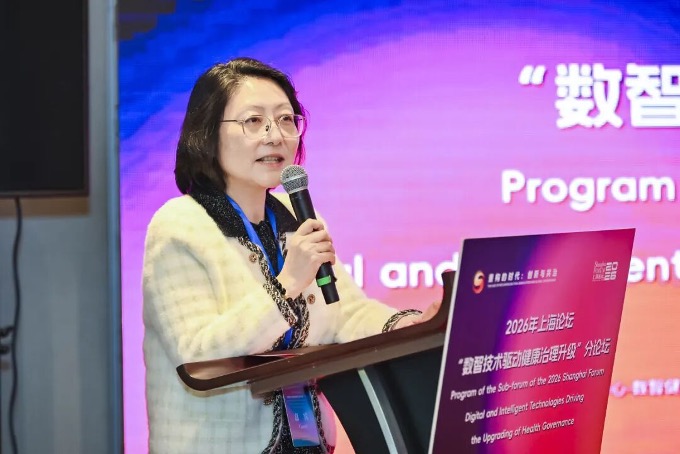
The forum brought together experts and representatives from the World Health Organization (WHO), the Chinese Center for Disease Control and Prevention (China CDC), the Health Development Research Center of the National Health Commission, SCDC, and prestigious domestic and international universities, hospitals, and tech enterprises. Discussions centered on chronic disease prevention and control, primary healthcare services, community health management, applications of smart wearables, and multi-stakeholder governance. The session was moderated by Professor Wang Fan, Professor at FDDI and Director of the Digital Health and Governance Innovation Center.
During the opening session, Gao Yue, Dean of the Institute for Space Internet at Fudan University and Director of the Shanghai Jiading-Fudan International Education, Science and Technology Innovation Center, emphasized that the key to digital health governance lies in “integrating into real-world scenarios, embedding into systems, and fostering synergy.” He noted that the Jiading-Fudan Center is advancing platforms in advanced manufacturing, biomedicine, and the low-altitude aviation economy, while the Digital Health and Governance Innovation Center continues to focus on wearable device incubation, chronic disease management service packages, dynamic population health assessment precision intervention.
Xiao Ping, Deputy Director of SCDC, pointed out that chronic diseases remains the primary health challenge for residents in megacities. Leveraging Shanghai’s Three-Year Action Plan for Public Health System Construction, the city has established over 200 Community Chronic Disease Health Management Support Centers, serving more than 10 million people. The next phase will focus on upgrading integrated chronic disease management to the next stage.
Zhang Yi, Executive Dean of FDDI, highlighted that the Digital Health and Governance Innovation Center, launched this February, will harness Fudan’s interdisciplinary strengths across liberal arts, sciences, medicine, and engineering. The center aims to conduct research and practice in digital health, chronic disease control, and global health governance, providing academic support for AI collaborative governance and the international expansion of related industries.
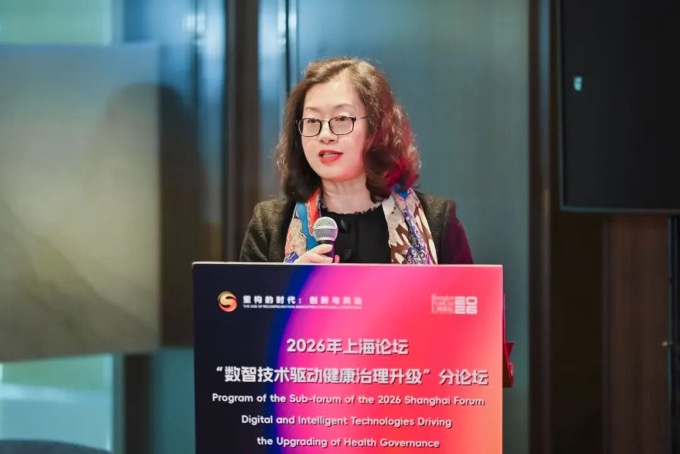
In the following keynote speeches, Hiromasa Okayasu, Director of Data, Strategy and Innovation, WHO Western Pacific Region, shared insights on global chronic disease control via remote link. He stressed that amid accelerating population aging and the rising burden of non-communicable diseases (NCDs), it is essential to shift the focus of health governance toward early intervention, evidence-based practices, and AI applications.
Miao Yanqing, Deputy Director of Health Strategy and Service System Research Department, National Health Commission, interpreted the guidelines on medical insurance support for primary healthcare. She noted that reforming payment and incentive mechanisms is a crucial lever for transforming service behavior and enhancing vitality at the grassroots level.
Cheng Minna from SCDC introduced Shanghai’s practice of integrated community-based chronic disease management. Shanghai has built a system characterized by the “integration of prevention and treatment, combination of generalists and specialists, and hierarchical medical system,” shifting the focus from “disease-centered” to “person-centered” comprehensive management.
Sheng Rong, Huawei Technical Expert and HarmonyOS Developer Advocate, discussed the progress of HarmonyOS, AI-assisted monitoring, and smart wearables in chronic disease management. He expressed interest in collaborating with Fudan University to explore cross-platform data interoperability, specialized databases, and digital therapeutics.
Professor Sophia Chan, Former Secretary for Food and Health of Hong Kong; Professor and Director of HKU Primary Health Care Academy, shared Hong Kong’s reform path. Utilizing District Health Centers and the Primary Healthcare Blueprint alongside cloud platforms and decision-support systems, Hong Kong is shifting from “treatment-oriented” to “prevention-focused” and from “hospital-centered” to “community-based” care.
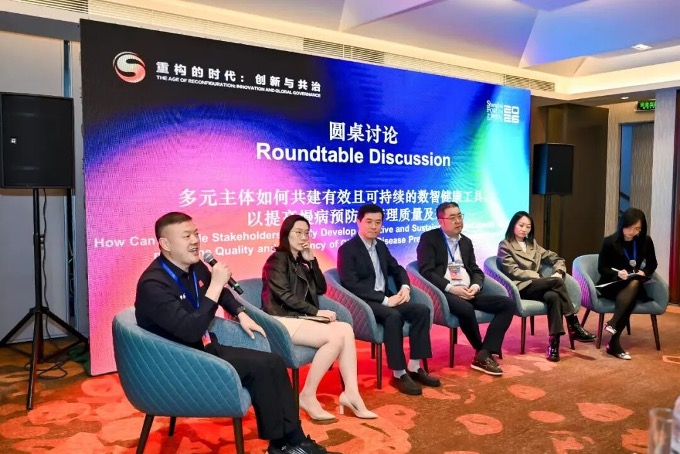
The roundtable discussion, moderated by Sun Jiani, Technical Officer for NCDs, WHO Representative Office in China, featured experts from Shanghai Health Promotion Center, Huadong Hospital, Huashan Hospital, JD Health, and Sunfit. The panel explored how diverse stakeholders can co-build sustainable digital health tools. The consensus reached was that the value of such tools depends not only on technical sophistication but on their ability to integrate into communities and deliver tangible health outcomes. Professor Louisa Gnatiuc Friedrichs, Nuffield Department of Population Health, University of Oxford, commented that while AI and multi-omics offer new possibilities for precision prevention, models must bridge the gap between scientific evaluation and clinical translation.
The afternoon session concluded with a closed-door seminar on “Standardized Community Chronic Disease Prevention Systems,” focusing on the implementation of grassroots application scenarios.
The forum successfully aligned with the new trends of the digital era, consolidating a consensus on digital health. Moving forward, the participating parties will continue to promote the closer integration of digital technology with public health systems to provide new momentum for the “Healthy China” initiative and global health governance.