

In the field of artificial intelligence (AI) industry, perhaps no development has attracted more attention this year than the simultaneous acceleration of initial public offering (IPO) plans by the three dominant players: OpenAI, Anthropic, and SpaceX+xAI. This unprecedented race to IPO is rapidly shifting competition among leading AI firms away from a model backed by venture capital toward a new phase increasingly sustained by public capital markets. This article examines the potential implications of this development for the United States’ position of global dominance in AI.

Elon Musk, Dario Amodei, and Sam Altman
Source: The Economist
01 Going Public: An Inevitable Path for AI Giants
The pace of advancement in today’s large AI models is extraordinarily rapid. From GPT-5.4 to Gemini 3.1 Pro, virtually every technological breakthrough emerging from frontier AI labs relies on massive financial support. Recent editions of Stanford HAI’s AI Index Report have documented the rapid growth in compute requirements and training costs for state-of-the-art models. The computational resources required to train state-of-the-art models have reportedly increased by more than one hundredfold over the past five years, while training costs have risen from several million U.S. dollars in the early stages of development to hundreds of millions of dollars today. Sustaining this intense cycle of technological competition will require leading AI firms to continue raising enormous amounts of capital, thereby setting the stage for three potentially historic IPOs within a single year.
Before April this year, OpenAI had already reached a valuation of US$840 billion. More recently, the company announced the completion of a new US$122 billion funding round, pushing its post-money valuation to US$852 billion and reportedly setting a new global record for the largest single private-equity financing deal. Strategic investors participating in the round reportedly included Amazon, SoftBank Group, and NVIDIA. The new funding is expected to strengthen computing-capacity reserves, expand data-center infrastructure, and recruit top-tier talent, with the goal of advancing artificial general intelligence (AGI) development and supporting the continued growth of businesses such as ChatGPT. OpenAI is currently seeking an IPO valuation of approximately US$1 trillion, equivalent to roughly forty times its annualized revenue.
Meanwhile, Anthropic, was reportedly valued at US$380 billion in its latest financing round, representing a 108 percent increase from its September 2025 valuation of US$183 billion. Based on the company’s most recently announced annualized revenue figures, its revenue has reportedly reached US$30 billion, exceeding OpenAI’s reported US$25 billion and marking an increase of US$9 billion. The company is reportedly targeting a future public-market valuation exceeding US$500 billion.
As for xAI, its revenue last year was approximately US$500 million, substantially lower than that of its two rivals. However, following its integration with SpaceX, its valuation has reportedly risen to US$1.25 trillion, with a target IPO valuation exceeding US$1.5 trillion. If realized, the company would rank among the ten most valuable publicly listed corporations in the world and could potentially make Elon Musk the first trillionaire in human history.
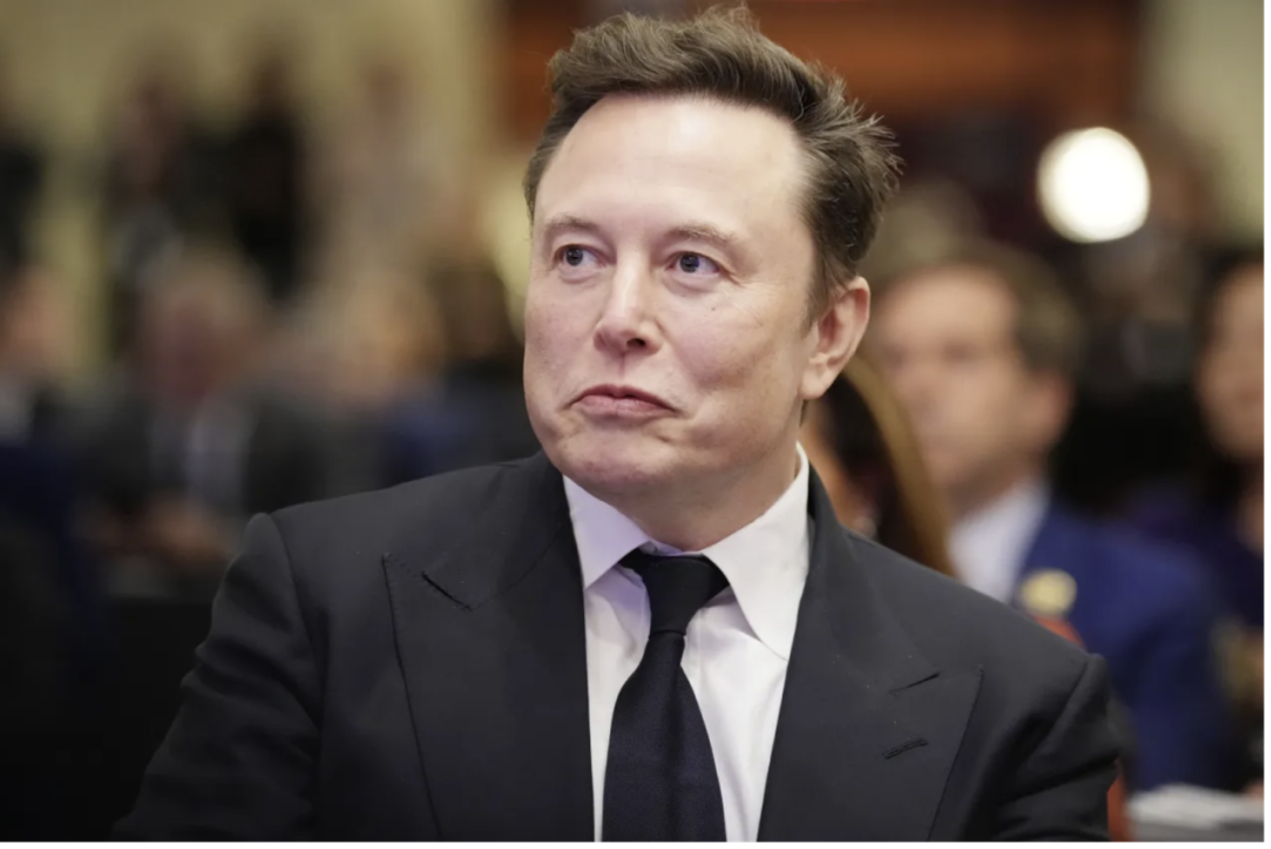
Elon Musk has joined Ray Dalio, founder of Bridgewater Associates, and Scott Bessent, U.S. Secretary of the Treasury in supporting proposals aimed at reducing national debt.
Source: Getty Images
At present, although the revenue performance of the three leading firms is impressive, none of them has approached break-even. It has previously been reported that xAI burns as much as US$1 billion per month, while its current revenue remains far below its cost base. Elon Musk has publicly stated that such massive losses are not unusual across the AI industry, primarily driven by the extremely high costs of server infrastructure and semiconductor procurement.
Although SpaceX is profitable in its rocket launch and satellite internet businesses, its planned space-based data center initiative is expected to require astronomical sums of external financing. OpenAI has projected that it will not generate free cash flow before 2030, yet it still plans to invest approximately US$660 billion in infrastructure development. Meanwhile, Anthropic has reportedly committed US$50 billion to building customized AI data centers in locations including Texas and New York.
Taken together, the cash-burn dilemma across these firms remains severe. What they require is longer-term financing mechanisms at much larger scale and with greater liquidity.
However, in the current private capital market, the ability to absorb such extremely highly valued companies is already close to its limits. Only a small number of actors—primarily large technology conglomerates such as Amazon—have the capacity to deploy tens of billions of dollars in a single transaction. Remaining within the private market increasingly makes it difficult to secure sustained financing that matches their valuation levels. Therefore, transitioning into public capital markets would not only provide more stable funding sources, but also expand financing channels through market-based mechanisms, thereby supporting long-term infrastructure expansion. The Economist has argued that if all three companies were to go public, the combined value created could exceed the total value of all IPOs backed by venture capital since 2000, an unprecedented scale in financial history.
In addition, should SpaceX be the first to complete a large-scale initial public offering (IPO), it would provide an important market test for subsequent listings. A Reuters report published on April 1 has already characterized it as a make-or-break test for “mega IPOs.” If SpaceX succeeds in raising between US$50 billion and US$75 billion, market valuation benchmarks for OpenAI and Anthropic would likely shift away from model performance toward more pragmatic metrics, including realized revenue, capital expenditure intensity, governance transparency, and the acceptance of public market investors.
At the same time, regulatory adjustments by Nasdaq have created more favorable conditions for such listings. On March 30, Nasdaq announced revisions to the eligibility rules for inclusion in the Nasdaq-100 Index, effective May 1. Under the new framework, large newly listed companies that meet the relevant criteria may become eligible for evaluation as early as the seventh trading day after listing, with potential inclusion in the index as soon as the fifteenth trading day. This mechanism is particularly attractive for companies valued above US$300 billion, and especially those worth US$700 billion to US$1 trillion.
However, the market has grown more cautious in 2026 than in previous years. After OpenAI completed a US$122 billion funding round that lifted its valuation to US$852 billion, enthusiasm for AI-related equities in secondary markets showed clear signs of cooling. Investors are increasingly focused on the speed at which returns from AI infrastructure investments can be realized. According to S&P Global, total capital expenditure by the five major cloud service providers in 2026 is projected to reach US$635 billion, approaching 90 percent of their combined operating cash flow over the same period. This implies that, should the three companies proceed with simultaneous public listings, they would face significantly more stringent valuation benchmarks and more intensive performance scrutiny.
In sum, IPOs have become an increasingly inevitable strategic choice for the three leading AI firms. However, investors have moved away from uncritical enthusiasm for AI and toward a more rational, fundamentals-driven evaluation. This transition tests not only the technological capabilities of these leading firms, but also the long-term viability of their business models and their governance maturity.
For AI companies, the long-term research and development model traditionally supported by venture capital may gradually shift toward a greater emphasis on commercial deployment and sustainable cash flows. Within the generative AI value chain, long-term economic value is more likely to be derived from downstream applications and platform ecosystems, rather than model scale alone. Consequently, the potential IPOs of these three firms may represent a critical turning point in the evolution of the AI industry—from a phase of technological exploration to one of large-scale industrialization.
02 Capital Inflows: Reshaping the U.S. AI Advantage
The United States is systematically constructing AI dominance across six key dimensions, including the continuous evolution of top-level strategic frameworks, deepening public–private sector integration, expansion of military applications, formation of exclusionary alliance networks, differentiated global governance and control mechanisms, and the projection of value systems. From the Obama administration to the Trump administration, AI has been elevated to the status of a national strategic priority. Through a combination of government investment and end-to-end industrial control by leading firms, the United States has established structural advantages across the broader AI ecosystem, from semiconductors and algorithms to talent.
The existing U.S. advantages in AI compute infrastructure can be understood across three interrelated dimensions. First, the United States holds a dominant position in AI hardware supply, with firms such as NVIDIA accounting for a leading share in the high-end AI accelerator market. GPUs produced by these firms are widely used in AI training and inference worldwide, providing the core performance foundation for U.S. AI development, while much of the world’s AI workloads remains dependent on the related technology stack. Second, infrastructure expansion driven by large-scale private capital has played a central role. Major technology companies including Microsoft, Alphabet, Meta, and Amazon have built one of the world’s most concentrated data center networks and hyperscale cloud ecosystems, thereby providing frontier AI labs with relatively centralized access to high-performance computing resources. Third, policy instruments and ecosystem integration further reinforce these advantages. On December 11, 2025, President Donald Trump signed the executive order titled Ensuring a National Policy Framework for Artificial Intelligence, which is described as emphasizing the establishment of a unified national AI policy framework to support U.S. technological leadership. The order also opposed fragmented and overly stringent state-level regulation, and directed the creation of an AI Litigation Task Force to challenge inconsistent state laws. This was subsequently followed, according to available descriptions, by a White House document dated March 20, 2026 titled National Policy Framework for Artificial Intelligence. The document advances legislative proposals centered on a unified federal AI policy, including federal preemption of state AI regulations that impose undue burdens, in order to prevent a fragmented state-by-state regulatory landscape, while preserving generally applicable laws in areas such as consumer protection, child safety, intellectual property, and freedom of expression. It also advocates a light-touch regulation, relying on existing federal agencies for oversight rather than establishing a new AI-specific federal regulator or adopting an EU-style regime of strict risk-tiered prohibitions. Instead, it seeks to foster AI innovation through sandboxes, access to federal data, and infrastructure development. If enacted, such a framework would likely reduce compliance costs and regulatory uncertainty for nationwide AI firms, thereby strengthening investor confidence and contributing to more stable valuations in the AI sector.
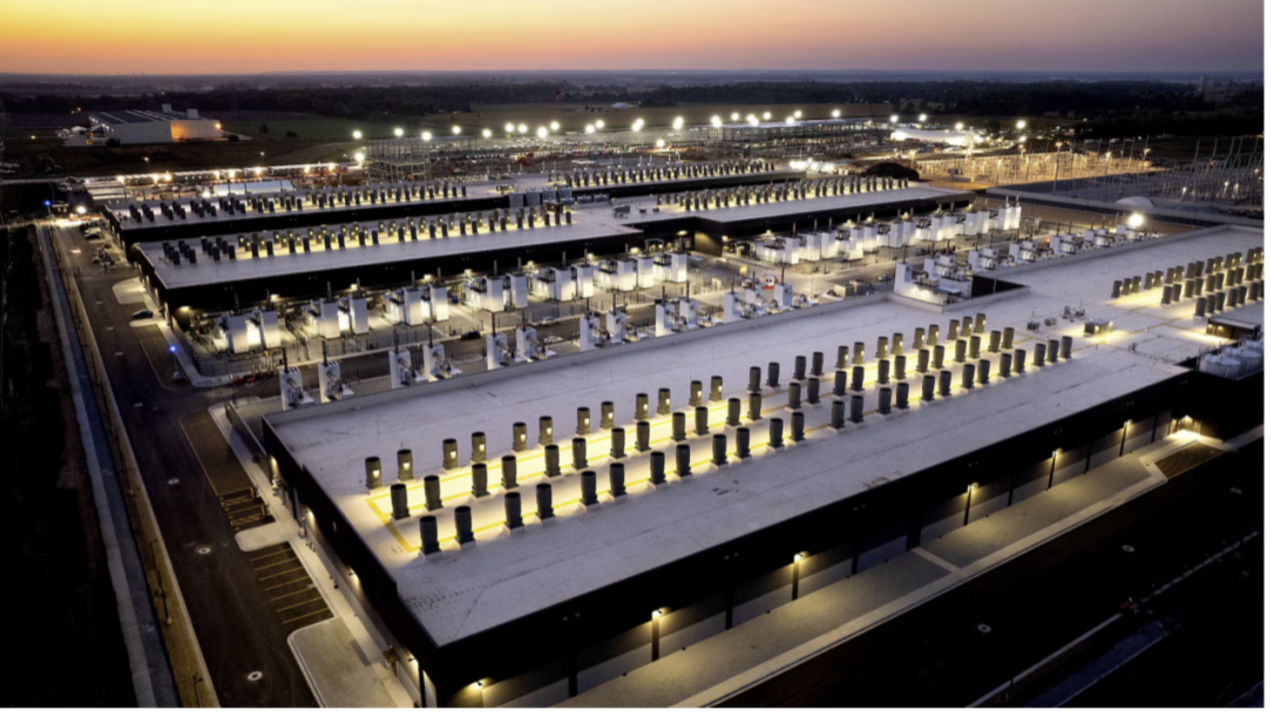
October 3, 2025, Amazon Web Services (AWS) data center in New Carlisle, Indiana, United States.
Source: Reuters
However, the current development of AI in the United States also faces several significant constraints, most notably energy bottlenecks. Electricity demand from U.S. data centers is projected to double between 2024 and 2030, reaching 426 terawatt-hours (TWh), accounting for approximately 9 percent of total national electricity consumption. Compounding this problem, aging grid infrastructure has already resulted in an estimated 44 gigawatts (GW) of power capacity shortfall. This not only directly constrains the further scaling of model training, but also makes the development of AI increasingly dependent on electricity price stability and the carrying capacity of underlying infrastructure. Data centers require substantial electricity consumption, thereby linking AI development to both energy pricing and infrastructure capacity.
Melissa Otto, Head of Research at Alpha Research, warned at the CERAWeek energy conference in Houston that supply risks were not yet fully reflected in market prices, raising concerns about further price increases and their potential spillover effects on the global economy. “We’re seeing this big question around global growth,” Otto added, noting that a 30 percent jump in energy prices would hurt both consumers and companies.
Against this backdrop, the massive capital raised through IPOs by the three leading companies provides important financial support for consolidating and reshaping the U.S. advantages in AI.
First, in terms of energy and resource consumption, IPO-derived capital is expected to accelerate a shift of AI compute toward more sustainable and resilient solutions. As noted above, SpaceX’s space-based data center initiative aims to enable large-scale deployment of orbital AI computing capacity, which could help alleviate the severe energy bottlenecks currently facing the United States. At the same time, by leveraging distributed and potentially more sustainable energy utilization models, it may reduce reliance on the terrestrial power grids and provide more stable resource support for AI expansion. In the longer term, capital-driven energy innovation may not only improve the reliability and scalability of compute supply, but also potentially catalyze a broader global shift in energy technologies toward space-based and renewable pathways, thereby further strengthening U.S. strategic leverage over AI-related resources.
Second, for the three leading companies and other firms, substantial capital inflows are expected to accelerate the transition of AI from laboratory-scale prototypes to large-scale deployment. IPO proceeds would enable companies such as OpenAI and Anthropic to more rapidly acquire next-generation chips, expand onshore data center capacity, and improve the overall efficiency of both training and inference workloads. While enhancing their own competitive position, this process may also generate technological spillovers and ecosystem-wide complementarities, thereby fostering more integrated development across the AI value chain and forming a more complete “compute–data–application” loop. As a result, a broader range of AI firms would be able to access high-performance computing resources with lower entry barriers, facilitating a structural shift in the industry from relatively concentrated, lab-driven competition among a small number of frontier players toward a more widely distributed industrial application ecosystem. This scale-up transition is expected to significantly enhance the overall innovation efficiency and commercial sustainability of the U.S. AI sector, while also providing a more stable compute environment for small and medium-sized enterprises as well as startups.
Third, in the field of AI, which has already been integrated into the U.S. defense ecosystem, capital inflows may further deepen defense–commercial integration. Relevant White House AI policy documents have placed defense AI adoption and access to critical compute infrastructure on the national security agenda, emphasizing public-private cooperation to accelerate AI deployment within the Department of Defense. In this context, pressures arising from public financial disclosures and quarterly key performance indicators (KPIs) may further incentivize the three leading companies to allocate greater resources toward defense-oriented AI applications, thereby reinforcing both compute dominance and defense capabilities.
The massive capital injection from the IPOs of the three giants is expected not only to alleviate current practical constraints such as energy shortages, but also to further consolidate and amplify the existing U.S. AI advantages in corporate competition and national defense, thereby providing a more solid material foundation and strategic support for U.S. long-term leadership in the global AI landscape. Of course, this process also faces potential challenges, including capital deployment efficiency, the regulatory environment, and the stability of global supply chains. However, based on current indications, its role in reshaping the overall U.S. AI advantages may have already begun to emerge.
03 Potential Risks: Founder Infighting, Valuation Bubble, and Circular Investment
However, the IPO race among the three giants carries multiple risks on its own right.
The first is internal friction caused by open and hidden rivalries among the three leaders. The Economist summed up the three as “the mercenary” for Sam Altman, “the missionary” for Dario Amodei, and “the messianic” for Elon Musk. These sharply different personalities have given rise to conflicts that go beyond ordinary commercial competition and have even become a significant variable influencing the strategic directions of the three companies.
The rift between Dario Amodei and Sam Altman can be traced back to a group house on Delano Avenue in San Francisco in 2016. At the time, Amodei lived with his sister Daniela Amodei and the effective altruism advocate Holden Karnofsky. Greg Brockman, a friend of Danielle’s, was a frequent visitor. Brockman, Dario Amodei, and Karnofsky once had engaged in a heated debate over “the right way to build AI.” Amodei argued that, on sensitive issues such as AI research and development, the government should be informed first, while Brockman believed that developers had an obligation to disclose frontier advances to the public. These differences in philosophy later evolved into core disagreements between OpenAI and Anthropic over corporate positioning and were further exacerbated by subsequent disputes over power allocation, contribution attribution, and layoffs. By the end of 2020, Dario Amodei, his sister, and more than a dozen other core members had left OpenAI collectively to found Anthropic, marking the complete public rupture between the two men.

At the India AI Summit in New Delhi this February, Indian Prime Minister Narendra Modi joined hands with participating tech leaders and raised their arms at the close of the event. However, Dario Amodei and Sam Altman did not hold hands; instead, they awkwardly touched elbows.
Source: Getty Images
Meanwhile, the conflict between Musk and Altman has also been long‑standing. Musk was one of OpenAI’s co‑founders, but left in 2018 due to divergent visions and subsequently publicly accused OpenAI of abandoning its original non‑profit mission in favor of pursuing commercial interests. In a lawsuit set to go to trial in April 2026, Musk sought up to US$134 billion from OpenAI and Microsoft in alleged “wrongful gains,” while claiming that his early contributions, including US$38 million in funding, had helped build OpenAI. If successful, this lawsuit could directly threaten OpenAI’s operational stability and Altman’s reputation.
The relationship between Musk and Dario Amodei is equally complex. In 2017, when OpenAI’s “Universe” project ran into trouble, Musk demanded an employee contribution table, which ultimately led to 10–20 percent of the staff being laid off. Amodei witnessed this process and regarded it as “needlessly cruel.” Subsequently, a series of events—including disputes over leadership of GPT‑series research, whether he would be invited to slide-preparation meetings, and whether promotion promises were kept—further accumulated personal grievances. Musk has repeatedly mocked Anthropic on X, calling it “misanthropic and evil.” Separately, Amodei reportedly compared the legal battle between Altman and Musk to “the fight between Hitler and Stalin.”
In summary, the public escalation of these conflicts has further amplified the triangular tensions among the three men. If the three founders’ energy is drained by infighting, core team stability declines, and key decisions are swayed by personal grudges, this may lead to fragmented strategic decision‑making, thereby affecting the overall pace of innovation. Consequently, the three giants may find it difficult to fully commit to a lightning‑style AI race.
Second, there is the risk of a valuation bubble and a market crowding‑out effect. If, after their IPOs, any of the three giants fails to meet market expectations—for instance, ChatGPT’s weekly active users have exceeded 900 million, but growth has already shown signs of slowing—a chain reaction of sell‑offs could be triggered, placing significant pressure on the broader technology sector. This massive IPO event will concentrate a substantial portion of venture capital into a few high‑profile firms, making it markedly harder for small and medium‑sized AI startups to secure funding. As a result, the U.S. AI ecosystem may gradually shift from diverse innovation toward a more concentrated landscape, further amplifying systemic financial risks. Moreover, the high valuations themselves could exacerbate volatility in the secondary market.
Once listed, the three giants will have to contend with quarterly earnings pressure and rigorous scrutiny from Wall Street analysts. Any sign of slowing growth or cost overruns is likely to be rapidly magnified, thereby affecting stock price stability. While such market mechanisms help enhance corporate transparency, they may also push management to adjust R&D timelines under short‑term performance pressure, indirectly reducing long‑term investment in technological breakthroughs.
Taken together, the valuation bubble and the crowding‑out effect may reinforce each other: they reflect the capital profits brought by the IPOs, but also constitute potential challenges that require careful navigation. Founder infighting could exacerbate the valuation bubble, while the bubble could in turn amplify regulatory pressures—ultimately testing the overall execution capacity of the U.S. AI sector. If these risks are not effectively managed, the IPOs themselves could become a source of hidden risk.
Furthermore, in current market valuation across the AI industry, there is another notable issue: circular investment, or closed‑loop ecosystems. Circular financing refers to a situation where a supplier also acts as a major investor, with invested capital flowing back through procurement, equity swaps, or long‑term contracts—creating round‑tripping transactions. This model is particularly prominent in the AI sector. It helps startups quickly access expensive computing resources and accelerates innovation and infrastructure development, while providing suppliers with predictable revenue streams and aligning incentives.
However, the model also carries risks. It not only distorts signals of true demand but also exacerbates over‑reliance on a few dominant players and drives parties across the ecosystem to overexpand capacity based on optimistic expectations. If actual AI adoption fails to keep pace, the self‑reinforcing cycle of interests could break, triggering a chain reaction that further amplifying the risk of an artificial prosperity within the AI ecosystem.
For example, giants such as NVIDIA, Amazon, Alphabet, Microsoft, and Oracle are both major shareholders and investors, while also serving as core suppliers to AI startups such as the three leading firms. NVIDIA plans to invest up to US$100 billion in OpenAI, and in return OpenAI has committed to purchasing NVIDIA GPUs on a large scale for data center construction. Amazon has made an additional US$4 billion investment in Anthropic (bringing the total to US$8 billion), while Anthropic has agreed to use AWS as its primary cloud provider. Microsoft and NVIDIA jointly invested up to US$15 billion in Anthropic, with Anthropic committing to spend approximately US$30 billion on computing resources via Microsoft Azure. In addition, OpenAI signed a US$300 billion cloud infrastructure agreement with Oracle, while Oracle procures a large volume of chips from NVIDIA, creating multi-layered closed loops.
In the IPO process of the three giants, the circular investment model described above is likely to face rigorous scrutiny during related-party transaction audits. SpaceX has already filed a confidential draft S-1 registration statement in early April 2026, with a target listing possibly around June, while OpenAI and Anthropic are expected to proceed with their public offerings in the second half of 2026.
Under U.S. Securities and Exchange Commission (SEC) rules, Item 404 requires comprehensive disclosure in the S-1 prospectus of related-party transactions involving shareholders holding more than 5 percent of the shares, directors, executive officers, or their related parties. Such disclosures may include details on investment agreements, cloud service procurement, chip supply contracts, and equity options. These transactions must also indicate whether they were, or will be, conducted on arm’s-length terms. Auditors, underwriters, and the SEC review team will focus on examining their economic substance, potential conflicts of interest, customer concentration risks, and whether the revenue is genuinely sustainable.
Historical experience suggests that circular transactions of this kind may trigger SEC comment letters, leading to filing delays or requests for additional disclosures. However, as long as such transactions are disclosed transparently and their potential impact is highlighted in the “Risk Factors” section, their presence typically does not directly block the IPO process. Nonetheless, this process will compel investors and the market to evaluate the valuation foundation of the AI industry more carefully and avoid being misled by “AI washing” or artificial prosperity.
04 Conclusion
The IPO race among the three AI giants is injecting new momentum into the U.S. AI industry, driving its gradual evolution from a traditional venture-capital‑driven model toward a paradigm jointly supported by public-market capital and national strategic priorities. This transformation is expected to provide renewed impetus for U.S. leadership in AI, but its ultimate outcome will depend on the actual performance of the three companies in terms of execution capability, founder coordination, and the global competitive landscape. This race is not only a high‑stakes business drama played out through the public rivalry among the three founders, but also a test of the overall strategic resilience of U.S. AI sector. Conversely, if the various risks are not properly managed, a strategic window of opportunity may open for global competitors.
Regardless of the final outcome, the IPO race may have already pushed the U.S. AI industry into a new phase, with long‑term implications for the global technology landscape and geopolitical order. Alphabet, as a mature competitor that has long been publicly traded, provides an important market benchmark for the three giants with its stable cash flow and reasonable valuation of around 9 times earnings. During this transition, whether the three giants can truly strike a balance between growth and security, and between financing and innovation, will directly affect the long‑term competitiveness of U.S. AI industry on the global stage.
Original URL: https://mp.weixin.qq.com/s/_eQaeYH7Lhg5pepNn8tnDw