

At the invitation of Chinese President Xi Jinping, U.S. President Donald Trump paid a state visit to China from May 13 to 15, 2026. This is the first U.S. presidential visit to China in the past nine years and Trump’s second since November 2017. The Xi-Trump meeting took place as artificial intelligence (AI) is rapidly evolving and strategic competition in advanced technologies continues to intensify. Both leaders agreed that China–U.S. relations are the most important bilateral relationship in the world today. Against this backdrop, the meeting promoted a new vision of building “a constructive China–U.S. relationship of strategic stability,” and helped bring AI-related issues into a more pragmatic framework for bilateral strategic dialogue.
Over the long term, the prospects for China–U.S. cooperation on AI remain promising. The significance of the meeting for AI governance lies not in achieving immediate breakthroughs on existing differences, but in developing a shared strategic understanding on bottom lines and sustaining dialogue. Amid intensifying global competition and cooperation in AI, the two sides are seeking a realistic and manageable pathway for long-term dialogue.
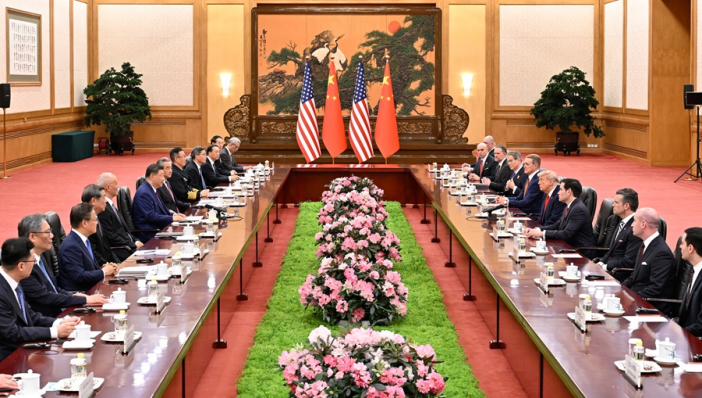
Chinese President Xi Jinping holds talks with U.S. President Donald Trump at the Great Hall of the People in Beijing.
Source: Xinhua News Agency
I. Export Controls and Import Calculations: The Long Game Over Advanced Chips
As advanced chips provide a critical hardware foundation for AI development, the progress and signals surrounding China–U.S. talks on related export controls have drawn close attention. Ahead of the meeting, debate centered on whether NVIDIA CEO Jensen Huang would join the U.S. delegation. Huang was not included in the initial list of 16 business leaders released by the White House before the delegation’s departure. Yet on May 13, when the presidential aircraft stopped in Alaska for refueling, Huang boarded the plane at the last minute, fueling speculation that he had joined the trip in a dramatic, eleventh-hour move. Unnamed NVIDIA sources cited by Caixin, a Chinese financial news outlet, and other media said the arrangement had in fact been prepared two days earlier rather than being a spontaneous decision as rumored. The development was interpreted by some observers as a subtle signal from Washington to Beijing.
As the meeting unfolded, the United States appeared to downplay the chip issue and leave room for possible movement. On May 14, U.S. Trade Representative Jamieson Lee Greer told Bloomberg TV that chip export controls were “not a major topic of discussion” at the bilateral meeting. Yet on May 15, before boarding Air Force One for the return trip, Trump first claimed the issue “didn’t come up,” adding that China had not approved purchases of NVIDIA’s H200 chips “because they chose not to” and because “they want to develop their own.” He then said that the issue “did come up” and that “something could happen on that.” The inconsistent messaging seemed to reflect Washington’s ambivalence between preserving its technological leadership and maintaining access to overseas markets. On the one hand, U.S. firms have commercial incentives to export second-tier advanced chips to China; on the other, Washington remains concerned that Chinese firms could narrow the effective capability gap through system optimization and engineering improvements.
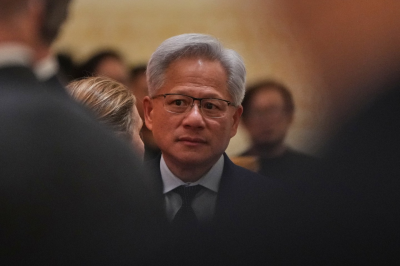
NVIDIA CEO Jensen Huang attends a welcome banquet at the Great Hall of the People in Beijing, May 14, 2026.
Source: Associated Press
Yet the meeting between the two heads of state appeared to mark the beginning of a shift on two fronts:
On the export side, U.S. chip controls on China appear to be shifting from blanket restriction toward a more selective, conditional approval approach. During the meeting, Reuters reported that the U.S. Department of Commerce had approved purchases of NVIDIA H200 chips by around 10 Chinese companies, including internet firms such as Alibaba Group, Tencent and ByteDance, alongside distributors and server-related companies including Lenovo and Foxconn. Under the reported arrangement, each approved customer could purchase up to 75,000 H200 chips either directly from NVIDIA or through authorized distributors. This approach suggested an effort by Washington to preserve commercial opportunities for U.S. firms while maintaining broader restrictions on cutting-edge chips, allowing selected chip exports to China subject to controlled conditions.
The export regulations issued by the U.S. Department of Commerce’s Bureau of Industry and Security (BIS) in January 2026 require that a certain share of chip sales revenue be paid to the U.S. government, and that the chips pass through the United States for transit and testing. These conditions have heightened China’s concerns over potential risks such as tampering and backdoor installation. Against this backdrop, U.S. remarks around the meeting tended to attribute uncertainty over the chip deals to whether Chinese buyers were willing to proceed, while glossing over the impact of U.S. licensing conditions, regulatory procedures and security reviews on whether the deals could actually be completed. Such framing risks mistaking effect for cause.
However, domestic pressure within the United States to further tighten chip controls on China has not diminished. Prior to the meeting, the White House Office of Science and Technology Policy issued NSTM-4, a memorandum titled “Adversarial Distillation of American AI Models,” alleging that foreign actors, principally based in China, were engaged in “deliberate, industrial-scale campaigns” to distill U.S. frontier AI systems. The memorandum called for stronger intelligence-sharing and defensive coordination between government agencies and AI companies. Meanwhile, the U.S. House Foreign Affairs Committee advanced the Multilateral Alignment of Technology Controls on Hardware Act, or MATCH Act, aiming to align U.S. and allied controls on chokepoint semiconductor manufacturing equipment and further restrict China’s access to advanced chipmaking tools. On May 14, during the meeting, Anthropic released a report titled “2028: Two scenarios for global AI leadership,” arguing that advanced chips remain essential for training frontier models. It also warned that Chinese AI labs could use loopholes in export controls, overseas compute access and large-scale model distillation to narrow the gap with U.S. models to only a few months. After the meeting, U.S. Secretary of State Marco Rubio, in an interview with NBC News, acknowledged that President Trump had announced that certain chips could be sold to China. He immediately added, however, that the United States must preserve its areas of dominance and cutting-edge advantages, saying it would be “dumb” to sell such technology to “a country that could reverse engineer it and leapfrog it.”
Taken together, the debate in Washington continues to be shaped by a binary logic of maintaining U.S. technological dominance and preventing China from catching up. The emerging “selective, conditional approval” approach therefore does not represent a broader softening of U.S. technology policy toward China, but rather a compromise born of Washington’s reluctance both to give up the Chinese market entirely and to allow China access to a stable source of advanced computing power that could help narrow the technology gap.
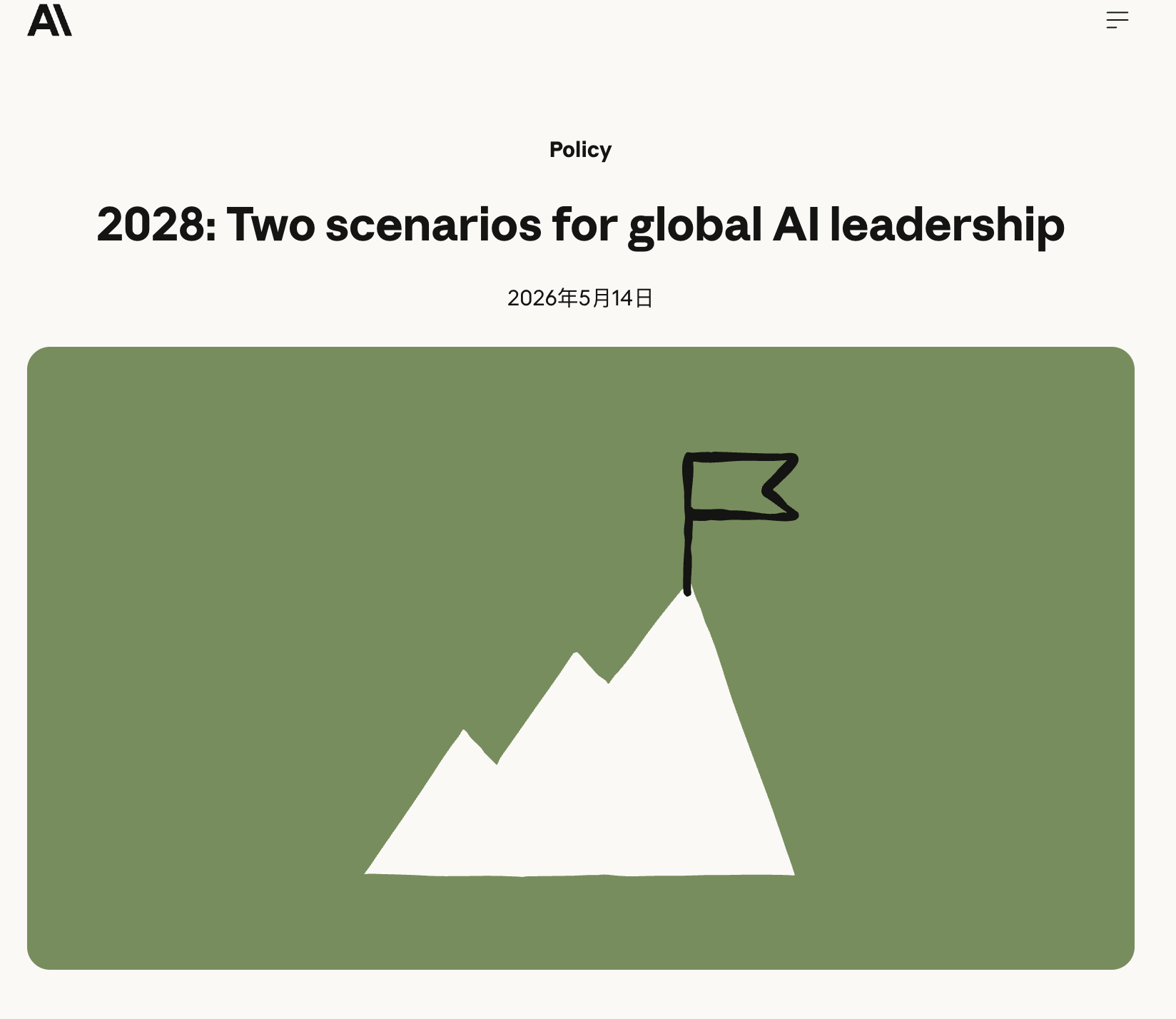
Anthropic publishes an article on its official website calling on the United States to implement measures to slow China’s AI development, May 14, 2026.
Source: Official website of Anthropic
On the other hand, shifts on the import side indicate that the China–U.S. chip rivalry is entering a new phase, with China maintaining a highly cautious attitude and measured expectations regarding chip transactions. Although Washington approved the relevant purchases, NVIDIA had not yet delivered H200 chips to Chinese firms at the time of writing. This reflects not only uncertainty around U.S. licensing implementation, but also China’s own strategic calculations.
Accepting arrangements involving substantial revenue-sharing and unilateral testing requirements could, from Beijing’s perspective, amount to accepting continued U.S. extraction of value from China’s computing infrastructure development and recognizing Washington’s authority over supply-chain rules. At the same time, China’s domestic AI chip industry is entering what many analysts describe as a scaling phase. Chinese AI accelerator chips accounted for more than 41 percent of domestic market shipments in 2025, while models such as DeepSeek-V4 have achieved compatibility with multiple domestic chip platforms including Huawei Ascend systems. Foundries such as SMIC are also expanding advanced manufacturing capacity.
From China’s perspective, there appears to be willingness to engage in dialogue on AI safety and supply-chain stability. At the same time, however, China is unlikely to accept “conditional approval” as a substitute for fair market access, nor is it likely to build critical computing infrastructure on external supply chains perceived as unstable, uncontrollable or insecure.
For NVIDIA, the H200 approvals represent a limited positive development rather than a decisive breakthrough. According to figures cited by The Next Web, China’s share of NVIDIA’s revenue has reportedly declined from more than 20 percent to around 5 percent. The company also disclosed that roughly $2.5 billion worth of H20 inventory remained undeliverable in the first quarter of fiscal year 2026, with potential losses from related restrictions reaching $8 billion in the second quarter. While the U.S. government’s approval keeps the door open for NVIDIA to return to the Chinese chip market, whether these orders can be finalized remains subject to three variables: U.S. licensing conditions, China’s regulatory stance and the purchasing willingness of Chinese buyers. Financial institutions including UBS and Morgan Stanley have adopted cautious positions, arguing that the short-term revenue impact from China should not be overstated before actual orders materialize.
At a deeper level, what NVIDIA truly faces is not mere market volatility. Its future position in China may depend on whether it can strike a minimum balance among U.S. export controls, Chinese security concerns and its own commercial interests.
Looking ahead to the prospects of China–U.S. negotiations and rivalry over high-end chips, the chip issue remains the most practically consequential and readily verifiable test of both sides’ sincerity in bilateral AI dialogues. Leading up to the Chinese president’s reciprocal visit this September and over a longer horizon, both sides are expected to maintain cautious expectations. Rather than pursuing a one-off, comprehensive relaxation of export controls, they are more likely to engage in technical, issue-specific consultations in a phased manner. For the United States, striking a balance among maintaining technological leadership, preventing the spillover of frontier computing power, and safeguarding market interests will continue to shape the pace of its chip export controls on China. For China, its ability to arrive at a sound arrangement that mitigates supply-chain security risks, uphold the legitimate procurement needs of enterprises, and accelerate the development of its domestic computing power ecosystem will ultimately affect whether relevant transactions can be successfully completed.
II. Convergence, Tension and Strategic Contestation in the China–U.S. Intergovernmental AI Dialogue
(I) Restarting Dialogue and Building Guardrails: The Resumption of the China–U.S. Intergovernmental AI Dialogue
On May 14, 2024, the first meeting of the China–U.S. intergovernmental dialogue on AI was convened in Geneva, Switzerland. The two sides conducted in-depth, professional, and constructive exchanges of views on AI technological risks, global governance, and other respective concerns. This dialogue was a pivotal step to implement the consensus reached during the China–U.S. presidential summit in San Francisco, marking the formal establishment of the bilateral intergovernmental AI dialogue mechanism. In November of the same year, during the APEC Economic Leaders’ Meeting in Lima, Peru, the Chinese and U.S. presidents further affirmed the need to maintain human control over the decision to use nuclear weapons—a milestone widely interpreted by observers as a significant signal that this dialogue mechanism could extend into broader strategic domains. However, following the inauguration of the second Trump administration in early 2025, the scheduled second round of the intergovernmental dialogue was never placed on the agenda, leaving the dialogue mechanism effectively at a standstill.
Against this backdrop, whether and in what format the China-U.S. intergovernmental AI dialogue mechanism could be restarted became one of the most closely watched issues at the meeting. International media outlets, including The Wall Street Journal, Bloomberg, and CNBC, intensively used high-profile narratives such as “the two AI superpowers are going to start talking,” reflecting strong external expectations surrounding this issue. Judging from the outcomes of the meeting, the two countries confirmed that the intergovernmental AI dialogue would be resumed. During an interview on his return trip, Trump specifically noted that the two leaders had “talked about possibly working together for guardrails,” while underscoring the immense potential and transformative power of AI. On May 19, China’s Ministry of Foreign Affairs stated in response to related queries that “during President Trump’s visit to China, the two heads of state had constructive exchanges on AI and agreed to launch government-to-government dialogue on AI.” The ministry further emphasized that, as two major AI powers, China and the United States need to work together to promote the development and governance of AI, so that it can better contribute to the progress of human civilization and the common welfare of the international community.
Based on the information publicly available at present, neither side has fully disclosed the specific arrangements or agenda of this upcoming round of dialogue; hence, the substantive outcomes remain to be seen. On one hand, from the broader perspective of AI governance, the resumption of the intergovernmental AI dialogue between China and the United States is a positive development. In the face of model-derived risks and governance challenges posed by AI, both sides have reasons and incentives to propel dialogue forward. On the other hand, the two nations still differ in their governance philosophies, regulatory pathways, and perceptions of competition and cooperation. These differences constitute practical tensions that cannot be avoided as the dialogue progresses.
(II) “Leadership Enables Dialogue”: Bessent’s View of China–U.S. AI Guardrails
Shortly after the first day of the meeting concluded, U.S. Treasury Secretary Scott Bessent delivered what many observers regarded as one of the most important public comments on AI during the meeting. In an interview with CNBC, Bessent said, “The two AI superpowers are going to start talking. We’re going to set up a protocol in terms of how we go forward with best practices for AI to make sure non-state actors don’t get a hold of these models.” He added that China and the United States were discussing “guardrails” for AI use amid growing calls for regulation of emerging technology.
The remarks appeared to reflect Washington’s evolving assessment of the AI balance between the two countries. On one hand, the United States still sees China as its primary technological competitor. On the other hand, the U.S. side has also, for the first time, publicly acknowledged that China has emerged as a peer competitor capable of standing on equal footing with the United States, and must therefore be incorporated into the U.S. global AI strategic stability framework.
Within the visiting U.S. delegation, Bessent served not only as the chief figure spearheading economic negotiations but also as the U.S. representative participating in the proposed intergovernmental AI dialogue. Consequently, during the meeting, Bessent was widely regarded as a key voice elucidating the U.S. stance on AI. This partly reflected personnel changes within the Trump administration. In March 2026, White House AI and crypto czar David Sacks completed his term as a Special Government Employee and shifted into an advisory role as co-chair of the President’s Council of Advisors on Science and Technology, through which he will continue to influence the administration’s policy trajectory on AI and emerging technologies. Meanwhile, given the need for alignment across negotiating channels and working-level coordination, trade and economic teams from both sides had been actively engaging on AI issues ahead of the meeting. On China–U.S. AI-related issues, Bessent had already previewed his position in an earlier interview with Fox Business, describing what had happened in AI over the previous month as “a step change in the power of one large language model.” He also stressed that the U.S. government’s task was to allow AI companies to continue innovating while maintaining safety.
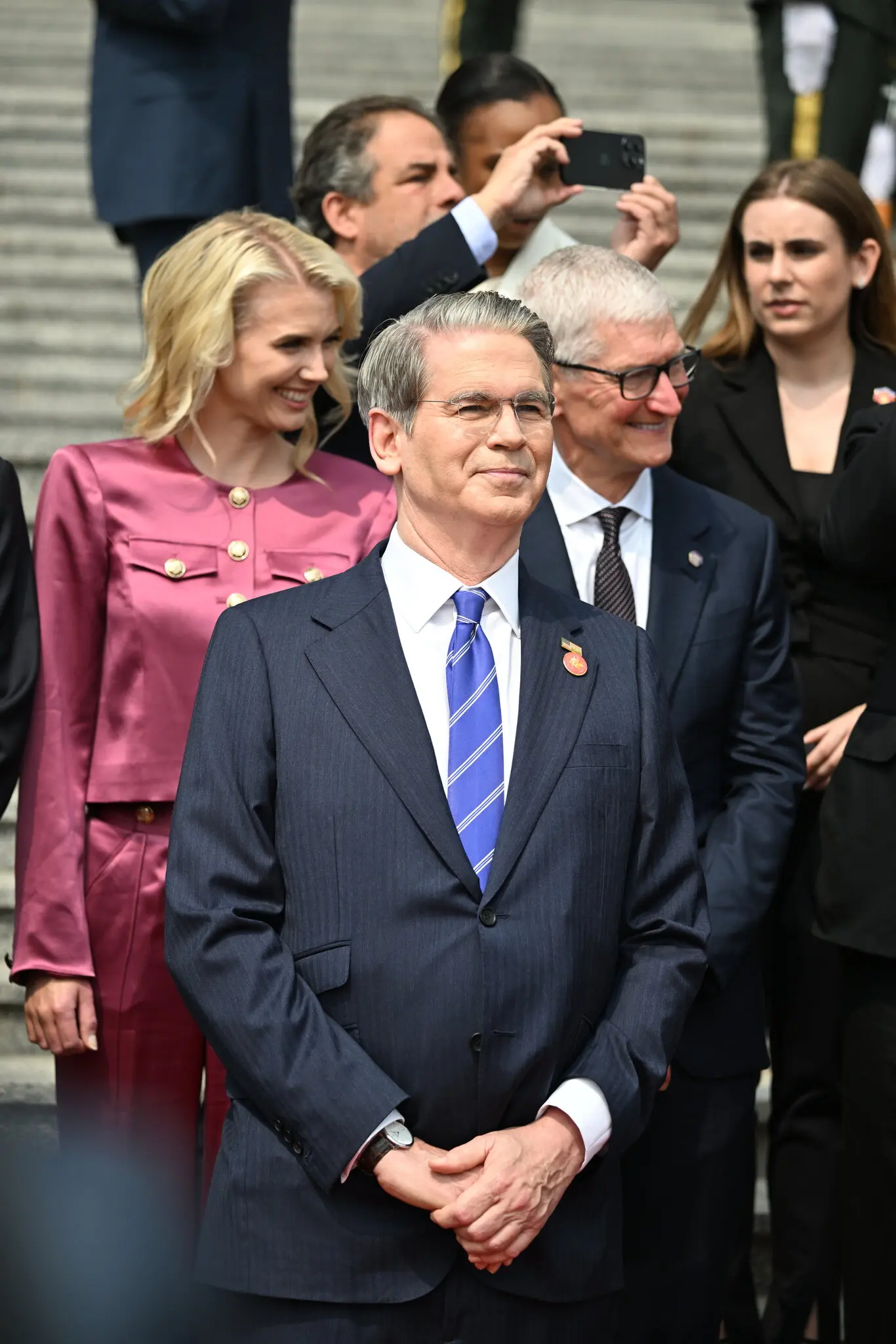
U.S. Treasury Secretary Scott Bessent attends the welcoming ceremony held for U.S. President Donald Trump at the Great Hall of the People in Beijing.
Source: The New York Times
Bessent’s comments also suggested a broader governance framework built around three interconnected themes.
First, Bessent emphasized the vital importance of maintaining U.S. leadership. On one hand, prior to the negotiations, Bessent repeatedly stressed America’s leading position in AI, asserting that the United States was able to discuss AI with China precisely because “we are in the lead.” His point was to signal that the United States was approaching rule-setting from a position of strength: actively bringing up AI was not a sign of weakness, but a demonstration of American confidence. In describing the bilateral relationship, Bessent said “the Chinese are substantially behind us” in AI, but also noted that they “had a very advanced AI industry,” thereby preserving ample tactical flexibility for the United States in subsequent talks. On the other hand, regarding the future dynamics of China–U.S. competition and cooperation in AI, Bessent set the foundational tone by stating that it was “of utmost importance” for the United States to maintain its lead over China in AI, adding that this was why China was interested in discussing guardrails. Furthermore, Bessent made a rare disclosure about frontier development in the U.S. AI ecosystem. He told CNBC that he expected a major “step-function jump” in upcoming large language model releases from Google’s Gemini and OpenAI, and revealed that the U.S. government was in consultations with these firms over their release schedules, further signaling the dominance of U.S. AI models.
Second, he framed the safety protocol as a way to counter non-state actors rather than constrain state behavior. Bessent made it clear that the proposed protocol would focus in particular on ensuring that “non-state actors don’t get a hold of these models.” This effectively shifted the focus of China–U.S. AI dialogue away from direct military competition or technology-intelligence rivalry between the two countries and toward a mutually acceptable narrative of shared threat. The objective of this joint governance would focus primarily on preventing terrorist organizations, criminal groups or rogue actors from leveraging frontier models to launch financial or cyberattacks. According to analysts, one specific scenario of concern was the possibility that “non-state, criminal or terrorist organizations” could exploit frontier AI capabilities to disrupt the global financial system.
Third, he sought to embed American values into global AI norms. In an interview reported by Reuters, Bessent further stated that the United States would “put in U.S. best practices and U.S. values” on AI models and then “roll those out to the world,” revealing a grander ambition to compete over norms. At a time when the global AI governance architecture has yet to take shape, the United States seeks to play a leading role in this process. Under this logic, the China–U.S. AI dialogue mechanism, as understood by Bessent, would not only be a bilateral coordination forum for frontier model safety but also a governance blueprint with spillover effects, potentially influencing AI regulatory processes in other regions, such as the European Union.
(III) The Real Contest Behind the Language of “Leadership”
What degree of advantage, then, does the “lead” that Bessent repeatedly emphasized actually entail?
According to Stanford University’s latest 2026 AI Index Report, the competition has become increasingly disaggregated across specific dimensions. China leads in areas including talent development, patents, publications, robotics and energy infrastructure. Meanwhile, the performance gap between leading Chinese and American frontier models continues to narrow. As of March 2026, the top U.S. model outperformed the top Chinese model by only 2.7 percent on the Arena benchmark. In 2025, U.S. companies released 50 notable AI models compared with 30 from China—a narrower gap than many had anticipated—while the gap in frontier model performance had narrowed to single-digit percentage points. Google DeepMind CEO Demis Hassabis stated in January 2026 that leading Chinese AI models were “only a matter of months behind” top U.S. and Western systems. He noted that while the United States still led in foundational innovation, companies including DeepSeek, Alibaba and Zhipu AI had demonstrated remarkable engineering and cost-effective scaling capabilities that helped narrow the performance gap. In private investment, the gap remains substantial: U.S. private AI investment exceeds China’s by roughly 23 times, and it continues to widen.
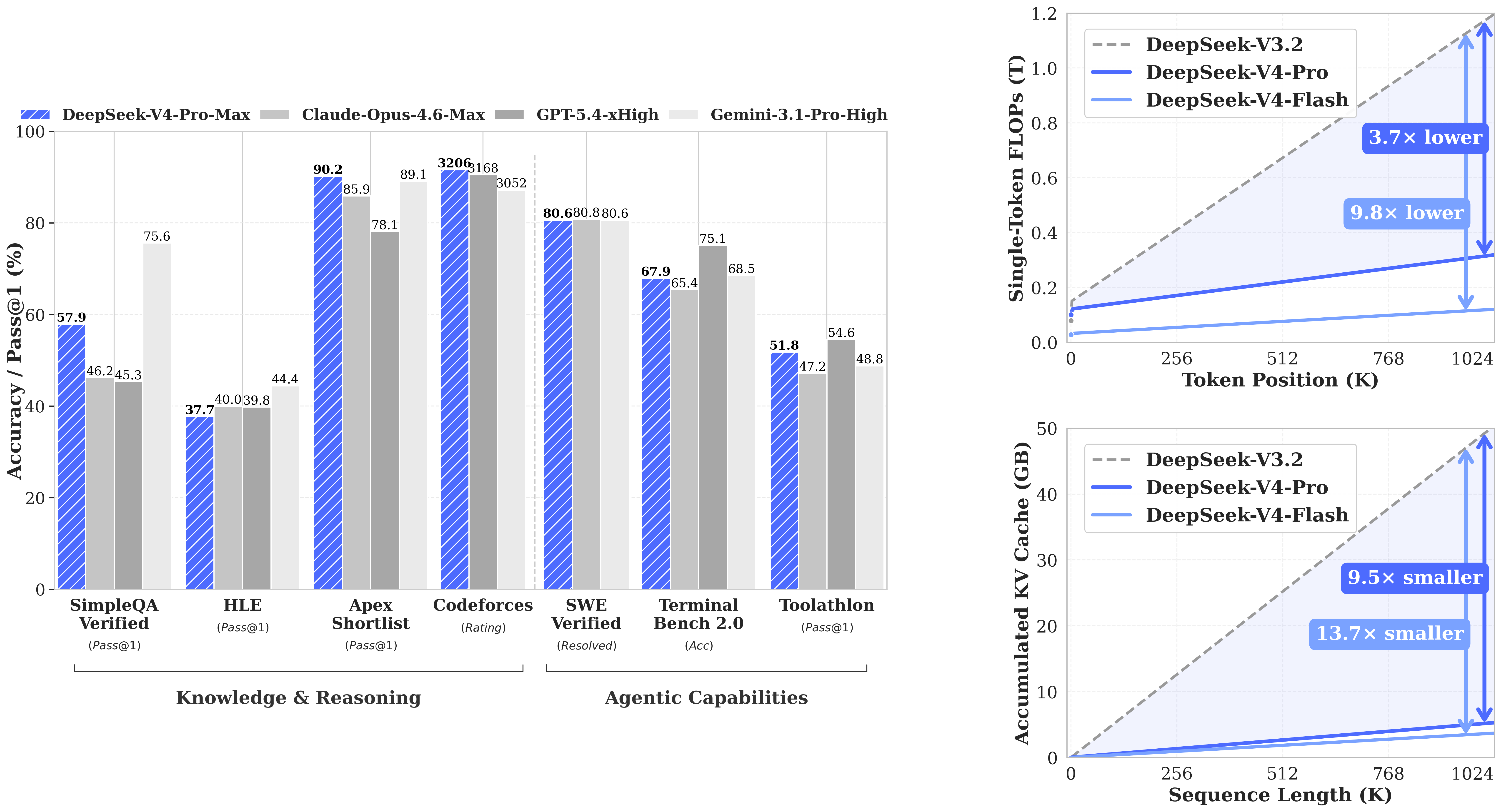
Comparison of DeepSeek-V4-Pro-Max with leading international frontier models.
Source: Hugging Face
In summary, from Washington’s perspective, the core concern increasingly appears not to be whether China is developing another OpenAI, but whether China is developing an alternative path for AI industrialization distinct from Silicon Valley’s. One of the greatest shocks to the United States in recent years has stemmed not from any single Chinese model, but from the rapid scaling capabilities demonstrated by Chinese enterprises. There is a growing realization within Washington that while China may not be the first to define the “most powerful model,” it could be the first to achieve large-scale industrialization and social deployment of AI. On one hand, China’s open-source model ecosystem is reshaping the dependency structures of the global AI landscape. On platforms such as Hugging Face, Chinese models deliver strong performance at low or near-zero costs. This has led global developers to increasingly favor Chinese open models when building applications, plugins, more complex and specialized derivative versions, and industry solutions. Consequently, the technical frameworks, toolchains and cloud services underpinning Chinese models may also spread simultaneously. On the other hand, the United States has limited policy tools to constrain other countries’ diverse needs for AI development. Given the complex global supply chains of the AI industry, the reach of U.S. extraterritorial controls is becoming increasingly limited; even if export controls take effect, they are not a long-term solution for the United States. A Brookings Institution report points out that while export curbs on China may restrict its access to advanced computing power in the short term, they could also accelerate China’s efforts to build an indigenous supply chain over the medium-to-long term. As a result, a subtle shift is emerging in U.S. AI policy toward China, as Washington seeks to keep AI competition with China stable and manageable, and prevent it from turning into a resource-draining, open-ended arms race.
III. Outlook: Towards a New Phase of China–U.S. AI Competition and Cooperation
Prior to the meeting, international media and think tanks, including The Wall Street Journal and Bloomberg, reported that China and the United States would explore establishing official channels for AI dialogue. The high-profile narrative that “the two AI superpowers are going to start talking” drew greater global attention to the issue. Judging from the information disclosed by both sides so far, although Beijing and Washington engaged in in-depth communication on principled and normative issues surrounding AI competition and development around the time of the meeting, a discernible gap remains between the tangible outcomes achieved and external pre-meeting expectations. TIME commented that AI was “the elephant in the room” at the meeting: it did not take center stage as much as some observers had expected, but remained an undercurrent in broader geopolitical and economic discussions. The Royal Institute of International Affairs, or Chatham House, analyzed that the objective of both countries on AI was to seek the establishment of communication channels and thereby navigate some of the frictions stemming from real-world competition. As the Chinese saying suggests, deep-seated tensions are not formed overnight. Against the backdrop of intense rivalry over AI innovation, the meeting between the two heads of state marked a promising start for strategic communication. However, disagreements on specific AI-related issues persist, and long-term tensions continue to evolve in complex ways. Consequently, efforts by China and the United States to enhance strategic dialogue and broaden areas of cooperation will remain grounded in practical realities while addressing real-world tensions.
Overall, the meeting did not fundamentally alter the basic dynamics of China–U.S. competition and cooperation in AI. What it did change was the way those dynamics are framed and managed, thereby pushing the relationship into a new stage characterized by greater technicality, specialization, and institutionalization. AI has increasingly become one of the most strategically significant issues in the bilateral relationship, and one that cannot easily be addressed through any single policy instrument.
In the near term, the political and technical conditions for comprehensive AI cooperation remain limited. Yet this does not preclude broad cooperation in specific areas. Indeed, when broader conditions are not yet in place, the procedural value of communication itself becomes even more important. The working-level engagement, risk communication and agenda coordination launched by the meeting are likely to continue operating ahead of the planned leaders’ meeting in the United States in September, forming the main line of the next stage of high-level China–U.S. dialogue. Looking ahead, both sides appear to have the vision and incentives to define the optimal boundaries of mutually beneficial AI development, build safety guardrails for managing differences amid competition, and seek new consensus within the new landscape of strategic interplay:
First, both sides need to focus on global responsibilities to reshape the foundation of dialogue. The China–U.S. relationship plays a central role in shaping the evolution of global AI. Together, the two nations harbor the world’s most vibrant AI enterprises, the most intensive foundation model R&D activities, and the most critical compute and supply chain resources, while accounting for a major share of global AI investment and talent flows. The foundation models, chips, cloud computing platforms, and application ecosystems rolled out by Chinese and American firms are becoming deeply embedded in the global technological architecture. Consequently, the China–U.S. AI relationship cannot be reduced to a binary choice between comprehensive cooperation and full-scale rivalry. While the two sides compete intensely in model capabilities, chip supply, standards-setting, and industrial ecosystems, they also face shared risks, including the misuse of powerful models, threats to financial and cybersecurity systems, vulnerabilities in critical infrastructure, and global technology diffusion. While the meeting has not altered the fundamentals of China–U.S. AI competition, it has elevated AI from a purely industrial rivalry into a pivotal issue of bilateral strategic stability, with the highest levels of leadership personally driving the agenda and calibrating bottom lines.
Second, both sides need to strengthen safety baselines to prevent systemic threats. As large models, AI agents, autonomous decision-making and automated cyber capabilities continue to advance, the diffusion of technological capabilities has clearly outrun the formation of rules. Many risks do not fully emerge at the time of model release, but gradually become visible only after large-scale deployment, cross-border access and integration into complex real-world scenarios. Ahead of the meeting, frontier model safety had already drawn close attention from industry and policy circles. Security evaluations related to Anthropic’s Claude Mythos and OpenAI’s cyber-defense frameworks heightened concerns among U.S. and European regulators and financial institutions over AI-assisted cyberattacks. As frontier models become increasingly powerful, their potential misuse by malicious actors could pose serious national security risks, including cyberattacks, attacks on critical infrastructure and the development of biological weapons. China and the United States share a national security interest in preventing terrorist organizations, criminal networks and other non-state actors from exploiting AI to launch such attacks. AI safety is thus not merely a matter of technical standards, but a pressing national security concern. This provides a practical context and impetus for the two sides to launch dialogue on AI guardrails.
Third, both sides need to expand the list of common understandings and advance practical dialogue. Judging from the public outcomes, AI did not emerge as a separate major agenda item at the meeting. Yet the way it was addressed left room for follow-up coordination between the two sides and helped set the stage for a second presidential meeting planned for September. This limited but meaningful outcome also provides a key basis for the international community to track the long-term development of this issue.
After the meeting, two important questions remain for China, the United States and global AI governance more broadly: how to safeguard national interests without allowing technological competition to slide into crisis, and how to uphold safety baselines while preserving space for open innovation. These questions make dialogue and risk management all the more necessary. A rational choice for both countries, and one that meets the expectations of the international community, is to build channels for cooperation amid competition and set safety guardrails amid strategic interaction.
Author
Zhang Ao, Research Assistant of CGAIG
Yu Yue, Research Assistant of CGAIG
Li Ziyi, Research Assistant of CGAIG
Original URL: https://mp.weixin.qq.com/s/LwSkO6-vSySSTIulKyzKQQ