

Artificial intelligence (AI) is reshaping the way public governance operates. As Triangular Cooperation becomes an increasingly important form of South-South Cooperation, the question of how digital tools can be used to improve the implementation efficiency of cooperation projects, enhance the traceability of funds, and safeguard the governance sovereignty of recipient countries has emerged as a topic well worth exploring.
On the afternoon of June 3, 2026, Dr. Diego Vega — Visiting Scholar at the Center for Global AI Innovative Governance (CGAIG) and the Fudan Development Institute (FDDI), Coordinator of the Specialization Program in Asia-Pacific Studies at the Latin American Faculty of Social Sciences (FLACSO) in Ecuador, and former Commercial Consul of Ecuador in Shanghai — delivered a lecture titled “AI and Digital Governance: New Models for Efficiency Gains and Capacity Building in Triangular Cooperation.” The lecture was moderated by Yao Xu, Secretary-General of CGAIG and Associate Professor at FDDI, with Xin Yanyan, Deputy Secretary-General of CGAIG and Assistant Professor at FDDI, joining as discussant.
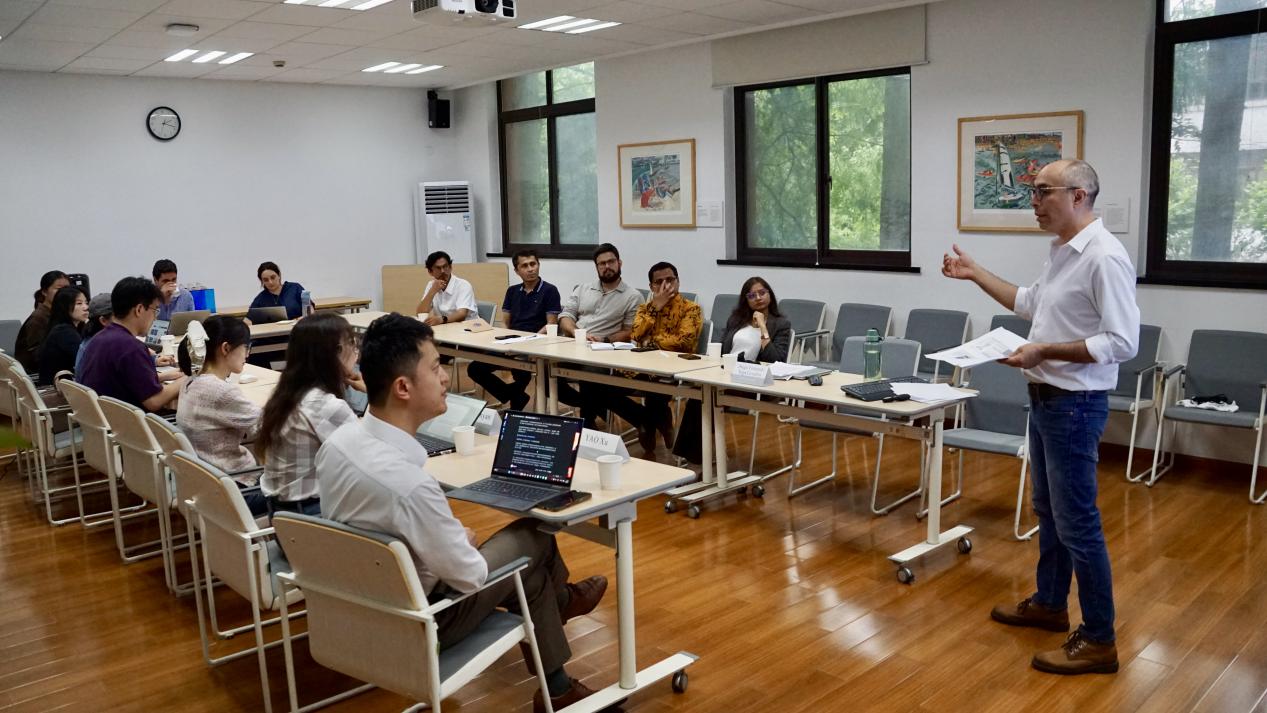
The lecture in session
Dr. Vega’s research builds on the fieldwork he conducted during his doctoral studies on agricultural triangular cooperation in Ecuador. He observed that Ecuador’s international cooperation system is relatively coherent in its legal framework and policy objectives; its shortcoming lies in governance inefficiencies at the implementation stage. Held back by the “single account” system and public-procurement procedures, the disbursement of funds is severely delayed, with some projects held up for as long as six months to a year, while the personnel turnover and loss of institutional memory that accompany changes of government further drive up the transaction costs of cooperation. Dr. Vega then presented two agricultural cooperation cases in which China was a key participant. His comparative study found that the “rice-duck co-culture” project proved difficult to sustain owing to insufficient needs assessment, whereas the “bamboo construction-materials project” achieved sound sustainability through legislation, training, and capacity building. Vega therefore argued that the success or failure of triangular cooperation often hinges on the quality of governance rather than on the legal framework itself.
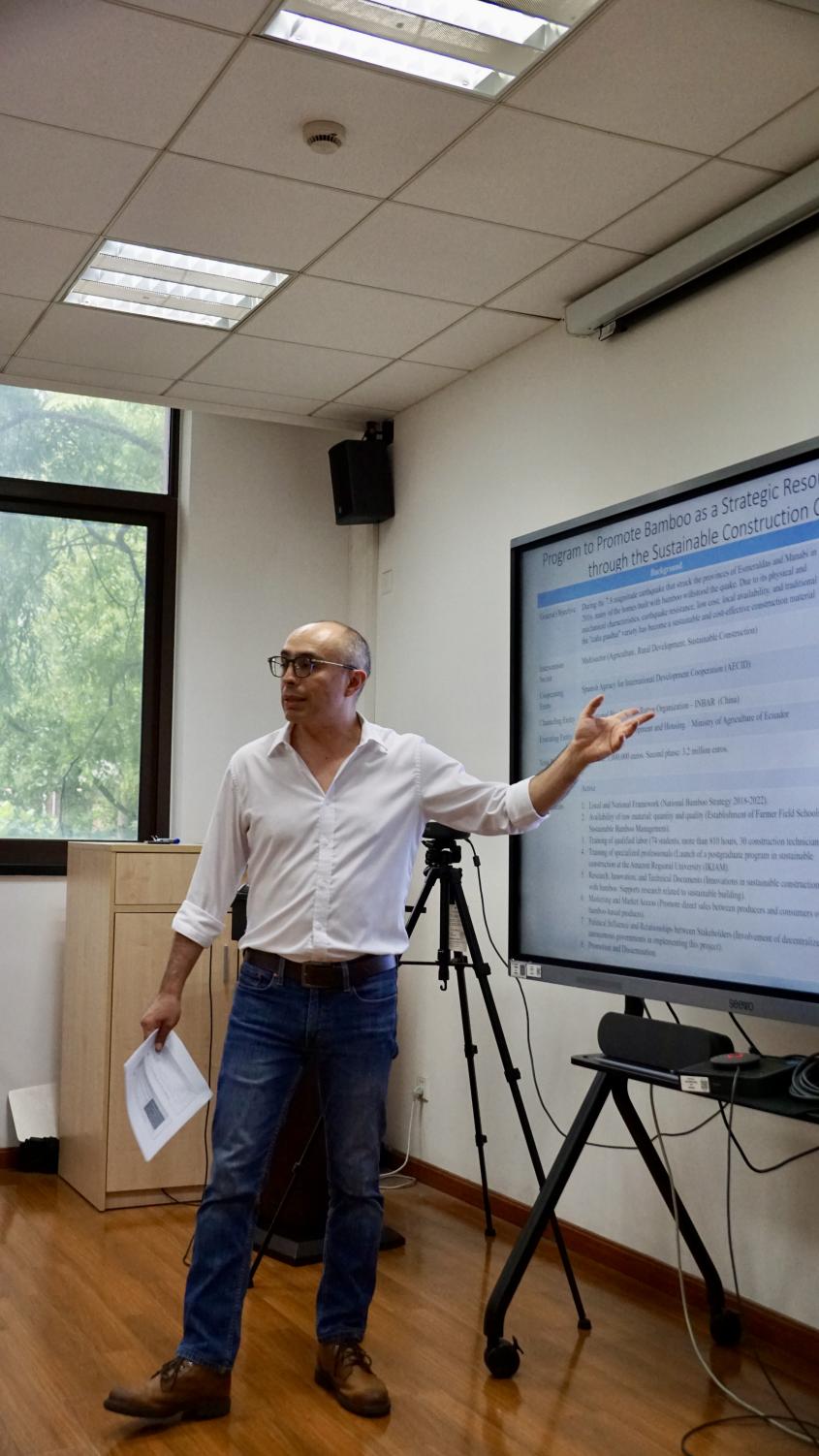
Dr. Diego Vega, Visiting Scholar at the Center for Global AI Innovative Governance (CGAIG) and the Fudan Development Institute (FDDI)
Building on this assessment, Dr. Vega put forward a vision for advancing administrative reform through algorithmic governance and developed the conceptual framework of an “Adaptive Algorithmic Governance System” (AAGS). He argued that governance should move from a static “design-then-shelve” model toward a dynamic mechanism that “learns and adjusts as it goes.” In his view, an AAGS can deliver functions such as knowledge retention, needs validation, reduced transaction costs, and strengthened accountability; in essence, however, it remains a decision-support tool and cannot replace the judgment of government. He also cautioned that algorithmic bias, low-quality data, and the model “black box” may distort resource allocation and erode accountability, and that AI capabilities are frequently overestimated, making human oversight indispensable. He further emphasized that, in adopting AI, the Global South should reinforce national priorities and public accountability, ensuring that the technology serves its own development rather than passively following donors’ agendas.
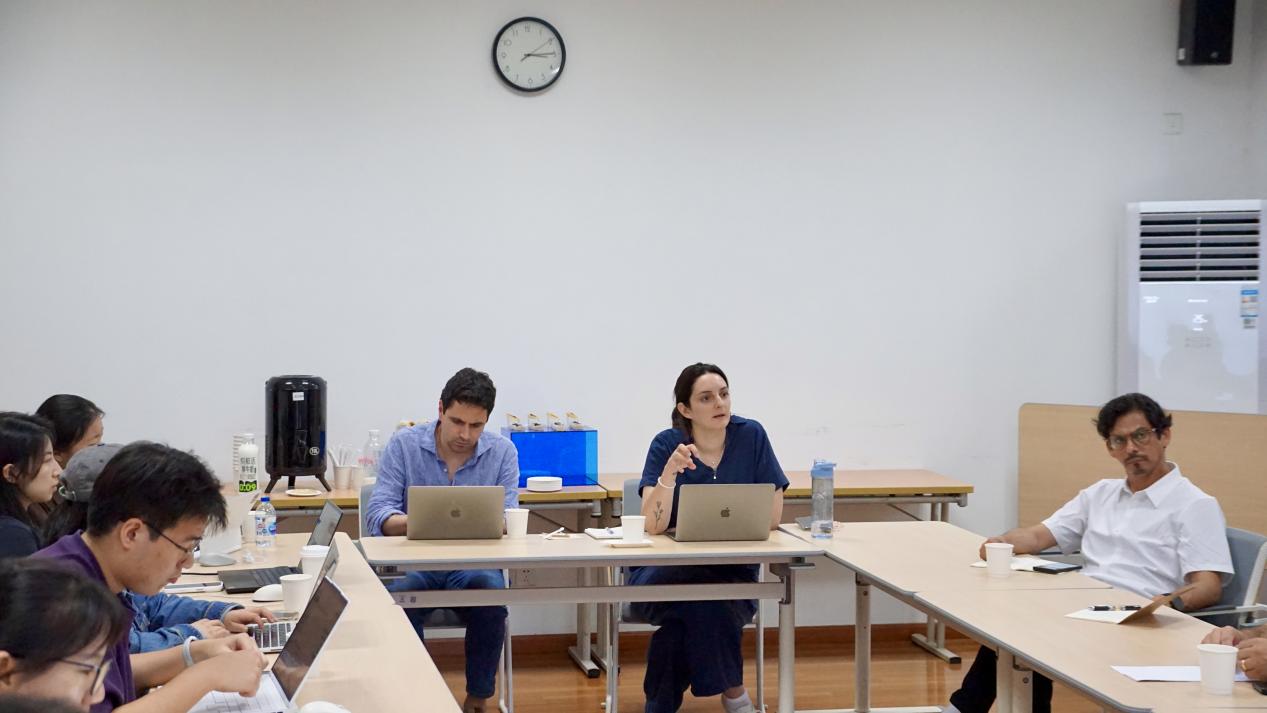
Discussion during the lecture
During the discussion session, the discussant and members of the audience engaged with the substance of the lecture, addressing such topics as the boundaries of government intervention within a dynamic policy cycle, the attribution of responsibility for algorithmic bias under “human-in-the-loop” mechanisms, and the limitations of the binary “success/failure” judgment from a development-studies perspective. Dr. Vega responded to each in turn, drawing on relevant cases.
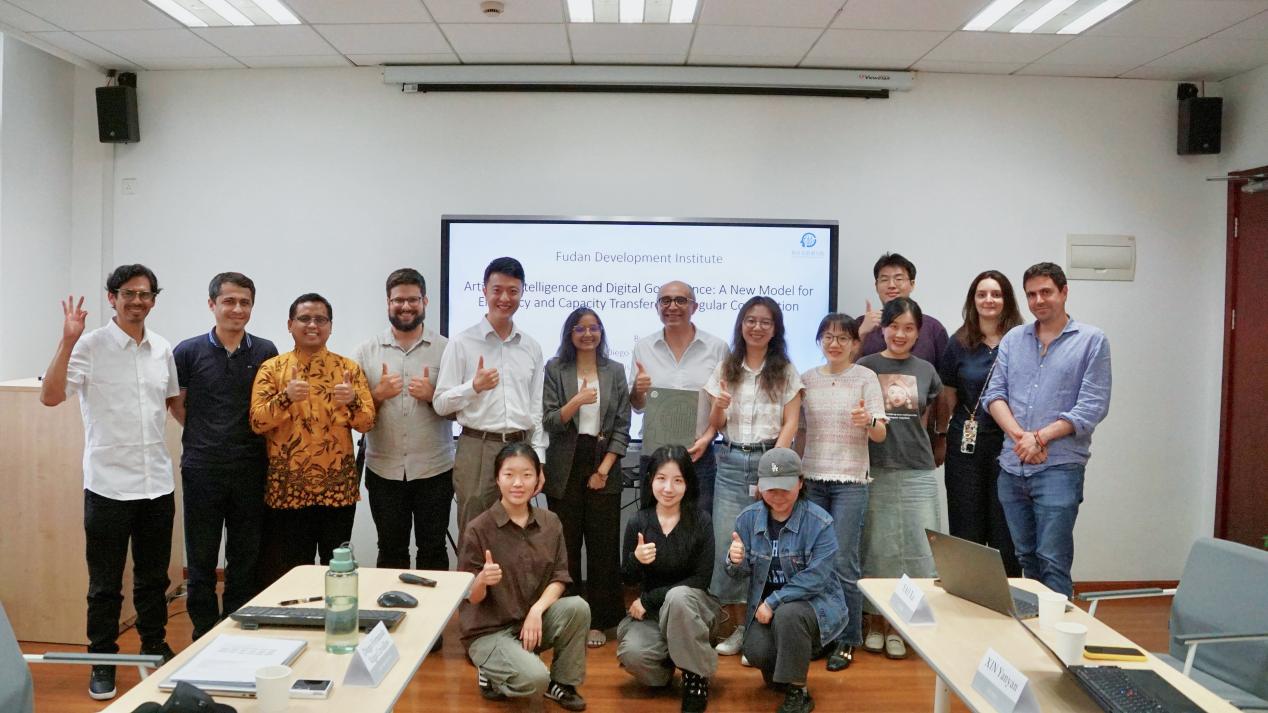
Group photo of the participants
In his closing remarks, Secretary-General Yao Xu noted that Dr. Vega brings together experience across industry, government, and research, and that his work offers valuable insights into the integration of AI and public governance. Following the lecture, the Center for Global AI Innovative Governance presented Dr. Vega with a Visiting Scholar certificate.
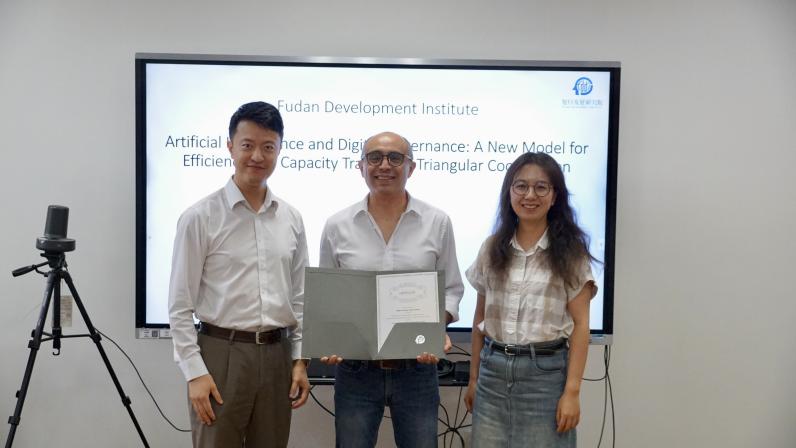
Yao Xu, Secretary-General of CGAIG (left), and Xin Yanyan, Deputy Secretary-General (right), present Dr. Vega with a Visiting Scholar certificate