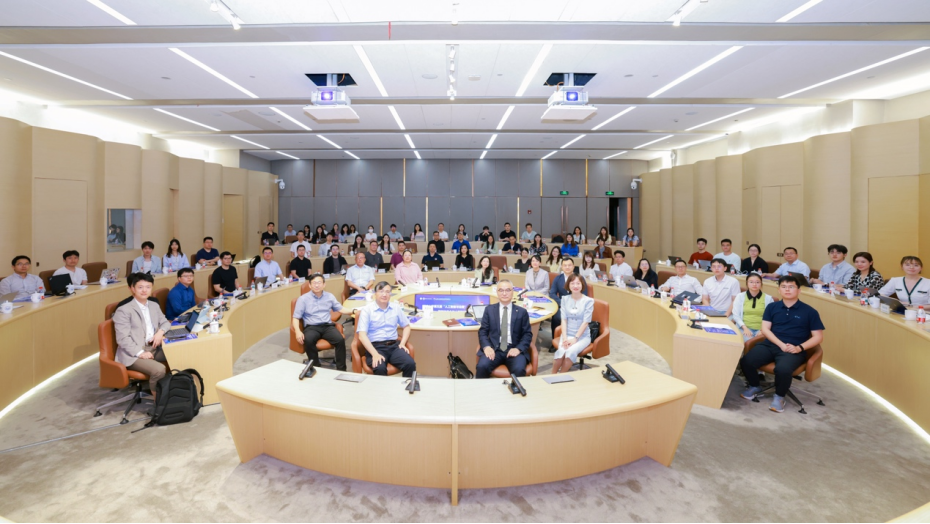


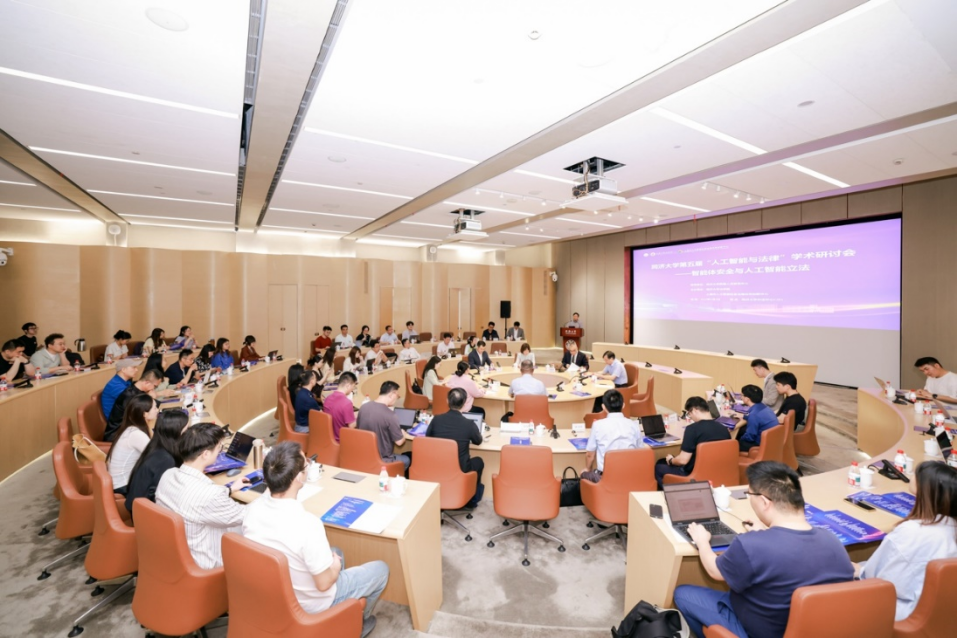
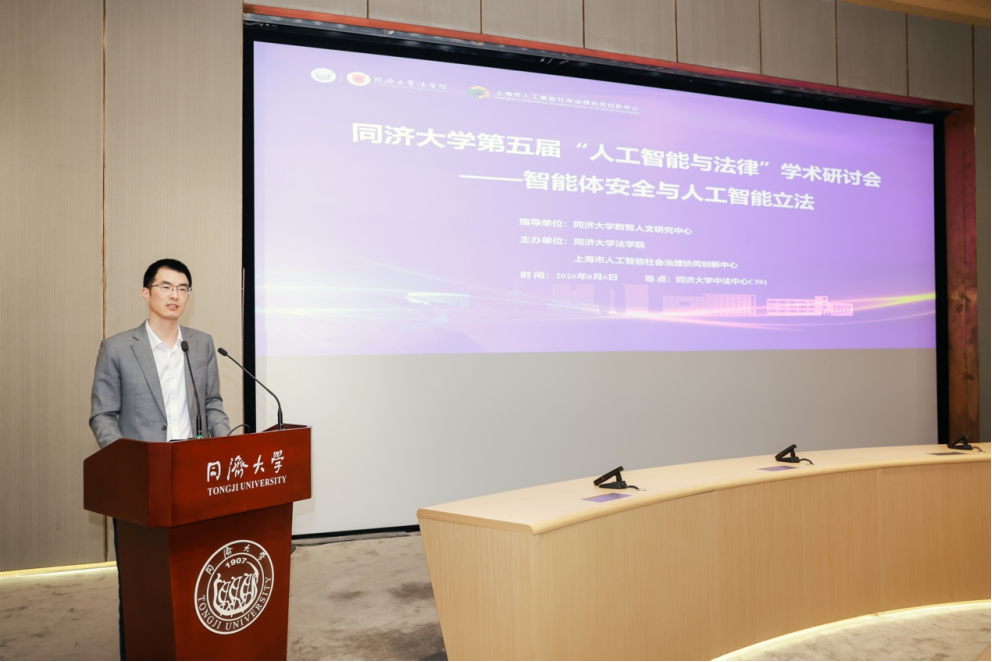
On June 6, 2026, the Fifth Tongji University Academic Symposium on “Artificial Intelligence and Law” was held at Tongji University’s Siping Road Campus. The symposium, themed “AI Agent Safety and AI Legislation”, was organized under the guidance of the Center for Digital and Intelligent Humanities at Tongji University and jointly hosted by Tongji Law School and the Shanghai Collaborative Innovation Center of AI Social Governance. Experts, scholars, and practitioners from leading universities, research institutions, and companies, including Tsinghua University, Beihang University, Fudan University, Shanghai Jiao Tong University, Zhejiang University, Tongji University, the Third Research Institute of the Ministry of Public Security, the Shanghai Artificial Intelligence Laboratory, and the Beijing Academy of Artificial Intelligence (BAAI), as well as companies such as NIO, Alibaba, Meituan, Ant Group, and Tencent, gathered to discuss frontier issues such as AI agent safety governance, regulatory rules, and AI legislation.
01 Opening Ceremony
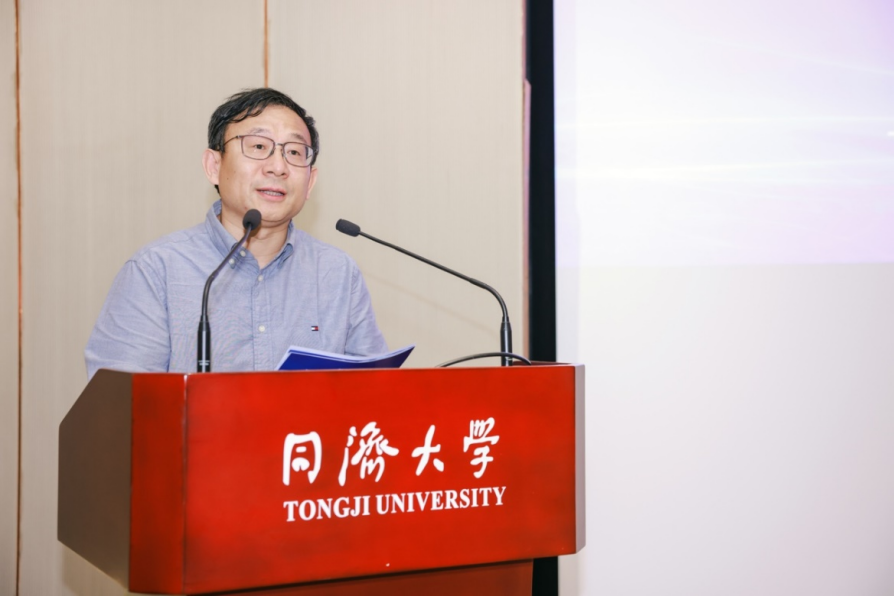
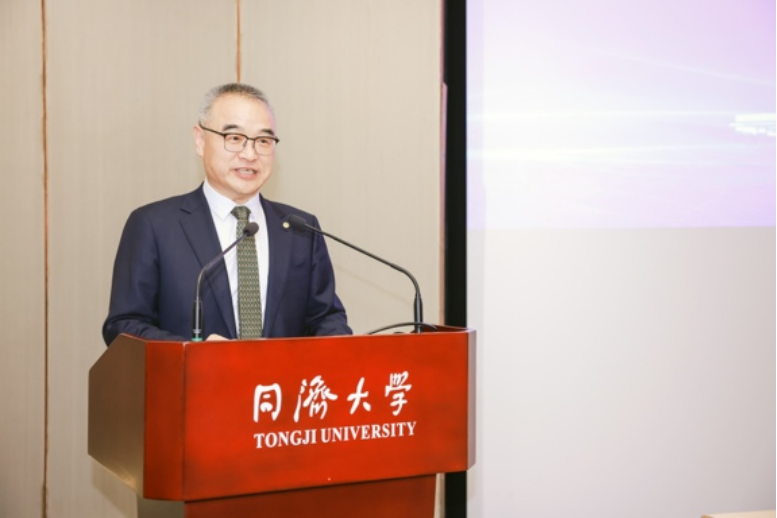
The opening ceremony was moderated by Duan Cunguang, Party Committee Secretary of Tongji Law School. Jiang Huiling, Dean of Tongji Law School and Director of the Shanghai Collaborative Innovation Center of AI Social Governance, and Xu Tingting, Secretary of the General Party Branch of the Shanghai Social Sciences Development and Research Center, each delivered remarks. Jiang Huiling welcomed the guests and noted that, in facing the challenges of the intelligent age, it is essential to uphold a people-centered approach, guard against the dehumanizing effects of AI, promote a shift in legal governance toward ex ante prevention, and further deepen interdisciplinary collaboration and global dialogue and cooperation. Xu Tingting pointed to the new challenges posed by the autonomous decision-making of Agents, and called for testing rules through frontline practice in real application scenarios, thereby driving broader innovation in AI governance.

02 Keynote Speeches
In the keynote session, the following speakers delivered keynote addresses in turn: Long Weiqiu, Dean of the Institute for Advanced Studies in Humanities and Social Sciences, Beihang University, Professor at the Law School, and Vice President of the China Law Society Cyber and Information Law Society; Hua Xiansheng, Executive Dean and Tenured Professor of the Institute of AI for Engineering at Tongji University; Gao Gang, Vice President, Chief Compliance Officer, and Global General Counsel of NIO; and Zhou Hanhua, Distinguished Professor at Tongji Law School and Executive Vice President and Secretary-General of the China Law Society Cyber and Information Law Society. The keynote session was moderated by Xu Gang, Vice Dean of Tongji Law School and Secretary-General of the Shanghai Collaborative Innovation Center of AI Social Governance.
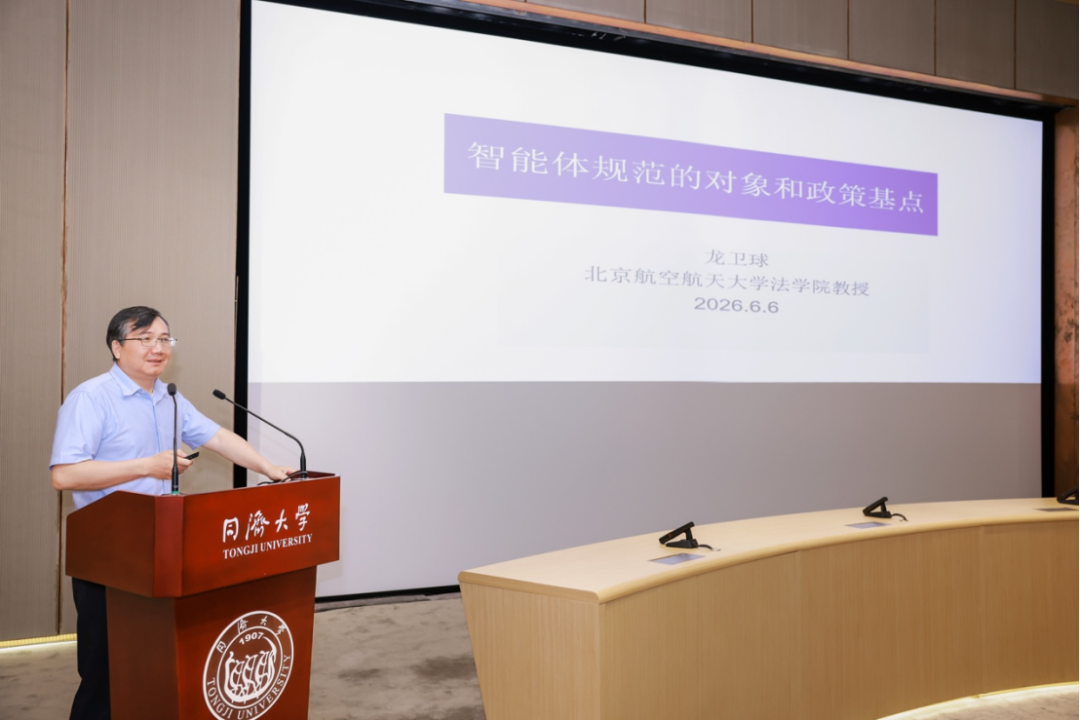
Long Weiqiu delivered a keynote address titled “Regulating Agents: Objects of Governance and Policy Foundations”. He noted that Agents are an important form of AI products and services, argued that the risks and boundaries of liability between agents and large models need to be distinguished, and called for clarifying the legal attributes of agents. On policymaking, he put forward three lines of thought: drawing on institutional frameworks to promote agent innovation, strengthening the safety and security framework for Agents, and strengthening oversight where agents are deployed in high-risk fields such as healthcare and finance and on platforms.
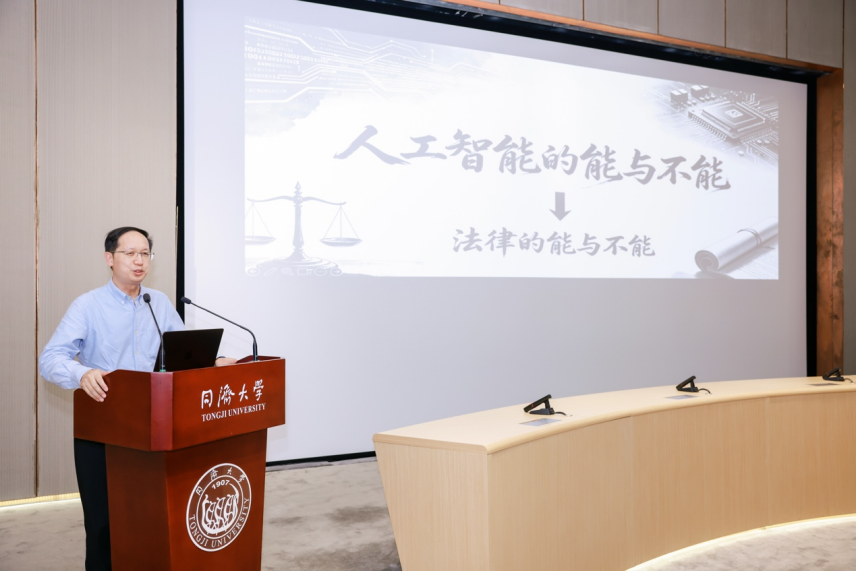
Hua Xiansheng delivered a keynote address titled “Agent Safety: What Law ‘Can’ and ‘Cannot’ Do”. He noted that, as AI develops at scale, various safety and legal risks will become increasingly prominent. Legislators need a deep understanding of the technology, and the formulation of legislative rules must align with the realities of implementation. He called for clearly delineating the governance boundary between technology and law, relying on relying on technical measures to mitigate manageable risks, using law to fill the blind spots of technical governance, and guarding against laws and regulations being distorted into tools for profit-seeking.
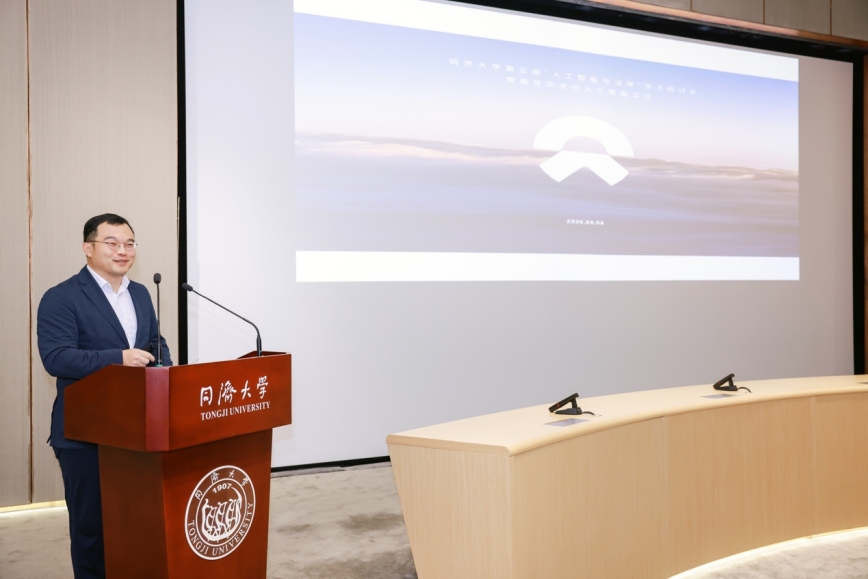
Gao Gang delivered a keynote address titled “Data Privacy, Security and Deployment Strategies for Agents”. Speaking from a corporate compliance perspective, he noted that Agents have reshaped the boundaries of data compliance, giving rise to problems such as unauthorized access, loss of control over data transmission, and ambiguous user authorization. In response, he put forward several measures: building a traceable accountability mechanism, safeguarding data security through deployment isolation, and embedding compliance requirements into intelligent systems to create an automated compliance framework.
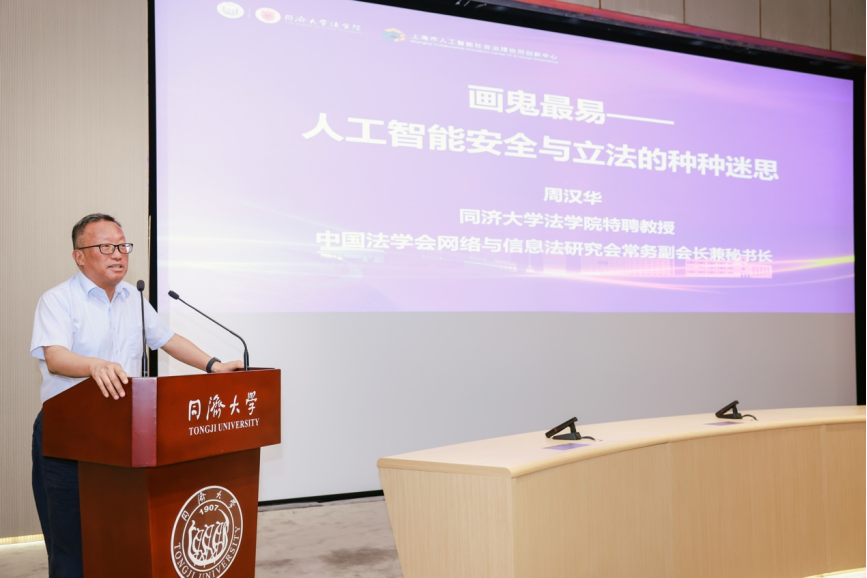
Zhou Hanhua delivered a keynote address titled “Painting Ghosts Is Easiest: The Many Myths of AI Safety and Legislation”. He offered an interpretation of certain misconceptions in current AI legislation, cautioning that legislation must not blindly copy foreign practices and warning against the institutional illusion that legislation can guard against extreme risks. He reflected on the path dependence of assuming that strong ex ante government regulation can prevent risks, as well as on the positioning of legislation as a means to promote the development of the AI industry. He maintained that the supply of institutional rules should fit the objective laws of technological evolution, and that AI legislation should be advanced in a rational spirit.
03 Thematic Discussions
In the thematic discussion session, the conference held discussions around two themes: “Safety Risks of Agents and Collaborative Governance” and “Agent Regulation and AI Legislation”.
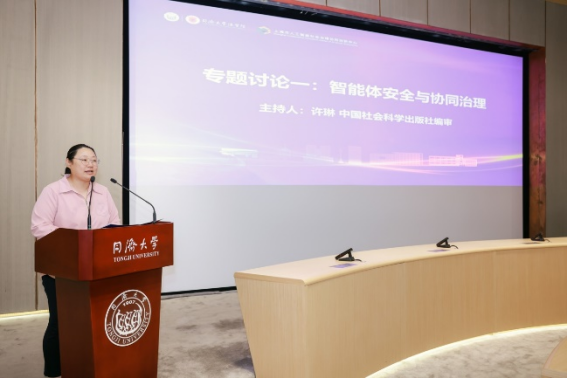
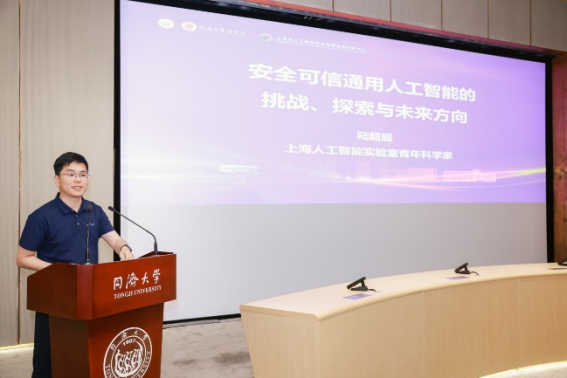
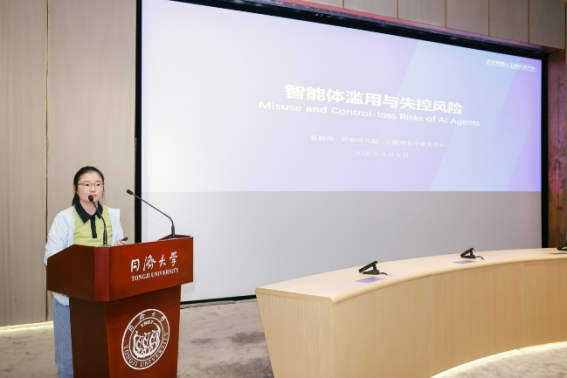
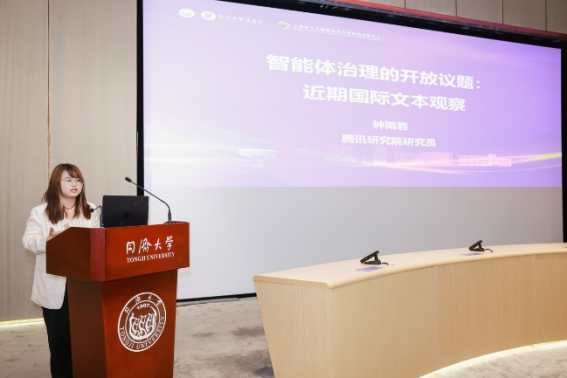
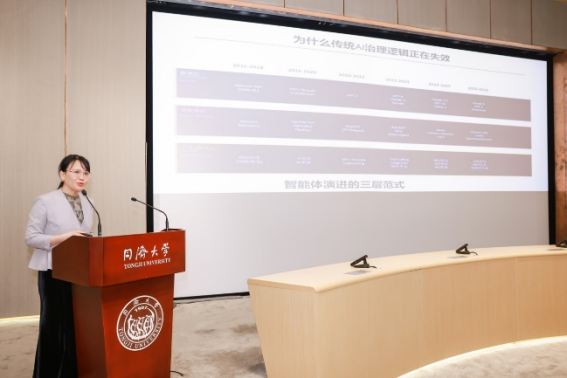
The first thematic discussion, “Safety Risks of Agents and Collaborative Governance”, was moderated by Xu Lin, Senior Editor at the China Social Sciences Press. Lu Chaochao, a young scientist at the Shanghai Artificial Intelligence Laboratory, spoke on the challenges, explorations, and future directions of safe and trustworthy artificial general intelligence, calling for the construction of endogenous security systems, a national-level offense-defense gaming platform, and security infrastructure. Yi Jingwei, a researcher at the Beijing Academy of Artificial Intelligence, drew on cutting-edge experimental cases to reveal the risks of agent misuse and loss of control. Pan Xudong, Associate Professor at the College of Computer Science and Artificial Intelligence, Fudan University, and mentor at the Shanghai Innovation Institute, spoke on the safety risk assessment and governance of Agents, setting out a three-tier behavioral code for agent safety governance. Fu Hongyu, Director of the AI Governance Center, Alibaba Research Institute, addressed the safety and ethical governance of agents and proposed “a governance model driven by both capabilities and risks” governance model. Zhu Lingfeng, Head of Privacy and Data Protection Legal Affairs at Meituan Group, spoke on the global regulatory landscape of agent governance and put forward a three-tier governance framework for global regulation. Feng Fan, Senior Legal Expert at Ant Group, divided agents into three categories (information provision, task agency, and physical interaction) and explored the legal liability and ethical boundaries of agents’ autonomous decision-making. Zhong Yufei, a researcher at the Tencent Research Institute, reviewed the recent evolution of global policy and regulatory documents on Agents and identified the core open issues in agent governance.
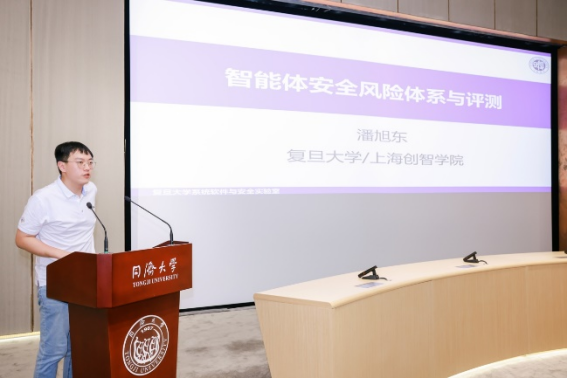
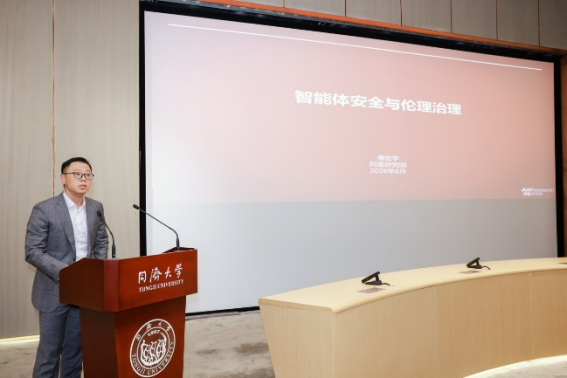
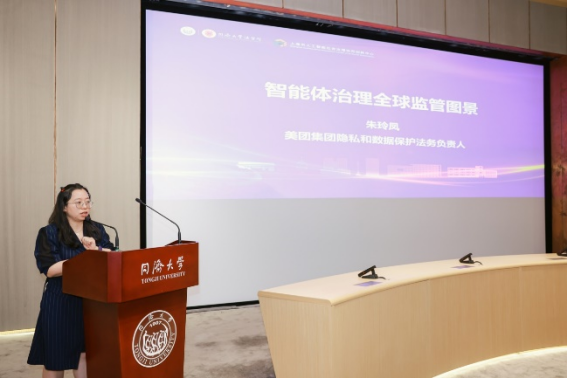
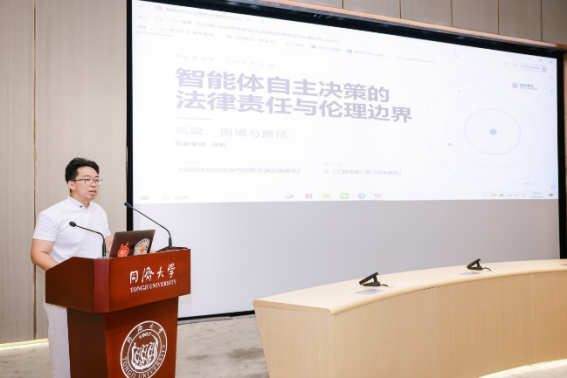
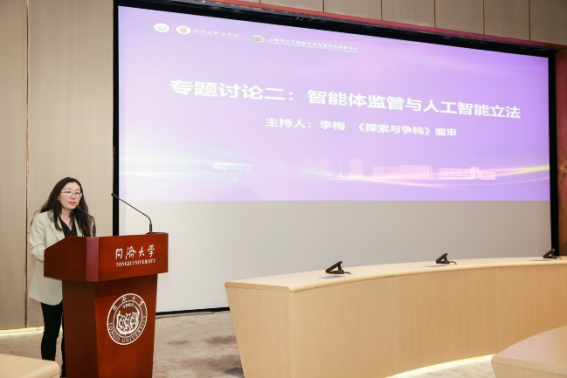
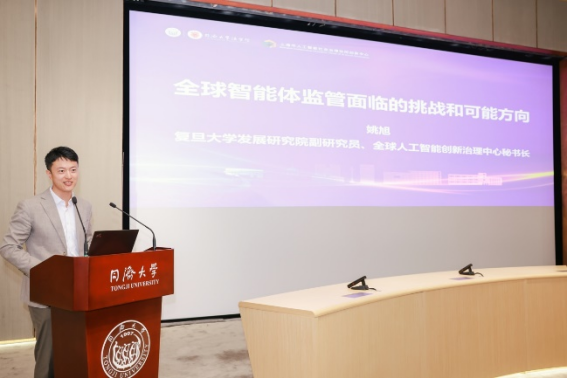
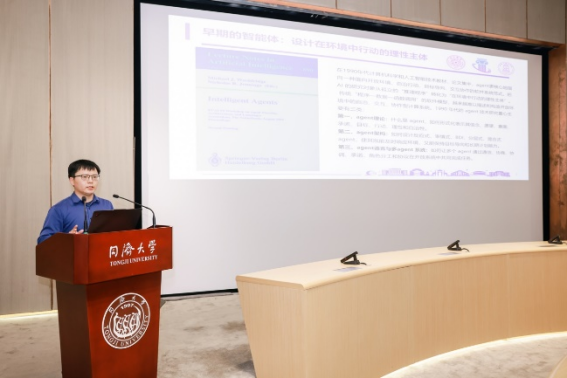
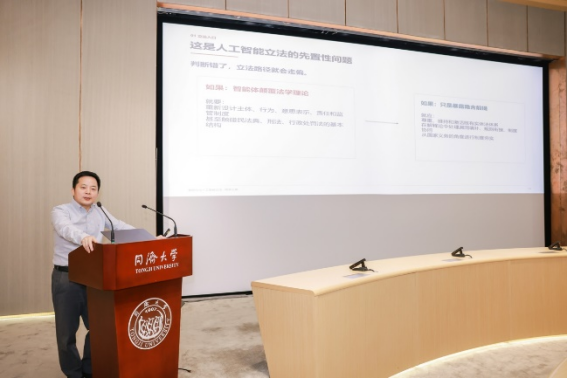
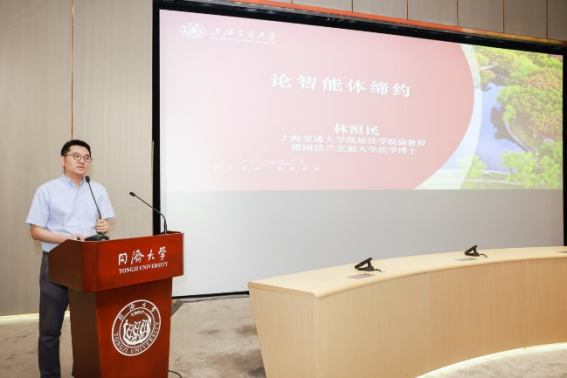
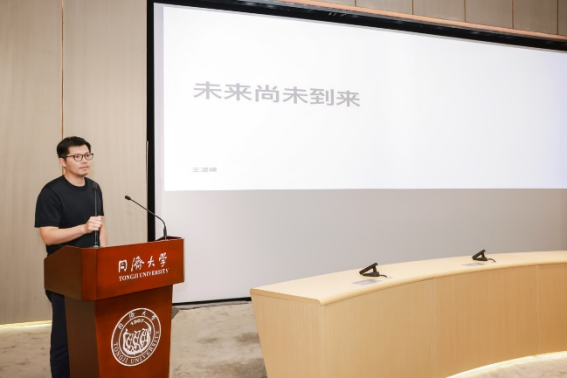
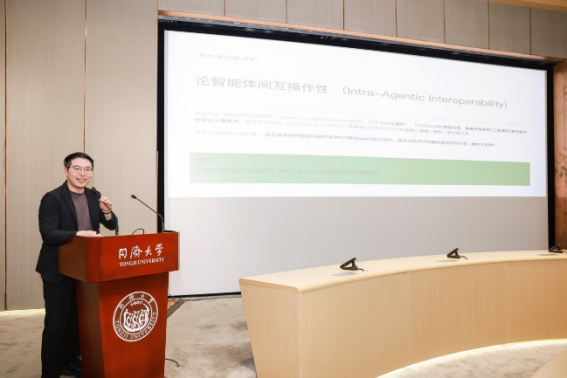
The second thematic discussion, “Agent Development and AI Legislation”, was moderated by Li Mei, Editor at Exploration and Free Views. Yao Xu, Secretary-General of the Center for Global AI Innovative Governance and Associate Professor at the Fudan Development Institute, pointed to the challenges facing global agent regulation and proposed advancing the building of the governance system steadily and by scenario, in a way that takes small, quick steps and remains measured and reversible. Liu Yun, Assistant Researcher at the Think Tank Center, Tsinghua University, and the university’s Law School, shared reflections on the new governance landscape emerging as agent developers proliferate, calling for clarifying the legal effect of agents’ collaborative conduct and the rules for recognizing transactions. Li Xueyao, Professor at the KoGuan Law School of Shanghai Jiao Tong University, spoke on the topic “Have Agents Disrupted Legal Theory?”, offering a reflection on the practical utility of existing innovative theories in AI jurisprudence and calling on the academic community to study China’s own regulatory innovation practices in depth. Huang Daoli, Director of the Cybersecurity Law Research Center, Third Research Institute of the Ministry of Public Security, analyzed the complementary integration of dedicated legislation for Agents with existing law, proposed building a dual-track structure of technical identity and legal attribution, and advocated advancing legislation in a layered, complementary, and systematically integrated manner. Wang Linghao, Associate Professor at the Guanghua Law School of Zhejiang University, offered a reflection on current models of AI legislation and argued for prudent restraint toward the impulse to legislate. Lin Huanmin, Associate Professor at the KoGuan Law School of Shanghai Jiao Tong University, focused on agent contracting and called for clarifying the boundaries of its legality and the mechanisms for user remedies. Wang Wei, Assistant Professor at Tongji Law School, explored the question of interoperability between agents and argued for replacing binary thinking with conditional, auditable, and proportionate access rights.
04 Closing Ceremony
In the closing session, Xu Gang, Vice Dean of Tongji Law School and Secretary-General of the Shanghai Collaborative Innovation Center of AI Social Governance, gave a summary of the symposium. He noted that the theme of this symposium was both cutting-edge and pressing, and that senior experts and young scholars from the technology sector, industry, and academia had held in-depth discussions from multiple perspectives, providing a reference for current efforts on agent safety and AI legislation. He observed that the misalignment in how the technology industry and regulators understand safety is the deeper root of the current mismatch in governance, and called for returning to first principles, holding firm to the boundary between technology and law, and achieving a balance between safety and innovation.
The “Artificial Intelligence and Law” Academic Symposium of Tongji University has now been held five times. In recent years, Tongji Law School, drawing on the Shanghai Collaborative Innovation Center of AI Social Governance, has actively carried out research on the safety regulation and legal governance of AI, achieving notable results. Themed “Agent Safety and AI Legislation”, this symposium conducted in-depth discussions that brought together perspectives and sparks of insight from technology, industry, and academia, with the aim of providing intellectual support for the improvement and innovation of China’s AI governance system.